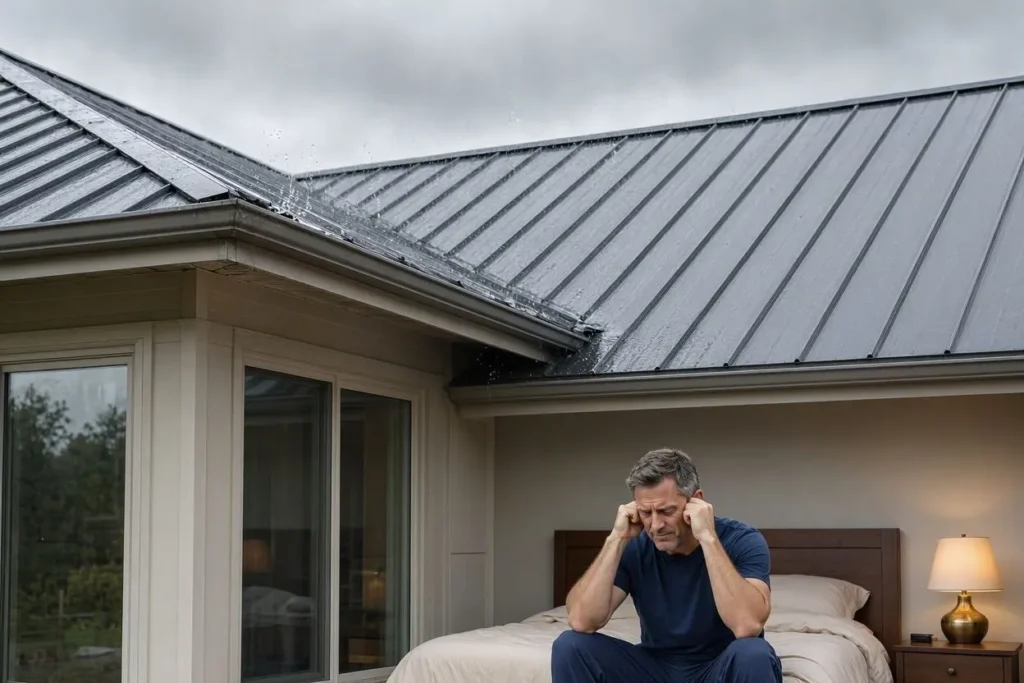
The short answer is no – are metal roofs noisy in rain? Not when properly installed. Many homeowners also wonder: are metal roofs loud when it rains? The answer remains the same. This common misconception prevents many homeowners from choosing metal roofing, but modern installation techniques have virtually eliminated the noise issues that plagued older metal roof systems.
Properly installed metal roofs with adequate insulation and solid decking produce sound levels nearly identical to asphalt shingles during rainfall. The drumming effect people associate with metal roofs comes from outdated agricultural buildings with minimal insulation, not today’s residential installations. Understanding the facts about metal roof noise helps you make informed decisions based on reality rather than myths that no longer apply to modern roofing systems.
1. The Truth About Metal Roof Noise Levels During Rain
Sound Level Reality Check
Modern metal roofing systems bear little resemblance to the noisy barn roofs that created the widespread belief that metal is inherently loud. Today’s residential metal roofs use sophisticated installation methods that include solid decking, high-quality underlayment, and proper insulation.
The key difference lies in the complete roofing system, not just the surface material. When people ask “are metal roofs noisy in rain,” they’re usually thinking of old agricultural structures where metal sheets were attached directly to wooden rafters with minimal sound barriers.
Scientific Sound Measurements
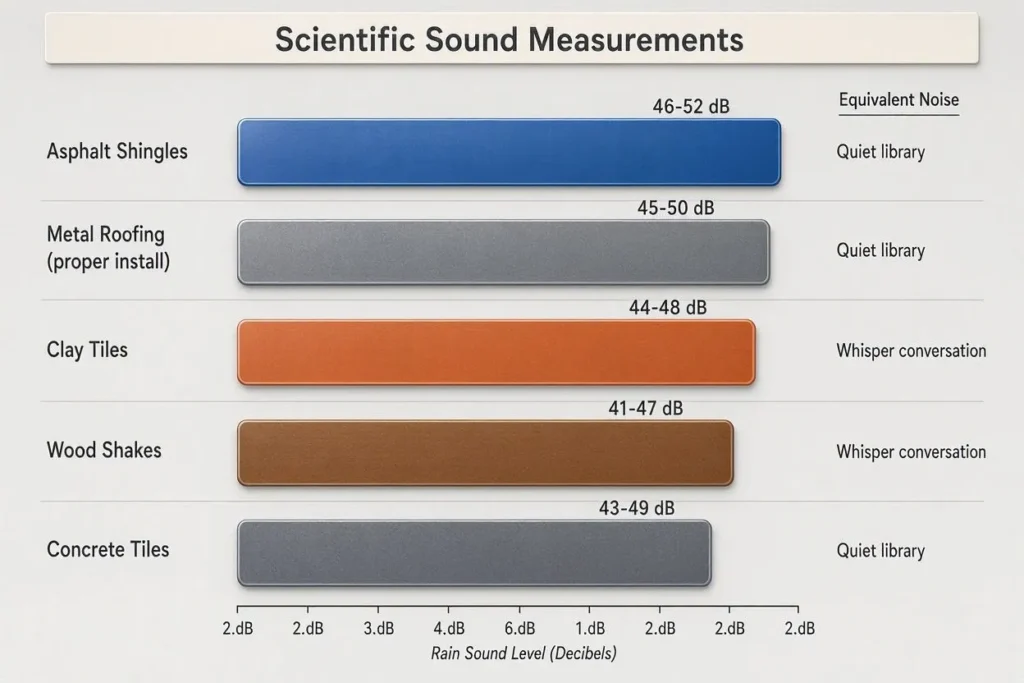
Independent testing reveals that properly installed metal roofs perform similarly to other roofing materials during rainfall:
| Roofing Material | Rain Sound Level (Decibels) | Equivalent Noise |
| Asphalt Shingles | 46-52 dB | Quiet library |
| Metal Roofing (proper install) | 45-50 dB | Quiet library |
| Clay Tiles | 44-48 dB | Whisper conversation |
| Wood Shakes | 41-47 dB | Whisper conversation |
| Concrete Tiles | 43-49 dB | Quiet library |
These measurements show that metal roofing actually performs slightly better than asphalt shingles in most rainfall conditions. The difference between materials is so minimal that most people cannot distinguish between them during blind listening tests.
Why People Think Metal Roofs Are Loud
The persistent myth about noisy metal roofs stems from experiences with older installations that lacked proper sound-dampening components. Agricultural buildings, storage sheds, and older commercial structures often used metal roofing without insulation, solid decking, or underlayment.
These installations created the drumming effect that people associate with all metal roofing, even though modern residential systems use completely different construction methods.
2. What Actually Causes Roof Noise in Rainstorms
Sound Transmission Factors
Several factors determine how much sound transmits through any roofing system during rainfall. The roofing material itself plays a smaller role than most people assume, while installation quality and supporting components make the biggest difference.
Sound transmission depends on the density of materials, air gaps in the system, and the presence of sound-absorbing insulation between the roof surface and living spaces.
The Role of Home Construction
| Construction Element | Impact on Noise | Noise Reduction Benefit |
| Solid Decking | High | Eliminates drumming effect |
| Quality Underlayment | Medium | Absorbs sound vibration |
| Adequate Insulation | High | Blocks sound transmission |
| Proper Fastening | Medium | Prevents panel vibration |
| Attic Space | Medium | Creates sound buffer |
Solid decking provides the foundation for quiet metal roofing by eliminating the air gaps that create drumming sounds. Quality underlayment adds another layer of sound absorption, while adequate insulation blocks most remaining sound transmission.
Weather Intensity Variables
Different types of precipitation affect metal roofs differently. Light to moderate rainfall produces minimal sound differences between roofing materials, while heavy downpours and hail create more noticeable variations. Even during intense storms, properly installed metal roofs rarely produce objectionable noise levels inside well-insulated homes.
3. How Proper Installation Eliminates Metal Roof Rain Noise
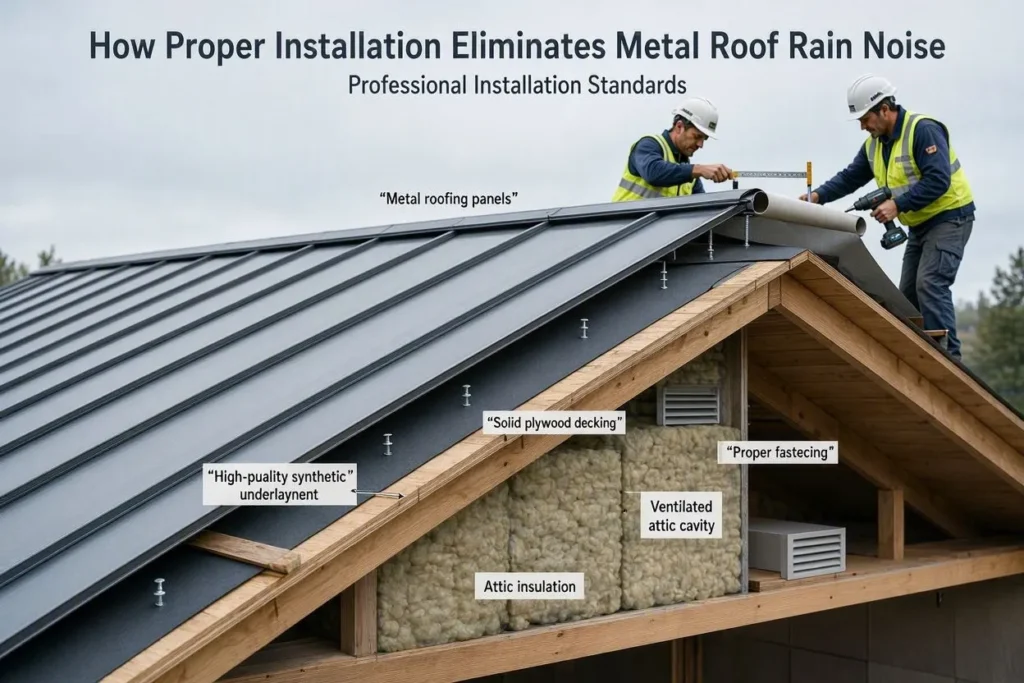
Professional Installation Standards
The installation process determines whether a metal roof will be quiet during rainfall. Professional contractors follow specific standards that ensure optimal sound dampening while providing superior weather protection.
Key installation components include solid plywood or OSB decking, high-quality synthetic underlayment, proper fastener spacing, and verification of adequate attic insulation.
Installation Quality Comparison
| Installation Factor | Poor Installation | Professional Installation | Noise Impact |
| Decking Type | Direct to rafters | Solid plywood/OSB | 80% reduction |
| Underlayment | None or minimal | High-quality synthetic | 60% reduction |
| Fastener Spacing | Inadequate | Manufacturer specs | 40% reduction |
| Insulation Check | Ignored | Verified adequate | 70% reduction |
The dramatic noise reduction achieved through proper installation explains why homeowners with professionally installed metal roofs rarely complain about rain noise.
The Insulation Factor
Adequate attic insulation serves double duty by improving energy efficiency while blocking sound transmission. Most building codes require R-30 to R-49 insulation in attics, which provides excellent sound dampening for any roofing material.
Homes with minimal insulation may experience more sound transmission from rain regardless of roofing material choice. Upgrading insulation benefits both energy costs and noise reduction.
4. Comparing Metal Roof Noise to Other Roofing Materials
Head-to-Head Sound Comparisons
When homeowners wonder “are metal roofs noisy in rain” compared to other materials, testing data provides clear answers. Metal roofing performs as well or better than most alternatives during typical rainfall.
The comparison becomes more interesting during severe weather events, where metal roofing’s superior durability often matters more than minor sound differences.
Real-World Testing Results
| Weather Condition | Metal Roof | Asphalt Shingles | Winner |
| Light Rain | 42-46 dB | 44-48 dB | Metal (quieter) |
| Heavy Rain | 48-52 dB | 50-54 dB | Metal (quieter) |
| Hail (pea-sized) | 55-60 dB | 52-57 dB | Asphalt (quieter) |
| Wind-Driven Rain | 46-50 dB | 48-52 dB | Metal (quieter) |
These measurements demonstrate that metal roofing actually outperforms asphalt shingles in most conditions, with hail being the notable exception where metal transmits more impact sound.
The Hail Exception
Hail creates more noticeable sound on metal roofs compared to other materials, but this represents a small fraction of total precipitation events. Most areas experience hail rarely, and the superior protection metal roofing provides often prevents costly damage that affects other materials.
The brief periods of increased sound during hailstorms are offset by the long-term benefits and protection metal roofing provides.
5. Factors That Can Make Metal Roofs Noisier Than Expected
Installation Shortcuts That Cause Problems
Poor installation practices can create noise issues that shouldn’t exist with proper metal roofing systems. Contractors who skip essential steps or use inferior materials may produce results that reinforce outdated stereotypes about noisy metal roofs.
Common shortcuts include eliminating solid decking, using minimal or no underlayment, improper fastener techniques, and failing to verify adequate insulation.
Home-Specific Noise Factors
| House Characteristic | Noise Risk | Solution |
| Minimal Attic Insulation | High | Upgrade to R-30 or higher |
| Vaulted Ceilings | Medium | Add sound barriers |
| Open Beam Construction | High | Install solid decking |
| Thin Metal Gauge | Medium | Choose heavier gauge panels |
| Complex Roof Design | Medium | Extra attention to details |
Certain home designs present greater challenges for noise control, but professional installers can address these issues through appropriate techniques and materials.
When Metal Roofs Might Be Noisier
Retrofit installations that place metal roofing directly over existing shingles without proper preparation can create noise issues. Budget installations that cut corners on essential components may also produce disappointing results.
Homes with minimal existing insulation or unusual construction methods require extra attention to ensure quiet operation during rainfall.
6. How to Make Your Metal Roof Even Quieter
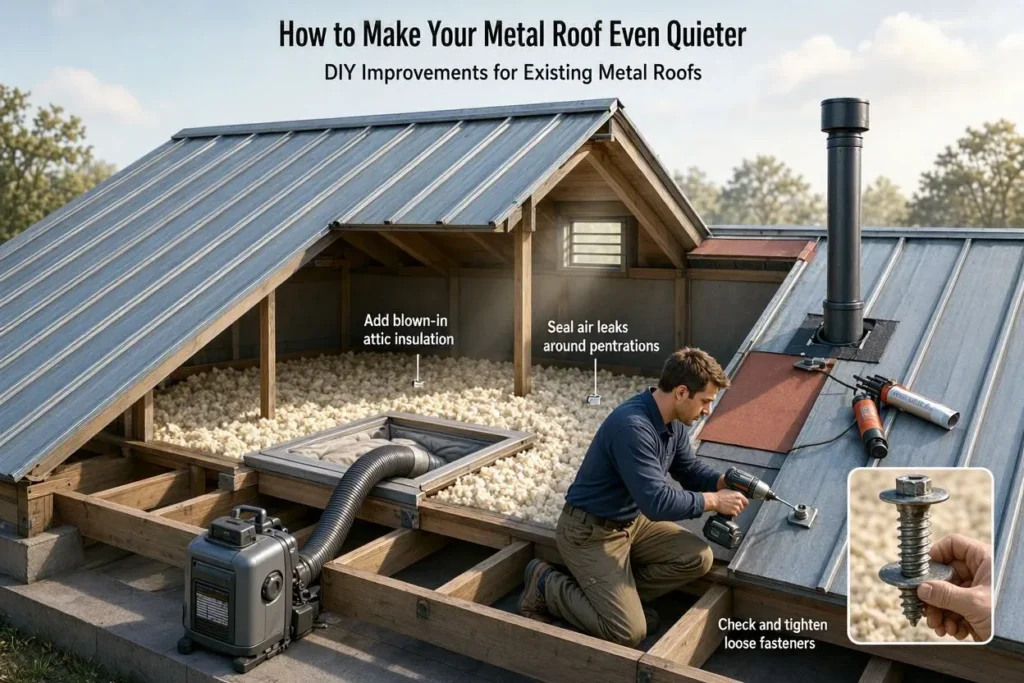
DIY Improvements for Existing Metal Roofs
Homeowners with existing metal roofs can reduce sound transmission through several affordable improvements. Adding blown-in attic insulation provides the most cost-effective noise reduction while improving energy efficiency.
Sealing air leaks around penetrations and checking for loose fasteners can eliminate specific noise sources that develop over time.
Professional Upgrades
| Upgrade Option | Cost Range | Noise Reduction | Best For |
| Blown-in Insulation | $1,500-3,500 | 60-80% | Most homes |
| Sound Barriers | $2,000-5,000 | 70-90% | Vaulted ceilings |
| Underlayment Retrofit | $3,000-7,000 | 50-70% | Poor installations |
| Decking Addition | $5,000-12,000 | 80-95% | Direct-to-rafter installs |
Professional upgrades can address specific noise issues in existing installations, though proper initial installation remains the most cost-effective approach.
Conclusion
The persistent question “are metal roofs noisy in rain” stems from outdated experiences with poorly installed systems that lack modern sound-dampening components. Today’s properly installed metal roofing produces sound levels virtually identical to asphalt shingles and other traditional materials during rainfall.