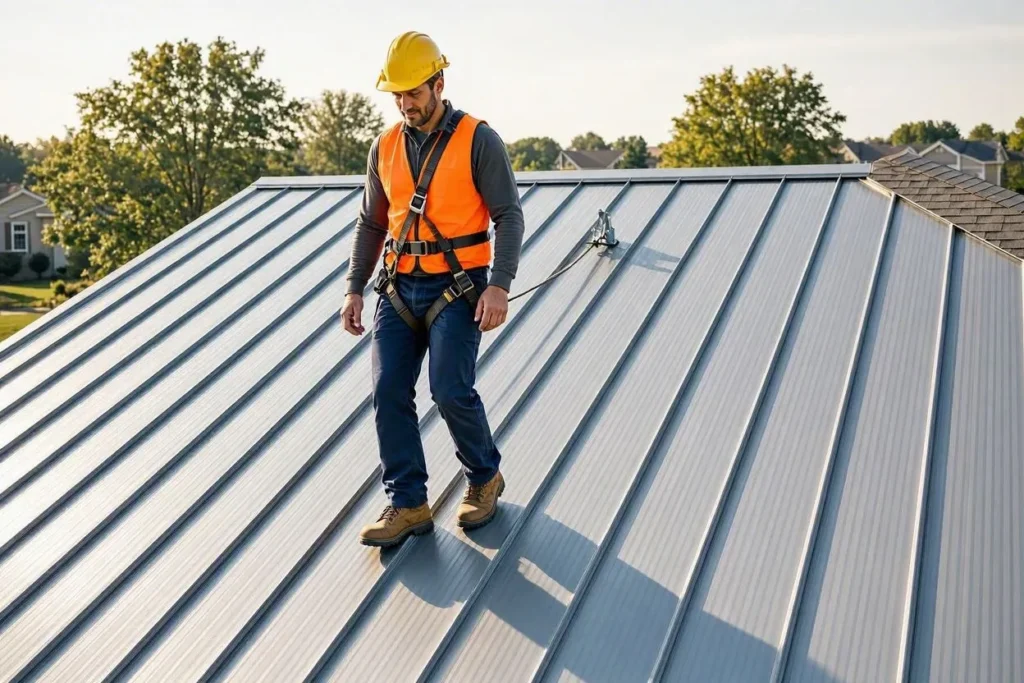
Can you walk on a metal roof? The answer is yes, but only with proper preparation, the right equipment, and strict adherence to safety protocols. After two decades in the roofing industry, I’ve safely navigated countless metal roofing systems, from residential standing seam installations to massive commercial corrugated structures. The key isn’t whether you can do it, but whether you should attempt it without the proper knowledge and equipment.
Walking on metal roofing requires understanding your specific roof type, investing in quality safety gear including metal roof grippers, and respecting weather conditions that can transform a routine maintenance task into a life-threatening situation. Professional roofers rely on specialized techniques, proper footwear with enhanced traction, and systematic approaches to navigate these surfaces safely.
Whether you’re planning routine maintenance, conducting inspections, or accessing rooftop equipment, success depends on meticulous planning and never cutting corners on safety measures. The investment in proper equipment and training always pays dividends in preventing accidents and ensuring efficient roof access.
Understanding Your Metal Roof Type
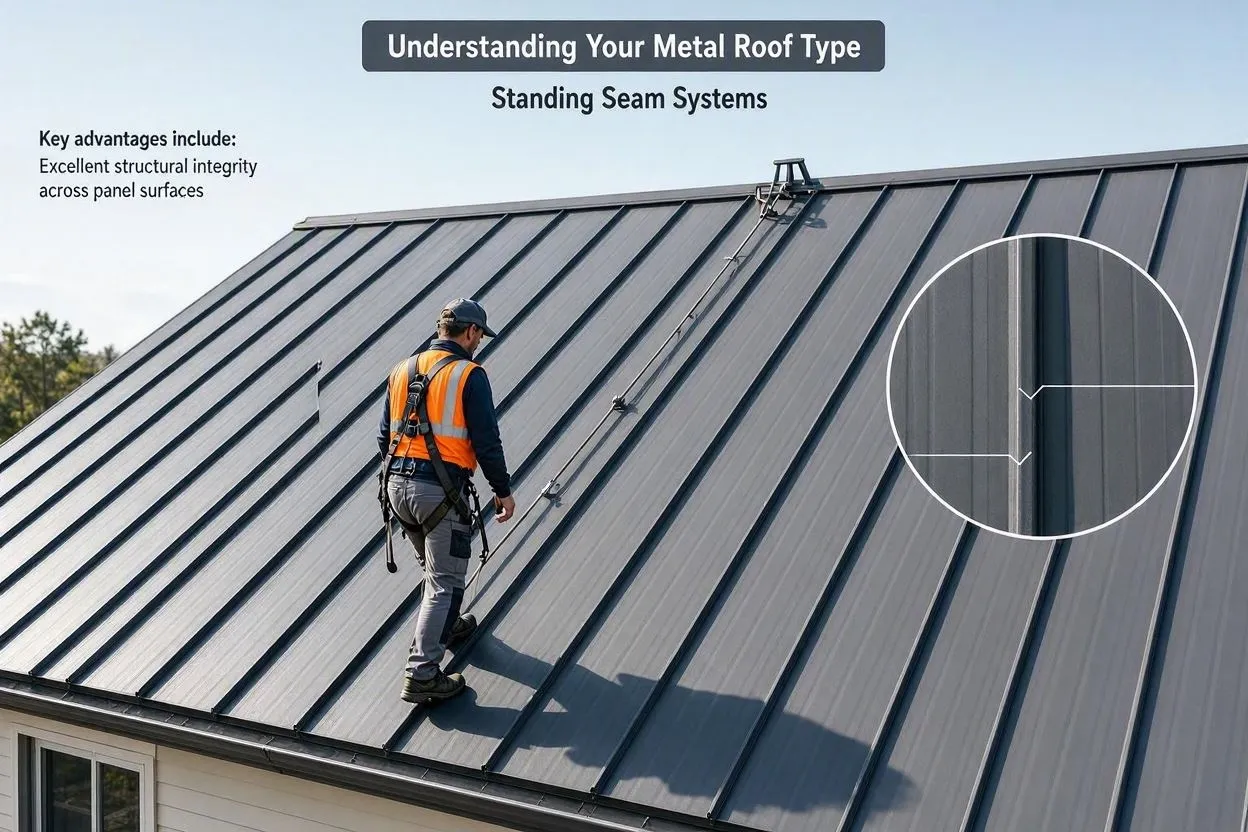
Standing Seam Systems
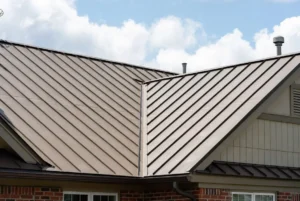
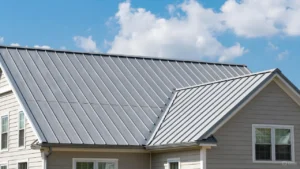
Different metal roofing systems present unique challenges for safe navigation. Standing seam metal roofs offer the best walkability due to their raised vertical seams and flat panels between joints. These seams provide natural pathways with enhanced grip potential, while the flat areas offer stable footing for most maintenance activities.
Key advantages include:
- Excellent structural integrity across panel surfaces
- Natural walking paths along raised seams
- Stable flat areas between vertical joints
- Strong attachment points for safety equipment
Corrugated and Ribbed Panels
Corrugated metal roofing demands a completely different approach. The alternating ridges and valleys create an uneven surface requiring careful foot placement. Smart navigation means stepping only on the ridges where structural support is strongest, completely avoiding the valleys where panels are most vulnerable to damage or breakthrough.
Critical navigation rules:
- Step only on ridge lines for maximum support
- Never walk in valleys between ridges
- Distribute weight across multiple ridges when possible
- Use extra caution near panel connections
Metal Shingle Systems
Metal shingle systems combine durability with aesthetic appeal but create the most challenging walking conditions. Their individual panel construction creates numerous seam lines and potential weak points. Each shingle must be treated as a separate structural element with specific weight-bearing limitations.
Understanding your roofing material composition is crucial for safety planning. Steel roofing often provides magnetic attachment opportunities for specialized equipment, while aluminum surfaces require different traction strategies. This knowledge directly impacts your equipment selection and walking technique.
Table: Metal Roof Types and Safety Characteristics
| Roof Type | Walkability | Required Equipment | Risk Level |
| Standing Seam | High | Basic safety gear | Low |
| Corrugated | Moderate | Enhanced grip equipment | Medium |
| Metal Shingles | Variable | Specialized equipment | Medium-High |
Structural Considerations
Panel thickness, structural support spacing, and installation quality significantly influence safe walking capacity. Thicker gauge materials naturally support more weight, while proper underlayment and deck attachment enhance overall system stability.
Essential Safety Equipment and Techniques
Personal Protective Equipment
Personal protective equipment forms the foundation of safe metal roof navigation. The most critical component is specialized grip equipment that provides the traction and stability needed for confident movement across potentially slick surfaces. During my early career, I witnessed a colleague slip on morning dew covering what appeared to be a completely dry metal roof. That incident taught me never to underestimate the importance of proper grip equipment.
Essential safety gear includes:
- Specialized grip equipment for your roof type
- Non-slip footwear with metal-specific soles
- Full-body safety harness with shock absorption
- Hard hat and impact-resistant eye protection
- Emergency communication device
Footwear and Traction Systems
Quality non-slip footwear designed specifically for metal roofing applications serves as your primary safety interface. Professional-grade boots feature specialized rubber compounds that maintain grip even when contaminated with moisture, debris, or temperature extremes. The sole pattern and tread depth significantly affect traction performance on different metal textures.
Fall Protection Systems
Safety harnesses and fall protection systems create your ultimate safety net when other precautions fail. Modern harness designs distribute impact forces across your entire body while maintaining comfort during extended wear. Anchor point selection becomes critical on metal roofing where attachment options may be limited compared to other roofing materials.
Pre-Walk Inspection Protocol
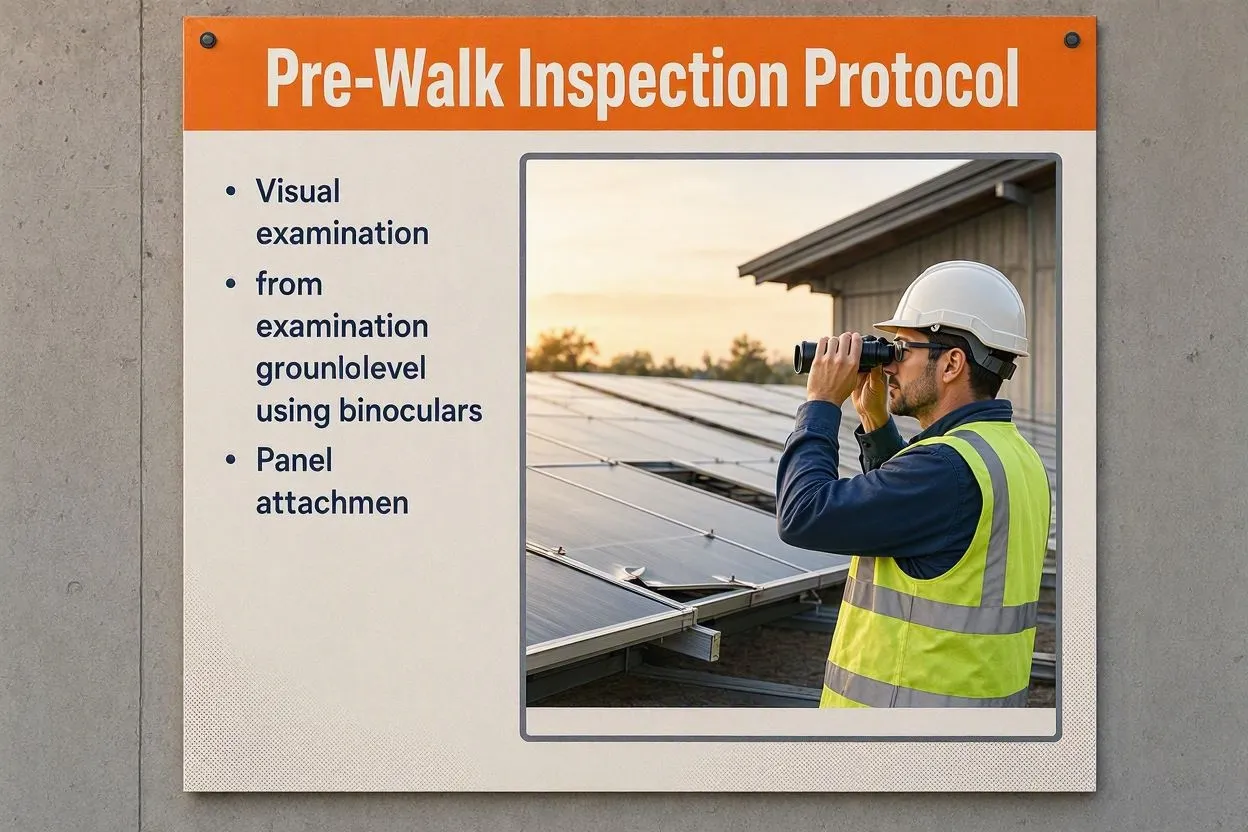
Pre-walk inspection protocols establish the foundation for safe navigation. Visual assessment from ground level reveals obvious structural issues, panel damage, or environmental hazards that could affect walking safety. Structural assessment involves checking panel attachment security, identifying loose fasteners, and evaluating overall system integrity.
Inspection checklist:
- Visual examination from ground level using binoculars
- Panel attachment and fastener security verification
- Weather condition assessment and monitoring
- Safety equipment functionality testing
- Emergency escape route identification
Proper Walking Techniques
Proper walking technique begins with deliberate foot placement on structurally sound areas. On standing seam systems, step directly on seams or flat panel areas between joints. Corrugated surfaces require stepping exclusively on ridge lines where structural support is strongest. Weight distribution involves maintaining three-point contact whenever possible two feet and one hand, or two hands and one foot.
Personal Experience: After 15 years conducting roofing inspections, I’ve learned that the most dangerous assumption is thinking all metal roofs behave the same. Each installation has unique characteristics affecting walkability and safety requirements.
Weather Conditions and Common Mistakes
Optimal Weather Conditions
Weather conditions dramatically impact metal roof safety. Optimal conditions combine dry surfaces, moderate temperatures, and minimal wind. Early morning after dew evaporation through early afternoon typically offers the best combination of temperature stability and visibility without extreme heat that makes metal surfaces dangerous to touch.
Safe weather parameters:
- Dry conditions with no precipitation forecast
- Temperatures between 40°F and 85°F for comfort and safety
- Wind speeds below 15 mph sustained
- Good visibility with minimal glare
- Stable weather patterns without rapid changes
Prohibited Weather Scenarios
Never attempt metal roof access during any precipitation, visible frost or ice formation, or wind speeds exceeding 15 mph. These conditions exponentially increase accident risk and should result in immediate activity postponement regardless of project urgency. Temperature considerations extend beyond personal comfort metal roofing conducts and retains heat efficiently, creating surface temperatures that can exceed air temperature by 30-40 degrees.
Equipment-Related Mistakes
The most common equipment-related errors stem from inadequate grip selection based on misunderstanding specific roof types. Metal roof grippers and specialized equipment demand deliberate movement to maintain effectiveness. Magnetic systems fail completely on non-ferrous metals, while suction cup grippers perform poorly on heavily textured materials.
Common equipment errors:
- Using magnetic grippers on aluminum or copper roofs
- Selecting inappropriate grip systems for roof texture
- Neglecting backup safety systems
- Improper harness adjustment and fit
- Failing to test equipment before roof access
Movement and Technique Errors
Technique mistakes often result from rushing or attempting to maintain ground-level work pace while on roof surfaces. Proper metal roof walking requires different timing and movement patterns than normal walking. Environmental misjudgments include underestimating rapid weather changes, ignoring surface contamination from leaves or debris, and misjudging structural integrity across different roof sections.
Communication Failures
Poor communication protocols create coordination failures between roof workers and ground support. Establishing clear signals, regular check-in schedules, and emergency communication procedures ensures help remains available when needed. These protocols become critical when working alone or in areas where visual contact with ground personnel is limited.
Professional vs DIY and Legal Considerations
When to Choose Professional Services
Professional roofing contractors bring specialized training, experience, and equipment that significantly reduce risks associated with metal roof access. Their familiarity with different roofing systems, safety protocols, and emergency procedures provides advantages that casual DIY approaches cannot match. Insurance coverage, licensing requirements, and liability protections offer additional security for both workers and property owners.
Professional services recommended for:
- Complex roof geometries with multiple levels
- Commercial or multi-story residential buildings
- Steep slopes exceeding 6/12 pitch
- Emergency repairs during challenging weather
- Insurance claim inspections requiring documentation
DIY Safety Assessment
Complex roof geometries, multiple level changes, steep slopes, and unusual architectural features challenge even experienced professionals. These conditions amplify risks for inexperienced individuals attempting DIY roof access. Height and accessibility challenges create exponential risk increases—single-story residential installations present manageable challenges for properly equipped individuals, while multi-story or commercial applications demand professional expertise.
Many homeowners wonder “can you walk on a metal roof” safely without professional help. The answer depends on multiple factors including experience with heights, comfort level with safety equipment, physical capabilities, and ability to maintain focus under stress. Equipment investment considerations include both initial costs and ongoing maintenance requirements for quality safety gear.
Insurance and Liability Issues
Homeowner liability concerns extend beyond personal injury to include property damage and third-party risks. Insurance coverage may exclude claims resulting from unsafe DIY activities, particularly when professional services are readily available. Professional licensing requirements vary by jurisdiction but often mandate specific training, insurance coverage, and bonding for commercial roofing activities.
Legal and Code Compliance
Building code compliance affects both access methods and repair activities performed while on the roof. Some jurisdictions require permits for certain roof access activities or mandate specific safety equipment and procedures. Professional consultation provides valuable guidance for navigating legal and insurance complexities while ensuring proper safety protocols.
Maintenance vs Emergency Access
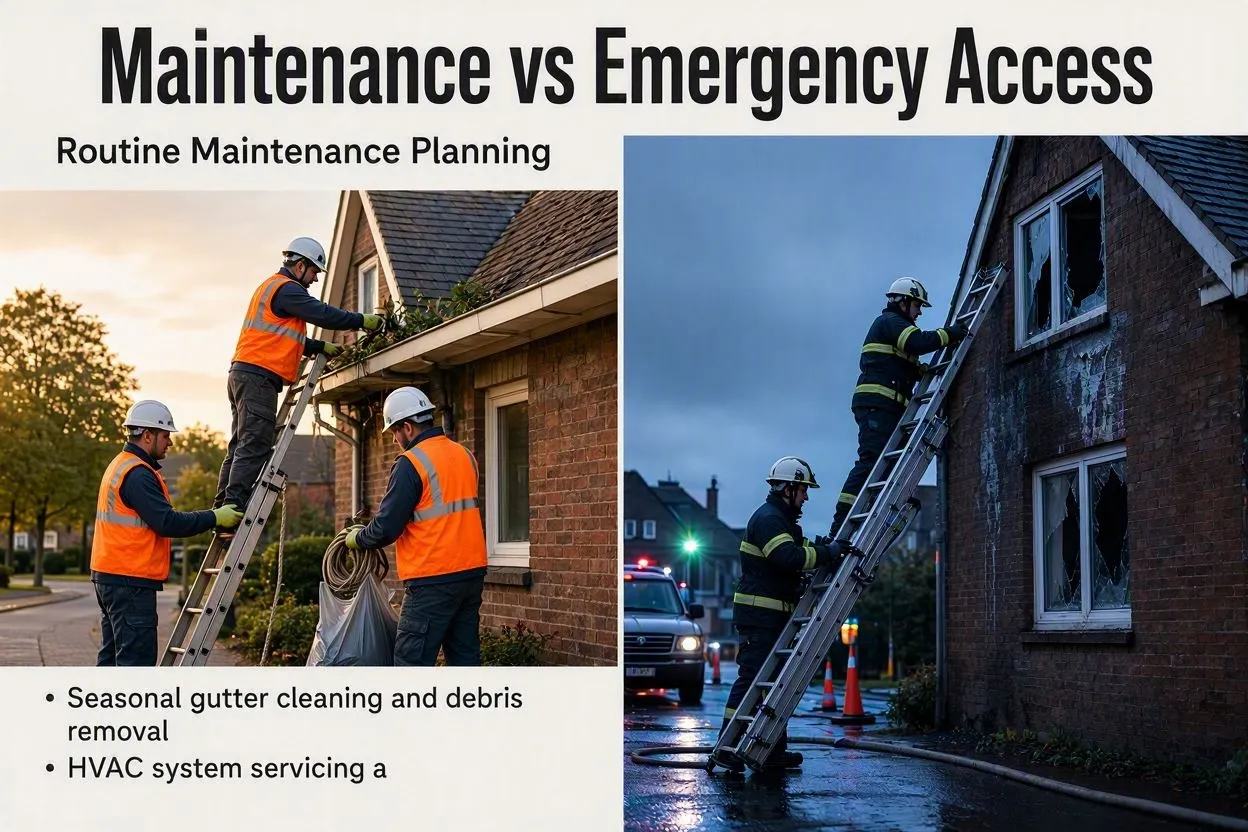
Routine Maintenance Planning
Routine maintenance protocols allow careful planning, optimal weather selection, and systematic safety preparation. Scheduled inspections, cleaning activities, and minor repairs benefit from advance preparation and ideal conditions. This controlled environment maximizes safety while ensuring thorough task completion.
Planned maintenance includes:
- Seasonal gutter cleaning and debris removal
- HVAC system servicing and filter replacement
- Satellite dish and antenna adjustments
- Solar panel cleaning and inspection
- Minor sealant and flashing repairs
Emergency Repair Considerations
Emergency situations require special consideration. Storm damage assessment often necessitates roof access when conditions remain challenging, where property owners ask “can you walk on a metal roof” to evaluate damage. However, emergency circumstances don’t eliminate safety requirements—they demand even greater caution and preparation.
When homeowners ask “can you walk on a metal roof” during emergency situations, the answer requires honest assessment of immediate risks versus potential consequences of delayed action. Temporary repairs accessed safely often prove more effective than comprehensive repairs attempted under dangerous conditions.
Post-Storm Assessment
Emergency repair access for active leaks or structural damage may justify calculated risks but should never compromise basic safety protocols. Professional assessment becomes particularly valuable in post-storm situations when surface contamination, loose debris, and compromised structural integrity create new hazards beyond normal weather considerations.
Professional Consultation Benefits
The decision of whether “can you walk on a metal roof” during various scenarios ultimately depends on honest risk assessment, proper equipment availability, and realistic evaluation of your skills and experience. Conservative safety margins should always guide these decisions, with professional consultation recommended when any doubt exists about safe access methods or structural integrity.
Professional consultation proves invaluable for navigating legal and insurance complexities while ensuring proper safety protocols. The cost of professional advice often proves minimal compared to potential liability exposure or insurance claim complications. Quality safety equipment, including reliable specialized grip systems, represents an investment that pays dividends in preventing accidents and ensuring efficient roof access.
Conclusion
Walking on a metal roof is safe when you match your technique to the panel type, wear the right footwear, and refuse to work in bad weather or with worn gear. Standing seam is the most forgiving surface, corrugated demands ridge-only footing, and shingle systems need the most caution of all. For anything beyond routine maintenance, especially steep slopes or multi-story buildings, calling a professional costs far less than a fall.