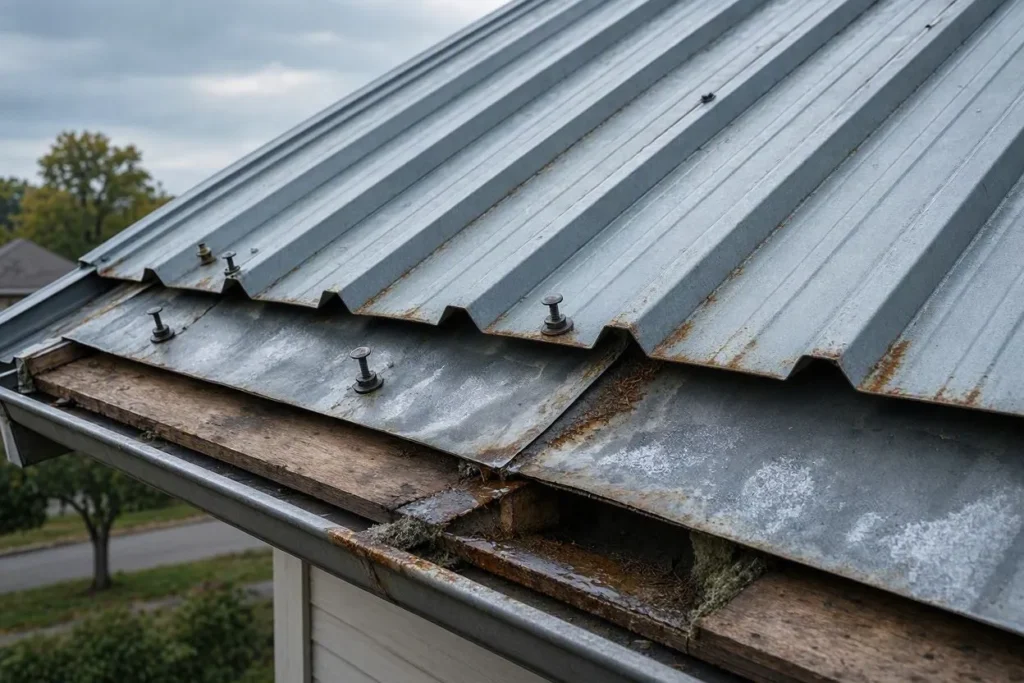
Metal roofing systems require specialized knowledge to install, maintain, and repair properly, making them vulnerable to unique challenges that differ significantly from traditional asphalt shingle roofs. When metal roof problems develop, they often stem from bad metal roof installation practices, inadequate maintenance, or environmental factors that homeowners don’t anticipate during the initial investment.
Understanding these potential issues before they become expensive disasters helps property owners make informed decisions about their roofing investment and know when to seek professional intervention. From fastener failures and thermal expansion issues to overlap leaks and corrosion problems, various metal roof problems can compromise your home’s protection if left unaddressed. Professional installation and regular maintenance can prevent most of these problems, but knowing what to watch for ensures you can address issues before they result in costly emergency repairs.
1. Understanding the Disadvantages of Metal Roofs
Despite their reputation for durability, metal roofs do present certain challenges that homeowners should consider before installation. The disadvantages of metal roofs include several key areas that can impact both performance and homeowner satisfaction.
Cost and Installation Challenges
Metal roofing systems typically require higher upfront investment compared to traditional asphalt shingles:
- Initial installation costs: $7,000 to $12,000 for average residential properties
- Specialized installation requirements: Certified contractors with metal roofing expertise
- Additional structural support: Some applications require roof reinforcement
- Premium fasteners and underlayment: Higher-grade materials increase overall project cost
Physical and Environmental Concerns
Metal roofing materials can be susceptible to various environmental factors that affect performance:
- Hail damage susceptibility: Softer metals like aluminum dent more easily
- Thermal expansion stress: Temperature changes cause material movement
- Noise amplification: Rain, hail, and wind sounds without proper insulation
- Color fading: UV exposure can cause chalking and paint deterioration over time
Compatibility and Corrosion Issues
Certain metal combinations and environmental conditions can accelerate deterioration:
| Corrosion Type | Common Causes | Prevention Methods |
|---|---|---|
| Galvanic corrosion | Dissimilar metals in contact | Proper isolation materials |
| Atmospheric corrosion | Salt air, industrial pollutants | Protective coating systems |
| Crevice corrosion | Trapped moisture in joints | Proper sealing and drainage |
2. Metal Roof Leaks in Heavy Rain – Identifying Vulnerability Points
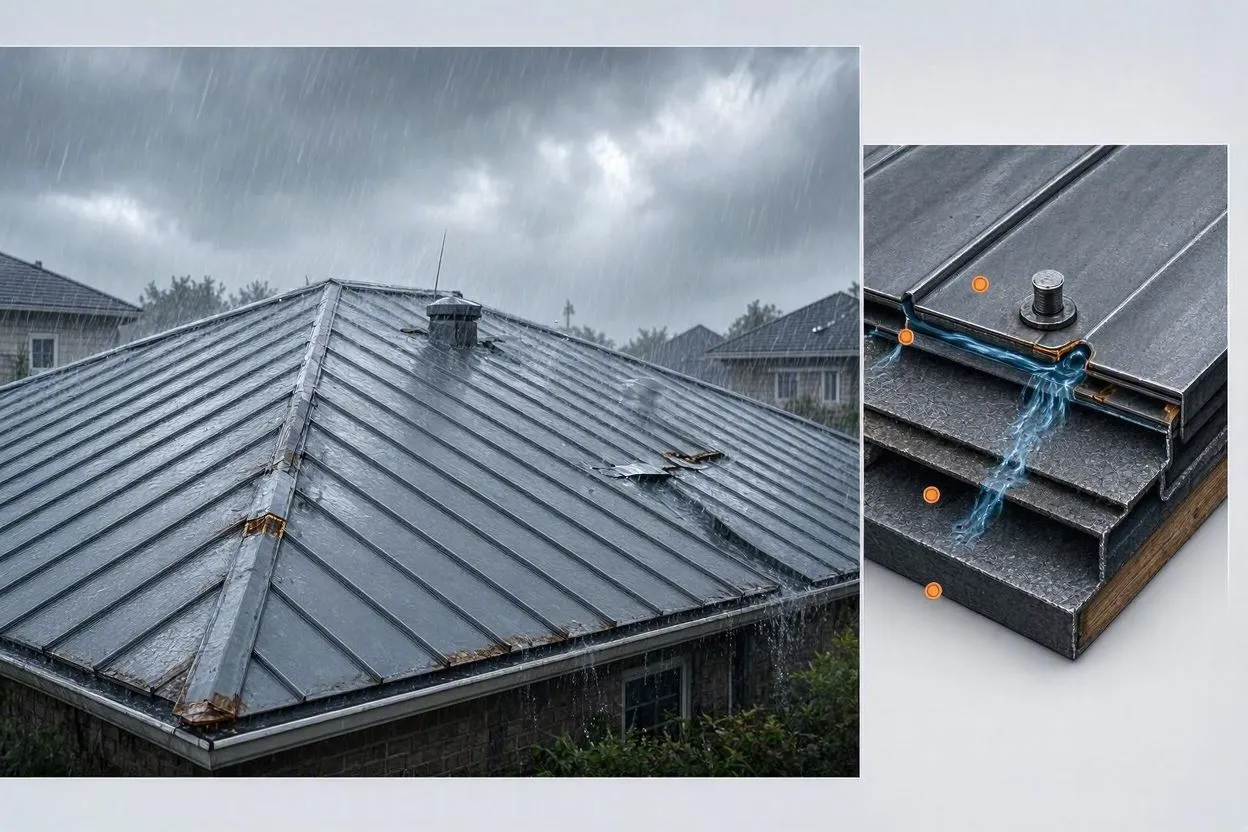
One of the most concerning metal roof problems occurs when metal roof leaks in heavy rain. Heavy rainfall can expose weaknesses in metal roofing systems that might not be apparent during normal weather conditions.
Common Heavy Rain Infiltration Points
Wind-driven rain poses particular challenges for metal roofing systems, as it can force water up under panels and through seams. Metal roofing requires proper installation with adequate underlayment and ice and water shield protection.
Primary vulnerability areas include:
- Inadequate slope design: Insufficient pitch for proper water drainage
- Clogged drainage systems: Gutters and downspouts unable to handle volume
- Compromised sealants: Deteriorated materials around roof penetrations
- Standing water areas: Low-slope sections with poor drainage design
Weather-Related Stress Factors
Capillary action can draw water through small gaps in metal roofing systems during sustained heavy rainfall. Standing water on low-slope metal roofs creates hydrostatic pressure that can force water through seams, fastener holes, or damaged sealants.
Professional installation with proper attention to weather barriers and drainage design significantly reduces the risk of heavy rain infiltration. Regular inspection of drainage systems helps prevent water backup during severe weather events.
3. Metal Roof Leaking at Overlap Critical Seal Point Failures
The most vulnerable areas for water infiltration often occur where metal roof leaking at overlap points creates opportunities for moisture penetration. Panel overlaps require precise installation techniques, proper sealants, and adequate fastening to maintain watertight seals.
Overlap Installation Requirements
Proper overlap distances are critical for preventing water infiltration:
| Overlap Type | Minimum Distance | Application |
|---|---|---|
| End laps | 6 inches | Panel ends meeting |
| Side laps | 1 inch | Adjacent panel edges |
| Ridge overlaps | 8 inches | Peak applications |
| Valley overlaps | 12 inches | Water collection areas |
Common Overlap Failure Causes
Thermal cycling causes metal panels to expand and contract, potentially compromising overlap seals if they weren’t designed to accommodate movement. Inadequate overlap distances can create insufficient barriers against wind-driven rain and capillary action.
Key failure points include:
- Improper sealant application: Wrong material or insufficient coverage
- Structural movement: Building settling affecting panel alignment
- Ice dam formation: Water backup penetrating normally effective seals
- Inadequate fastening: Insufficient attachment allowing panel movement
Professional repair of overlap leaks requires proper preparation, compatible materials, and attention to thermal movement to ensure long-lasting solutions.
4. Bad Metal Roof Installation – The Root of Most Problems
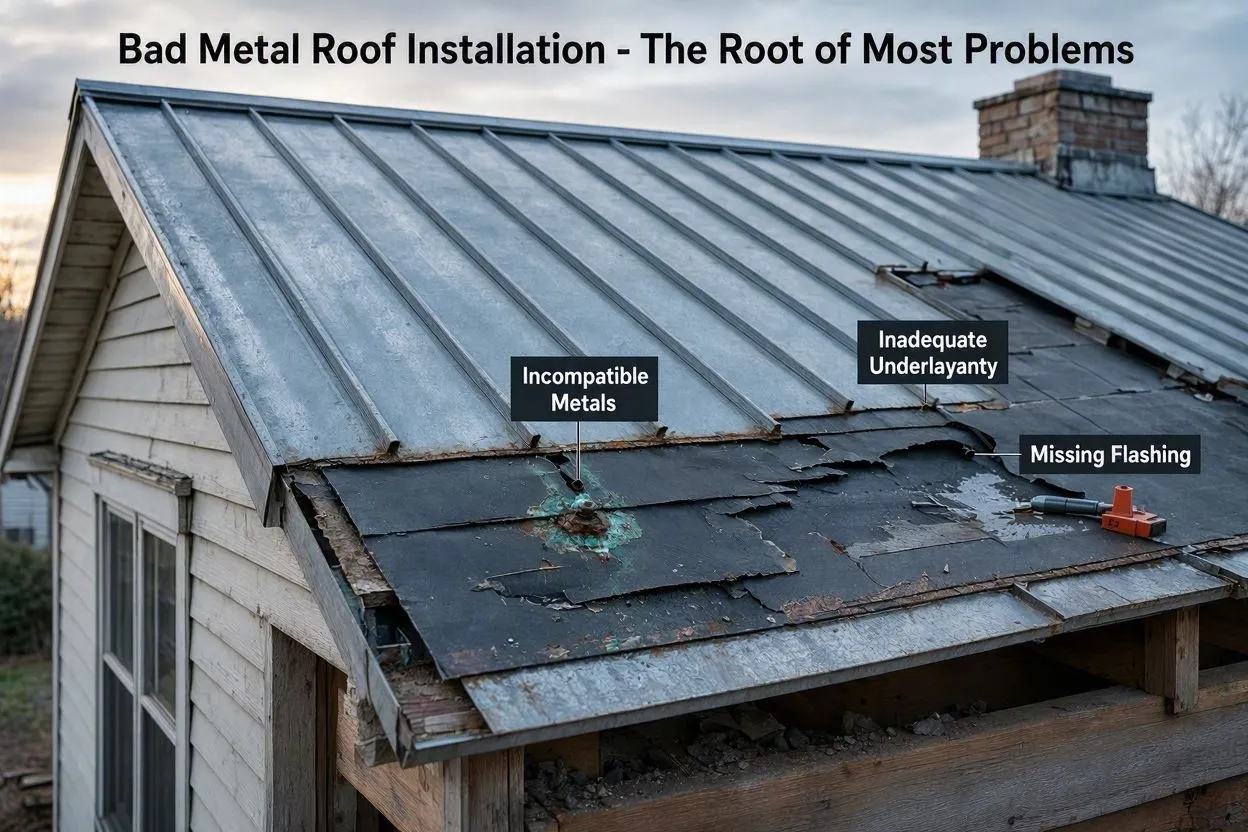
Many metal roof problems can be traced back to bad metal roof installation practices that compromise the system’s performance from day one. Improper installation creates immediate vulnerability points that will likely fail within the first few years of service.
Critical Installation Deficiencies
Using incompatible metals, inadequate underlayment, or skipping critical flashing details during installation sets the stage for premature failure. Insufficient attention to manufacturer specifications often results from contractors attempting to cut costs or lacking proper training.
Common installation mistakes:
- Wrong fastener selection: Incompatible materials causing galvanic corrosion
- Improper fastener placement: Incorrect spacing or substrate attachment
- Inadequate structural support: Insufficient framing for metal roofing loads
- Poor flashing installation: Compromised waterproofing at penetrations
Quality Control Factors
Rushing installation schedules or working in inappropriate weather conditions can compromise sealant curing, fastener tightness, and overall system integrity. Poor workmanship in flashing installation around chimneys, vents, and skylights represents the most common source of metal roof leaks.
Choosing experienced, certified metal roofing contractors with proper licensing, insurance, and manufacturer training significantly reduces installation-related problems. Quality installation includes proper ventilation design, adequate slope requirements, and attention to local building codes.
5. Fastener and Hardware Failures
Metal roofing systems rely heavily on proper fastener selection and installation, making fastener-related problems among the most common metal roof issues. Over-driven or under-driven fasteners create immediate leak points.
Fastener Related Problems
Exposed fasteners require regular inspection and maintenance, as rubber washers deteriorate from UV exposure and thermal cycling. Fastener backing out occurs when thermal expansion and contraction cause screws to gradually loosen.
Primary fastener issues:
- Galvanic corrosion: Incompatible fastener materials
- Washer deterioration: UV and thermal damage to sealing components
- Backing out: Thermal cycling loosening fastener grip
- Structural failure: Inadequate fastener spacing or selection
Maintenance Requirements
Regular fastener inspection and tightening should be part of routine metal roof maintenance, particularly after severe weather events. Missing or damaged fasteners leave panels vulnerable to wind uplift and water infiltration.
6. Corrosion and Material Degradation Issues
While metal roofing materials are generally corrosion-resistant, certain environmental conditions and installation practices can accelerate deterioration. Galvanic corrosion occurs when dissimilar metals come into direct contact in the presence of moisture.
Environmental Factors
Coastal environments with salt air exposure can accelerate corrosion in certain metal roofing materials, particularly when protective coatings are damaged. Acid rain, industrial pollutants, and other environmental contaminants can compromise protective coatings over time.
Corrosion acceleration factors:
- Coastal salt exposure: Accelerated deterioration near ocean environments
- Industrial pollutants: Chemical exposure compromising protective coatings
- Physical damage: Scratches and dents creating corrosion entry points
- Inadequate drainage: Standing water accelerating material breakdown
Regular inspection and prompt repair of coating damage helps prevent minor issues from developing into major corrosion problems requiring panel replacement.
7. Thermal Movement and Expansion Problems
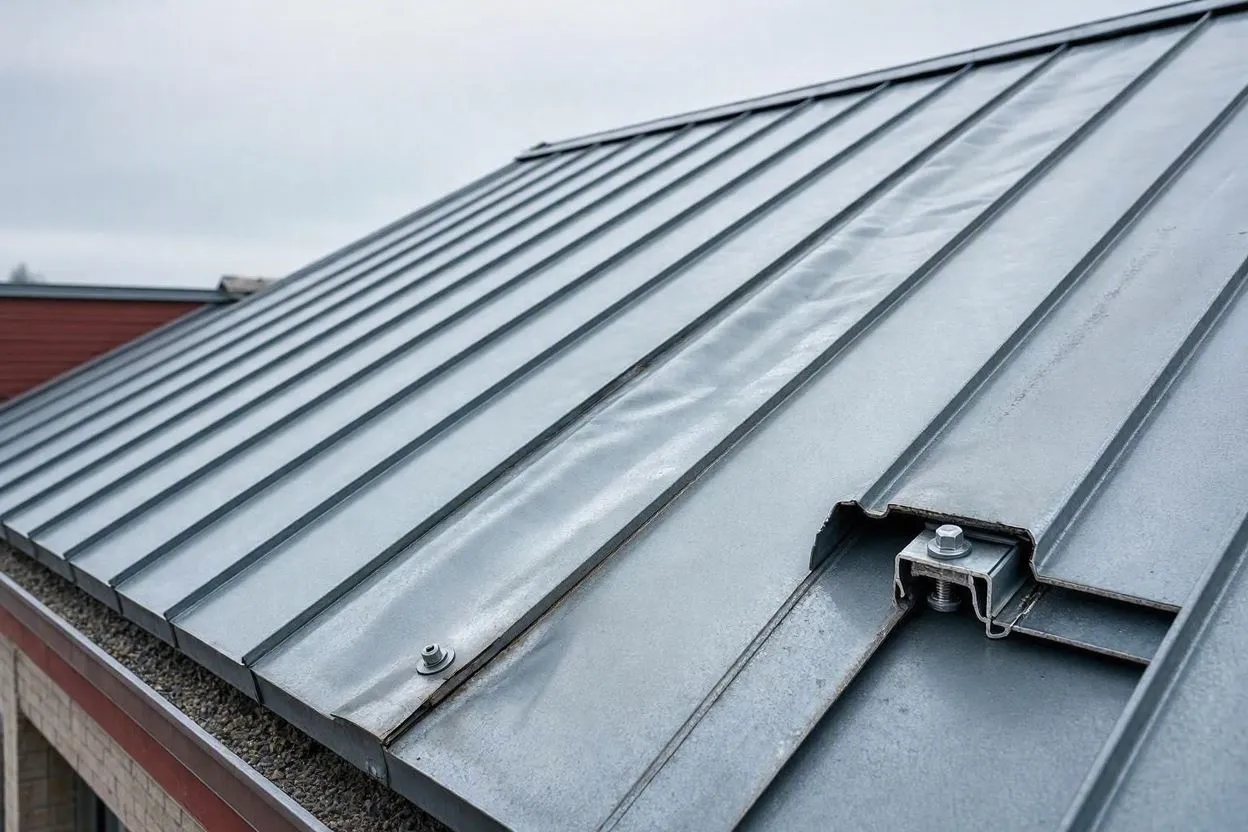
Metal roofing materials experience significant thermal expansion and contraction with temperature changes. This creates stress on fasteners, seals, and panel connections that can lead to various performance problems.
Thermal Stress Management
Inadequate allowance for thermal movement during installation can cause panels to buckle, fasteners to back out, or seams to separate. Oil canning, a visual distortion in metal panels, often results from inadequate design practices that don’t address thermal stress.
Thermal movement solutions:
- Expansion joints: Allowing controlled movement at critical points
- Floating fastener systems: Accommodating panel expansion and contraction
- Proper panel support: Adequate structural design for thermal stress
- Quality underlayment: Providing slip surfaces for panel movement
Understanding these requirements helps homeowners recognize when their metal roofing system may need professional evaluation or adjustment to prevent long-term problems.
Conclusion
Metal roof problems can range from minor maintenance issues to major structural concerns, but most can be prevented through proper installation and regular maintenance. Understanding the potential disadvantages of metal roofs helps homeowners make informed decisions and prepare for appropriate maintenance schedules.
When metal roof leaks in heavy rain or metal roof leaking at overlap points occurs, immediate professional evaluation can prevent minor problems from becoming major disasters. The key to long-term metal roofing success lies in choosing experienced contractors, using quality materials, and maintaining regular inspection schedules.