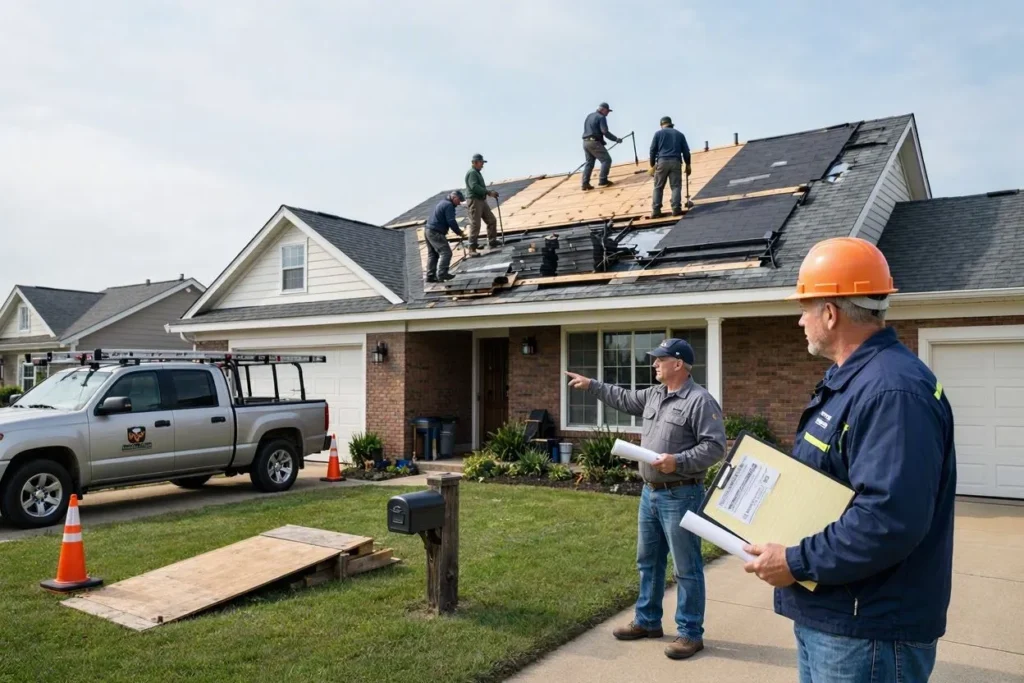
Do you need a permit to replace a roof is what you’re googling after that contractor just offered to “save you $200” by skipping the permit process. Here’s the truth. In most places, yes, you absolutely need a permit for roof replacement. But rules vary wildly by location.
I’m going to break down exactly when permits are required, what happens if you skip them, and why contractors push you to avoid permits.
The Short Answer Nobody Wants To Hear
In most jurisdictions across the United States, you need a permit for full roof replacement. This isn’t optional in most cities.
A roofing permit protects you from shoddy work, ensures code compliance, and prevents massive headaches when selling your home later. But every city, county, and state has different rules about when permits are actually required for roofing work.
When Do You Need a Permit to Replace a Roof?
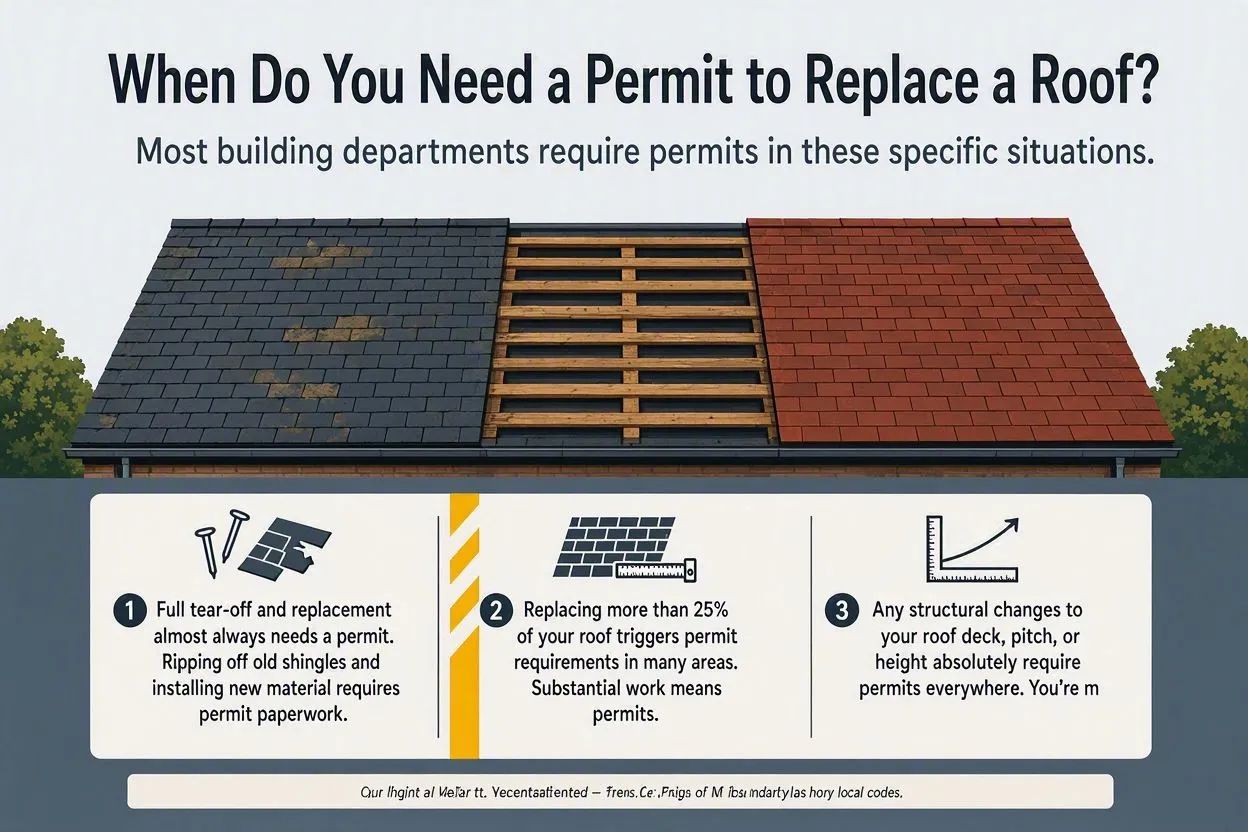
Most building departments require permits in these specific situations.
Full tear-off and replacement almost always needs a permit. Ripping off old shingles and installing new material requires permit paperwork.
Replacing more than 25% of your roof triggers permit requirements in many areas. Substantial work means permits.
Any structural changes to your roof deck, pitch, or height absolutely require permits everywhere. You’re modifying the building structure.
Changing roofing materials from what’s currently installed often needs approval. Going from asphalt to metal? Permit required.
Adding insulation or replacing sheathing falls under structural work. Touching more than surface shingles means permits become necessary.
One homeowner on Reddit learned this hard. His contractor skipped the $200 permit “to save money.” Three years later when selling, the buyer’s inspector flagged unpermitted work. The sale almost died. He spent $1,500 getting retroactive permits and inspections just to close the deal.
When Permits Usually Aren’t Required
Minor roofing work typically doesn’t need permits, but “minor” definitions vary significantly.
Replacing a few damaged shingles after storms usually doesn’t require permits. You’re doing maintenance, not replacement.
Adding a second layer over existing shingles doesn’t need permits in some areas. Parts of the Pacific Northwest specifically allow this.
Small repair work like fixing flashing or patching leaks typically falls under routine maintenance.
But what counts as “minor” in one city might require permits 20 miles away.
How Much Is a Permit for Roof Replacement?
Permit costs are trivial compared to total project costs.
Most residential permits cost $200-$500 depending on location and project size. Some smaller towns charge just $10-$50.
Larger complex projects can run several hundred dollars, but you’re still talking about 1-2% of total project cost.
California and Florida run higher. Rural areas charge almost nothing. You’re spending $15,000-$25,000 on a new roof. Why risk future problems over $200-$300 in permit fees?
The Real Reasons Contractors Avoid Permits
Contractors suggest skipping permits to “save you money.” That’s not the real reason.
Permits mean inspections that verify work quality and code compliance. Contractors cutting corners don’t want inspectors catching substandard work.
Licensed contractors only can pull permits in many jurisdictions. Unlicensed operators physically can’t get them.
Inspections slow down work and require specific installation sequences. Some contractors want speed without oversight.
One building inspector told me 60% of unpermitted roof work he sees has code violations or installation problems.
When contractors suggest skipping permits, they’re protecting themselves, not you.
What Actually Happens Without a Permit
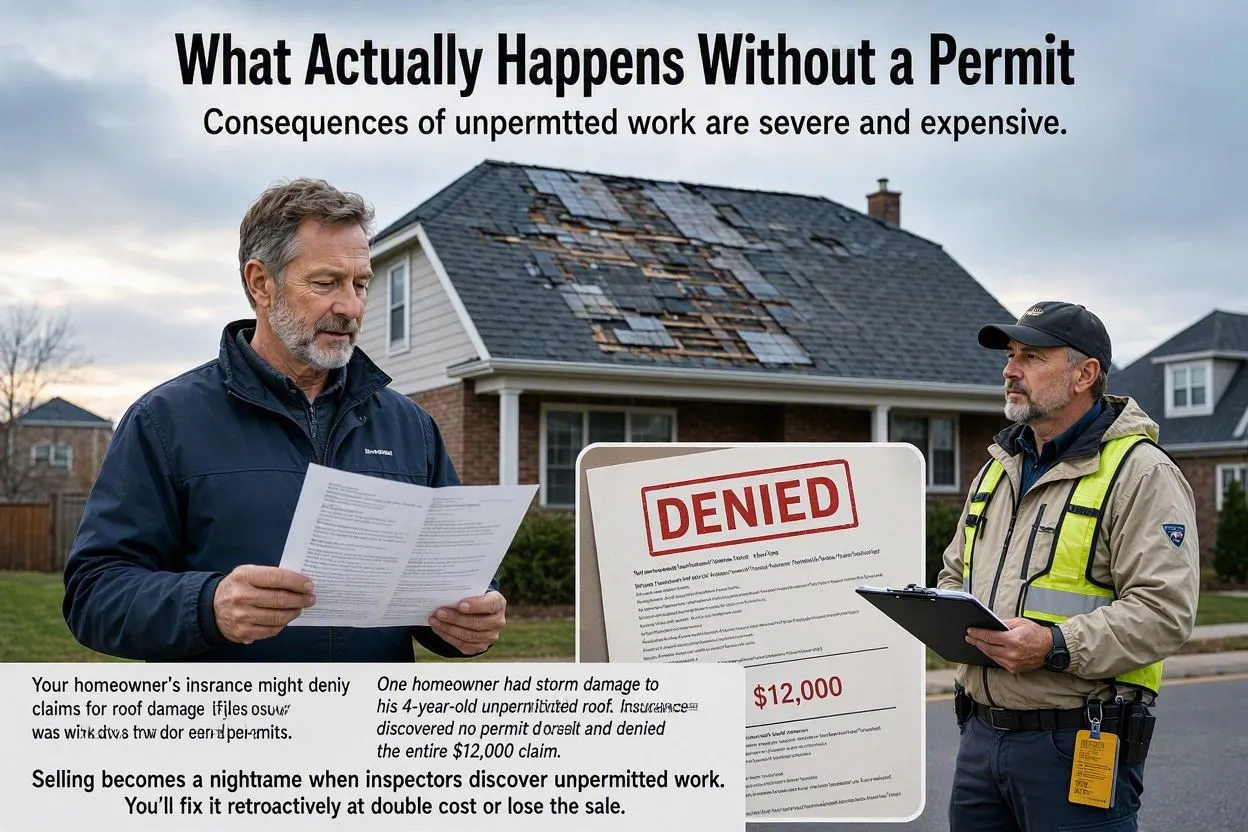
Consequences of unpermitted work are severe and expensive.
Your homeowner’s insurance might deny claims for roof damage if they discover work was done without required permits.
One homeowner had storm damage to his 4-year-old unpermitted roof. Insurance discovered no permit and denied the entire $12,000 claim.
Selling becomes a nightmare when inspectors discover unpermitted work. You’ll fix it retroactively at double cost or lose the sale.
Building departments can force removal of unpermitted work. In extreme cases, they’ll make you tear off everything and start over.
Double permit fees plus penalties apply when departments catch unpermitted work. Some jurisdictions triple fees as punishment.
How to Get a Roof Replacement Permit
The permit process isn’t complicated if you follow standard steps.
- Contact your local building department first to confirm whether permits are actually required for your specific project.
- Submit a permit application including project details, measurements, materials, estimated costs, and contractor information.
- Provide proof of ownership and any other documentation your building department requires.
- Pay the permit fee which varies by jurisdiction and project scope.
- Wait for approval which takes anywhere from same-day to several weeks depending on workload.
- Schedule required inspections at various project stages. Most inspect after tear-off, after underlayment, and at final completion.
- Get final sign-off from the inspector confirming work meets all applicable codes.
Many departments allow homeowners to pull permits themselves even when hiring contractors.
Do I Need a Permit to Replace My Roof Myself?
DIY roof replacement follows the same permit requirements as contractor work. Rules don’t change based on who does labor.
Homeowners can pull permits for their own property in most jurisdictions. You don’t need contractor licenses for your own home. The work still must meet code regardless of the installer. Inspectors check DIY work just as carefully.
Insurance implications might be worse with DIY unpermitted work. Some policies exclude homeowner-installed roofing from coverage.
I know a guy who DIY’d his roof without permits. Five years later when hail damaged it, insurance denied the claim. He paid $8,000 out-of-pocket for repairs on a roof he’d installed himself. Total waste.
The Insurance Company Factor
Your homeowner’s insurance cares deeply about roof permits.
Insurance companies track roof age and may request documentation proving when replacement occurred. Permits provide official documentation.
Claims investigations often include permit verification. Adjusters check with building departments before paying large claims. Coverage denials for unpermitted work are becoming more common as companies crack down.
One insurance company now requires proof of permits for any roof replacement within the last 10 years before issuing new policies.
Finding Contractors Who Actually Pull Permits
Not all contractors handle permitting properly.
Red flags to watch:
- Offering to “save money” by skipping permits
- Suggesting permits aren’t necessary
- Unable to provide contractor license number
- Pressuring quick decisions
- Charging excessive permit handling fees
Green flags indicating quality:
- Automatically includes permits in estimate
- Explains local code requirements clearly
- Licensed and insured with verifiable credentials
- Handles all permit paperwork themselves
A reputable contractor should know local permit requirements better than you and handle the entire process as standard service.
Making Your Decision About Permits
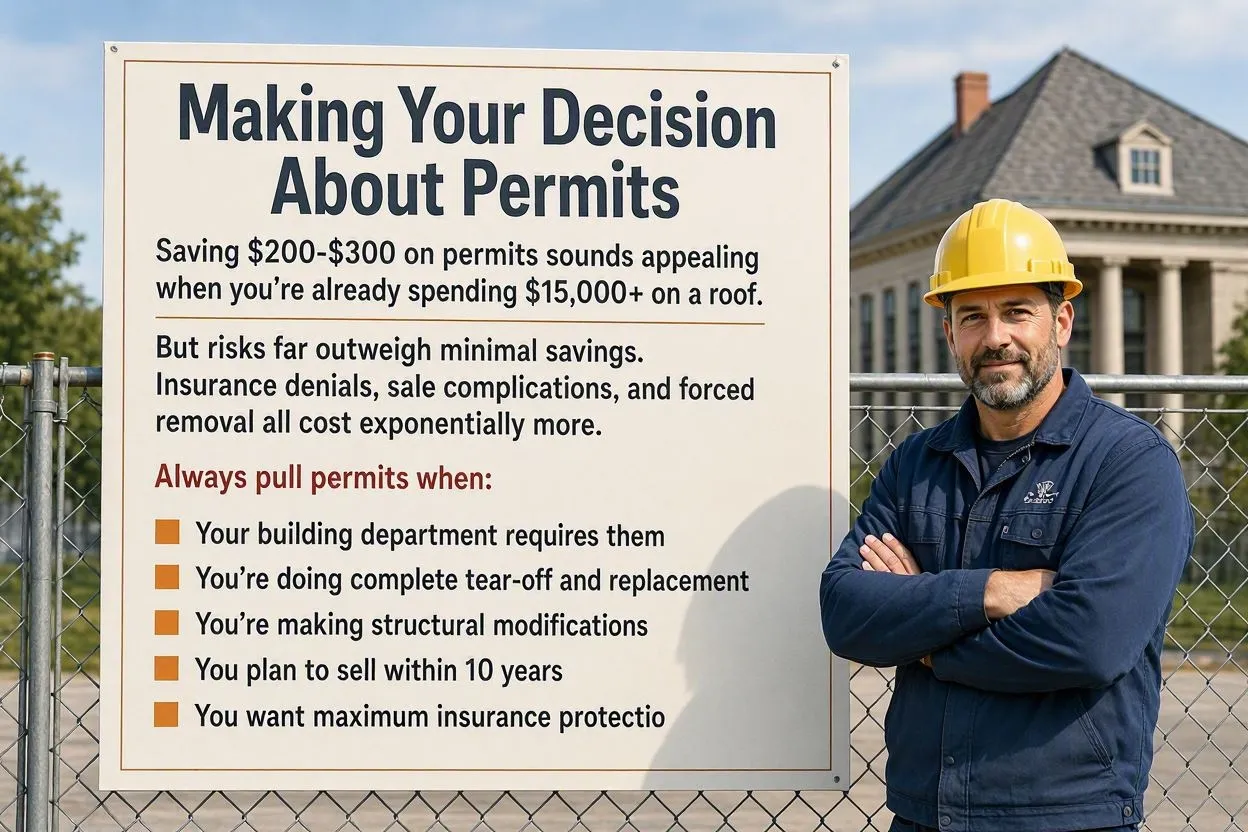
Saving $200-$300 on permits sounds appealing when you’re already spending $15,000+ on a roof.
But risks far outweigh minimal savings. Insurance denials, sale complications, and forced removal all cost exponentially more.
Always pull permits when:
- Your building department requires them
- You’re doing complete tear-off and replacement
- You’re making structural modifications
- You plan to sell within 10 years
- You want maximum insurance protection
Honestly? Just assume you need permits for any significant roofing work. The question, do you need a permit to replace a roof has one safe answer: yes, get the permit.
Read More Exciting Blogs At Rainy Roofers.
Conclusion
In the vast majority of areas, yes, you need a permit for a full roof replacement, and the $200 to $500 fee is trivial next to what skipping it can cost later. Unpermitted work has led homeowners to denied insurance claims, stalled home sales, and forced retroactive fixes that run into the thousands. If a contractor offers to skip the permit to save you money, treat that as a warning sign rather than a favor, and confirm requirements directly with your local building department before work begins.