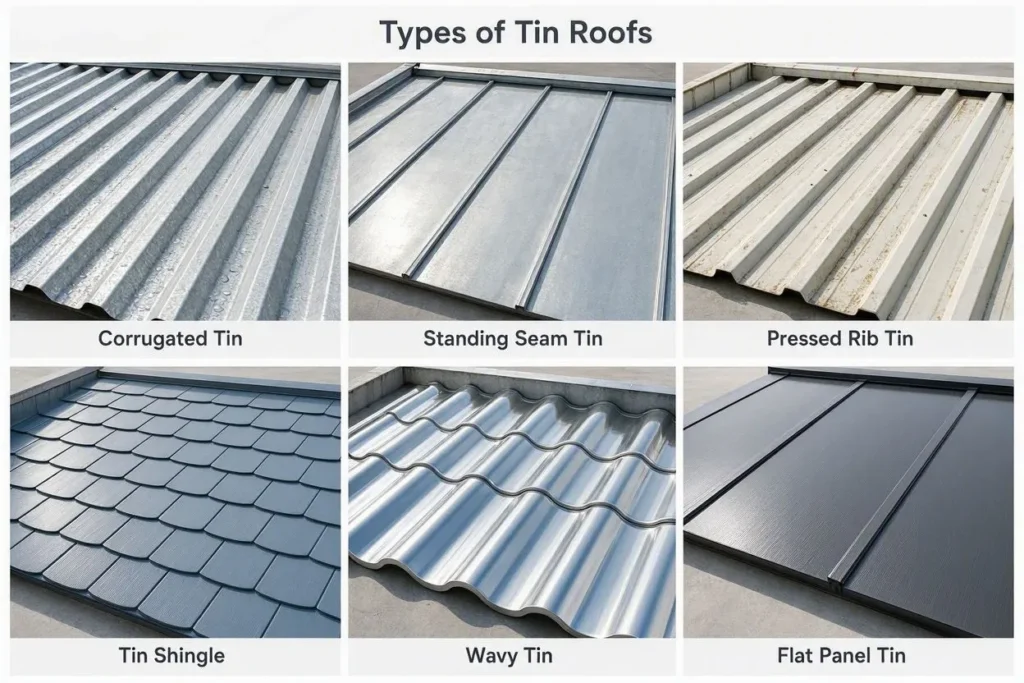
Here’s the truth nobody tells you upfront. When you ask about types of tin roofs, you’re not actually getting tin. Real tin roofs haven’t been made since the 1800s. What you’re really looking at is steel or aluminum disguised under an old-school name.
I’ve watched people walk into Home Depot asking for “tin” and walk out with the wrong material because they didn’t know what they were actually buying. Let me break down the types of tin roofs available today so you don’t waste money on something that won’t work for your project.
Modern tin roofing comes in three main categories: corrugated panels, standing seam systems, and ribbed profiles. Each has its own metal roof material list of components including the panels, fasteners, trim pieces, and underlayment. Understanding these different types of tin roofs will save you thousands in potential mistakes. Let’s get into what actually matters.
What Modern Tin Roofs Really Are
Stop calling it tin. Start calling it what it is. Today’s “tin roof” is either galvanized steel or painted steel. Sometimes it’s aluminum. The confusion comes from decades of people using the wrong terminology.
Real tin was steel coated with actual tin metal. That stopped being produced over 100 years ago because better options came along.
When someone talks about wanting that classic tin roof sound in the rain, they’re describing galvanized or painted metal panels. Same aesthetic. Same sound. Better performance.
The Three Main Types of Tin Roofs
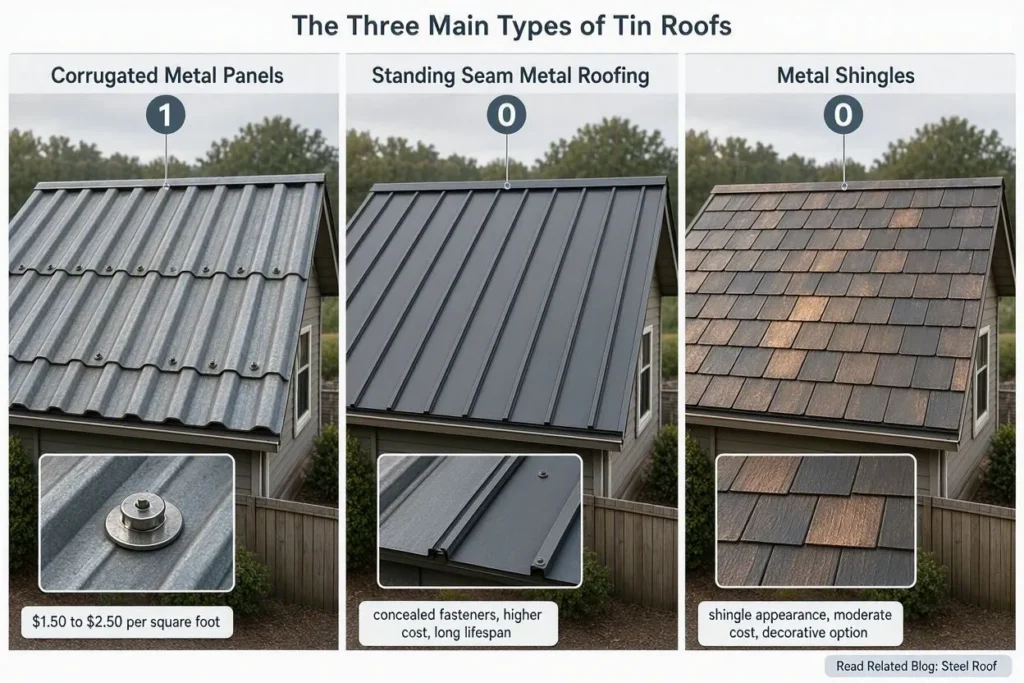
Corrugated Metal Panels
This is what most people picture when they think of a “tin roof.” The wavy, ridged panels that have been around forever. Corrugated is the cheapest option. Runs about $1.50 to $2.50 per square foot for materials. It’s also the easiest to install if you’re going DIY.
The downside? Exposed fasteners. Every screw is visible and creates a potential leak point.
Read Related Blog: Steel Roofing Panel Installation Instructions
Standing Seam Metal Roofing
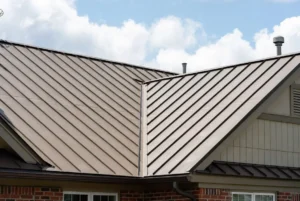
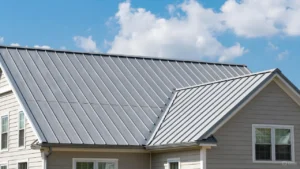
This is the premium choice among types of tin roofs. The standing seam hides all the fasteners underneath raised seams. No exposed screws means way fewer chances for leaks.
Costs about double what corrugated runs. But here’s the thing: it’ll outlast corrugated by decades because there’s no fastener maintenance. My neighbor went standing seam on his house five years ago. Zero maintenance since installation. Not a single leak.
Ribbed Panel Profiles
These include R-panel, PBR panel, and similar styles. They’re the middle ground between corrugated and standing seam.
Ribbed panels have that modern, clean look with vertical lines. Still use exposed fasteners like corrugated, but the profile is flatter and more contemporary. Price sits right between corrugated and standing seam. About $2.00 to $3.50 per square foot depending on gauge and finish.
Your Complete Metal Roof Material List
Here’s what you actually need beyond just panels. Every metal roof requires these components in your metal roof material list:
- Panels (obviously)
- Fasteners and screws with rubber washers
- Ridge cap for the peak
- Rake trim for the sides
- Eave trim for the bottom edge
- Valley flashing if you have valleys
- Underlayment (synthetic or ice/water shield)
- Sealant or caulk for overlaps
Most people forget half of this stuff. Then they’re making extra trips to the supply store mid-installation. Calculate everything before you buy. Add 10% for waste and mistakes.
Gauge Matters More Than You Think
This is where people mess up constantly. Metal roofing comes in different thicknesses called “gauge.” Lower numbers mean thicker metal.
- 26 gauge is standard for residential. It’s the sweet spot of cost and durability.
- The 24 gauge is heavier and stronger. Costs about 25% more. Worth it if you’re in high wind areas or concerned about hail.
- 29 gauge is cheaper but feels flimsy. I don’t recommend it unless the budget is absolutely critical.
Pay for 26 gauge minimum. Your future self will thank you.
Paint Finishes That Actually Matter
Not all finishes are created equal. You’ve got two main options: SMP and PVDF.
- SMP paint is the budget choice. It’ll fade faster, especially on dark colors. Lasts maybe 25-30 years before looking rough.
- PVDF paint (also called Kynar) is the premium stuff. Fades way slower. Holds color for 40+ years.
PVDF costs about 30-40% more than SMP. But on a metal roof that should last 50 years, you want paint that keeps up.
Galvanized vs Painted Options
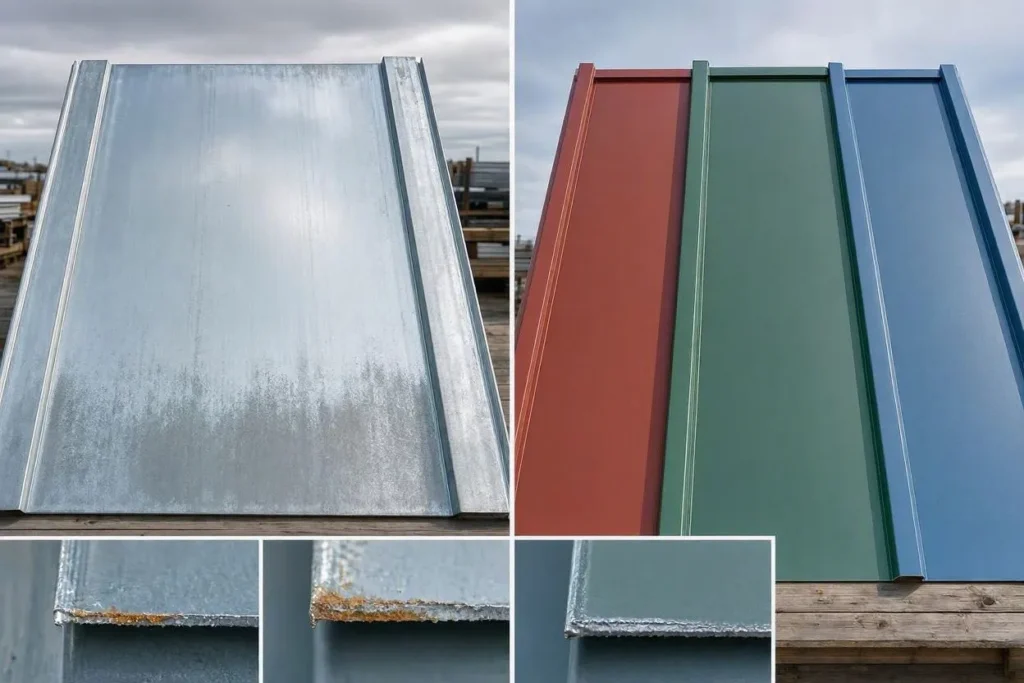
Galvanized is raw steel with a zinc coating. No paint. Just shiny silver metal that weathers to a dull gray. It’s the most authentic “tin roof” look. Also the cheapest option by far. Painted panels come in hundreds of colors. They start with a galvanized or galvalume base, then add paint on top.
Here’s what nobody mentions: galvanized will rust eventually if you cut it and expose bare edges. Painted panels hide this problem because the paint seals everything.
Standing Seam Worth the Cost?
Let me be straight with you. Standing seam is the best performing option among all types of tin roofs. No contest. But it costs 2x to 3x more than corrugated. That’s a real budget hit for most people.
When standing seam makes sense:
- You’re building your forever home
- You live in heavy rain or snow areas
- You want zero maintenance for 40+ years
When you can skip it:
- Shop buildings or barns
- Tight budget situations
- You’re comfortable doing periodic maintenance
I’ve installed both. Standing seam is objectively better. But corrugated done right will still last 30-40 years.
The Fastener Problem Everyone Ignores
This kills more metal roofs than anything else. Exposed fastener systems rely on rubber washers under every screw. Those washers are your only defense against leaks.
UV rays break down the rubber. Within 10-15 years, you’re probably dealing with some fastener issues. Standing seam eliminates this entirely. Fasteners are hidden under the panels where weather can’t touch them.
Coastal Areas Change Everything
Live near the ocean? Pay attention. Salt air destroys galvanized steel fast. Within years, not decades. For coastal applications among types of tin roofs, you need aluminum or painted steel with excellent paint systems. Never use bare galvanized near the coast. It’ll rust through in 5-10 years instead of 50.
Installation: DIY or Hire Out?
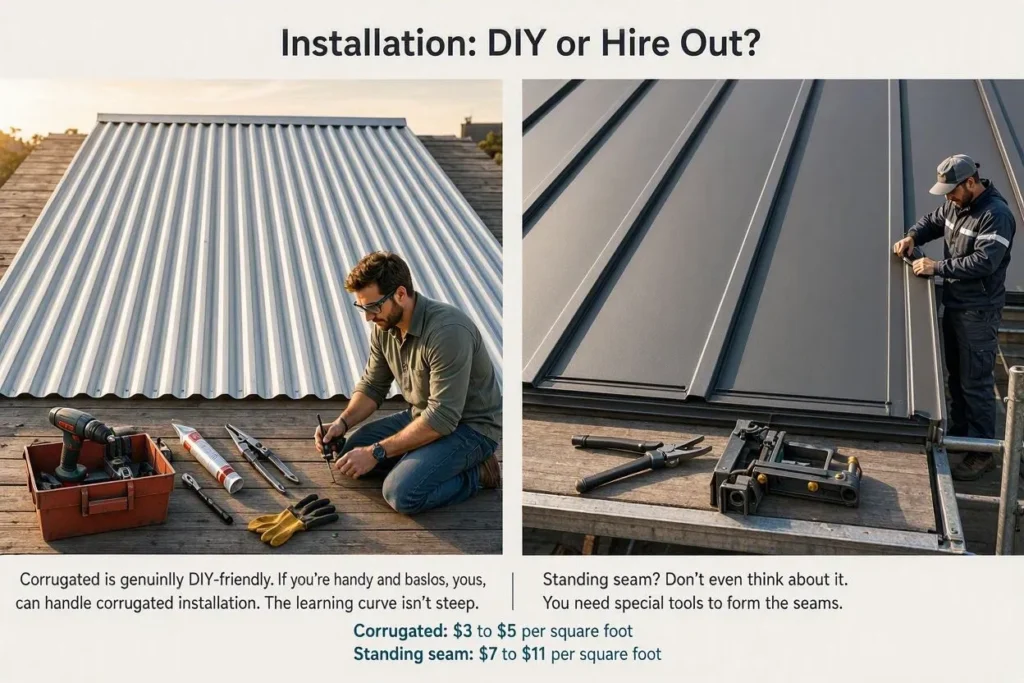
Corrugated is genuinely DIY-friendly. If you’re handy and have basic tools, you can handle corrugated installation. The learning curve isn’t steep. Standing seam? Don’t even think about it. You need special tools to form the seams.
Labor costs for installation:
- Corrugated: $3 to $5 per square foot
- Standing seam: $7 to $11 per square foot
DIY corrugated and you’re looking at materials only. That’s where the big savings come in.
Making Your Final Decision
Look, every project is different. The “best” type among all the types of tin roofs depends on your specific situation. Budget, location, building type, and how long you plan to own the structure all matter. For most residential homes where appearance and longevity matter, standing seam wins despite the higher cost. It’s the set-it-and-forget-it option.
For shops, barns, and budget-conscious projects, corrugated delivers incredible value. Just commit to the maintenance schedule. The worst decision is cheating on quality to save a few hundred bucks. Buy 26 gauge minimum, get PVDF paint if you can afford it, and use a competent installer.
Metal roofing done right outlasts everything else on the market. Done wrong, and you’re replacing it in 15 years wondering what happened. Read the More Blogs at Rainy Roofers.