Your contractor just quoted you two options. Steel standing seam: $26,000. Aluminum standing seam: $31,000. He says aluminum is “better for coastal areas” but won’t explain why or if you actually need it.
Now you’re trying to figure out if $5,000 buys you something real or just lighter metal. Here’s exactly when a standing seam aluminum roof makes sense and when you’re wasting money.
Aluminum vs Steel: The Real Differences
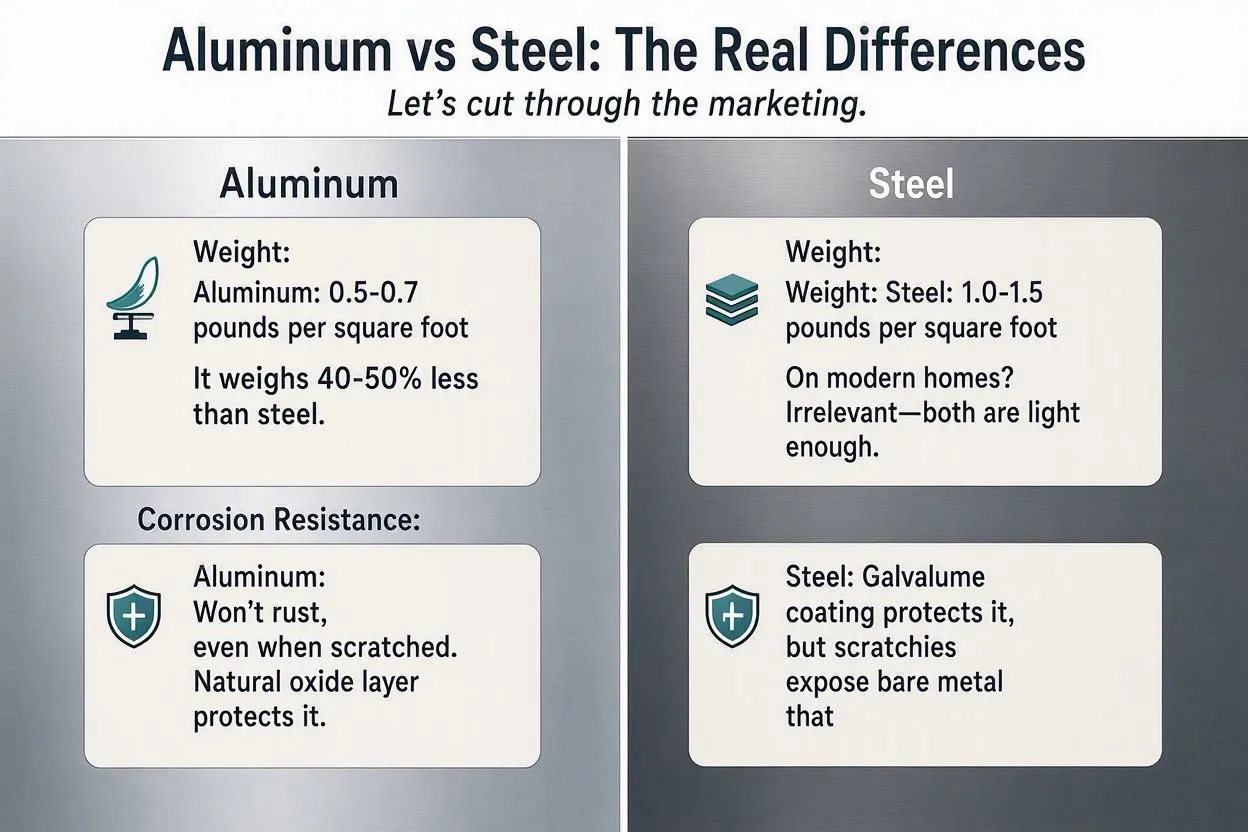
Let’s cut through the marketing.
Weight: Aluminum: 0.5-0.7 pounds per square foot Steel: 1.0-1.5 pounds per square foot. It weighs 40-50% less than steel. This matters on old buildings with questionable structure. On modern homes? Irrelevant—both are light enough.
Corrosion Resistance:
Aluminum: Won’t rust, even when scratched. Natural oxide layer protects it.
Steel: Galvalume coating protects it, but scratches expose bare metal that can rust. Near saltwater, this difference is massive. Inland? Both last 50+ years without corrosion issues.
Strength:
Steel: Stronger and more rigid. Resists denting better.
Aluminum: Softer metal. Dents more easily from hail or falling branches.
Thermal Expansion:
Aluminum: Expands/contracts more with temperature changes.
Steel: More stable dimensionally. This affects panel design and fastening systems but isn’t something you notice day-to-day.
Cost:
Steel: $10-$14 per square foot installed (standard) Aluminum: $11-$17 per square foot installed
Aluminum costs 10-20% more for materials. Total project difference: $2,000-$6,000 on a typical home.
When Aluminum Is the Right Choice
Coastal Properties (the big one):
If you’re within 5 miles of an ocean, aluminum is worth every penny. Salt air destroys steel over time. Even Galvalume-coated steel shows corrosion after 15-20 years near the coast.
Aluminum? Completely unbothered by salt. I’ve seen 40-year-old aluminum roofs on barrier islands that look 10 years old. A client built a beach house in the Outer Banks. I recommended aluminum. He wanted to save $4,500 with steel.
Ten years later, his steel roof showed rust staining around fasteners and panel edges. His neighbor’s aluminum roof 200 feet away? Perfect. He’s now budgeting for re-coating or replacement. That $4,500 savings will cost him $12,000+ to fix.
Within the saltwater spray zone? Go aluminum. No debate.
Historic Buildings or Structural Concerns:
Old buildings weren’t designed for modern roof loads. Aluminum’s light weight (40-50% less than steel) can be the difference between a roof your structure handles and one that requires expensive reinforcement.
A church built in 1887 needed re-roofing. Steel would’ve required $18,000 in structural upgrades. Aluminum installed with no modifications. Total cost including the aluminum premium? Still $12,000 less than steel with structural work.
When Weight Actually Matters:
Most modern homes? Weight doesn’t matter. Your structure handles either metal easily. But if you’re installing over existing shingles (allowed in some jurisdictions), lighter weight reduces structural load. Or if you’re doing a conversion from built-up roofing on a commercial building, weight savings matter.
Specific Architectural Requirements:
Some high-end architectural projects specify aluminum for its natural finish or welding characteristics.Aluminum can be welded in custom fabrication. Steel standing seam typically can’t. If you’re doing custom architectural metalwork, aluminum gives fabrication options steel doesn’t.
When Steel Makes More Sense
Don’t waste money on aluminum if you don’t need it.
Inland Properties (more than 5 miles from ocean):
Steel performs excellently anywhere without salt air exposure. The Midwest, mountain regions, inland South—all great for steel. You’re paying 10-20% extra for corrosion resistance you’ll never need.
Hail-Prone Regions:
Colorado, Nebraska, Texas, Oklahoma—anywhere golf-ball to baseball-sized hail happens regularly. Steel resists denting better than aluminum. After a hail event, aluminum roofs show more cosmetic damage. Does it affect function? Usually not. But insurance claims and appearance matter.
Budget Constraints:
If $5,000 stresses your finances, steel delivers 95% of aluminum’s performance for 15% less cost in most applications. The exceptions (coastal, weight-sensitive) are specific. For standard residential in normal climates, steel is the smart value play.
High Wind Areas (Non-Coastal):
Tornado alley, mountain wind corridors—places with extreme wind but no salt air. Steel’s higher tensile strength and rigidity handle wind loads better. Aluminum’s flexibility can be a disadvantage in sustained high winds.
For these applications, check out PBR panels or heavier gauge steel options for maximum wind resistance.
Cost Comparison: Real Numbers
Let’s look at a 2,000 square foot roof.
Steel (Galvalume with PVDF coating):
- Materials: $8,000-$10,000
- Labor: $12,000-$16,000
- Total: $20,000-$26,000
Aluminum (with PVDF coating):
- Materials: $10,000-$13,000
- Labor: $12,000-$16,000
- Total: $22,000-$29,000
Difference: $2,000-$3,000 typical
Labor costs stay similar. You’re paying for premium material, not more installation time. Over 50+ years (both materials last that long), that’s $40-$60 annually. Cheaper than one dinner out. If you’re coastal, it’s insurance against corrosion. If you’re inland, it’s an unnecessary premium.
Lifespan and Maintenance
Both materials last 50+ years with proper coating.
Aluminum maintenance:
- Wash annually in coastal areas (remove salt accumulation)
- Inspect fasteners every 5 years
- Virtually zero corrosion concerns
- Dents don’t compromise function, just aesthetics
Steel maintenance:
- Inspect coating for scratches/damage annually
- Touch up any exposed metal immediately
- Watch fasteners in coastal areas for rust staining
- Inland areas require minimal maintenance
The maintenance difference is minimal unless you’re coastal. Then aluminum wins significantly.
Performance in Different Climates
Hot Climates (Arizona, Texas, Florida): Both perform well. Color and coating matter more than material for heat reflection. Aluminum’s lighter weight provides no advantage in heat performance. Choose based on coastal proximity, not temperature.
Cold Climates (Minnesota, Colorado, Montana): Both handle freeze-thaw cycles perfectly. Steel’s rigidity performs slightly better under snow loads, but both are rated for heavy snow.
Humid Climates: Aluminum excels. Won’t corrode from constant moisture. Steel with quality Galvalume coating also performs well, but aluminum provides extra peace of mind.
Coastal Climates: Aluminum dominates. Salt air is the enemy of steel, even coated steel. The cost premium pays for itself in longevity.
Color Options and Appearance
Both materials accept the same paint systems. You get identical color options whether you choose aluminum or steel. Charcoal gray, black, white, bronze all available on both. The coating (PVDF vs SMP) matters more than the substrate material for color retention.
Natural finishes differ:
Unpainted aluminum develops a matte gray patina. Looks intentional and modern. Unpainted steel (Galvalume) has a shiny silver appearance. More industrial aesthetic.
If you want a natural metal finish, choose based on the look you prefer. For painted finishes, material doesn’t affect appearance.
Read our related guide about: Standing Seam Metal Roof Colors: Complete 2026 Guide + Photos
Installation Differences
Contractors familiar with steel can install aluminum—the techniques are nearly identical.
Minor differences: Aluminum requires different cutting tools (carbide blades to prevent gumming). Fastener torque specs differ slightly (aluminum panels are more forgiving of over-tightening). Thermal expansion clips accommodate more movement with aluminum.
Any experienced metal roofing contractor handles both materials without issues.
Labor costs stay consistent because installation time doesn’t change significantly.
Environmental Considerations
Both materials are environmentally friendly.
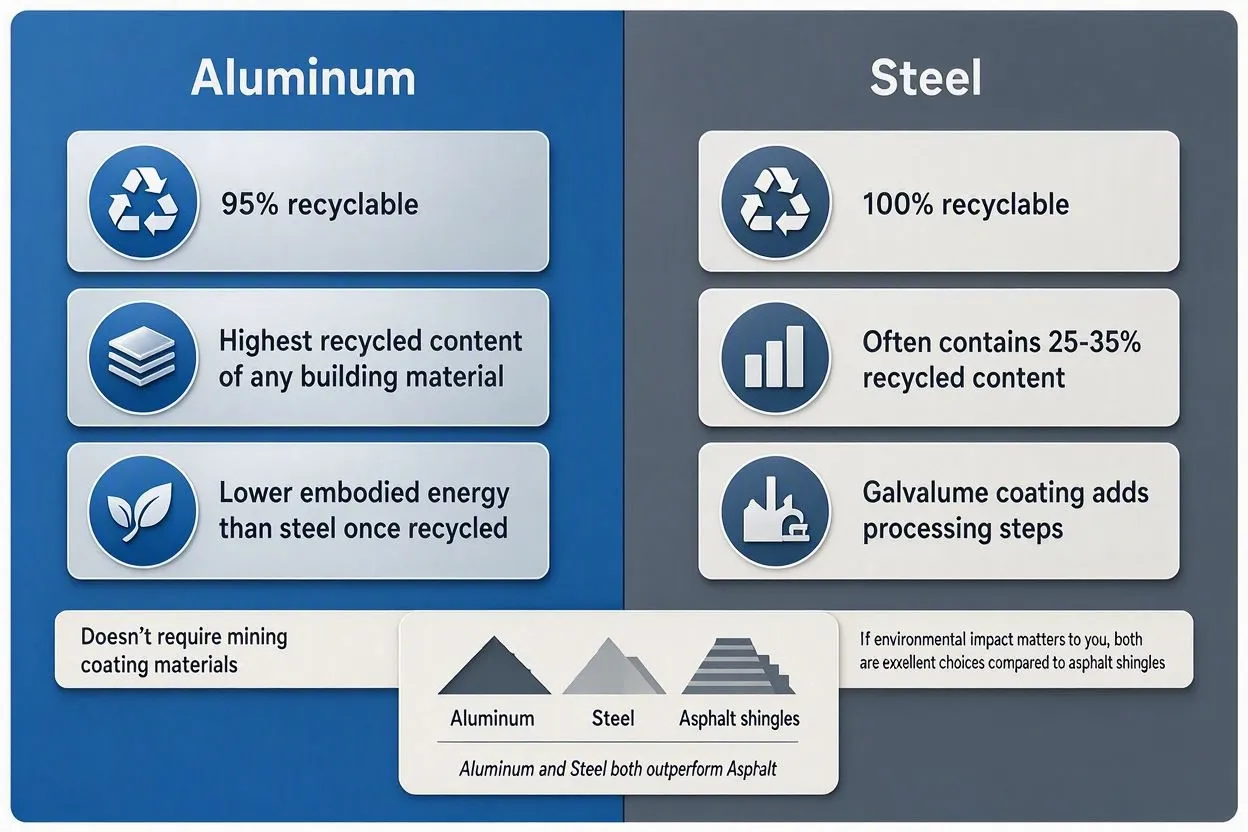
Aluminum:
- 95% recyclable (highest recycled content of any building material)
- Lower embodied energy than steel (once recycled)
- Doesn’t require mining coating materials
Steel:
- 100% recyclable
- Often contains 25-35% recycled content
- Galvalume coating adds processing steps
If environmental impact matters to you, both are excellent choices compared to asphalt shingles (which go to landfills). The difference between them is negligible from a sustainability standpoint.
The Decision Framework
Here’s how to choose.
Go with aluminum if:
- You’re within 5 miles of ocean (mandatory)
- Historic building with structural concerns
- You want maximum corrosion resistance
- Budget allows the 15-20% premium
Go with steel if:
- You’re inland (more than 5 miles from saltwater)
- You’re in hail country
- Budget is tight
- You want maximum dent resistance
At Rainy Roofers, we install both. We recommend aluminum for coastal clients and steel for everyone else unless specific factors apply. The $3,000-$5,000 difference is real money. Spend it where it matters. Save it where it doesn’t. Your roof protects everything underneath. Choose the material that matches your environment and budget.
FAQs
Is aluminum better than steel for standing seam roofs?
Not universally. Aluminum is better for coastal properties (salt air resistance) and weight-sensitive applications. Steel is better for hail-prone areas and costs less. Choose based on your specific situation.
How much more does aluminum cost than steel?
10-20% more typically. For a 2,000 sq ft roof, expect to pay $2,000-$5,000 extra for aluminum over steel. The premium buys corrosion resistance and lighter weight.
Will an aluminum roof dent easily?
Aluminum dents more easily than steel from hail or falling branches. The dents are usually cosmetic and don’t affect performance. In hail-prone areas, steel resists denting better.
How long does an aluminum standing seam roof last?
50+ years with proper coating and installation. In coastal areas, aluminum often outlasts steel by 10-20 years due to superior corrosion resistance.
Can you paint aluminum roofing?
Yes. Aluminum accepts paint systems identically to steel. PVDF coatings on aluminum last 40+ years. Color options are the same for both materials.
Conclusion
There’s no universal “better” metal here, just the right metal for your situation. Aluminum earns its premium when salt air, structural weight limits, or long-term corrosion resistance are real concerns. Steel earns its keep everywhere else, especially in hail country or on a tighter budget.
The mistake isn’t picking either material. It’s picking one without knowing why. Match the metal to your zip code, your structure, and your budget, and either choice will protect your home for 50+ years. Get quotes for both, ask your contractor to justify the recommendation with your specific conditions, and don’t pay for coastal-grade corrosion resistance if you’re 200 miles from the nearest coastline.