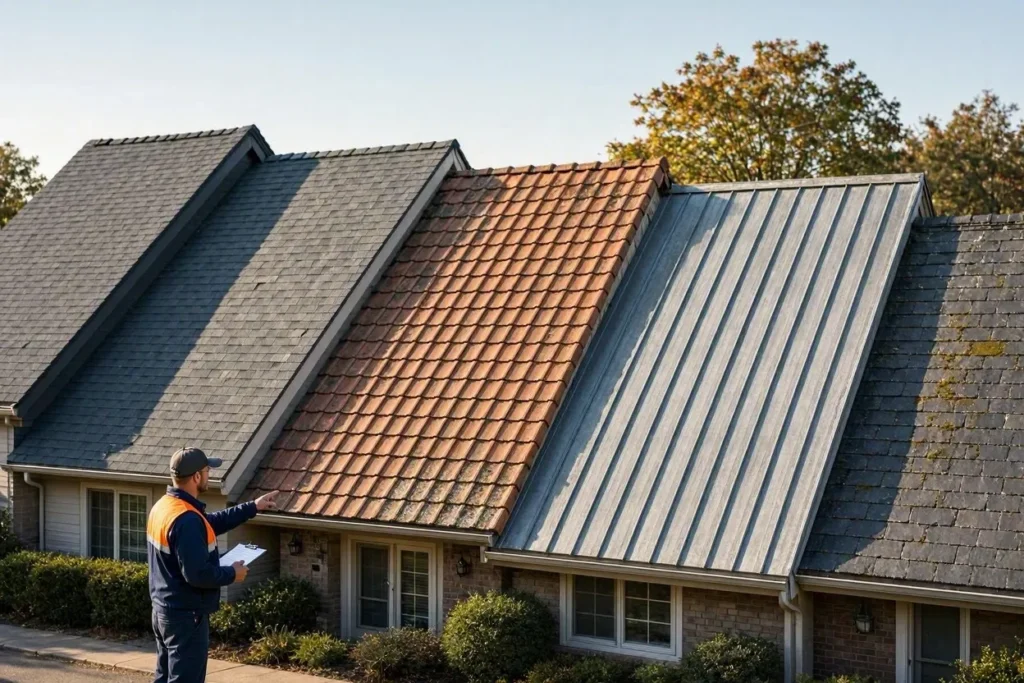
A roof lasts 20 to 50 years on average. The exact number depends on 4 things: material type, installation quality, climate, and maintenance habits. A basic 3-tab asphalt shingle roof lasts 15–20 years. A slate roof lasts 100–150 years. Every other material falls somewhere between those two points.
Most homeowners don’t think about their roof until something goes wrong. That’s a costly mistake. Understanding your roof’s lifespan helps you plan financially, catch problems early, and avoid paying for an emergency replacement instead of a planned one.
This guide covers every major roofing material, the real factors that cut lifespan short, climate-specific data most blogs skip, 7 replacement warning signs, and how to find out your roof’s exact age — even if you bought the home already built.
Average Roof Lifespan at a Glance
| Roofing Material | Lifespan | Best For |
| 3-Tab Asphalt Shingles | 15–20 years | Budget-conscious homeowners |
| Architectural Asphalt Shingles | 22–30 years | Most US homes |
| Luxury Asphalt Shingles | 30–50 years | Long-term value seekers |
| Standing Seam Metal | 40–70 years | All climates |
| Exposed Fastener Metal | 20–30 years | Dry climates |
| Steel / Aluminum | 40–60 years | General residential use |
| Copper / Zinc | 70–100+ years | Coastal and humid areas |
| Clay Tile | 50–100 years | Hot, dry climates |
| Concrete Tile | 40–70 years | Most climates |
| Wood Shake / Cedar | 20–40 years | Dry climates only |
| Slate (Hard) | 100–150 years | Any climate |
| Slate (Soft) | 75–90 years | Mild climates |
| EPDM Flat Roof | 25–30 years | Commercial / low-slope |
| TPO / PVC Flat Roof | 20–30 years | Commercial / residential flat |
How Long Does a Roof Last by Material
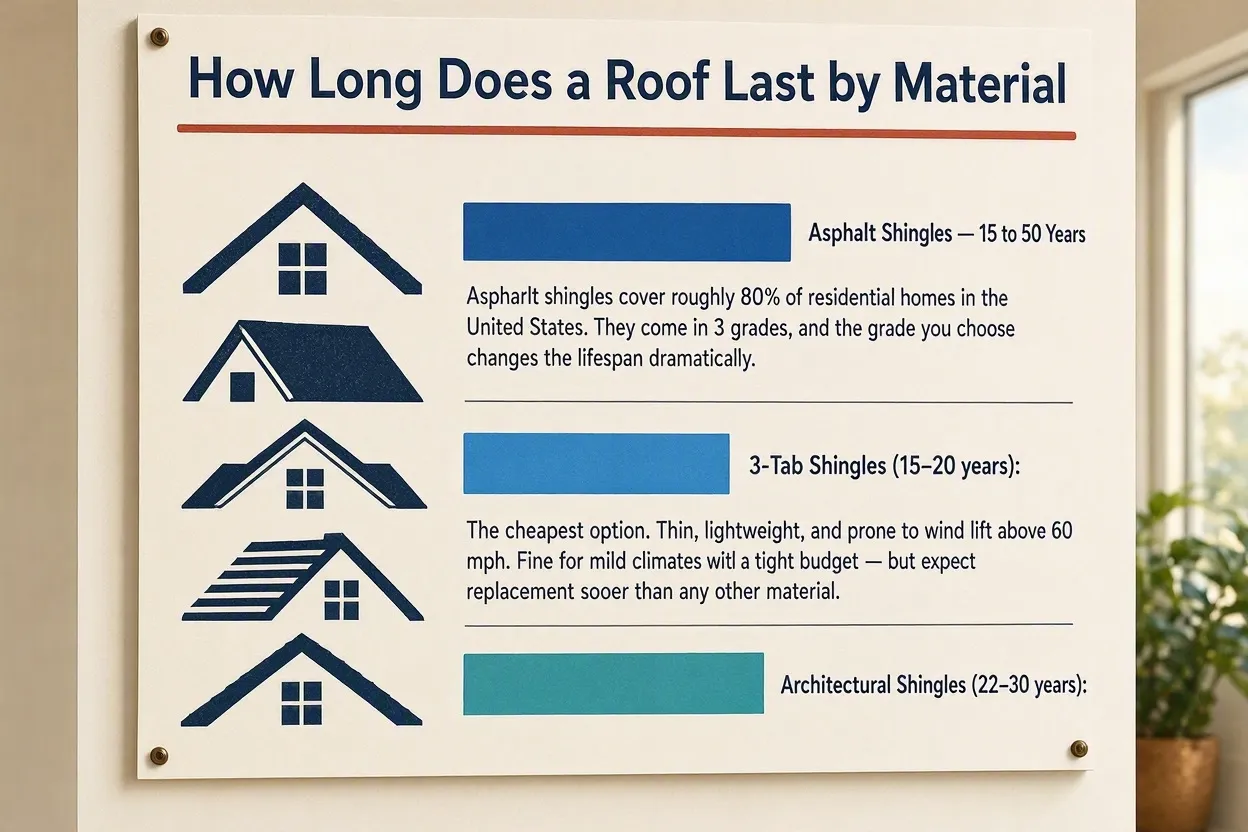
Asphalt Shingles — 15 to 50 Years
Asphalt shingles cover roughly 80% of residential homes in the United States. They come in 3 grades, and the grade you choose changes the lifespan dramatically.
3-Tab Shingles (15–20 years): The cheapest option. Thin, lightweight, and prone to wind lift above 60 mph. Fine for mild climates with a tight budget — but expect replacement sooner than any other material.
Architectural Shingles (22–30 years): The most commonly installed shingle in the US today. Thicker than 3-tab, better wind resistance (up to 110 mph), and noticeably better curb appeal. Most contractors recommend this grade as the baseline for any roof replacement.
Luxury Shingles (30–50 years): Designed to replicate the look of slate or tile at a fraction of the cost. These are the longest-lasting asphalt option available. In the right climate with proper maintenance, luxury shingles can outlast a standing seam metal roof.
The biggest threat to asphalt shingles: poor attic ventilation. Trapped heat from below bakes the shingles from the underside and cuts lifespan by 5–10 years. It also voids most manufacturer warranties. Before installing any asphalt roof, verify your attic ventilation system meets code.
Metal Roofs — 20 to 100+ Years
Metal roofing is growing fast and for good reason. It lasts 2–3 times longer than asphalt at roughly 1.5–2 times the upfront cost. Over a 50-year horizon, metal is almost always cheaper per year than asphalt.
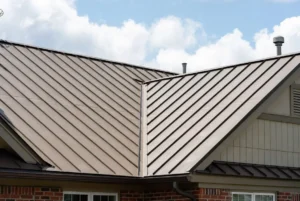
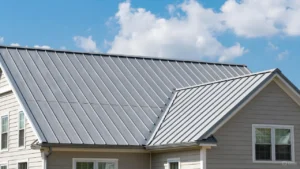
Standing Seam Metal (40–70 years): Panels interlock along raised seams, leaving no exposed fasteners. This design eliminates the most common failure point in metal roofing fastener corrosion and loosening. Best choice for most homeowners switching to metal.
Exposed Fastener Metal (20–30 years): Cheaper to install but fasteners are visible and exposed to weather. Works in dry climates. In humid or coastal areas, fasteners corrode within 10–15 years.
By metal type:
- Steel: 40–50 years
- Aluminum: 50+ years (corrosion-resistant, ideal for coastal areas)
- Copper: 70–100+ years (develops a protective patina over time)
- Zinc: 80–100 years
Metal roofs also reflect solar heat, which reduces cooling costs by 10–25% in hot climates. That energy savings adds up to thousands of dollars over the roof’s lifespan — a real financial benefit competitors rarely calculate for readers.
Tile Roofs 40 to 100 Years
Clay and concrete tile roofs are among the most durable options available for residential homes.
Clay Tile (50–100 years): Less porous than concrete, which means better resistance to moisture absorption and freeze-thaw damage. Clay tiles in Florida, Texas, and the Southwest routinely hit 80–100 years without structural failure.
Concrete Tile (40–70 years): More affordable than clay but heavier and slightly more porous. Still outlasts asphalt shingles by 2–3 times.
The hidden cost most homeowners miss: Both clay and concrete tile look fine on the surface while the underlayment underneath has already failed. The underlayment — a waterproof barrier between the tiles and the roof deck needs replacement every 20–30 years even when tiles remain intact. A tile roof that looks perfect can be leaking into the decking because nobody replaced the underlayment on schedule.
Structural note: Tile roofs weigh over 800 pounds per 100 square feet. Homes must be structurally engineered to carry that load before installation. Budget an additional $5,000–$12,000 for structural upgrades if your home was not originally built for tile.
Slate Roofs 75 to 150+ Years
Slate is the only roofing material that routinely outlives the homeowners who install it. Hard slate from quality quarries lasts 100–150 years with minimal maintenance. Soft slate lasts 75–90 years.
The trade-off is cost: $15–$30 per square foot installed, compared to $4–$8 for architectural shingles. However, if you plan to stay in the home long-term or want a roof that adds genuine property value, slate delivers cost-per-year numbers that beat every other material. Slate also requires a structural upgrade for most homes similar to tile due to its weight.
Wood Shake and Cedar 20 to 40 Years
Wood shake lasts 20–30 years in dry climates with consistent maintenance. In high-humidity climates, expect 15–20 years before moss, mildew, and rot shorten the lifespan significantly.
Cedar shake requires treatment every 3–5 years with water repellent and preservative. Skip that maintenance schedule and a 30-year roof becomes a 15-year roof. It is one of the most maintenance-intensive roofing materials available.
Flat Roofs 15 to 30 Years
Flat roofs use different materials than sloped roofs and follow different rules.
EPDM Rubber (25–30 years): The most durable flat roof option. Flexible, weather-resistant, and relatively easy to repair. Common on commercial buildings and residential additions.
TPO / PVC (20–30 years): Energy-efficient and reflective. TPO accounts for roughly 40% of the commercial flat roofing market. Lifespan depends heavily on drainage quality — ponding water is the number one flat roof killer.
Modified Bitumen (15–20 years): Older technology, still used on residential flat roofs. Shorter lifespan but lower upfront cost.
4 Factors That Determine How Long Your Roof Actually Lasts
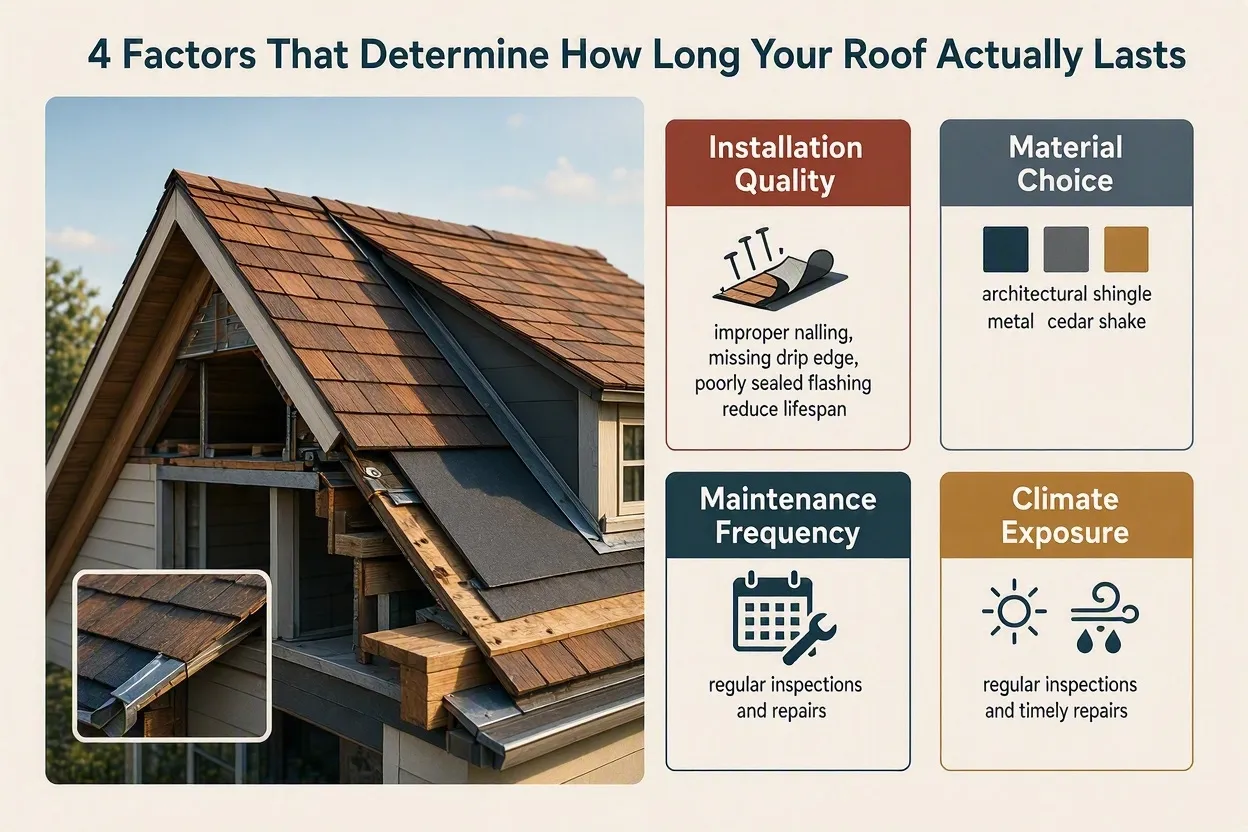
Your material choice sets the ceiling. These 4 factors determine where you land within that range.
1. Installation Quality
Installation is the single biggest factor in real-world roof lifespan. A 30-year architectural shingle installed by an inexperienced crew can fail in 12–15 years. Improper nailing patterns, missing drip edge, poorly sealed flashing, and incorrect underlayment overlap are the most common installation errors — none are visible from the ground, and all cause premature failure.
Hire a licensed, manufacturer-certified contractor. Certification matters because it validates the installer follows the manufacturer’s installation specs — which is also what keeps your warranty valid.
2. Attic Ventilation
A properly ventilated attic moves air in through soffit vents and out through ridge vents, keeping the attic close to outdoor temperature year-round. Without that airflow, two things happen. In summer, trapped heat bakes shingles from underneath. In winter, warm air from the living space hits the cold roof deck, creates condensation, and causes wood rot and mold in the decking.
Fix attic ventilation before a roof replacement not after. Installing new shingles over a poorly ventilated attic is like putting new tires on a car with a broken alignment. The tires wear out in half the expected time.
3. Climate and Weather Exposure
Your zip code affects your roof more than most people realize. The same architectural shingle that lasts 28 years in Minnesota lasts 18–20 years in Arizona — not because of quality differences, but because of daily temperature extremes and UV intensity.
Hot sunny climates (Arizona, Texas, Southern California): UV radiation breaks down asphalt binders. Dark shingles absorb more heat and degrade faster. Light-colored or cool-roof materials extend lifespan by 20–30% in these climates.
Cold climates (Minnesota, Maine, Colorado): Freeze-thaw cycles expand and contract roofing materials repeatedly. Ice dams form when heat escapes through the roof deck, melts snow at the top, and refreezes at the cold eave — forcing water under shingles and into the home.
Coastal climates (Florida, Gulf Coast, Pacific Coast): Salt-laden air accelerates corrosion on metal components — flashing, gutters, fasteners, and metal panels. Aluminum and copper hold up far better than steel in these environments.
High wind areas (Midwest, Carolinas, Oklahoma): 3-tab shingles are rated to 60 mph. Architectural shingles carry 110 mph ratings. In tornado or hurricane corridors, material wind rating is not optional.
4. Maintenance Habits
Regular maintenance extends any roof’s life by 5–10 years beyond the material’s expected baseline. The most impactful maintenance tasks cost nothing but time:
- Inspect twice yearly — spring and fall
- Clear gutters of debris every fall before winter
- Trim branches to at least 6 feet from the roof surface
- Replace individual damaged shingles immediately one cracked shingle left unaddressed becomes a $4,000 decking repair in 2–3 years
- Check and reseal flashing around chimneys, skylights, and vents annually
Roof Lifespan by Climate — What Competitors Don’t Tell You
This data is missing from almost every roofing article online. Same material, different climate — dramatically different results.
| Climate | Worst Material Choice | Best Material Choice | Key Reason |
| Hot / Sunny (AZ, TX, FL) | Dark 3-tab asphalt | Light metal or clay tile | Dark shingles reach 190°F surface temp vs 150°F for light colors — faster thermal breakdown |
| Cold / Snowy (MN, ME, CO) | Wood shake | Metal, hard slate | Freeze-thaw cycles crack porous organic materials |
| Coastal (FL Gulf, Pacific) | Standard steel | Aluminum, copper, clay tile | Salt air corrodes iron-based metals within 10–15 years |
| High Wind (Midwest, Carolinas) | 3-tab asphalt | Architectural shingles, metal | 3-tab lifts at 60 mph; architectural holds to 110+ mph |
| High Humidity (Southeast US) | Wood shake | Metal, concrete tile | Constant moisture creates rot, moss, and mildew in organic materials |
7 Signs Your Roof Needs Replacement
One sign alone rarely means replacement. Multiple signs together usually do. Check all 7 before calling a contractor.
- Shingles are curling or cupping. Edges bending upward (cupping) or centers lifting (curling) both indicate moisture damage or heat stress. This is not repairable — the shingles need replacement.
- Granule loss visible in gutters. Asphalt shingles shed granules near end of life. Check gutters after rain. Heavy granule loss means the UV-protective coating is gone and the shingles are degrading.
- Missing or cracked shingles. Isolated damage from a storm is repairable. Widespread missing shingles across multiple sections means structural exposure.
- Daylight visible from the attic. Inspect your attic on a sunny day. Any visible light through the roof boards means the decking has failed and water is getting in.
- Water stains on ceilings or walls. When underlayment fails, water bypasses intact-looking surface shingles and creates interior staining. The roof can look fine outside while actively leaking inside.
- Sagging roof deck. A visibly sagging or wavy roofline means trapped moisture has rotted the decking underneath. This is an urgent structural issue — not a cosmetic one.
- Roof age exceeds material lifespan. If your asphalt shingle roof is 20+ years old, budget for replacement within the next 3–5 years regardless of visible condition. The failure will come — and emergency replacements cost 20–30% more than planned ones.
How to Find Out Your Roof’s Age
Most homeowners don’t know their roof’s installation date. Here are 4 ways to find it.
- Pull the building permit. Every roof replacement requires a building permit. Your county assessor’s office or building department keeps permit records. Search the county website with your address or call directly. Most counties have digitized records back to the 1990s.
- Read the home inspection report. If you bought the home within the past 10–15 years, your inspector noted the approximate roof age. Dig out the report — it’s there.
- Ask the previous owner. A $10,000 roof replacement is memorable. A quick email or message to the previous owner usually gets an answer. Most people remember major home expenses.
- Book a free contractor inspection. An experienced roofing contractor estimates age within ±3 years from granule loss patterns, shingle stiffness, weathering color, and flashing condition. Most offer free inspections. Use this as a starting point before committing to anything.
Repair or Replace How to Decide
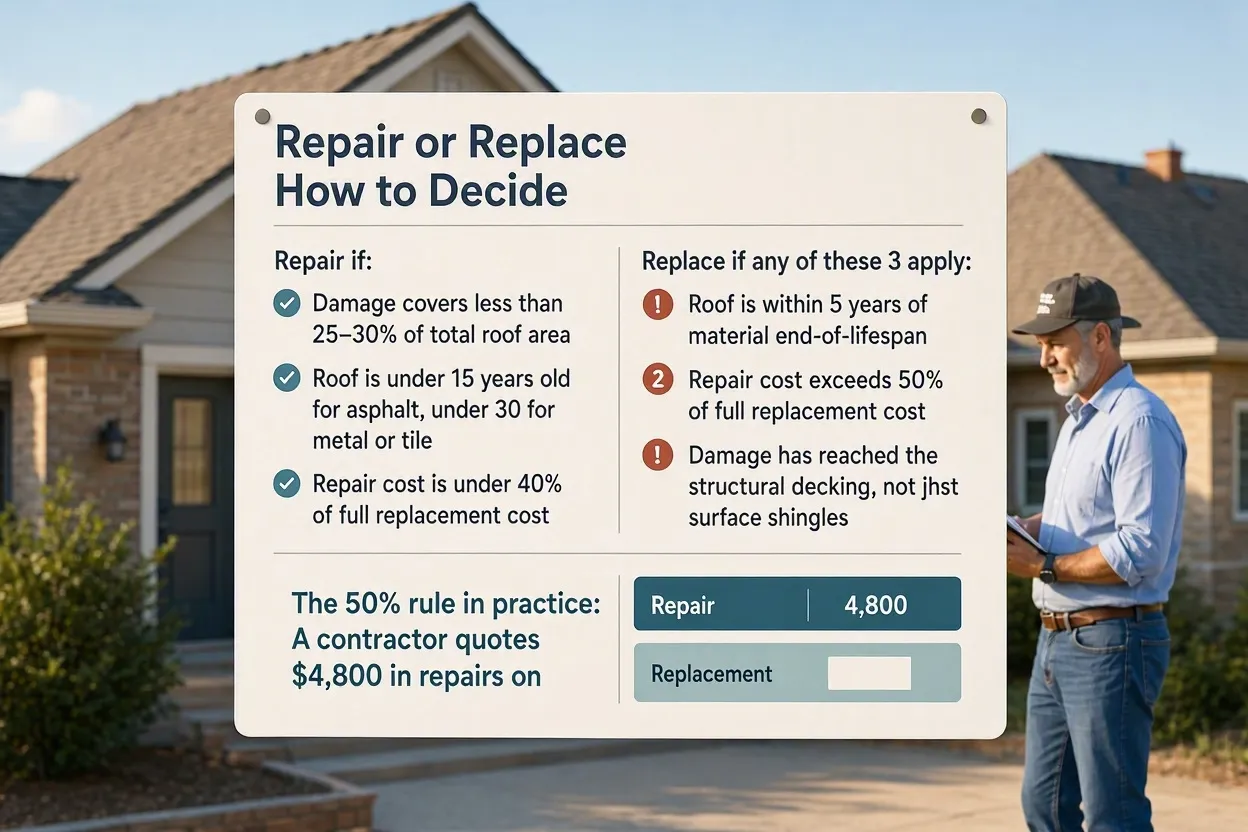
Repair if:
- Damage covers less than 25–30% of total roof area
- Roof is under 15 years old for asphalt, under 30 for metal or tile
- Repair cost is under 40% of full replacement cost
Replace if any of these 3 apply:
- Roof is within 5 years of material end-of-lifespan
- Repair cost exceeds 50% of full replacement cost
- Damage has reached the structural decking, not just surface shingles
The 50% rule in practice: A contractor quotes $4,800 in repairs on a home where full replacement costs $9,500. Replace it. You spend nearly the same money but reset the 25-year clock instead of patching a roof that will need replacement in 3–4 years anyway.
What a “30-Year Shingle” Actually Means Warranty Myths
The name creates false expectations. A 30-year architectural shingle does not come with a 30-year performance guarantee.
Here is what roofing warranties actually cover:
- Material defects only. Manufacturers cover defects in the shingle itself — not wind damage, UV degradation, poor installation, or normal wear.
- Most warranties are prorated. Coverage drops sharply after year 10. A $9,000 roof replacement in year 15 might get $1,200 in warranty coverage — not a new roof.
- Warranties void for these reasons: unregistered installation (most manufacturers require warranty registration within 30–60 days), non-certified installer, missed annual inspections, unauthorized modifications like solar panel mounts, and improper attic ventilation.
Always read the exclusions section of a roofing warranty before choosing a product. The coverage is rarely what the marketing implies.
What is the best roof for the money?
Architectural asphalt shingles offer the best cost-per-year value for most homeowners. At $6,000–$10,000 installed with a 22–30 year lifespan, annual cost runs $200–$450 per year. Metal roofing has a higher upfront cost but lower annual cost over 50+ years — better value for homeowners planning to stay long-term.