You’ve decided on standing seam metal.
Now you’re staring at a color chart with 47 options ranging from “Charcoal Gray” to “Aged Copper” to “Ocean Blue” wondering which one won’t make your house look ridiculous. Your contractor says “whatever you like” which helps exactly zero percent.
Here’s everything you need to know about standing seam metal roof colors and how to pick one you won’t regret in five years.
Most Popular Standing Seam Metal Roof Colors
Let’s start with what actually gets installed.
The top 5 colors account for 70% of all residential standing seam installations:
- Charcoal Gray (28% of installations)
- Black (18% of installations)
- Galvalume (unpainted silver – 12% of installations)
- White (9% of installations)
- Bronze/Brown earth tones (8% of installations)
Everyone else combined? The remaining 25%.
There’s a reason these dominate they work with virtually any home style and hold value.
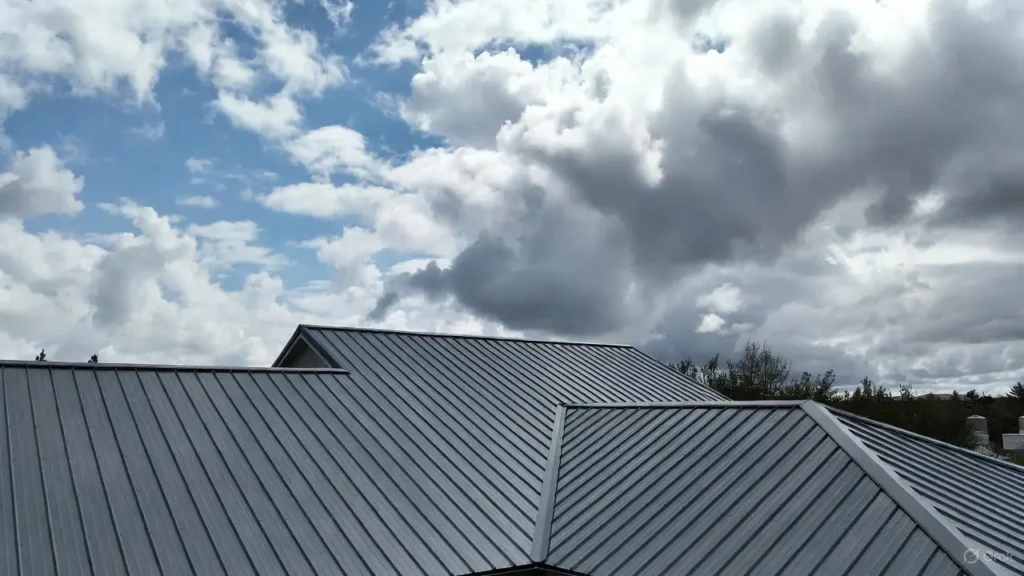
Gray Standing Seam Metal Roof: The Safe Choice
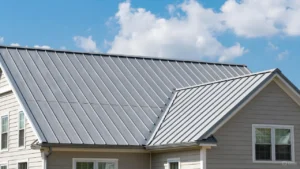
Gray standing seam metal roof options are the most requested colors in the industry.
Why gray dominates:
It hides dirt better than white. It’s less dramatic than black. It works with brick, stone, siding, stucco—basically everything.
Gray also gives you options within the shade range.
Charcoal Gray (Dark): The most popular single color. Works with any architectural style. Makes tall roofs look less imposing. Hides pollen, dust, and streaks. Energy-efficient enough (reflects 40-50% of heat).
I installed charcoal gray on a modern farmhouse last month. White siding, black trim, charcoal roof. Looked like a magazine cover. The client gets stopped by neighbors weekly asking who did the work.
Dove Gray (Light): Softer look, more reflective (60% solar heat reflection). Perfect for traditional homes. Shows dirt more than charcoal but saves more on cooling costs.
Slate Gray (Medium): The middle ground. Not as common as charcoal or dove, which makes it more distinctive. Works beautifully on craftsman and contemporary homes.
Ash Gray: Warmer tone than the others. Has subtle brown undertones. Complements natural wood and stone better than cool grays.
Gray works best on:
- Modern farmhouses
- Contemporary homes
- Colonial style homes
- Ranch homes with neutral siding
- Commercial buildings wanting professional look
Energy savings: Light grays save 15-20% on cooling. Dark grays save 8-12%.
Black Standing Seam Metal Roof: Bold and Modern
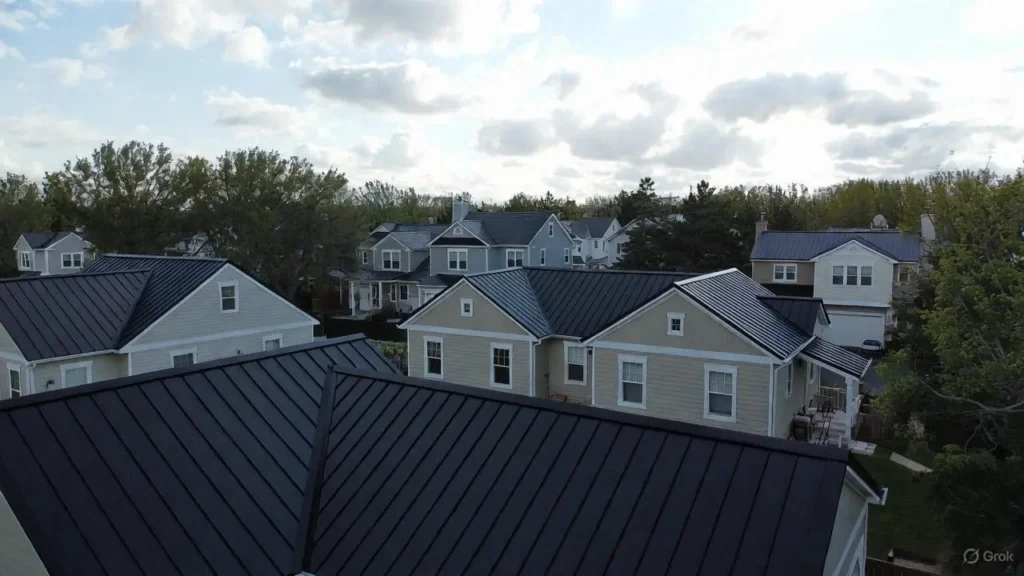
Black standing seam metal roof installations have doubled in the last five years.
Why black is trending:
Modern architecture loves it. Minimalist design demands it. It makes homes look expensive and intentional.
The benefits:
Hides absolutely everything. Pollen, dust, dirt, streaks—invisible on black. You’ll never stress about roof appearance.
Creates dramatic contrast. White siding + black roof = instant curb appeal. Natural wood + black roof = modern cabin aesthetic.
Makes rooflines disappear. If you have a tall or complex roof you want to minimize visually, black recedes into the background.
The drawbacks:
Heat absorption. Black absorbs 80-85% of solar heat. Your attic will be hotter. Your AC will work harder. In hot climates (Texas, Arizona, Florida), this costs you $200-$400 annually in extra cooling.
Shows scratches and fading. Black shows wear more than other colors. Premium PVDF coating is mandatory—don’t cheap out on paint quality with black.
Not ideal for all climates. Minnesota in winter? Fine. Phoenix in summer? You’re paying for that visual choice in energy bills.
Black works best on:
- Modern/contemporary architecture
- A-frame cabins
- Homes with white or light-colored exteriors
- Properties with lots of trees (shade helps with heat)
- Cold climates where heat absorption is beneficial
A client installed black on a modern home in Colorado. Stunning visual impact. In winter, the black roof melts snow faster than his neighbor’s light gray roof. In summer, his cooling bills run $40/month higher.
He says it’s worth it for the look. Your budget might disagree.
White Standing Seam Metal Roof: Maximum Efficiency
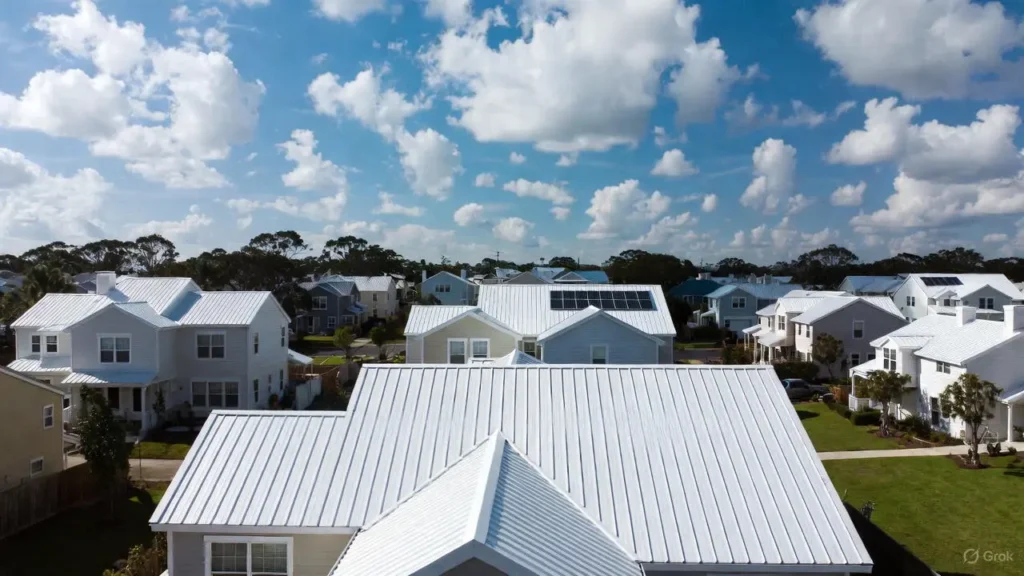
White standing seam metal roof is the energy efficiency champion.
Performance numbers:
Reflects 65-70% of solar heat. In hot climates, this saves 20-25% on cooling costs. For someone spending $300/month on AC, that’s $60-$75 monthly savings.
Over 50 years? $36,000-$45,000 in energy savings.
The aesthetic:
Clean, bright, coastal look. Perfect for beach homes, modern minimalist designs, Mediterranean styles.
Makes homes look larger. Light colors visually expand space.
The maintenance reality:
Shows everything. Dirt, pollen, algae, streaks—all visible on white. You’ll notice it more than your neighbors will, but it bothers some people.
Requires occasional cleaning in humid climates. Pressure washing every 3-5 years keeps it looking fresh.
White works best on:
- Coastal properties (beach aesthetic)
- Hot climates (energy savings justify appearance trade-offs)
- Modern minimalist homes
- Mediterranean or Spanish-style architecture
- Homes with white or cream exteriors
A friend in South Texas installed white on his ranch home. Summer electric bills dropped from $380/month to $285/month. That’s $1,140 annually. The roof paid for itself in energy savings in 25 years.
But he pressure washes it every spring because pollen and dust show up clearly.
Blue Standing Seam Metal Roof: Distinctive Choice
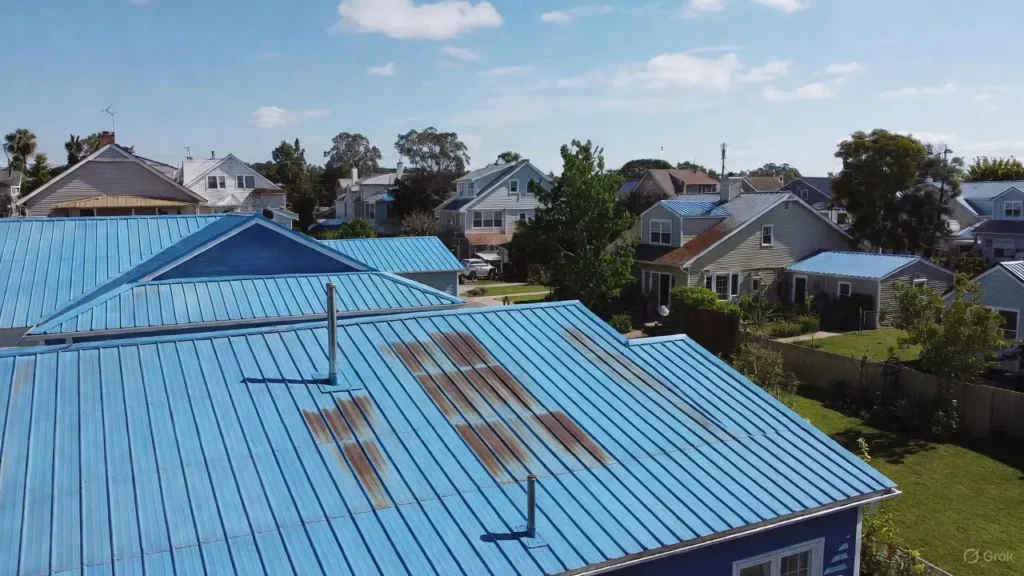
Blue standing seam metal roof options are less common but increasingly popular for the right homes.
Shades available:
Navy blue: Deep, sophisticated, works with gray or white siding.
Colonial blue: Traditional New England look, perfect for historic-style homes.
Bright blue: Bold statement, works on modern designs or beach cottages.
Slate blue: Subtle blue-gray that splits the difference.
Why people choose blue:
Unique without being weird. You get a distinctive look that still feels appropriate.
Complements natural surroundings. Blue works beautifully near water or in mountain settings.
Adds personality. If every house on your street is gray or black, blue makes yours memorable.
Blue works best on:
- Coastal homes (obviously)
- New England colonial style
- Modern farmhouses with white siding
- Mountain properties
- Homes wanting distinctive but tasteful color
I installed navy blue on a farmhouse with white board-and-batten siding last year. Absolutely stunning. The homeowner gets compliments constantly.
But her HOA almost rejected it. Check your HOA rules before going bold.
Other Popular Colors Worth Considering
Bronze/Brown Earth Tones:
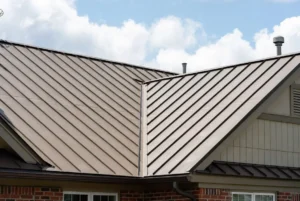
Warm, natural, complements brick and stone perfectly. Popular in the Southwest and mountain regions.
Hides dirt well. Doesn’t show fading as obviously as other colors.
Energy efficiency sits middle-range (50-55% reflection for lighter browns).
Red/Terracotta:
Spanish or Mediterranean architecture. Mission-style homes. Ranch properties wanting that classic barn aesthetic.
Distinctive but traditional. Won’t work everywhere, but perfect for the right home.
Green (Forest, Hunter, Sage):
Blends with natural surroundings. Perfect for wooded properties or mountain homes.
Energy efficiency depends on shade (lighter greens reflect more).
Galvalume (Unpainted Silver):
Natural metal finish. Industrial aesthetic. Develops subtle patina over time.
Costs less (no paint premium). Maximum durability (no paint to fade).
Popular for modern architecture and commercial buildings.
How Color Affects Energy Bills
This matters more than people realize.
Heat reflection by color:
- White: 65-70% reflection
- Light gray: 60-65% reflection
- Medium gray: 50-55% reflection
- Charcoal gray: 40-45% reflection
- Bronze/earth tones: 45-50% reflection
- Black: 15-20% reflection
In hot climates, this translates to real money.
Phoenix example (2,000 sq ft home):
- White roof: $220/month summer cooling
- Charcoal roof: $275/month summer cooling
- Black roof: $310/month summer cooling
Over a year, black costs $540 more than white in cooling.
Over 50 years? $27,000 difference.
In cold climates, the math flips. Heat absorption helps in winter, reducing heating costs slightly.
Resale Value and Color Choice
Neutral colors hold value better.
Best for resale:
Gray (any shade), black, bronze, white. These appeal to the widest buyer pool.
Riskier for resale:
Bold colors (bright blue, red, green, purple). Some buyers love them. Others are turned off immediately.
A realtor friend says neutral-colored roofs sell homes 8-12 days faster on average than bold colors. Not because bold is bad—because it limits the buyer pool.
If you’re staying 20+ years, choose what you love. If you might sell in 5-10 years, stick with neutrals.
How to Actually Choose Your Color
Here’s my decision framework.
Step 1: Check HOA restrictions
Some neighborhoods ban certain colors. Know the rules before falling in love with navy blue.
Step 2: Consider your climate
Hot climate = prioritize light colors for energy savings. Cold climate = dark colors acceptable, even beneficial. Moderate climate = choose based on aesthetics.
Step 3: Match your home’s style
Modern/contemporary: Gray, black, white Traditional/colonial: Gray, bronze, blue Farmhouse: Gray, black, white, bronze Mediterranean/Spanish: Terracotta, bronze, white Craftsman: Earth tones, gray, bronze
Step 4: Look at neighbors (or don’t)
Want to blend in? Choose what’s common on your street. Want to stand out? Choose something distinctive but tasteful.
Step 5: Get actual samples
Order metal samples in your top 3 colors. Look at them in different lighting. Morning sun, afternoon sun, cloudy days, night lighting.
Colors look different on a tiny chip versus 2,000 square feet of roof.
Step 6: Use visualizer tools
Many manufacturers offer online visualizers. Upload a photo of your home, apply different colors digitally.
Not perfect, but better than guessing.
For more on the full decision process, check our standing seam metal roof guide for complete installation considerations.
FAQs About Metal Roof Colors
What is the most popular standing seam metal roof color?
Charcoal gray dominates at 28% of installations, followed by black at 18%. These two account for nearly half of all residential standing seam projects.
Do dark metal roofs cost more to cool?
Yes. Black roofs can add $200-$400 annually to cooling costs in hot climates versus white roofs. In cold climates, this effect is minimal or even beneficial.
Will my metal roof color fade?
Premium PVDF coatings (Kynar 500) resist fading for 40+ years. Cheap SMP coatings fade noticeably in 10-15 years. Pay for quality coating—it’s worth it. See our standing seam metal roof cost guide for coating options.
Can I change my metal roof color later?
Technically yes, but it’s expensive. You’d need to repaint the entire roof ($4,000-$8,000+). Choose carefully upfront.
What colors make a house look bigger?
Light colors (white, light gray, light bronze) visually expand. Dark colors (black, charcoal) make homes appear smaller or blend rooflines.
The Bottom Line on Color Selection
Here’s what matters.
Standing seam metal roof colors should match three things: your climate, your home’s style, and your personal taste—in that order.
Gray (any shade) works for 90% of homes. Black works for modern aesthetics if you’re okay with energy trade-offs. White maximizes efficiency in hot climates. Blue adds personality for the right property.
At Rainy Roofers, we help clients see actual samples in natural light before making final decisions. Color chips lie. Real metal in sunshine tells the truth.
Choose a neutral if resale matters soon. Choose what you love if you’re staying forever.
Your roof is visible from the street for 50+ years. Pick something you’ll still like in decade three.