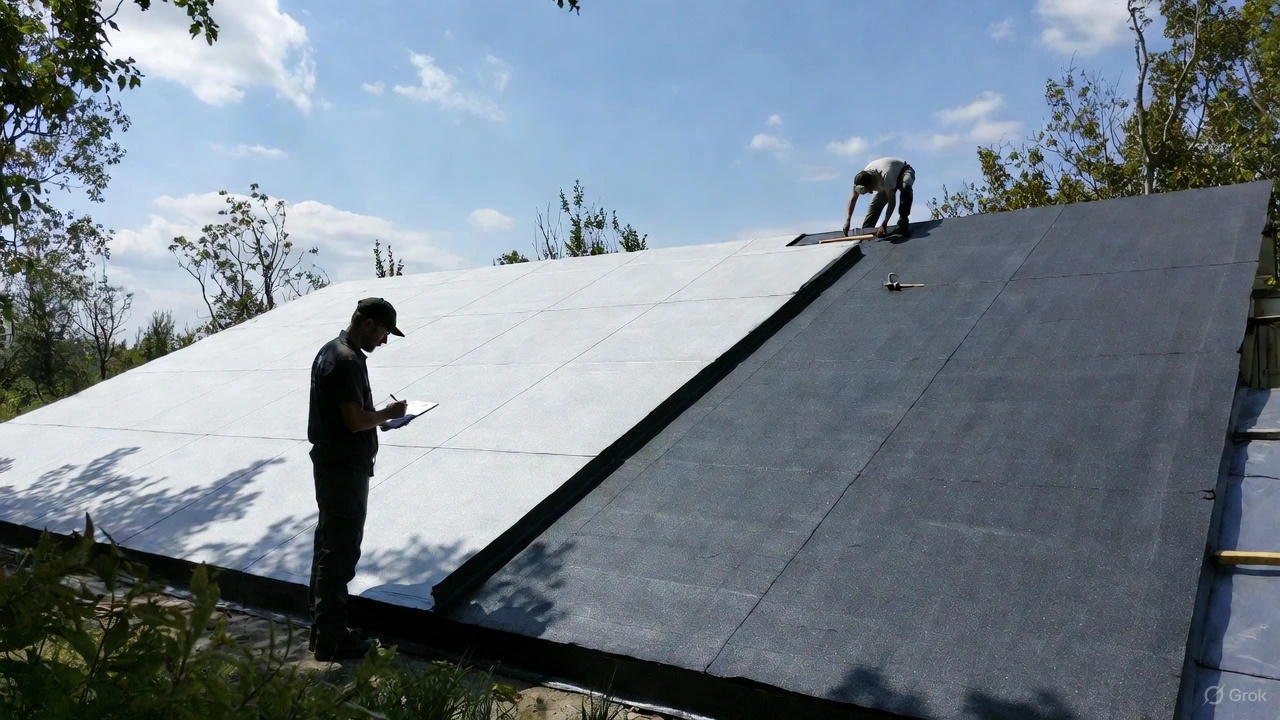
You’re getting quotes for rubber roofing and one contractor insists white is the only way to go. Another swears by black. The price difference isn’t huge, but you’re wondering if the color actually matters or if this is just a sales pitch.
Here’s the truth: rubber roofing color directly impacts your energy bills, roof temperature, and long-term costs. The right choice depends on where you live and what you’re trying to accomplish.
I’ve installed both white rubber roofing and black rubber roofing at Rainy Roofers for over a decade. Let me break down the real differences so you can make the smart choice for your situation.
What Makes White and Black Rubber Roofing Different
The color isn’t just aesthetic—it changes the chemistry and performance of the membrane.
Black EPDM roofing contains carbon black, an additive that absorbs UV rays and converts them into heat. It’s the traditional rubber roofing option that’s been around since the 1960s.
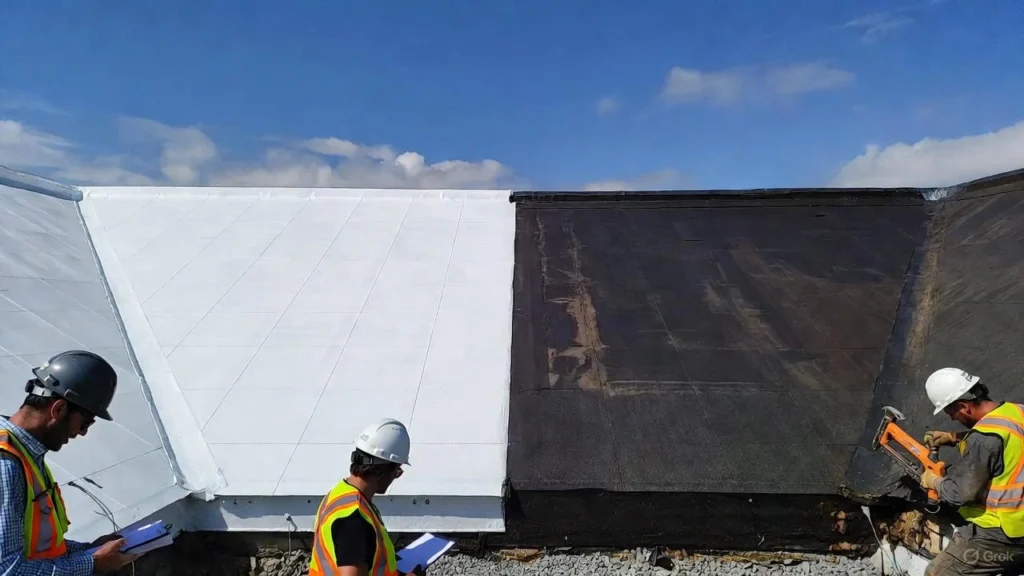
White EPDM roofing uses titanium dioxide instead. This compound reflects UV rays rather than absorbing them, keeping the roof surface significantly cooler.
Both are waterproof rubber roofing materials. Both last 20-50 years with proper installation. The difference is what happens when sunlight hits them.
On a 90°F summer day, black rubber roofing can reach 170°F. White rubber roofing on the same day might only hit 120°F—that’s a 50°F difference on your roof surface.
That temperature difference matters more than most contractors admit.
White Rubber Roofing Energy Efficiency Benefits
White rubber roofing reflects 75-85% of sunlight. It’s classified as a “cool roof” because it actively fights heat absorption.
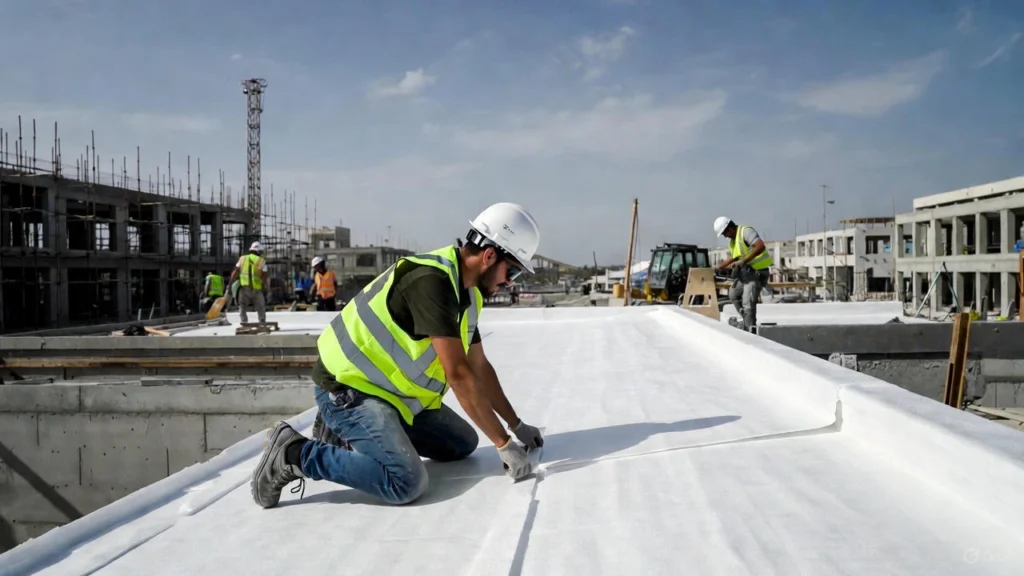
Energy savings from white rubber roofing:
- 15-25% reduction in cooling costs in hot climates
- Lower peak demand on your AC system during summer
- Cooler interior temperatures even without AC running
- Extended HVAC lifespan from reduced workload
- Energy Star rated options qualify for rebates
We installed white TPO (a type of white rubber roofing) on a commercial building in our area last summer. The owner tracked his electric bills carefully. His cooling costs dropped 22% compared to the previous year with his old black roof.
The math is simple: less heat entering the building means less energy spent removing that heat.
White rubber roofing also helps fight the urban heat island effect. Cities with more reflective roofs run cooler overall, reducing community-wide energy consumption.
When white rubber roofing makes sense:
- Hot climates with long summers
- Buildings with high AC usage
- Warehouses or facilities with temperature-sensitive operations
- Any building pursuing LEED or green certification
- Areas where energy costs are high
The payback period on white rubber roofing is typically 5-7 years in southern states. Your higher upfront cost gets recovered through lower utility bills.
Black Rubber Roofing Performance in Cold Climates
Black rubber roofing isn’t inferior—it’s optimized for different conditions.
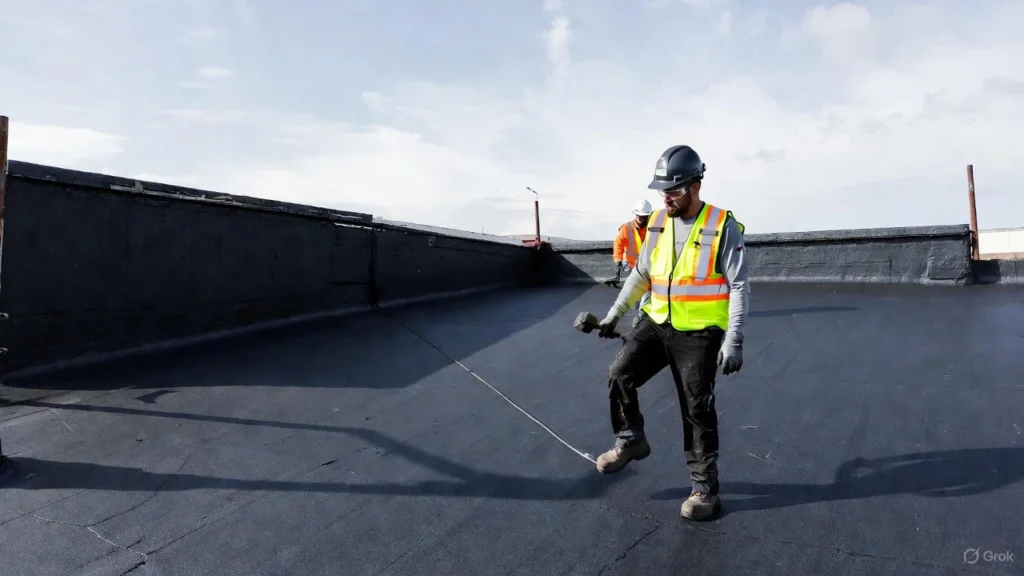
What heat absorption white roofing avoids? It’s actually beneficial in cold climates. Black EPDM roofing absorbs solar energy and converts it to heat, which helps in several ways.
Black rubber roofing advantages:
- Snow melting: Heat absorption helps snow melt faster, reducing roof load
- Ice prevention: Warmer roof surface minimizes ice dam formation
- Heating benefits: Solar gain reduces heating costs in winter
- Lower cost: Black EPDM costs 10-15% less than white
- Dirt concealment: Doesn’t show dirt, debris, or discoloration as obviously
I installed black EPDM in a garage in a northern climate three years ago. The homeowner loves it because snow clears naturally within days of a storm, while his neighbor’s light-colored roof stays snow-covered for weeks.
Black rubber roofing also has a 60+ year track record. It’s the most proven rubber roofing membrane available. White EPDM and TPO are newer formulations with less long-term data.
When black rubber roofing makes sense:
- Cold climates with significant snow
- Buildings where heating costs exceed cooling costs
- Budget-conscious projects
- Areas where roof appearance doesn’t matter
- Situations where proven longevity is priority
Temperature Data: The Real Numbers
Let’s talk actual performance data instead of marketing claims.
The Lawrence Berkeley National Laboratory tested roof surface temperatures across different colors. Their findings:
Black rubber roofing:
- Surface temp on 90°F day: 170°F
- Heat absorption: 80%+ of solar energy
- Interior temperature impact: +10-15°F without AC
White rubber roofing:
- Surface temp on 90°F day: 120°F
- Heat reflection: 75-85% of solar energy
- Interior temperature impact: +2-5°F without AC
That 50-80°F surface temperature difference translates directly to your AC workload.
The U.S. Department of Energy estimates cool roofs save 10-15% on total building energy costs in warm climates. In mixed climates, savings drop to 5-10% because you lose heating benefits in winter.
Here’s what nobody tells you: location matters more than the membrane itself.
Phoenix, Arizona – White rubber roofing pays for itself in 4-5 years through cooling savings.
Minneapolis, Minnesota – Black rubber roofing makes more sense. Heating costs dominate, and snow removal matters.
Nashville, Tennessee – Mixed climate makes the choice closer. Slight edge to white for overall energy efficiency.
Waterproof Performance: Both Colors Deliver
One concern I hear constantly: “Does the color affect waterproofing?”
No. Both white rubber roofing and black rubber roofing are 100% waterproof when properly installed.
The waterproof performance comes from the EPDM or TPO material itself, not the color additives. Titanium dioxide and carbon black don’t compromise the membrane’s ability to shed water.
Waterproof rubber roofing qualities (both colors):
- Zero water absorption in the membrane material
- Seamless installation prevents leak paths
- Flexible enough to handle building movement
- Resistant to ponding water
- UV-stable compounds won’t degrade
I’ve never seen a waterproof rubber roofing failure caused by color choice. Leaks happen from installation errors—improper seam sealing, inadequate flashing, or physical damage—not from white versus black.
Both colors handle standing water equally well. Both resist weather damage. Both maintain flexibility in temperature extremes.
The color affects energy performance, not waterproof protection.
Cost Comparison and Long-Term ROI
Let’s talk about money because that’s what actually matters.
Upfront costs:
- Black EPDM: $5-10 per square foot installed
- White EPDM: $6-11 per square foot installed
- White TPO: $7-12 per square foot installed
For a 1,500 square foot roof, you’re looking at $1,500-3,000 more for white over black.
Operating costs (hot climate, 20-year period):
- Black rubber roofing: Higher AC costs, potentially $3,000-5,000 more over 20 years
- White rubber roofing: Lower AC costs, saves $3,000-5,000 over 20 years
Operating costs (cold climate, 20-year period):
- Black rubber roofing: Lower heating costs, saves $1,000-2,000 over 20 years
- White rubber roofing: Higher heating costs, costs $1,000-2,000 more over 20 years
The math is straightforward in extreme climates. Mixed climates require actual energy calculations based on your building’s specific usage.
At Rainy Roofers, we run energy analysis for clients in mixed climates. We look at their utility bills, building insulation, and HVAC efficiency to determine actual ROI.
Maintenance and Appearance Over Time
White rubber roofing shows dirt. There’s no way around it.
That bright white surface looks fantastic when new but accumulates visible dirt, debris, and discoloration over 5-10 years. This reduces reflectivity and energy efficiency.
Cleaning maintains performance but adds maintenance costs. Budget $200-500 annually for professional roof cleaning if appearance and maximum reflectivity matter.
Black rubber roofing hides dirt naturally. Debris and discoloration blend in. You still need to clean drains and remove debris, but the roof looks acceptable even when it’s not pristine.
Neither color requires more structural maintenance. Both need seam inspections, flashing checks, and drain cleaning regardless of color.
Frequently Asked Questions
Does white rubber roofing really save that much on energy costs?
In hot climates, yes. Documented savings of 15-25% on cooling costs are common. In cold climates, black rubber roofing is more efficient because you benefit from heat absorption. Climate determines savings potential.
Will black rubber roofing damage my building from heat?
No. Properly installed black EPDM handles high temperatures without degrading. The material is designed for decades of heat exposure. Your building’s insulation protects the interior regardless of roof color.
Can I paint my black rubber roofing white later?
Not recommended. Roof coatings exist but typically last 5-10 years and void manufacturer warranties. Choose the right color initially rather than trying to change it later.
Does waterproof rubber roofing work in both colors?
Yes. Both white and black rubber roofing provide identical waterproof protection. Color affects energy performance, not water resistance. Installation quality matters far more than color for preventing leaks.
Which color lasts longer?
Black EPDM has a slightly longer track record (60+ years vs 30 years for white). Both colors last 20-50 years with proper installation and maintenance. Lifespan depends more on installation quality than color choice.
Making Your Color Decision
Stop overthinking this. The decision is simpler than contractors make it seem.
Choose white rubber roofing if:
- You live in a hot climate (southern states)
- Cooling costs dominate your energy bills
- Energy efficiency is a priority
- You’re pursuing green building certification
Choose black rubber roofing if:
- You live in a cold climate (northern states)
- Heating costs dominate your energy bills
- Budget is tight
- Snow accumulation is a concern
At Rainy Roofers, we install both colors regularly. We match the rubber roofing color to your climate and energy patterns, not to what’s trendy or what we have in stock.
Your roof will perform for 30+ years. Choose the color that saves you money over that timeframe, not the one that looks better in a brochure.