Plastic roof shingles are polymer roofing products molded to look like slate, cedar shake or clay tile, and they resist hail, rot and cracking better than most natural materials. They cost more than asphalt but weigh far less than slate. Proof matters, though. A product performs as promised only when independent Underwriters Laboratories (UL) and American Society for Testing and Materials (ASTM) test ratings back the brand’s claims.
Key Takeaways
- Plastic roof shingles are molded polymer products that mimic slate, cedar shake and tile without wood’s rot risk or the weight of stone.
- “Plastic roofing” covers three different products: corrugated panels, synthetic shingles and asphalt composition shingles. Confirm which one a quote describes.
- A Class 4 rating under UL 2218 is the top hail rating, and in some states it can qualify homeowners for insurance discounts.
- Many synthetic shingles reach a Class A fire rating only as part of a tested assembly with a specific underlayment.
- No verified national price figure is available for synthetic roofing, so compare at least three itemized quotes per square, meaning 100 square feet (9.3 m²).
- Federal Trade Commission (FTC) Green Guides govern recycled-content claims, and end-of-life recycling for synthetic shingles remains limited.
What Are Plastic Roof Shingles?
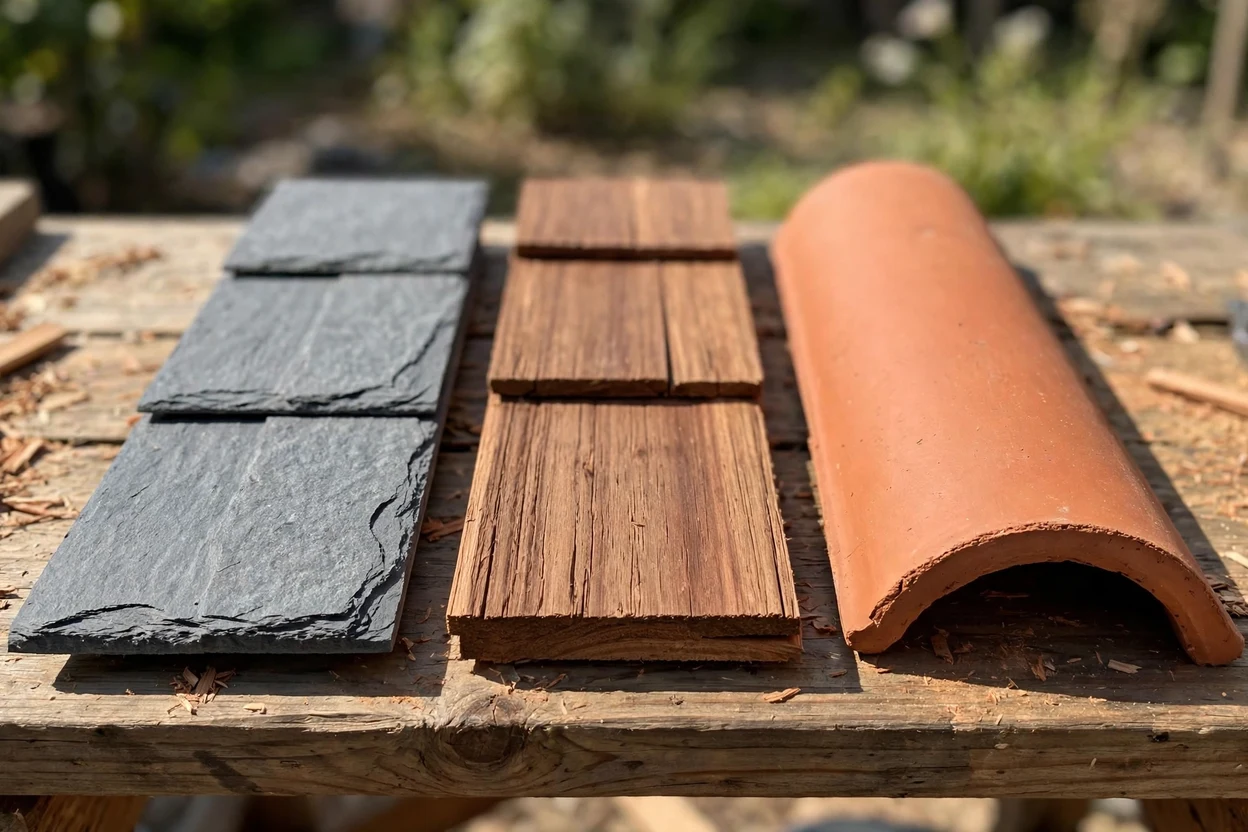
Plastic roof shingles are synthetic roofing units molded from polymers such as polypropylene, polyethylene, polyvinyl chloride (PVC) or rubber blends that replicate natural slate, cedar shake or clay tile. Manufacturers add ultraviolet (UV) stabilizers and pigments so the shingles hold their color and resist brittleness on sloped residential roofs. Fire retardants curb flame spread.
Most products sold for houses are better described as synthetic or polymer shingles, a label that reflects the blended materials inside them. Many contain recycled plastic or rubber.
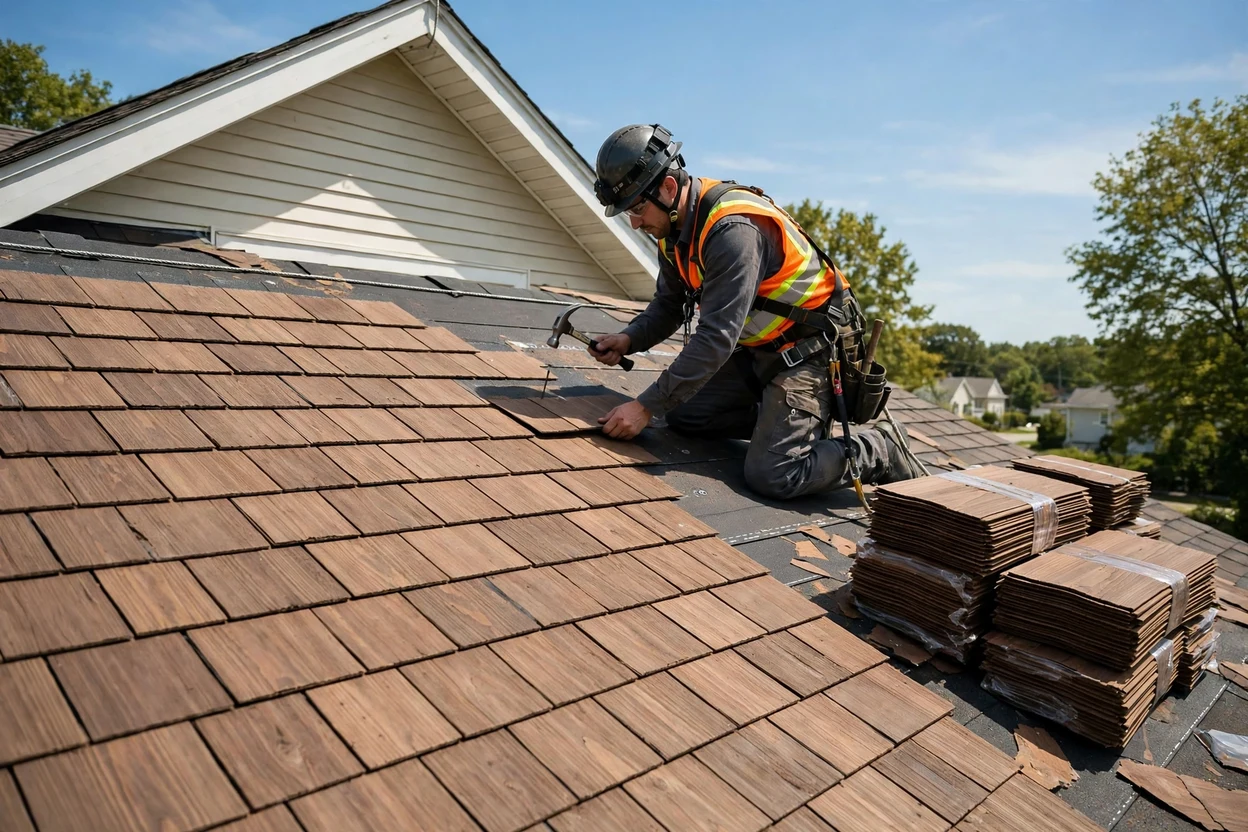
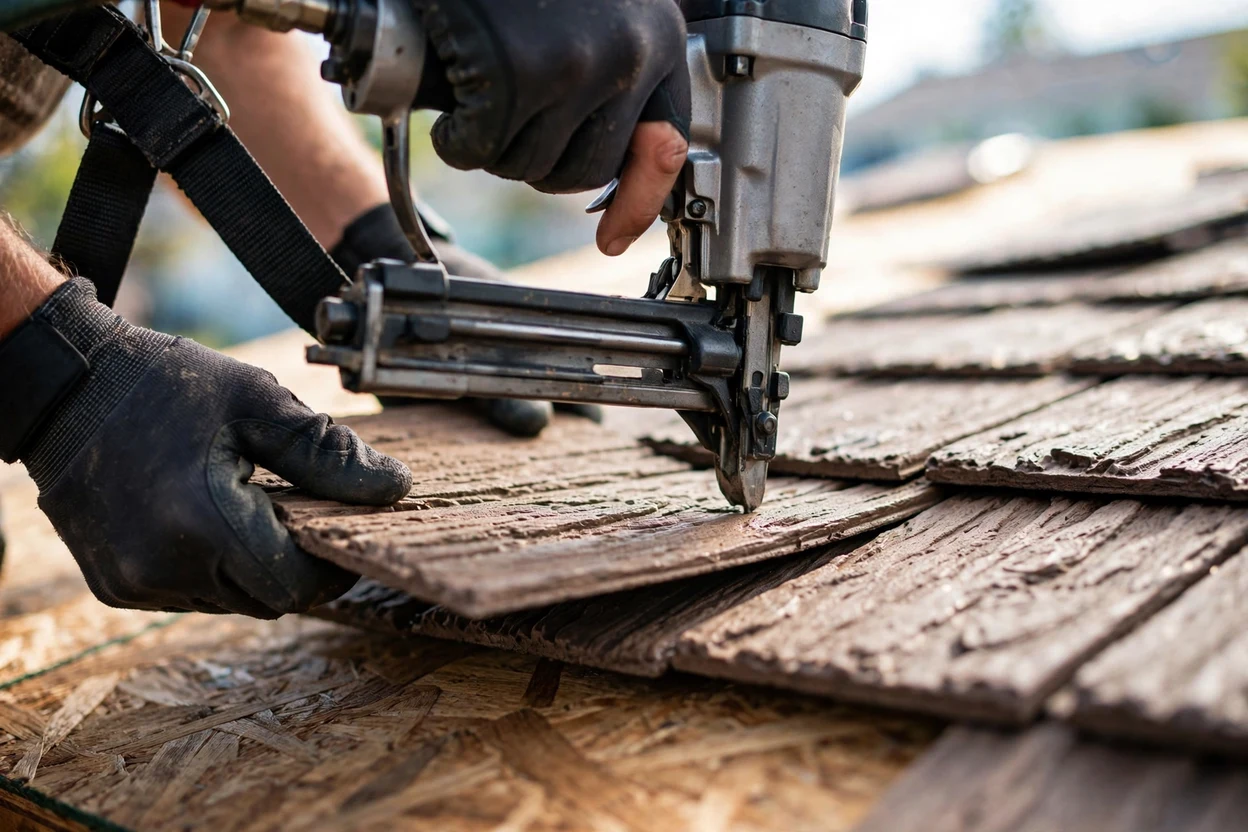
All major lines install piece by piece. Roofers nail each unit over underlayment on a solid roof deck, the same basic method they’d use for asphalt shingles.
Major US brands include DaVinci Roofscapes, Brava Roof Tile, EcoStar and EcoSmart, which sells the Eco-Shake line, and each one offers several profiles and color blends. Thicknesses vary too. That means two “synthetic slate” roofs can look and weigh differently. Test ratings can differ as well.
Synthetic Slate
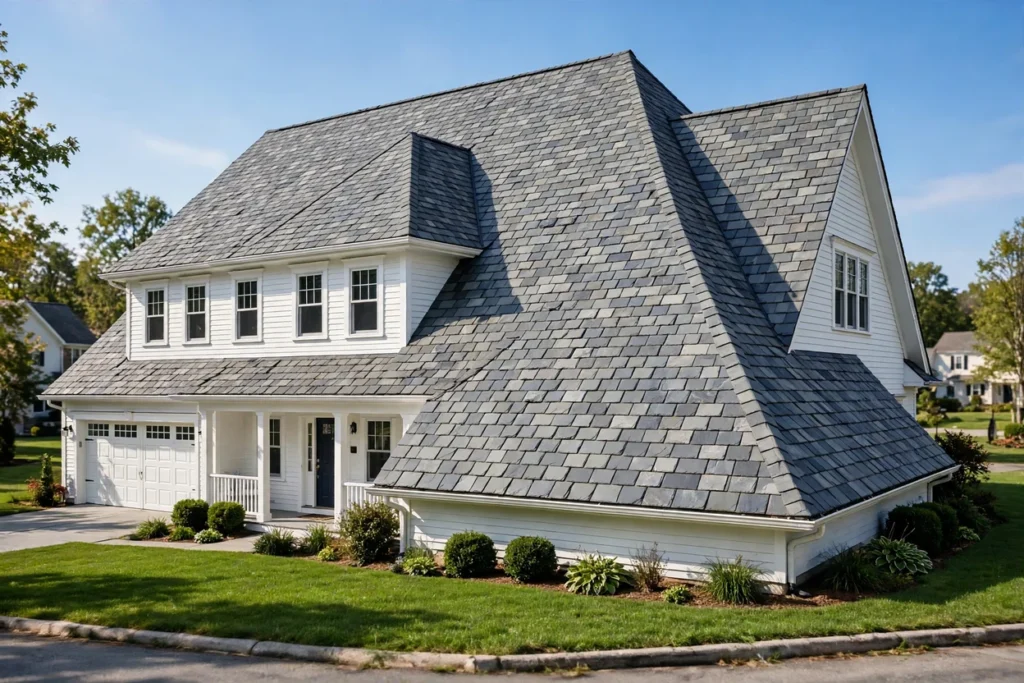
Plastic slate roof shingles copy quarried slate’s thickness and chiseled edges. Color shifts from piece to piece, too. Installers mix several widths and color blends to break up the pattern, and that’s what makes fake slate shingles read as stone from the street.
Synthetic slate fits homes framed for asphalt whose owners want a slate look. Historic styles suit it too. It’s a strong pick in neighborhoods where a homeowners association (HOA) or a design review board requires that slate appearance.
Synthetic Cedar Shake
Synthetic cedar shake roofing replicates the hand-split grain and thick butts of real cedar, right down to the staggered edges along each course. Polymer shakes don’t absorb water. Because of that, they won’t rot, cup, split from freeze-thaw cycles or host moss the way wood does.
Color blends run from fresh-cut tan to weathered gray. That gives homeowners a choice. Anyone who wants the aged look can have it on day one instead of waiting years for natural cedar to turn silver.
Synthetic Tile
Brava Roof Tile and other makers mold barrel and Spanish-style shingle roof tiles from polymer blends. The payoff is weight. Southwest and Mediterranean-style homes get a clay look at a fraction of what real clay tile weighs sitting on the rafters.
Foot traffic is clay’s weak spot. Synthetic shingle roof tiles resist the cracking that breaks clay tiles when someone walks the roof during gutter cleaning or satellite dish installation.
Which Plastic Roof Do You Mean?
“Plastic roofing” describes three different products: corrugated polycarbonate or PVC panels, molded synthetic shingles, and asphalt composition shingles built on a fiberglass mat. Each product has its own use, lifespan, code path and installer. Don’t mix them up. Before comparing prices or reviews, confirm which one a contractor or retailer means, and apply the same check to any article you read.
Search results for “plastic roofing” often jumble panels together with synthetic and asphalt house shingles. That causes confusion. Keeping the three apart helps you hold realistic price expectations and read warranty terms correctly, and it keeps code requirements straight.
The table below compares the three products sold as plastic roofing in the USA.
| Product | Typical Use | Looks Like | Where Sold |
|---|---|---|---|
| Corrugated polycarbonate or PVC panels | Carports, patio covers, sheds, greenhouses | Ribbed translucent or opaque sheets | Home Depot, Lowe’s |
| Synthetic polymer shingles | Steep-slope house roofs | Slate, cedar shake, clay tile | Roofing distributors, certified contractors |
| Asphalt composition shingles | Steep-slope house roofs | Flat or dimensional tabs | Roofing distributors, big-box stores |
Corrugated panels belong on outbuildings and covered outdoor spaces, and they aren’t designed to replace shingles on a house roof. This guide sticks to synthetic house shingles.
Are Composite Shingles the Same as Asphalt Shingles?
No, composite shingles are not always asphalt shingles: roofers use “composite” or “composition” for standard asphalt shingles, while manufacturers use “composite” for polymer shingles made from plastic and rubber blends. Check the data sheet. A quote that lists composite shingles can describe either material, and the two sit at different price points.
In everyday US roofing talk, “composition shingles” and “comp shingles” simply mean asphalt shingles. They’re layered products. Each one starts as a fiberglass mat, which is then coated in asphalt and topped with a layer of mineral granules.
Polymer composite shingles share none of it. They’re molded solid from plastic and rubber blends with the color mixed all the way through, so there are no granules to shed as they age.
The table below compares asphalt composition shingles with polymer composite shingles.
| Feature | Asphalt Composition | Polymer Composite |
|---|---|---|
| Main Ingredients | Fiberglass mat, asphalt, mineral granules | Polypropylene, polyethylene or rubber blends |
| Appearance | Flat or dimensional tabs | Slate, shake or tile profiles |
| Hail Ratings | Class 4 on select lines | Class 4 on many lines |
| Upfront Cost | Lower | Higher |
| Granule Loss | Yes, over time | No granules |
True polymer shingles are sold as synthetic slate, synthetic shake or synthetic tile lines. Then verify the details. The data sheet should list polymer ingredients, not a fiberglass mat coated in asphalt, before you treat a product as truly synthetic.
Are Plastic Roof Shingles Any Good?
Yes, plastic roof shingles are a good choice for homeowners who want a slate or shake look with Class 4 hail resistance, low maintenance and light weight, provided the specific product carries independent test ratings. They’re a poor fit for budget reroofs. Upfront material and labor costs run higher than asphalt, which squeezes any tight reroofing budget.
On the plus side, synthetic shingles offer hail resistance, light weight, freedom from rot and insects, and realistic slate and shake profiles. The trade-offs are real, though. Upfront cost runs higher than asphalt, and the field history is shorter than natural materials. Recycling at end of life is limited.
The table below compares the main advantages and drawbacks of synthetic shingles.
| Factor | Advantage | Drawback |
|---|---|---|
| Hail | Class 4 ratings available | Not every line is Class 4 |
| Fire | Class A achievable | Often requires specific underlayment |
| Maintenance | No rot, splitting or insect damage | Debris and leaves still need clearing |
| Appearance | Convincing slate and shake profiles | Some lines look uniform up close |
| Cost | Avoids slate’s structural upgrades | Higher upfront cost than asphalt |
| Track Record | Accelerated weathering test data | Shorter field history than slate |
No verified cross-brand ranking of test ratings is available. Request current UL and ASTM listings for each product line from DaVinci Roofscapes, Brava Roof Tile, EcoStar or any other brand under consideration. Judge line by line, never brand by brand.
How to Read Test Ratings Before You Buy
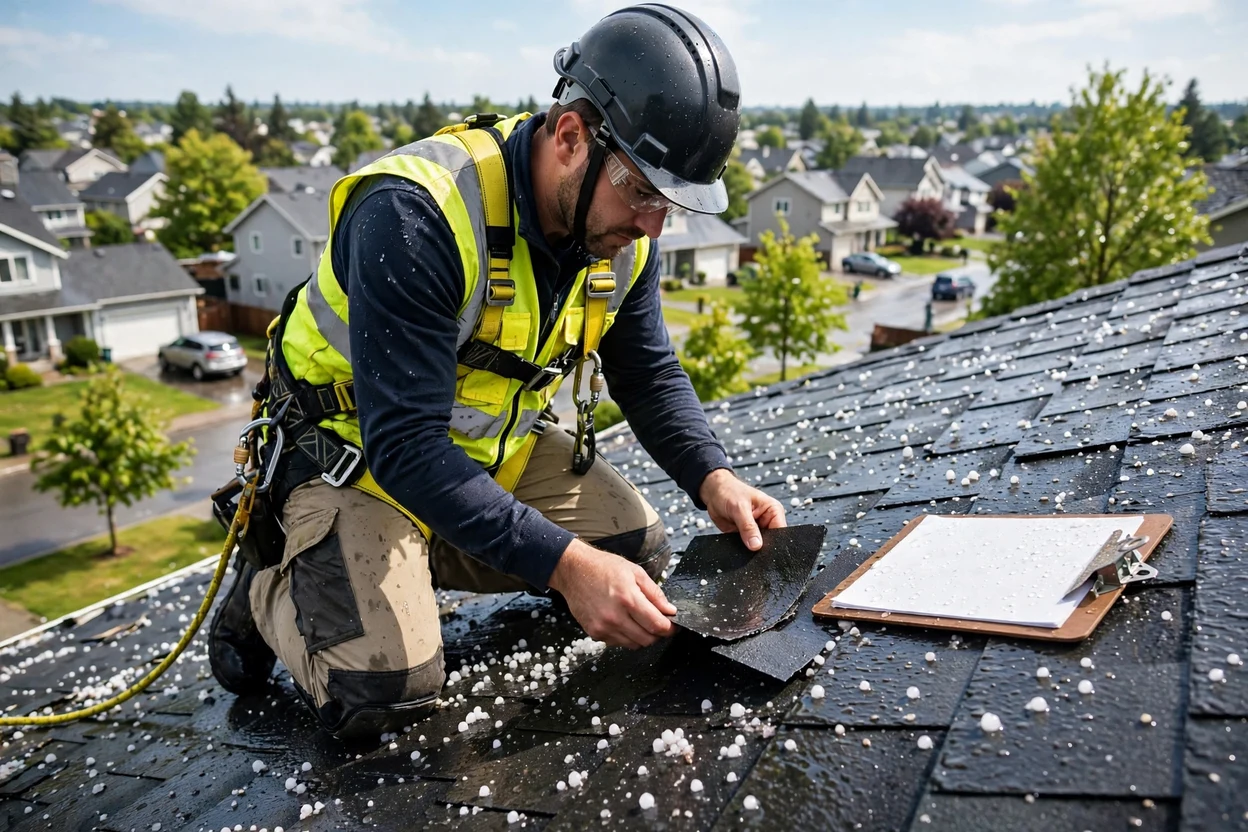
Four sets of independent tests show whether plastic shingles live up to marketing claims: UL 2218 for hail, UL 790 or ASTM E108 for fire, ASTM D3161 and D7158 for wind, and International Code Council Evaluation Service (ICC-ES) reports for code compliance. Ask for each certificate or listing number. A brochure line isn’t proof.
Manufacturers test specific product lines. Whole brands don’t get a rating. A brand can hold a Class 4 rating on its thick slate line and a lower rating, or none, on a thinner shake line.
The table below compares the key test standards and the top rating for each.
| Standard | What It Tests | Top Rating |
|---|---|---|
| UL 2218 | Hail impact using steel balls | Class 4 |
| UL 790 / ASTM E108 | Flame spread and burning embers | Class A |
| ASTM D3161 | Fan-induced wind resistance | Class F, 110 mph (177 km/h) |
| ASTM D7158 | Wind uplift resistance | Class H, 150 mph (241 km/h) |
| ICC-ES Report | Building code compliance | Current, unexpired report |
Impact Resistance (UL 2218)
UL 2218 drops steel balls onto roofing samples from set heights and checks for cracks. Class 1 is the gentlest. It uses a 1.25-inch (32 mm) ball dropped 12 feet (3.7 m). At the top of the scale, Class 4 calls for a 2-inch (51 mm) ball dropped from 20 feet (6.1 m) onto the sample.
Synthetic shingles with a Class 4 listing hold up to hail better than unrated products, and insurers in several hail-prone states offer premium discounts for Class 4 roofs. Amounts vary by carrier. No verified national figure is available.
Fire Resistance (UL 790 and ASTM E108)
UL 790 and ASTM E108 are equivalent fire tests that rate roof coverings on a three-step scale of Class A, B or C. Class A is the top grade. It offers the highest resistance to flame spread and burning embers.
Synthetic shingles are fire resistant when the full tested assembly goes on exactly as the listing describes it, with no substitutions. Underlayment is the usual catch. Many products reach Class A only over a specific fire-resistant underlayment named in the listing. Use the wrong underlayment, and even a Class A product may fail both the rating and the local code.
Wind Resistance (ASTM D3161 and D7158)
ASTM D3161 uses fan-driven wind. It rates shingles Class A at 60 mph (97 km/h), Class D at 90 mph (145 km/h) and Class F at 110 mph (177 km/h).
Uplift is what ASTM D7158 measures. Shingles earn Class D at 90 mph (145 km/h), Class G at 120 mph (193 km/h) and Class H at 150 mph (241 km/h) under this standard. Coastal homeowners should match the wind class to the design wind speed their local building department enforces.
Code Compliance (ICC-ES Reports)
An ICC-ES report confirms that a product complies with the International Residential Code (IRC) and the International Building Code (IBC). Search the report number at icc-es.org. Make sure it’s current.
Read the listed installation conditions and slope limits. Note the required underlayment, too. Building inspectors rely on these reports when they’re asked to approve synthetic roofing products they haven’t seen on a job site before.
Is Synthetic Slate Better Than Real Slate?
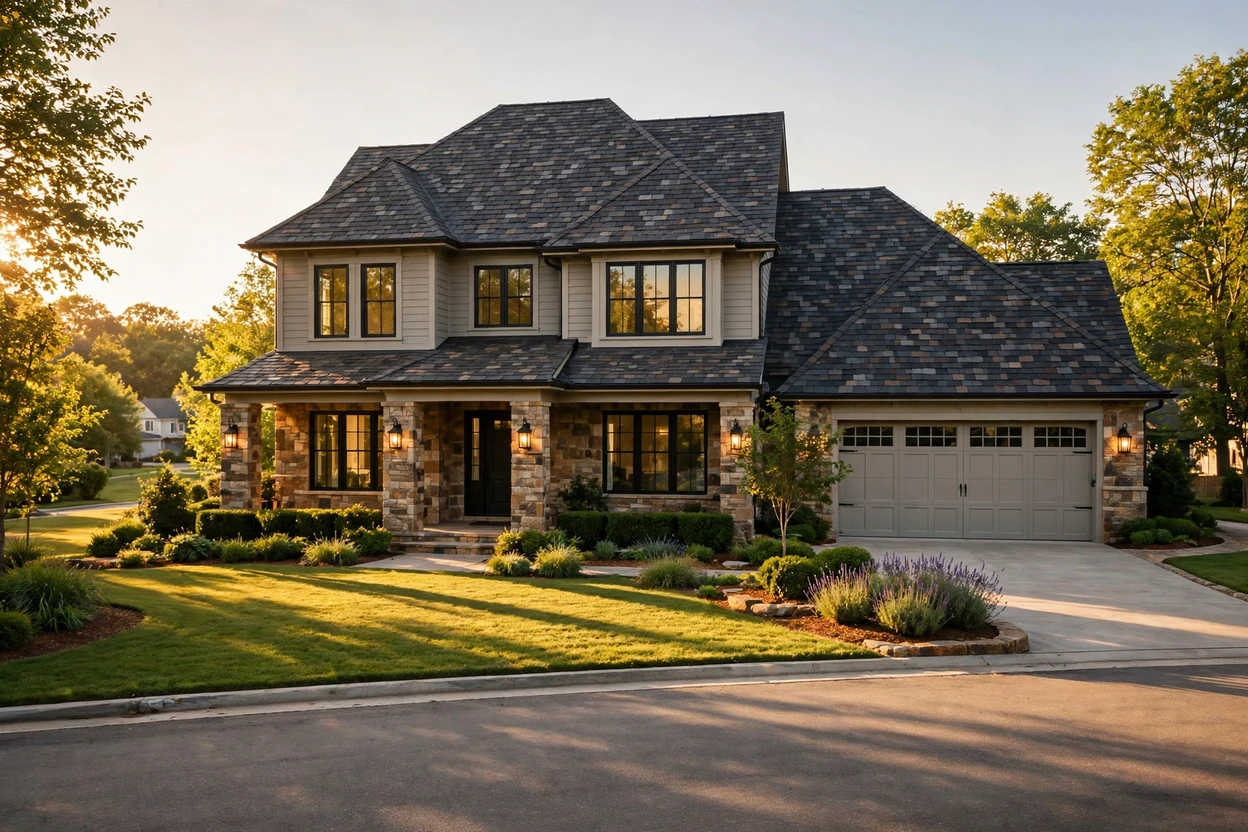
No, synthetic slate is not better than real slate on proven lifespan, because quarried slate roofs on historic US buildings have lasted for generations, but synthetic slate wins on weight, breakage resistance and structural cost. Two conditions favor the synthetic version. Choose it when the roof framing can’t carry natural stone, or when hail regularly cracks brittle materials.
The table below compares synthetic slate with a natural slate roof.
| Factor | Synthetic Slate | Natural Slate |
|---|---|---|
| Weight | Light; standard framing usually works | Heavy; framing often needs engineering review |
| Breakage | Flexes; resists cracking underfoot | Brittle; cracks when walked on |
| Hail | Class 4 on many lines | Can crack under large hail |
| Proven Lifespan | Shorter field history | Generations on historic buildings |
| Installer Pool | General roofers with brand training | Specialist slate roofers |
Synthetic slate generally installs on framing built for asphalt without added reinforcement, while natural slate often requires a structural review. There’s no verified cross-brand weight figure. Compare the weight per square on the data sheet with your existing roof, and ask the contractor to confirm framing capacity.
Plastic slate roof shingles also widen the contractor pool. Natural slate doesn’t. Real stone requires specialist crews and slate-specific tools, while the synthetic version goes on with general roofing crews who’ve completed the brand’s training.
Is Synthetic Cedar Shake Roofing Worth It?
Yes, synthetic cedar shake roofing is worth it for homeowners in wildfire zones, wet climates and HOA neighborhoods that require a wood look, because polymer shakes resist rot, splitting, insects and moss, and many lines earn Class A fire ratings that untreated wood shake shingles cannot match.
Real cedar shake roofing delivers natural grain and a silver patina. It has costs, though. Wood shake shingles absorb moisture and host moss, and they need fire-retardant treatment to earn a Class B or Class A rating. Some fire-prone communities restrict untreated wood roofs entirely.
The table below compares synthetic cedar shake with real cedar shake.
| Factor | Synthetic Cedar Shake | Real Cedar Shake |
|---|---|---|
| Rot and Insects | Not affected | Needs treatment and airflow |
| Fire Rating | Class A on many listed assemblies | Requires fire-retardant treatment |
| Maintenance | Occasional debris clearing | Periodic cleaning and retreatment |
| Appearance | Molded grain, consistent color | Natural grain, weathers to silver gray |
| Hail | Class 4 on many lines | Can split under hail |
Composite shingles in a shake profile also settle a common HOA conflict. Here’s how it plays out. Covenants in some neighborhoods require a wood look, while insurers or fire codes in the same area discourage real wood.
How Much Do Plastic Shingles Cost?
No verified national price figure is available for plastic shingles, but synthetic roofing consistently costs more than asphalt and requires less structural work than natural slate. Contractors price roofs per square. A square means 100 square feet (9.3 m²). Compare at least three itemized quotes for the same product on the same roof so the numbers actually line up side by side.
Prices swing with product line, profile, roof shape and local labor rates, and that’s exactly why published price ranges rarely agree. Treat any online cost-per-square range as a starting point. Local itemized bids should decide.
The table below lists the factors that change the cost of synthetic roofing.
| Cost Factor | Why It Changes Price |
|---|---|
| Product Line | Thicker profiles and premium blends cost more |
| Roof Pitch | Steep roofs need extra safety equipment and time |
| Roof Complexity | Valleys, dormers and skylights add cutting labor |
| Tear-Off | Removing old layers adds labor and disposal fees |
| Deck Repairs | Rotted sheathing is replaced per sheet |
| Underlayment | Fire-rated assemblies may need premium underlayment |
| Trim Pieces | Hip, ridge and starter pieces are priced separately |
Insurance savings can narrow the cost gap. Carriers in hail-prone states discount Class 4 roofs. Alabama law also requires insurers to offer discounts for roofs built to the Insurance Institute for Business & Home Safety (IBHS) FORTIFIED standard. Get your carrier’s discount in writing before you choose a product.
Compare lifecycle cost, not sticker price. Divide each bid’s installed cost by the warranty’s full-coverage years. Then subtract expected insurance savings over the same period to find the true annual cost of each option.
How Long Do Synthetic Roof Shingles Last?
Synthetic roof shingles carry long limited warranties from their manufacturers, but no verified independent field-life figure is available because the category is younger than slate, tile or cedar. Judge lifespan indirectly. Look at the warranty’s length and what it covers, plus UV weathering test results and the installer’s workmanship guarantee.
How long a fake slate roof lasts depends on the product line and the local climate it’s exposed to year after year. Installation quality counts too. The strongest predictor is a long, non-prorated warranty backed by a certified installer.
The table below lists the warranty terms to check before signing a contract.
| Warranty Term | What to Check |
|---|---|
| Material Coverage | Manufacturing defects only, or color change too |
| Proration | When full coverage drops to partial |
| Labor | Whether removal and reinstallation labor is covered |
| Transferability | Whether a home buyer inherits coverage |
| Installer Requirement | Whether certified installation is mandatory |
| Wind and Hail | Speed limits, hail size limits and exclusions |
Register the warranty within the manufacturer’s window. Keep the installer’s certification number with the contract, because some enhanced warranties apply only to certified installations.
Do Plastic Shingles Fade in the Sun?
Yes, plastic shingles fade slightly in the sun over time, but UV stabilizers mixed through the polymer slow color change, and many manufacturers test products with accelerated weathering. Pigment chemistry and color choice decide how much a roof shifts. So does climate. Some warranties cover color change beyond a set limit, which is worth checking before you sign.
Earth tones and blended grays generally show gradual shifts less than saturated single colors do, so they tend to age more gracefully on a roof. That’s by design. Many brands build blends meant to weather toward a natural slate or aged cedar look.
Ask the manufacturer for weathering test data and the warranty’s color-change clause. Sun exposure raises the stakes. Homes in high-UV regions such as Arizona, Nevada and New Mexico benefit most from running this check before signing a contract.
Choosing Plastic Shingles for Roof Projects by US Region
The right plastic shingles for roof projects in the USA depend on the local hazard: hail ratings matter most in the Plains, fire ratings in California’s wildland areas, wind approvals in Florida, and design approval in HOA neighborhoods. Start with local risk. Then match the product’s listings to the hazards your local code and your insurer treat as top priorities.
The table below compares regional priorities for synthetic roofing across the USA.
| Region | Main Hazard | Rating to Prioritize | Approval to Confirm |
|---|---|---|---|
| Plains Hail Belt | Large hail | UL 2218 Class 4 | Insurer discount terms |
| California WUI | Wildfire embers | Class A fire assembly | Chapter 7A compliance |
| Florida Coast | Hurricane wind | ASTM D7158 Class H | Florida Product Approval or NOA |
| Gulf Coast | Hurricane wind, hail | Wind and Class 4 | IBHS FORTIFIED eligibility |
| HOA Communities | Design rules | Profile and color | Architectural review approval |
Hail Belt States
Texas, Oklahoma, Kansas, Nebraska and Colorado see frequent damaging hail. That’s where Class 4 pays off. In those states, a Class 4 synthetic roof reduces the chance that you’ll need to file a claim after each storm rolls through.
Call your insurer before buying. Ask whether it discounts Class 4 roofs and what documentation it requires. Most carriers want the product name along with either the UL listing or a certificate from the contractor who installed it.
California Wildfire Zones
California Building Code Chapter 7A sets construction rules for wildland-urban interface (WUI) areas. The roof rule is strict. Homes in designated Very High Fire Hazard Severity Zones need a Class A roof assembly, not just a Class A product.
Look up your parcel’s hazard zone on the Office of the State Fire Marshal map first. Then compare listings. The synthetic product’s Class A listing has to match the exact underlayment and deck your contractor plans to use on your roof.
Florida and Hurricane Coasts
Yes, plastic shingles can go on a house in Florida, but the product needs Florida Product Approval, and homes in Miami-Dade and Broward counties need a Miami-Dade Notice of Acceptance (NOA). Neither is optional. These approvals confirm the product meets the Florida Building Code wind requirements for the High-Velocity Hurricane Zone (HVHZ).
Search the product on floridabuilding.org. Do it before signing a contract. Next door, Gulf Coast homeowners in Alabama should ask whether the new roof qualifies for an IBHS FORTIFIED designation and the insurance discount tied to it.
HOA Neighborhoods
Many HOAs require architectural review before any change in roof material. Prepare a full packet. Send the product brochure and color samples with the application, and include a physical sample so the committee can see the texture up close.
Synthetic slate and shake often win approval in communities that require a natural look, since they read as stone or wood from the street. Approval is never automatic, though. Wait for written sign-off before ordering material.
Are Recycled Plastic Roofing Shingles Eco-Friendly?
Recycled plastic roofing shingles are partly eco-friendly: they divert plastic and rubber waste from landfills and last long enough to reduce reroofing waste, but recycling them at end of life remains limited. Verify recycled-content percentages with the manufacturer. The FTC Green Guides require claims like these to be specific and supportable, so a vague “eco” label isn’t enough.
EcoStar and EcoSmart market recycled content in their synthetic slate and shake lines. Get specifics. Ask each brand for the percentage of post-consumer and post-industrial content in the exact product line you’re considering for your home.
The FTC Green Guides allow a “recyclable” claim without qualification only when recycling facilities are available to a substantial majority of consumers. Few US communities accept used synthetic shingles. Treat any end-of-life recycling promise as unverified unless the manufacturer runs a documented take-back program.
The table below compares the environmental strengths and limits of recycled synthetic shingles.
| Factor | Strength | Limit |
|---|---|---|
| Raw Material | Uses recycled plastic and rubber | Content varies by product line |
| Durability | Fewer reroofs reduce waste | Long field life not yet proven |
| Weight | Lighter loads for transport | Still petroleum-based |
| End of Life | Some take-back programs exist | Few local recycling options |
How to Hire an Installer for a Plastic Shingles Roof
Hire a contractor certified by the specific synthetic brand, because certified installation often determines warranty eligibility and whether the roof keeps its fire, wind and hail ratings. Check state licensing and insurance first. Before signing a contract for a plastic shingles roof, also look in person at recent synthetic projects the contractor has completed.
- Confirm the contractor holds current certification from the brand you selected.
- Verify the state or local contractor license through your licensing board.
- Request certificates of general liability and workers’ compensation insurance.
- Ask for addresses of two or three completed synthetic roofs you can view.
- Require an itemized bid listing product line, underlayment, flashing and trim pieces.
- Check that the underlayment matches the product’s Class A fire listing.
- Confirm the contractor pulls the building permit and schedules inspections.
- Get the workmanship warranty and manufacturer warranty registration in writing.
Inspect the roof deck during tear-off. Insist on written pricing for replacing rotted sheathing before work starts, so deck repairs don’t become a surprise charge.
Frequently Asked Questions
Do Plastic Roof Shingles Get Damaged by Hail?
No, Class 4 rated plastic roof shingles rarely crack from typical hail. Extreme hail is different. Very large stones can still damage any roof, so check the warranty’s hail size limits before you rely on coverage.
Can I Put Plastic Shingles on My House in Florida?
Yes. The product needs Florida Product Approval, and any home in Miami-Dade or Broward counties also needs a Miami-Dade Notice of Acceptance (NOA).
What Is Cheaper, Synthetic Shake or Real Cedar Shake?
No verified price comparison is available. Upfront bids vary locally, but synthetic shake avoids the recurring cleaning and retreatment costs that real cedar shake demands over its life. Compare itemized local quotes.
Does an HOA Accept Synthetic Shake?
Yes, many HOAs approve synthetic shake that matches a wood appearance. Approval isn’t guaranteed. Submit samples and brochures to the architectural review committee, and get written approval before you order any material for the job.
Can Plastic Shingles Be Recycled?
No, not usually. Few US facilities accept used synthetic shingles. Ask the manufacturer whether it runs a documented take-back program that collects old shingles at the end of their life.
Conclusion
Synthetic roofing is moving from niche to mainstream as hail losses and wildfire codes push homeowners toward tested, durable materials. Insurers are pushing, too. Plastic roof shingles fit that shift when the product carries current UL, ASTM and ICC-ES listings.
The next decade will add field data to what accelerated tests suggest today. Until then, ratings matter. Homeowners who pick a rated product line and a certified installer, backed by a clear warranty, will be positioned to benefit from expanding insurance incentives and stronger resilience programs such as IBHS FORTIFIED.