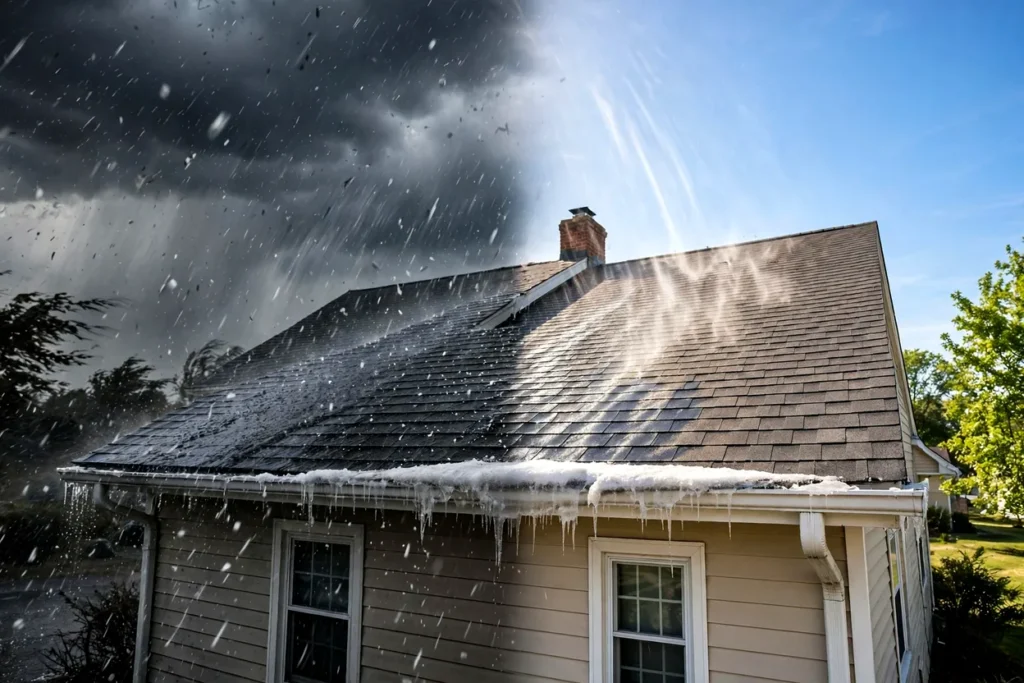
Weather effects on roofs are the forms of sudden damage and slow wear that hail, wind, ice, sun, rain, and wildfire embers cause to shingles, flashing, underlayment, and decking. Hail and wind cause the most sudden damage across the USA. UV exposure and freeze-thaw cycles work slower, wearing roofs down season after season. Your region picks the main threat.
Key Takeaways
- Wind and hail cause the most sudden roof damage in the USA, and the Insurance Information Institute (III) ranks wind and hail among the most frequent homeowners insurance claim causes.
- The weather effects on your roof depend on region: hail dominates the Great Plains, hurricanes the Gulf and Atlantic coasts, ice dams the Northeast and Midwest, UV the Southwest, and wildfire embers the West.
- Impact-resistant asphalt shingles rated UL 2218 Class 4 survive two strikes from a 2-inch (51 mm) steel ball in the same spot without cracking.
- Shingles rated ASTM D7158 Class H or ASTM D3161 Class F carry the highest standard wind ratings for asphalt shingles.
- Inspect your roof from the ground after every major storm, photograph damage, and contact your insurer before making permanent repairs.
What Are Weather Effects on Roofs?
Weather effects on roofs fall into two groups: sudden damage from single events such as hail, high wind, and hurricanes, and gradual damage from repeated exposure to UV rays, heat, rain, and freezing temperatures. Sudden damage shows up within hours. Gradual damage is sneakier, since it builds over years and shortens roof lifespan without any single event you can point to as the cause.
Most US homes wear asphalt shingles, so they get the focus here. Other materials aren’t immune. Metal, tile, slate, and wood shake roofs face the same weather, though each one fails in its own distinct way.
Think of a roof as layers. Shingles shed water, underlayment backs them up, flashing seals joints and penetrations, and the roof deck underneath carries the whole load of the system. Damage any one layer and water slips through to the one beneath it.
The table below compares sudden and gradual weather damage.
| Damage Type | Weather Causes | How Fast It Appears | Typical Result |
|---|---|---|---|
| Sudden | Hail, high wind, hurricanes, falling trees | Hours | Cracked, missing, or lifted shingles |
| Gradual | UV, heat, rain, freeze-thaw cycles | Months to years | Granule loss, curling, brittle shingles |
| Mixed | Snow and ice | Days to weeks | Ice dams, leaks, deck strain |
What Weather Has the Biggest Effect on Your Roof?
Wind and hail are the weather with the biggest effect on your roof across the USA, because both cause sudden, widespread damage that often requires repair or full replacement. The Insurance Information Institute (III) lists wind and hail among the most frequent causes of homeowners insurance claims. Still, local ranks differ. Ice dams and wildfire can rank higher in some regions.
The ranking below orders weather threats by how much sudden damage each one does to residential roofs across the country. National damage totals by weather type have no verified figure available here. Severity and reach set the order instead.
This table ranks the main weather threats and pairs each one with its defense standard.
| Weather Threat | Damage Type | Highest-Risk Regions | Defense Standard |
|---|---|---|---|
| 1. High wind and hurricanes | Uplift, missing shingles, deck loss | Gulf Coast, Atlantic Coast, Plains | ASTM D7158, IBHS FORTIFIED Roof |
| 2. Hail | Cracked mats, granule loss, dents | Great Plains, Front Range | UL 2218 Class 4 |
| 3. Wildfire embers | Ignition of roof and gutter debris | Western states | Class A fire rating |
| 4. Snow and ice | Ice dams, leaks, structural strain | Northeast, Midwest, mountains | IRC ice barrier |
| 5. Sun, heat, and UV | Brittle, curled, blistered shingles | Southwest, Southeast | ENERGY STAR cool roof |
| 6. Heavy rain | Leaks at flashing and valleys | Pacific Northwest, Southeast | Proper flashing and underlayment |
Weather Threats Ranked by US Region
Yes, the weather that damages roofs most varies by US region. A Texas roof and a Maine roof face very different threats. Match your roofing materials and maintenance plan to whatever threat ranks first where you live, not to a national average.
This table compares the top roof threats in each US region.
| Region | Top Threat | Second Threat | Key Defense |
|---|---|---|---|
| Great Plains (TX, OK, KS, NE) | Hail | Tornado and straight-line wind | Class 4 shingles |
| Gulf and Atlantic Coast | Hurricane wind | Wind-driven rain | FORTIFIED Roof, sealed deck |
| Northeast and Midwest | Ice dams | Heavy snow | Ice barrier, attic insulation |
| Southwest (AZ, NM, NV) | UV and heat | Monsoon storms | Cool roof shingles |
| West (CA, OR, WA, CO) | Wildfire embers | Rain and moss | Class A roof, ember vents |
| Southeast inland | Thunderstorm wind | Heat and humidity | High wind-rated shingles |
How Does Hail Damage a Roof?
Hail damages a roof by bruising and cracking asphalt shingles, knocking loose the protective granules, and denting metal flashing, vents, and gutters. The National Weather Service (NWS) classifies hail 1 inch (2.5 cm) or larger as severe. Bruised shingles lose UV protection and water resistance. Leaks follow months later.
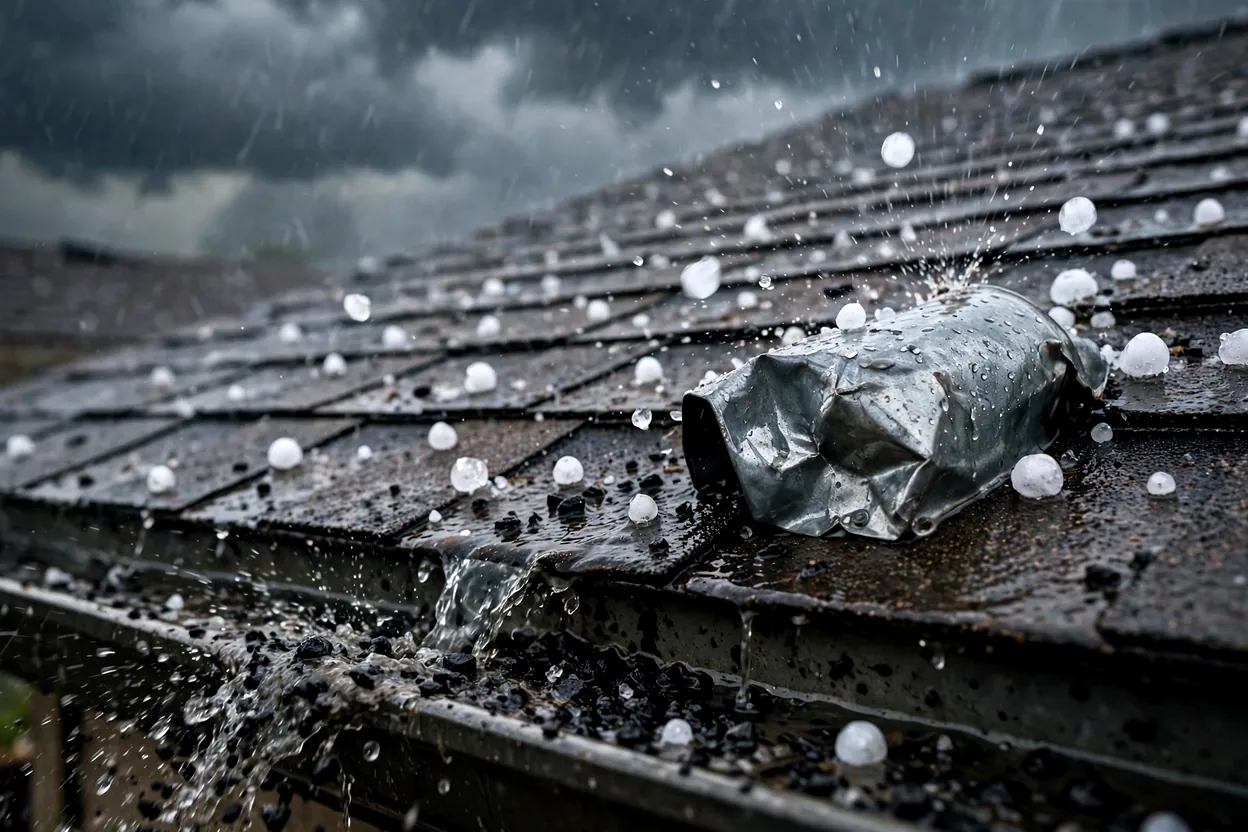
On asphalt shingles, hail damage looks like dark, round spots where the granules have been knocked away. Press a fresh hit. It’ll feel soft, like a bruise on fruit, and that give tells you the fiberglass mat hidden underneath has already fractured.
Wood shakes split along the grain when hail strikes them. Clay and concrete tiles crack or chip. Metal roofs dent, and softer metals such as aluminum gutters and vent caps show dents at smaller hail sizes than shingles do.
Follow these steps after a hail storm:
- Wait until the storm passes and lightning stops.
- Walk the property and photograph dents on gutters, downspouts, mailboxes, and car hoods.
- Collect hailstones and photograph them next to a coin or ruler to record size.
- Scan the roof from the ground with binoculars for dark spots and missing granules.
- Check gutters and downspout outlets for heavy granule buildup.
- Schedule a professional roof inspection after the storm if you find any damage signs.
Are Class 4 Shingles Worth the Cost?
Yes, Class 4 shingles are worth the cost in hail-prone regions such as the Great Plains, because they carry the highest impact rating under UL 2218. Many insurers in hail states offer premium discounts for Class 4 roofs. Ask your agent for the exact amount. No verified national figure for those discounts is available.
UL 2218 tests shingles by dropping steel balls onto them from set heights. The pass bar is strict. A shingle earns a class only if it shows no cracking after taking two impacts in exactly the same spot on its surface.
This table compares the four UL 2218 impact classes.
| Impact Class | Steel Ball Diameter (in / mm) | Hail Protection |
|---|---|---|
| Class 1 | 1.25 / 32 | Lowest rated level |
| Class 2 | 1.5 / 38 | Low |
| Class 3 | 1.75 / 44 | Moderate |
| Class 4 | 2 / 51 | Highest rated level |
Class 4 shingles resist damage, but they aren’t hail-proof. Very large hail still damages them. Read the warranty closely too, because a Class 4 rating doesn’t guarantee coverage for cosmetic granule scuffs under every manufacturer’s terms.
Can High Winds Blow Shingles Off?
Yes, high winds blow shingles off by creating uplift that breaks the adhesive seal strip and pulls shingles away from their nails. Damage starts at roof edges and corners, where wind pressure is highest. Ridges take a beating too. The NWS defines a severe thunderstorm as one producing winds of at least 58 mph (93 km/h).
Wind damage often starts small. One lifted shingle lets the wind get underneath, and then the next strong gust peels off the row sitting above it. Creased shingles, which bend back and fold, lose their seal even when they stay in place.
Debris adds its own damage. Large falling branches puncture the deck and crush rafters, while smaller flying debris scrapes off granules and tears shingle tabs.
Then there’s rain. Strong wind drives it sideways under shingles and through vents, so leaks show up even on roofs with no visible shingle loss at all.
What Wind Rating Should Shingles Have?
Shingles in hurricane and high wind zones should carry an ASTM D7158 Class H rating or an ASTM D3161 Class F rating. Both ratings mark the highest standard wind classes for asphalt shingles. Your local code may set a minimum. Confirm that requirement with your building department before installation.
ASTM D3161 uses a fan to blow air across installed shingles, while D7158 measures how well the sealed shingle resists uplift. Manufacturers print it on the bundle wrapper.
This table compares the main asphalt shingle wind classes.
| Wind Class | Test Standard | Rated Wind Speed (mph / km/h) |
|---|---|---|
| Class A | ASTM D3161 | 60 / 97 |
| Class D | ASTM D3161 or D7158 | 90 / 145 |
| Class F | ASTM D3161 | 110 / 177 |
| Class G | ASTM D7158 | 120 / 193 |
| Class H | ASTM D7158 | 150 / 241 |
Installation matters as much as the rating. Nailing shingles too high or using too few nails cancels out high wind performance, and so does skipping the starter strips.
Hurricane Season Roof Prep
The Atlantic hurricane season runs from June 1 to November 30, so complete roof prep in spring before storms form. Hurricanes start at 74 mph (119 km/h) on the Saffir-Simpson scale. That’s only the floor. A Category 3 storm brings sustained winds of 111 to 129 mph (179 to 208 km/h).
The Insurance Institute for Business and Home Safety (IBHS) created the FORTIFIED Roof standard to help homes ride out hurricanes with their roofs intact. It starts with a sealed roof deck. Ring-shank nails attach that deck, and high wind-rated shingles go on top. Higher FORTIFIED levels go further, adding protection for openings plus a continuous load path from roof to foundation.
Grant money exists in some states. Alabama and Louisiana, for example, run programs that help homeowners pay for FORTIFIED roofs, and your state insurance department can tell you what’s currently offered.
Follow these steps for hurricane season roof prep:
- Schedule a roof inspection in April or May.
- Replace missing, lifted, or creased shingles before June 1.
- Reseal flashing around chimneys, vents, and skylights.
- Trim tree limbs that hang over the roof.
- Clean gutters and downspouts so heavy rain drains fast.
- Photograph every roof slope to create a pre-storm record for insurance.
- Ask a roofer about hurricane straps and a sealed roof deck if your roof needs replacement.
Florida homes in Miami-Dade and Broward counties fall under the High-Velocity Hurricane Zone (HVHZ) rules of the Florida Building Code. Roofing products there need specific approvals.
What Causes Ice Dams on Roofs?
Ice dams form when heat escaping from the attic melts snow on the upper roof, and that meltwater refreezes at the colder eaves. Water pools behind the ridge. From there, that trapped water backs up under shingles and leaks into walls and ceilings. In cold states, ice dams rank as a leading cause of winter leaks.
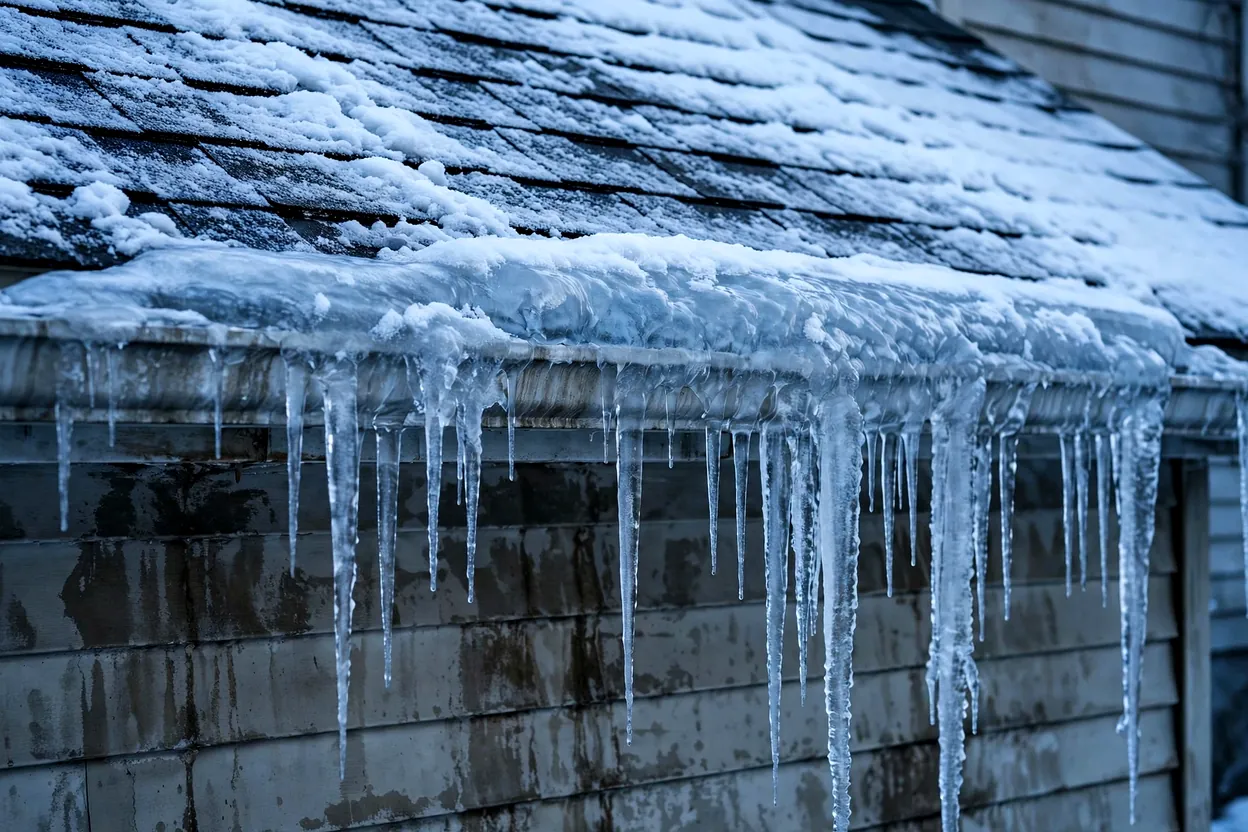
Ice dams need three conditions: snow on the roof, a warm upper roof surface above 32°F (0°C), and cold eaves below 32°F (0°C). Remove one, and the dams stop.
Most ice dams trace back to attic ventilation problems and poor insulation. Warm indoor air slips up into the attic through light fixtures and attic hatches, and it also finds its way in through gaps around pipes. That heat warms the deck from below.
The International Residential Code (IRC) requires an ice barrier in areas with a history of ice forming at the eaves. The barrier extends from the roof edge to at least 24 inches (610 mm) inside the exterior wall line. It’s a self-adhering membrane. Sealing around nails, it blocks water that backs up under the shingles.
Prevent ice dams with these steps:
- Seal air leaks between living space and attic.
- Add attic insulation to your local code level.
- Balance soffit and ridge ventilation to keep the attic cold.
- Install an ice barrier at the eaves during any reroof.
- Keep gutters clear before winter.
How to Remove an Ice Dam Safely
Remove an ice dam safely by raking snow off the lower roof from the ground and melting channels with calcium chloride, never by chipping the ice. Chipping with hammers or axes breaks shingles. Climbing an icy roof risks serious falls, so hire a pro with steam equipment for large dams.
Follow these steps to remove an ice dam:
- Pull snow off the lower 3 to 4 feet (0.9 to 1.2 m) of roof with a long-handled roof rake while standing on the ground.
- Fill a nylon stocking with calcium chloride ice melt.
- Lay the stocking across the ice dam so it hangs over the gutter.
- Let the calcium chloride melt a drainage channel through the ice.
- Call an ice dam removal company that uses low-pressure steam for thick or widespread dams.
Skip rock salt. It damages the plants growing below your eaves, and the runoff corrodes metal gutters and flashing on its way down.
Snow Load and Freeze-Thaw Cycle Damage
Heavy snow load strains roof framing, and freeze-thaw cycle damage widens cracks in shingles, flashing, and sealant. Water expands about 9 percent when it freezes. Small gaps can’t hold up. Repeated freezing and thawing pries them open until they leak.
Wet, packed snow weighs far more than fresh powder. Design limits differ. How much snow load a roof must carry varies by location, and your local building code is what sets that design limit.
Watch for these warning signs of snow overload:
- Sagging ceilings or roof lines
- Interior doors that suddenly stick
- New cracks in drywall near the ceiling
- Creaking or popping sounds from the attic
Don’t wait these out. If any of these signs appear during heavy snow, leave the house first and then call a structural engineer or roofer.
Does the Sun Damage Roof Shingles?
Yes, the sun damages roof shingles because UV rays break down the asphalt binder and heat speeds up that breakdown. Ceramic granules on the shingle surface block UV rays, but once those granules wear away, the exposed asphalt dries out and starts to crack and curl. Sun is the Southwest’s main slow threat.
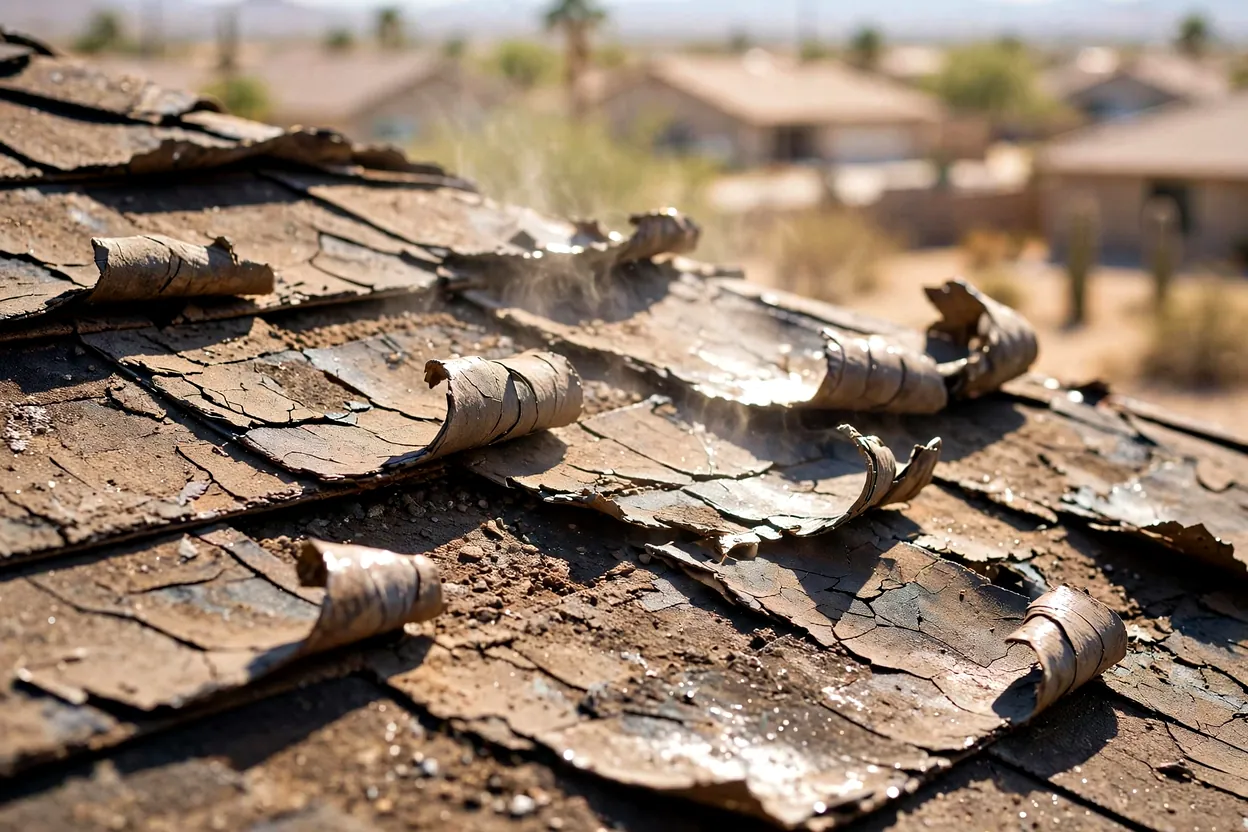
UV damage is slow. No single sunny day harms a roof, but years of exposure leave shingles brittle. South- and west-facing slopes in the Northern Hemisphere take the most sun, which is why they usually fail before the rest of the roof.
Roof blistering is a related heat problem. Blisters form when moisture or gas trapped inside a shingle expands as temperatures climb, and poor attic ventilation makes them worse because a hot attic heats the shingles from below.
This table compares common sun and heat damage signs.
| Damage Sign | Cause | What to Do |
|---|---|---|
| Granule loss | UV wear and age | Monitor gutters, plan replacement |
| Curling edges | Heat and drying asphalt | Inspect and replace affected shingles |
| Cracking | Brittle asphalt from UV | Repair before rain season |
| Blistering | Trapped moisture plus heat | Improve attic ventilation |
| Fading | Long sun exposure | Cosmetic, no action needed |
How Temperature Swings Cause Thermal Shock
Thermal shock happens when a hot roof cools suddenly, such as when a cold rain hits shingles after a scorching afternoon. Roofing materials contract fast. Repeated thermal shock loosens fasteners and splits shingles, and it also breaks the seal between the flashing and the roof surface.
Daily swings do the same thing slowly. Materials expand in daytime heat and contract at night. Over the years, that constant expansion and contraction pushes nails out of the deck and opens seams around chimneys and skylights.
High-desert areas with large day-to-night temperature swings see the most thermal shock. Storms make it worse. A summer thunderstorm rolling in after a hot afternoon adds one more sudden cooling event on top of the normal nightly drop.
Do Cool Roofs Reduce Heat Damage?
Yes, cool roofs reduce heat damage because reflective surfaces absorb less solar energy and stay cooler than standard roofs. Lower surface temperatures slow asphalt breakdown and cut attic heat. Certification helps you spot them. ENERGY STAR certifies cool roof products that meet set solar reflectance levels.
For steep-slope roof products such as shingles, ENERGY STAR requires an initial solar reflectance of at least 0.25 before certification. Low-slope products need at least 0.65. In a hot climate, ask your roofer for ENERGY STAR certified shingles.
Can Heavy Rain Cause Roof Leaks?
Yes, heavy rain causes roof leaks when water finds damaged shingles, failed flashing, clogged gutters, or worn sealant around roof penetrations. Rain alone rarely hurts a healthy roof. Heavy rain exposes weak spots that hail, wind, sun, and age already created.
Most leaks after rain start at flashing. Chimneys, skylights, plumbing vent boots, and roof valleys all depend on it to seal their joints. Rubber vent boots deserve a close look, because they crack with age and sun exposure and become a common source of leaks.
Clogged gutters cause trouble too. When they fill up, water backs up under the roof edge, and that overflow rots fascia boards and soaks the deck at the eaves.
Low-slope roofs drain slower than steep ones. Water that sits on those flatter sections finds small gaps and breaks down roofing membranes faster than runoff on a steep pitch would.
Ceiling stains can mislead you. Water damage usually shows up some distance from the actual leak, because the water runs along rafters and the deck before it drips onto drywall.
How to Find the Leak Source
Find a roof leak source by tracing water stains in the attic uphill along the rafters to the spot where water enters. Ceiling stains rarely sit right under the leak itself. Start with the usual suspects. Check flashing, vent boots, and valleys first, because those areas fail most often.
Follow these steps to find a roof leak:
- Go into the attic during or right after rain with a flashlight.
- Look for wet wood, dark stains, or mold on the roof deck and rafters.
- Trace the water trail uphill to its highest point.
- Push a long nail or wire through the leak point to mark it from outside.
- Check the roof surface near that mark for damaged shingles, flashing, or vent boots.
- Run a garden hose over sections one at a time with a helper inside if the leak stays hidden.
How Does Wildfire Affect a Roof?
Wildfire affects a roof mainly through wind-blown embers that land on the roof, ignite dry debris in gutters, and enter the attic through vents. Embers outrun the fire front. In fire-prone western states, a Class A fire-rated roof gives the best protection when you pair it with clean gutters and ember-resistant vents.
Fire ratings for roof coverings come from tests in ASTM E108 and UL 790. Class A is the top rating. Asphalt shingles, metal, clay tile, concrete tile, and slate commonly carry a Class A rating, but untreated wood shakes don’t make the cut.
California goes further. Chapter 7A of the California Building Code sets wildfire construction rules for roofs and vents, and it applies in designated fire hazard areas.
Protect your roof from wildfire embers with these steps:
- Choose a Class A fire-rated roof covering when you reroof.
- Clear leaves and pine needles from gutters and roof valleys.
- Cover attic and soffit vents with noncombustible metal mesh 1/8 inch (3 mm) or smaller.
- Trim branches back from the roof and chimney.
- Install noncombustible gutter guards.
How Do I Know If My Roof Has Storm Damage?
You know your roof has storm damage when you see missing or lifted shingles, dark hail spots, dented metal, heavy granules in gutters, or new water stains inside. Check from the ground first with binoculars. Some damage, such as cracked shingle mats, only shows up during a close professional inspection.
Start outside. Walk around the house and study each roof slope and the gutters, then scan the ground below the eaves for debris. Shingle pieces and tabs in the yard confirm wind damage.
Then head inside. Look over the ceilings and the tops of walls for fresh stains, and in the attic, watch for damp insulation or daylight showing through the deck.
Signs of Roof Damage Checklist
The clearest signs of roof damage are missing shingles, cracked shingles, exposed nail heads, dented flashing, and water stains on ceilings. Each sign points to a specific weather cause. Some can’t wait. Repair high-urgency signs within days to stop water damage from spreading.
This table lists common signs of roof damage, their likely cause, and urgency.
| Damage Sign | Likely Weather Cause | Urgency |
|---|---|---|
| Missing or lifted shingles | High wind | High |
| Dark round spots on shingles | Hail | High |
| Granules piled in gutters | Hail or aging | Medium |
| Dented vents, gutters, flashing | Hail | Medium |
| Ice ridge at eaves | Ice dam | High |
| Curled or cracked shingles | Sun, heat, age | Medium |
| Ceiling water stains | Any leak source | High |
| Sagging roof line | Snow load or deck rot | Emergency |
Should I Hire an Inspector or a Roofer?
Hire a licensed roofer for storm damage inspection when you plan to repair or file a claim, and hire an independent inspector when you want an unbiased opinion. Roofers both inspect and repair, so they know damage patterns well. Independent inspectors don’t sell repairs. That removes any sales pressure from the visit.
This table compares a roofer and an independent inspector.
| Professional | Best For | Sells Repairs | Insurance Help |
|---|---|---|---|
| Licensed roofer | Repair quotes, claim support | Yes | Often meets the adjuster |
| Independent inspector | Unbiased condition report | No | Report supports your claim |
| Insurance adjuster | Claim decision | No | Works for the insurer |
Vet any roofer before signing. Confirm a state or local license where your state requires one, then make sure the company carries liability insurance and has a local address.
Does Homeowners Insurance Cover Weather Damage to a Roof?
Yes, most standard homeowners insurance policies cover sudden roof damage from wind, hail, lightning, and the weight of snow and ice. Exclusions matter, though. Standard policies exclude wear and tear and neglected maintenance, and they also exclude flood damage. Flood coverage requires a separate policy, such as one from the National Flood Insurance Program (NFIP).
Your homeowners insurance policy sets the details. Many coastal and hail-prone states allow separate wind and hail deductibles, which are often set as a percentage of dwelling coverage rather than a flat dollar amount.
Insurers look hard at roof age. Some policies pay less for older roofs, and some limit coverage for cosmetic hail damage on metal roofs, so read the roof section before storm season.
ACV vs RCV Coverage
Replacement Cost Value (RCV) coverage pays the full cost to replace a damaged roof, while Actual Cash Value (ACV) coverage pays replacement cost minus depreciation for age. RCV pays more on older roofs. ACV policies usually cost less in premiums but leave you paying a larger share.
This table compares ACV and RCV roof coverage.
| Coverage Type | What It Pays | Effect of Roof Age | Premium Cost |
|---|---|---|---|
| ACV | Replacement cost minus depreciation | Older roof, lower payout | Lower |
| RCV | Full replacement cost | Age does not reduce payout | Higher |
Many RCV policies pay in two parts. The insurer sends the ACV amount first, then releases the withheld depreciation once you’ve finished the repair and shown proof of the completed work.
How to File a Roof Damage Insurance Claim
File a roof damage insurance claim by documenting damage with photos, preventing further damage, and contacting your insurer before permanent repairs begin. Claim filing deadlines vary by state and policy. Act fast. Late reports give insurers grounds to question whether the damage really came from the storm.
Follow these steps to file a storm damage claim:
- Photograph and video every damaged area, inside and out, with dates visible.
- Cover holes with a tarp to prevent more water damage, and keep the receipts.
- Call your insurer or file online to open the claim.
- Get a written inspection report from a licensed roofer.
- Meet the insurance adjuster at the property, with your roofer present if possible.
- Compare the adjuster’s estimate with your roofer’s estimate line by line.
- Request a reinspection or invoke the appraisal clause in your policy if you disagree.
Keep every email, estimate, and receipt together in a single folder. If a claim stalls, your state insurance department handles complaints.
How to Protect Your Roof from Weather Year-Round
Protect your roof from weather year-round by inspecting it twice a year, cleaning gutters, keeping the attic cold and ventilated, and fixing small damage before storm season. Small repairs stop weather from turning minor wear into leaks. Regular care helps you extend the roof lifespan.
The National Roofing Contractors Association (NRCA) recommends roof inspections at least twice a year, in spring and fall, with an extra check after major storms.
Ventilation pulls double duty. A cold, vented attic prevents ice dams in winter, and in summer that same airflow cuts down on the heat that ages shingles from below.
Reroofing is the time to upgrade. Class 4 shingles, high wind-rated shingles, a sealed roof deck, and an ice barrier all cost less to add during a replacement than at any other point in a roof’s life.
Seasonal Roof Maintenance Schedule
A seasonal roof maintenance schedule assigns specific tasks to spring, summer, fall, and winter so each weather threat gets attention before it peaks. Spring targets storm and hurricane prep. Fall shifts the focus to ice dam prevention and gutter cleaning.
This table lists seasonal roof maintenance tasks and the weather each one addresses.
| Season | Key Task | Weather Addressed |
|---|---|---|
| Spring | Inspect roof and reseal flashing | Hail, wind, hurricanes |
| Summer | Check attic ventilation and heat | UV, heat, thermal shock |
| Fall | Clean gutters and trim trees | Rain, wind, wildfire embers |
| Winter | Rake snow and watch for ice dams | Snow, ice, freeze-thaw |
| After any storm | Ground-level damage check | All severe weather |
Frequently Asked Questions
How Soon After a Storm Should I Inspect My Roof?
Do a ground-level check within 24 hours, once the storm has safely passed. Then book a professional inspection within a few days, because hidden hail fractures and lifted shingles get worse with the next rain.
Does Moss or Algae Damage a Roof?
Yes, moss damages a roof by holding moisture and lifting shingle edges. Algae is different. Those dark streaks are mostly cosmetic. Remove moss gently with a roof-safe cleaner, never a pressure washer, since high pressure strips granules.
Do Metal Roofs Handle Severe Weather Better Than Asphalt Shingles?
Yes, metal roofs resist wind and fire well and shed snow easily. Large hail can still dent them. Look for a UL 2218 Class 4 rating, and confirm how your insurer handles cosmetic damage before you buy.
Can a Roof Be Replaced in Winter?
Yes, roofers replace roofs in winter, but asphalt shingle sealant strips need warmth to bond fully. Installers hand-seal shingles to make up for it. Expect delays when snow, ice, or rain hits the schedule.
How Do I Avoid Storm-Chaser Roofing Scams?
Hire local roofers with a verifiable address, license, and insurance. Refuse large upfront payments. Never sign a contract assigning your claim on the spot, and check complaint records with your state attorney general.
Conclusion
Weather effects on roofs will keep shifting as storm patterns, building codes, and roofing materials change. Impact-resistant shingles, higher wind ratings, and programs like IBHS FORTIFIED Roof are becoming standard options in many markets. More insurers now reward homeowners who use them.
Your next step is simple. Figure out which weather threat ranks first in your region, then check your roof against the standard that matches it and plan your next upgrade around that gap. A roof built for local weather costs less to insure and lasts longer, storm after storm.