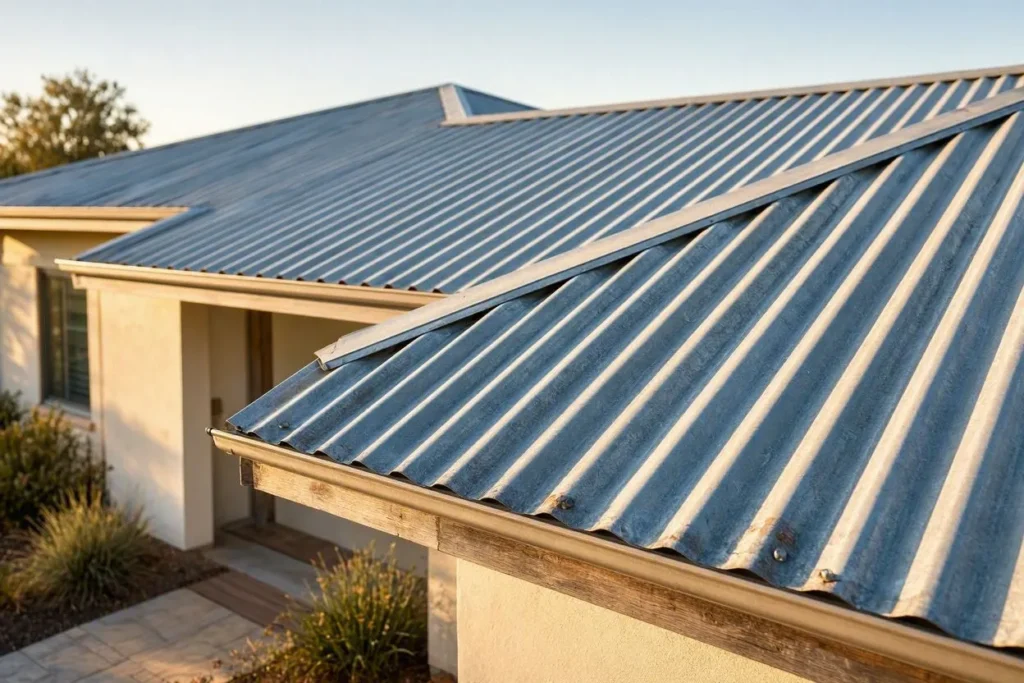
Most homeowners shopping for a new roof never consider recycled metal. They assume “recycled” means compromised. Shorter lifespan. Less durable. Somehow inferior.
That assumption costs them thousands. Recycled metal roofing performs identically to new metal roofing at 30–50% lower cost. The steel doesn’t forget how to be steel because it’s been reclaimed. The aluminum doesn’t lose its corrosion resistance because it came from a previous building.
This guide covers what recycled metal roofing actually is, what it costs, how it performs, and how to decide if it’s right for your project.
What Is Recycled Metal Roofing?
Recycled metal roofing is roofing material manufactured from reclaimed or post-consumer metal — primarily steel and aluminum rather than raw virgin materials.
Two types exist:
1. Post-consumer recycled content: Metal recovered from old vehicles, appliances, demolished buildings, and industrial scrap. This metal gets melted down and remanufactured into new roofing panels. The end product looks and performs exactly like brand-new roofing.
2. Reclaimed metal panels: Actual used panels removed from existing structures that are resold for reuse. These panels are inspected, cleaned, and resold at significant discounts.
Most major metal roofing manufacturers including DECRA, Metal Sales, and McElroy Metal now produce panels with 25–95% recycled content. When you buy “new” metal roofing, you are often already buying recycled metal without knowing it. The difference with explicitly recycled or reclaimed options is the price. You pay less. You get the same roof.
Recycled Metal Roofing Cost
Recycled metal roofing costs $3.50–$9.00 per square foot installed compared to $7.00–$16.00 per square foot for new metal roofing.
Cost breakdown by panel type:
| Panel Type | New (Installed) | Recycled (Installed) | Savings |
|---|---|---|---|
| Corrugated steel | $7–$12/sq ft | $4–$7/sq ft | 30–40% |
| Ribbed/R-panel | $8–$13/sq ft | $5–$8/sq ft | 35–40% |
| Standing seam steel | $10–$16/sq ft | $6–$10/sq ft | 35–45% |
| Standing seam aluminum | $11–$17/sq ft | $7–$11/sq ft | 35–45% |
On a 2,000 sq ft roof:
- New standing seam: $20,000–$32,000
- Recycled standing seam: $12,000–$20,000
- Savings: $8,000–$12,000
That gap funds an entirely new HVAC system. Or a kitchen renovation. Or 15 years of roof maintenance.
What Affects Recycled Metal Roofing Cost
4 factors move the price:
1. Panel condition — Reclaimed panels in excellent condition cost more than panels with cosmetic weathering. Both perform identically. Choose based on visibility.
2. Gauge — 24-gauge recycled steel costs more than 26-gauge but lasts longer. Never go below 26-gauge for a residential roof.
3. Paint finish — Recycled panels with intact PVDF (Kynar) finish cost more than SMP-coated or bare galvanized. PVDF holds color for 40+ years worth the premium on visible roof sections.
4. Source and availability — Reclaimed panels from local demolition projects cost less than panels shipped nationally. Ask local roofing suppliers about regional availability.
How Recycled Metal Roofing Performs
Recycled metal roofing performs identically to new metal roofing across every performance category. Steel does not degrade during the recycling process. Aluminum does not lose corrosion resistance. The physical properties of the metal are unchanged.
Lifespan
Recycled steel roofing lasts 40–60 years. Recycled aluminum lasts 40–60 years. These figures match new metal roofing lifespans exactly.
Compare that to asphalt shingles at 15–25 years. Recycled metal outlasts asphalt by 2–3x at a comparable or lower total cost.
Wind Resistance
Metal roofing new or recycled handles wind loads that destroy asphalt shingles. Properly installed standing seam panels resist winds up to 140 mph. Exposed fastener corrugated panels handle 90–110 mph depending on fastener spacing and gauge.
Hail Resistance
24-gauge steel achieves a Class 4 impact rating the highest available. That rating does not change because the steel was previously used. Class 4 certification means the panel survives a 2-inch (50mm) steel ball dropped from 20 feet. Most hail events never reach that severity.
Fire Resistance
All metal roofing carries a Class A fire rating the highest available. Recycled metal is non-combustible. Fire resistance is a property of the material, not its origin.
Energy Efficiency
Metal roofs with reflective coatings reflect 60–70% of solar heat versus 10–20% for asphalt shingles. This reduces attic temperatures and cuts cooling costs 10–25% annually.
In hot climates like Texas, Florida, and Arizona, that translates to $300–$600 in annual energy savings. Over 50 years: $15,000–$30,000 saved on electricity.
Recycled panels with intact reflective coatings deliver the same energy savings as new panels. The coating performance depends on finish condition, not panel age.
Patina and Weathering
Older reclaimed metal panels often carry natural weathering a dull, oxidized surface with character that new panels cannot replicate. Many architects and homeowners specifically seek this aesthetic for barns, farmhouses, and industrial-style buildings.
Galvanized steel develops a distinctive gray weathered look. Copper develops its famous green patina. Zinc develops a blue-gray protective layer. These patinas actually improve corrosion resistance, not reduce it.
Environmental Benefits of Recycled Metal Roofing
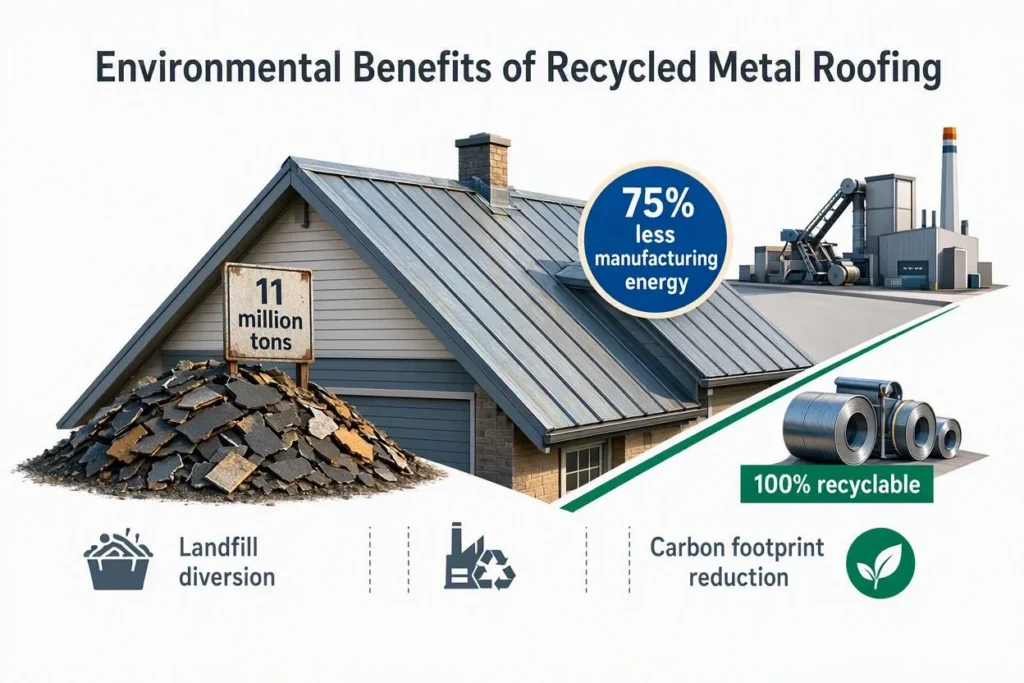
Recycled metal roofing reduces manufacturing energy use by 75% compared to producing new metal from raw ore.
3 specific environmental benefits:
1. Landfill diversion — 11 million tons of asphalt shingles enter U.S. landfills annually. Metal roofing is 100% recyclable at end of life. Choosing metal new or recycled permanently removes roofing from the landfill cycle.
2. Carbon footprint reduction — Producing recycled steel requires 75% less energy than producing virgin steel. Recycled aluminum requires 95% less energy than smelting new aluminum from bauxite ore. The carbon savings are substantial.
3. Resource conservation — Every ton of recycled steel saves 1.4 tons of iron ore, 0.5 tons of coal, and 74% of the energy required for virgin production. Choosing recycled metal directly reduces mining demand.
For homeowners pursuing LEED (Leadership in Energy and Environmental Design) certification or green building credits, recycled metal roofing contributes points across multiple categories.
Recycled Metal Roofing vs New Metal Roofing
| Factor | Recycled Metal | New Metal |
|---|---|---|
| Upfront cost | $3.50–$9.00/sq ft installed | $7.00–$16.00/sq ft installed |
| Lifespan | 40–60 years | 40–70 years |
| Performance | Identical | Identical |
| Appearance | May show weathering | Uniform, consistent |
| Availability | Limited, regional | Available everywhere |
| Environmental impact | Lower | Higher |
| Warranty | Limited or none | Manufacturer warranty |
The 2 main trade-offs with recycled metal:
Appearance consistency — Reclaimed panels may show variation in color, weathering, or minor cosmetic marks. For barns, sheds, or industrial buildings, this adds character. For high-visibility residential roofs where uniform color matters, source carefully or consider recycled-content new panels instead.
Warranty coverage — New metal roofing carries manufacturer warranties of 30–50 years. Reclaimed panels typically carry no manufacturer warranty. Factor this into your decision for permanent structures.
Recycled Metal Roofing vs Asphalt Shingles
This is the real comparison most homeowners need. 50-year total cost on a 2,000 sq ft roof. Asphalt shingles (replaced 2–3 times):
- Initial install: $10,000–$16,000
- Replacement 1 (year 18–20): $14,000–$20,000
- Replacement 2 (year 36–40): $18,000–$25,000
- Maintenance over 50 years: $4,000–$8,000
- Higher energy costs: $10,000–$15,000
- Total: $56,000–$84,000
Recycled metal roofing (one install):
- Initial install: $8,000–$18,000
- Maintenance over 50 years: $2,000–$4,000
- Energy savings: -$10,000–$20,000
- Total: $0–$22,000 net
Recycled metal saves $34,000–$84,000 over 50 years compared to asphalt shingles. The cheapest long-term roofing decision is metal new or recycled.
5 Types of Projects Best Suited for Recycled Metal Roofing
1. Agricultural buildings — Barns, stables, equipment sheds, and storage structures. Appearance consistency matters less. Budget matters more. Recycled corrugated steel is the default choice for farm buildings.
2. Commercial and industrial — Warehouses, workshops, and commercial storage facilities where function outweighs aesthetics. Recycled R-panel or PBR panel works perfectly.
3. Budget residential re-roofs — Homeowners who want metal durability without the full metal price tag. Recycled-content standing seam delivers 40–60 year performance at 35–45% lower cost.
4. Architectural accent projects — Porches, carports, covered walkways, and outbuildings where weathered metal aesthetics are desirable.
5. Green building projects — New construction or renovations targeting LEED certification, net-zero energy goals, or sustainability benchmarks.
How to Source Recycled Metal Roofing
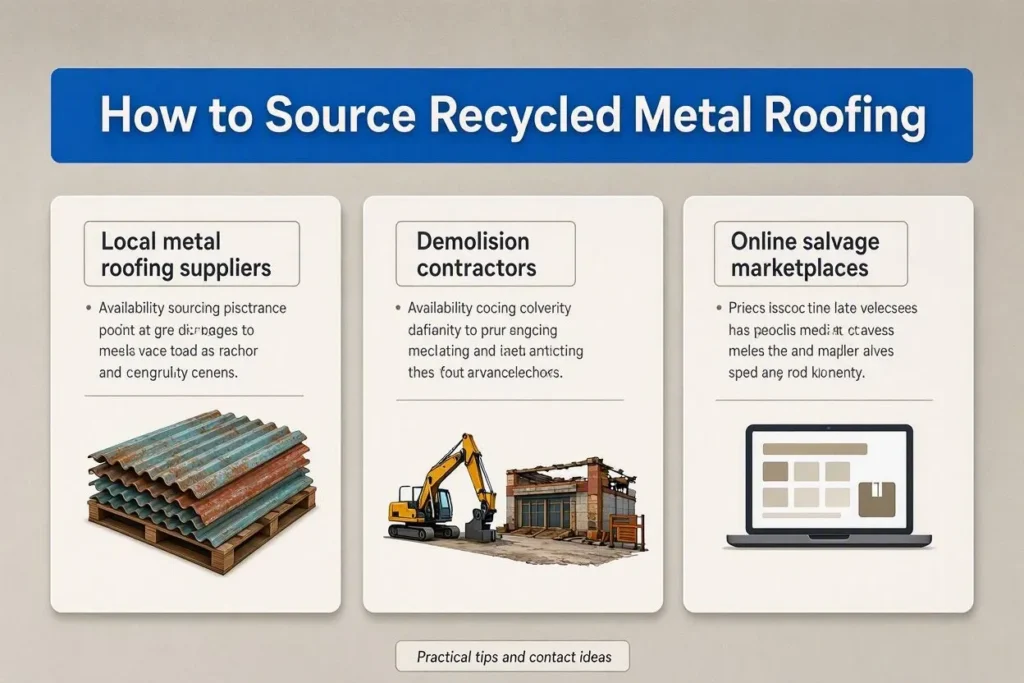
3 reliable sources:
1. Local metal roofing suppliers — Many suppliers stock reclaimed panels from commercial demolition projects. Call ahead and ask specifically about recycled or reclaimed inventory. Availability varies by region.
2. Demolition contractors — Buildings being demolished often yield large quantities of metal panels in good condition. Demolition contractors sell salvaged materials directly or through salvage yards.
3. Online marketplaces — Craigslist, Facebook Marketplace, and specialty salvage sites list reclaimed metal panels regularly. Inspect before buying — ask for gauge, condition photos, and measurements.
What to check before buying reclaimed panels:
- Gauge — measure with a gauge tool, not by feel
- Rust penetration — surface oxidation is cosmetic, through-rust is structural
- Panel straightness — warped panels install poorly
- Fastener holes — existing holes limit reuse options on some panel types
- Coating condition — peeling or delaminating paint signals end-of-life panels
Never buy reclaimed panels without physically inspecting them first.
Installation: What Changes With Recycled Metal
Nothing changes structurally. Recycled metal roofing installs identically to new metal roofing. Same fasteners, same underlayment, same trim pieces, same techniques.
2 practical differences:
- Panel dimensions — Reclaimed panels come in fixed lengths from the original installation. Measure your roof carefully before sourcing panels. Mixing lengths from different sources creates alignment problems.
- Pre-drilled holes — Some reclaimed exposed-fastener panels have existing screw holes from previous installation. These holes need to be positioned away from new fastener locations or sealed during installation. A competent installer handles this without issues.
Labor costs for recycled metal installation are identical to new metal installation $3–$11 per square foot depending on panel type and roof complexity.
Is Recycled Metal Roofing Worth It?
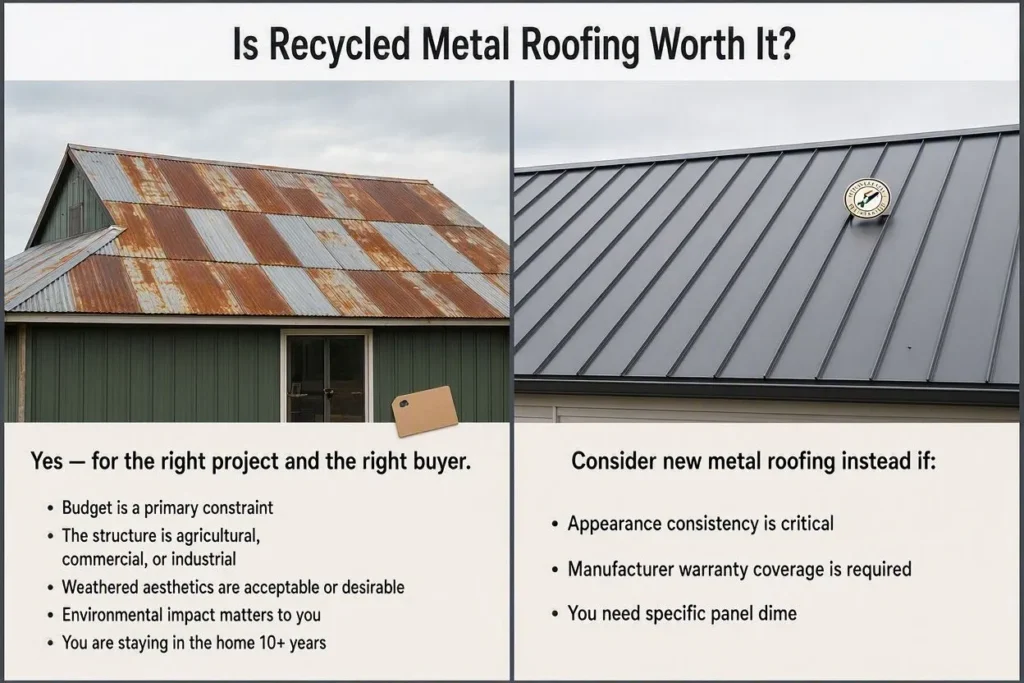
Yes — for the right project and the right buyer.
Choose recycled metal roofing if:
- Budget is a primary constraint
- The structure is agricultural, commercial, or industrial
- Weathered aesthetics are acceptable or desirable
- Environmental impact matters to you
- You are staying in the home 10+ years
Consider new metal roofing instead if:
- Appearance consistency is critical
- Manufacturer warranty coverage is required
- You need specific panel dimensions unavailable in reclaimed inventory
- The building is high-visibility residential
For most homeowners, the smartest path is new metal roofing manufactured with high recycled content typically 25–95% depending on manufacturer. You get consistent appearance, full warranty coverage, and significantly lower environmental impact than virgin-material options, often at no price premium over standard new panels.
The worst decision is choosing asphalt shingles to save money upfront. Recycled metal costs the same or less than asphalt over a 20-year period and dramatically less over 50 years.
Conclusion
Recycled metal roofing delivers 40–60 year performance at 30–50% less than new metal roofing. The steel performs identically. The aluminum corrodes at the same rate. The fire and wind ratings are unchanged. The trade-off is appearance consistency and warranty coverage both manageable with the right sourcing approach.
For agricultural buildings, commercial structures, and budget-conscious residential projects, recycled metal is the most cost-effective roofing material available. Period.
At Rainy Roofers, we work with both new and recycled metal roofing options. Contact us for a free consultation we’ll match the right material to your budget, building type, and performance requirements.