
Look, how to repair roof leak issues before they turn your ceiling into a swimming pool isn’t rocket science. But most homeowners freeze up when they spot that first water stain. I get it. I’ve been there.
Last summer, I woke up to water dripping onto my bed during a storm. Not fun. That single roof leak taught me more about home maintenance than any YouTube video ever could.
Why Your Roof is Leaking (And It’s Probably Not What You Think)
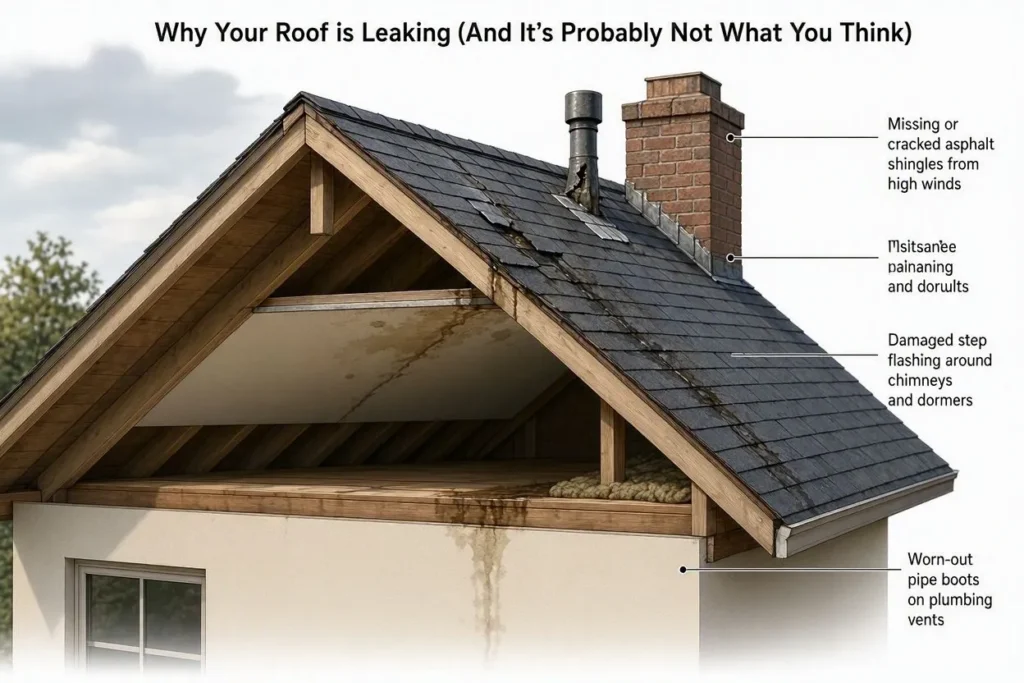
Here’s the truth: roof leaks in heavy rain rarely happen where you see the water stain on your ceiling.
Water is sneaky. It enters through damaged shingles or cracked flashing, runs down rafters, and shows up 10 feet away from the actual problem.
The most common culprits:
- Missing or cracked asphalt shingles from high winds
- Damaged step flashing around chimneys and dormers
- Worn-out pipe boots on plumbing vents
- Ice dams in colder climates
- Clogged gutters causing water backup
I learned this the hard way. Spent an hour sealing the wrong spot before realizing the leak was actually near my chimney.
How to Find the Real Source of Your Roof Leak
Start in your attic with a flashlight. You’re looking for:
- Water stains on the underside of the roof deck
- Mold growth (that black fuzzy stuff)
- Flow lines where water traveled down rafters
- Wet insulation that looks flat and dark
Pro tip: Do this during heavy rain. Active leaks are way easier to spot.
Can’t access your attic? Grab binoculars and check from the ground. Look for missing shingles waving goodbye in the wind. Mark the location on a sketch. Measure from two walls. You’ll need this when you get on the roof.
The Quick Fix: How to Repair Roof Leak From Inside (Temporarily)
Sometimes you need to stop the bleeding before you can do surgery.
Emergency indoor fixes:
- Place buckets under active leaks
- Push a screwdriver through the wet spot to create a drain hole (sounds crazy, but it prevents ceiling collapse)
- Spread tarps in the attic to protect insulation
This buys you time. But it’s not a permanent solution. Never let a roof leak sit longer than a few days. Water damage spreads fast.
How to Fix a Leaking Roof From the Outside: The Real Work
Safety first. Wear rubber-soled shoes. Use a roofing harness. Never work alone. Wait for a dry, sunny day. Wet roofs are death traps.
For Small Cracks and Exposed Nails
Roof sealant is your best friend here.
- Clean the area with a brush
- Apply thick bead of silicone sealant or roof cement
- Smooth it with a putty knife
- Cover exposed nail heads completely
I keep a tube of Henry’s roofing cement in my garage. Cost me $8 and saved me hundreds.
For Missing or Damaged Shingles
Here’s the process:
- Pry up nails from the damaged shingle using a utility knife
- Slide the new shingle into place
- Secure with 6d galvanized roofing nails
- Apply roofing cement over nail heads
- Press down surrounding shingles to create a watertight seal
Use chalk lines to keep everything straight. Your shingles work best when they align properly. Don’t eyeball it. Trust me.
For Flashing Problems Around Vents and Chimneys
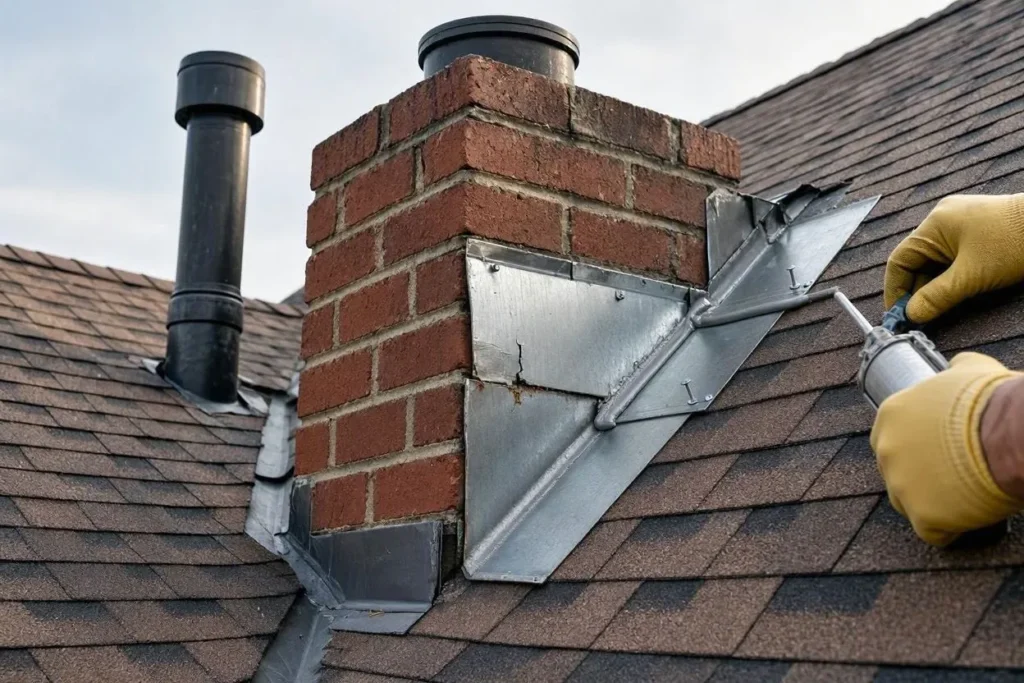
This is where most roof leak repair costs come from. Flashing is exposed to the elements and takes a beating.
Check these penetrations:
- Plumbing vent pipes
- Chimney walls
- Dormer joints
- Valley intersections
If the step flashing is cracked, replace it. Slip new flashing under the shingles above, secure with roofing nails, and seal edges with caulk. For roof leaks around vent pipe, replace the pipe boot. The rubber seal degrades from UV exposure after 10-15 years.
Flat Roof Leak Repair: A Different Beast
Flat roofs are built with layers of roofing felt and tar. Look for blisters where the top layer is separated.
To fix a blister:
- Slice it open with a utility knife
- Press out trapped water
- Dry the inside (use a propane torch carefully)
- Spread roof cement inside
- Nail down the edges
- Cover everything with more cement
My neighbor ignored a small blister for two years. Eventually needed a full roof replacement. Don’t be that guy.
Roof Leak Repair Sealant: What Actually Works
Not all sealants are created equal.
For bitumen-based products (most asphalt shingles):
- Roof cement works best
- Silicone won’t stick long-term to tar
For metal roofs:
- Use metal-specific sealants
- Self-tapping screws with rubber washers
For TPO or modified bitumen:
- Check manufacturer specs
- Wrong product voids warranties
I’ve seen people try Flex Seal. Works okay for tiny cracks. Not a long-term fix for structural damage.
When to Call a Professional Roofer (Know Your Limits)
DIY saves money on labor. But some jobs need experts.
Call the pros when:
- Your roof is sagging (structural damage)
- You have extensive water damage throughout the attic
- Multiple areas are leaking
- The roof is 20+ years old
- You’re dealing with ice dams repeatedly
Professional roofers carry pneumatic nail guns, safety equipment, and know building codes. They finish in days which takes you weeks. Plus, DIY roof repair can void material warranties if done wrong. That new shingle warranty? Gone if you install it incorrectly.
How Much Does It Cost to Repair Roof Leak?
Real numbers from my experience:
Small fixes (DIY):
- Tube of roofing cement: $8-15
- Replacement shingles: $30-50 per bundle
- New flashing: $15-40
Professional repairs:
- Minor leak repair: $150-400
- Flashing replacement: $200-500
- Shingle section replacement: $300-1,000
Roof leak repair cost depends on damage extent and roof access difficulty. Steep roofs cost more. Get three quotes. Always. Some contractors inflate prices 3x for simple jobs.
Roof Maintenance: Stop Leaks Before They Start
This is where you actually save money.
Annual checklist:
- Clean gutters twice a year
- Inspect shingles after storms
- Check flashing around penetrations
- Trim overhanging tree branches
- Remove moss and debris
I spend two hours each spring doing this. Haven’t had a leak since that first disaster. Prevention beats repair every single time.
Insurance Coverage: Is Your Leaking Roof Covered?
My roof is leaking. Is it covered by insurance? Depends on the cause.
Usually covered:
- Storm damage (wind, hail)
- Falling tree limbs
- Sudden accidents
Not covered:
- Wear and tear from age
- Neglected maintenance
- Gradual deterioration
Document everything with photos. File claims fast. Insurance companies deny claims for late reporting.
Tools You Actually Need
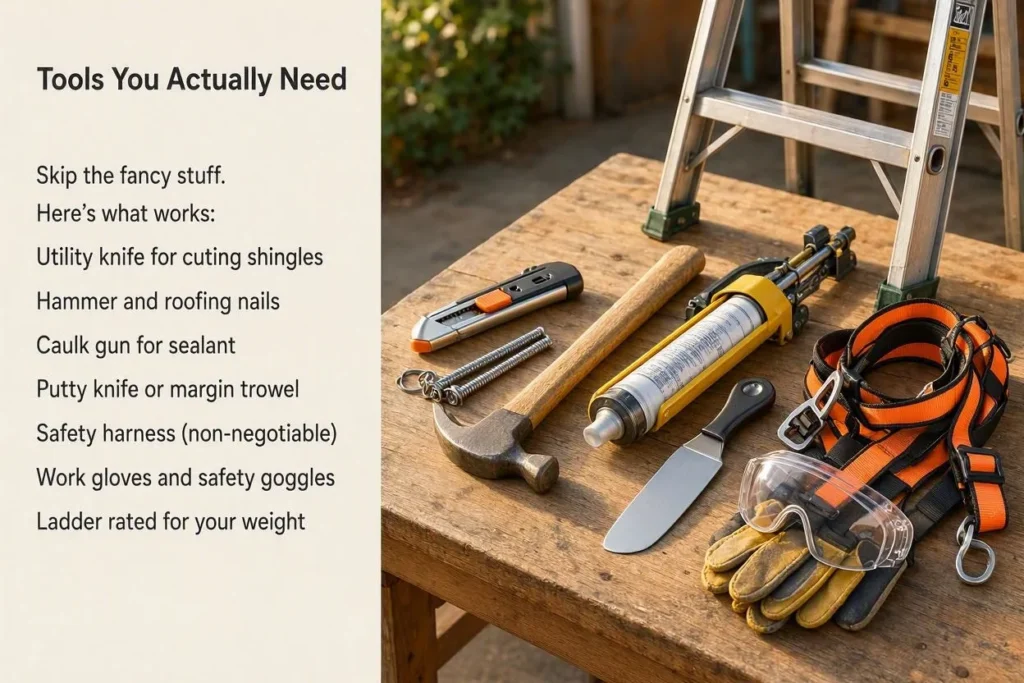
Skip the fancy stuff. Here’s what works:
- Utility knife for cutting shingles
- Hammer and roofing nails
- Caulk gun for sealant
- Putty knife or margin trowel
- Safety harness (non-negotiable)
- Work gloves and safety goggles
- Ladder rated for your weight
I bought a Guardian Roofing Harness Kit for $120. Best investment ever. Your life is worth more than saving $100.
Conclusion
How to repair roof leak problems comes down to three things: finding it fast, fixing it right, and maintaining it regularly. Don’t let water damage spread. Don’t ignore small leaks. And don’t be afraid to call professionals when the job exceeds your skill level. Your roof protects everything else in your home. Treat it that way.