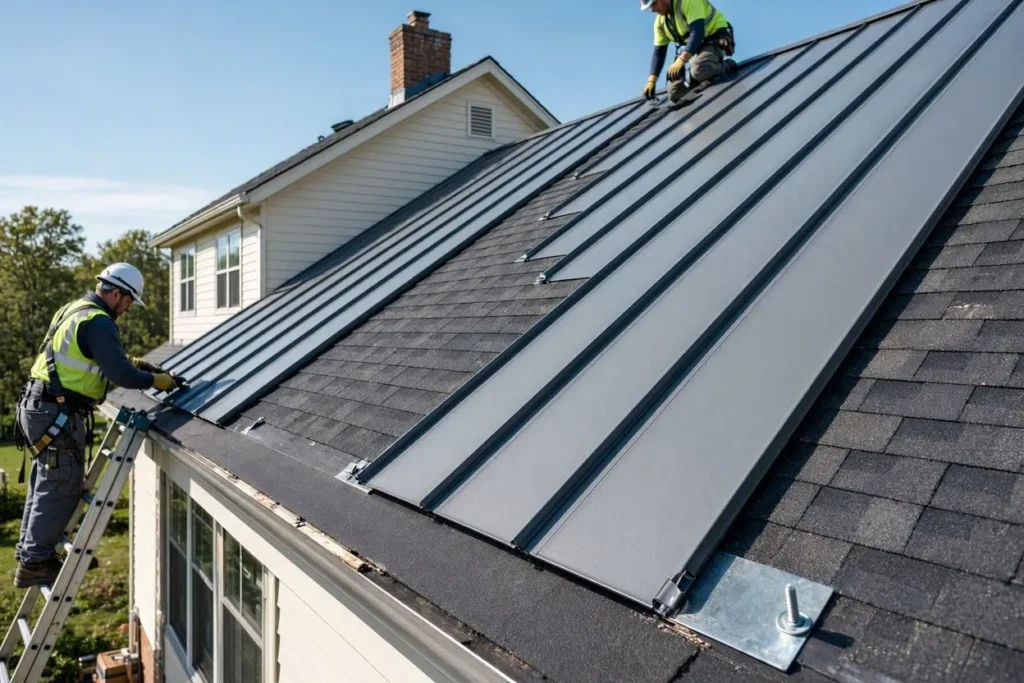
My neighbor called me last week. A contractor quoted him $8,000 less to install metal roofing over his old shingles. He asked: “Can you install a metal roof over shingles safely?” I’ve seen this play out dozens of times. Homeowners get excited about saving money on putting metal roof over shingles. Then they deal with metal roof over shingles problems three years later.
Here’s the reality: Yes, can you install a metal roof over shingles? Technically yes. Should you? That’s a completely different question. Understanding proper underlayment for metal roof over shingles and installation methods determines if this saves you money or costs you thousands.
I’ve watched five neighbors do this. Two did it right. Three are dealing with leaks, mold, and expensive repairs now. Let me break down exactly what works and what destroys your investment.
The Real Answer to Can You Install a Metal Roof Over Shingles
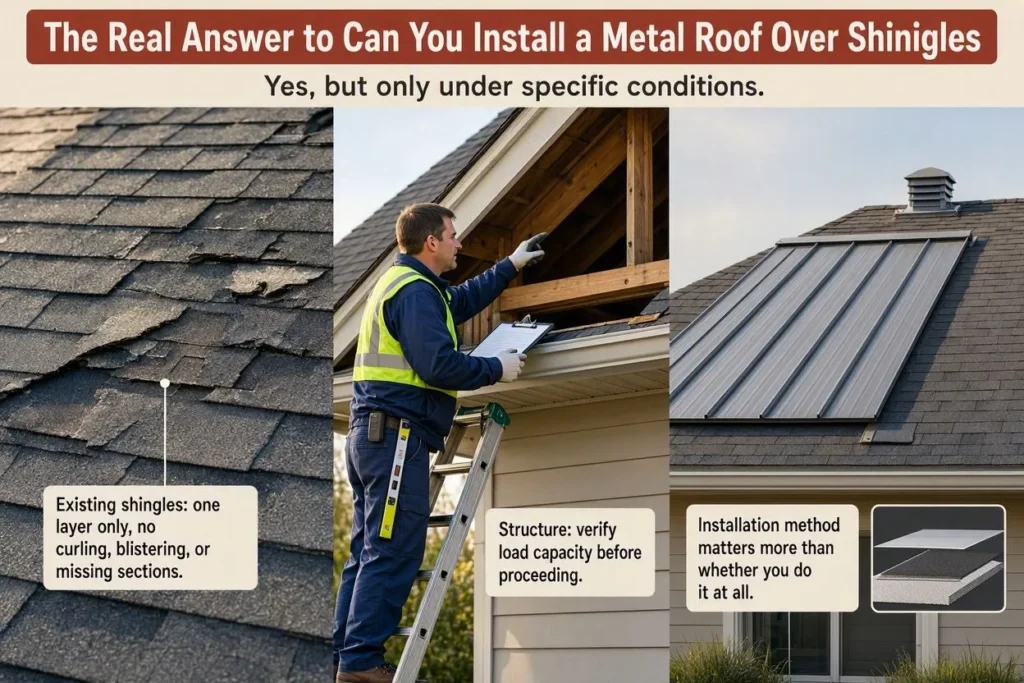
Can you install a metal roof over shingles? Yes, but only under specific conditions.
Your existing shingles must be in decent shape. One layer only. No curling, blistering, or missing sections. The structure needs to handle the combined weight. Most can, but you need verification first. Here’s what nobody tells you: The installation method matters more than whether you do it at all.
I watched a contractor install metal directly over shingles. No air gap. No strapping. Just screwed metal panels straight down. That roof leaked within eight months. Cost $14,000 to fix properly.
Why Most People Ask Can You Install a Metal Roof Over Shingles
The math looks appealing. Tear-off costs $2,000-4,000 depending on roof size. Dump fees add another $500-800. New underlayment runs $600-1,200.
Putting metal roof over shingles saves all that upfront. You’re looking at 20-25% cost reduction. But here’s the catch: That savings disappears fast if done wrong. Rainy Roofers told me they fix more overlay installations than original roofs. The average repair? $6,800. So you “saved” $3,000 upfront. Then I spent $6,800 fixing it. You’re $3,800 in the hole.
The Biggest Metal Roof Over Shingles Problems
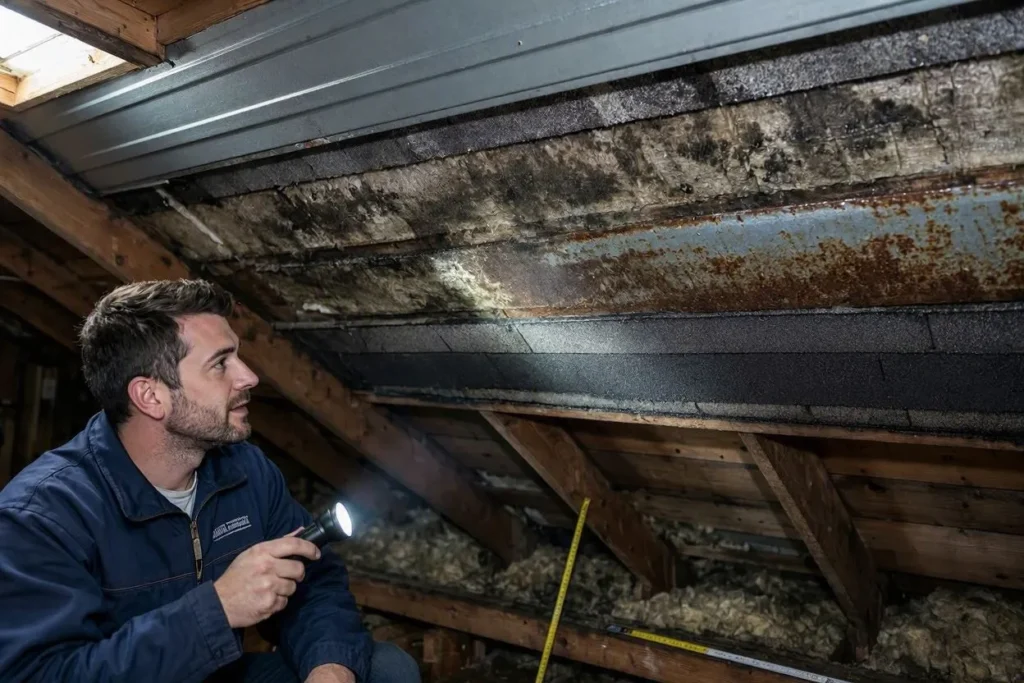
Metal roof over shingles problems fall into three categories: moisture, structure, and longevity.
Problem 1: Trapped Moisture
Metal sweats. Shingles underneath trap that moisture. No ventilation means mold grows between layers. I climbed into my buddy’s attic two years after his overlay installation. Black mold everywhere. His quote to remediate? $8,200. Plus another $11,000 to tear off both roofs and start over.
Problem 2: Hidden Structural Damage
You’re covering up the roof deck. Can’t inspect for rot or damage. One neighbor added metal over shingles. It looked great. Until a section collapsed during a snowstorm. The decking had rotted for years. He just covered it up. Insurance denied the claim because it was “pre-existing.”
Problem 3: Fastening Issues
Screws go through shingles, through decking, into nothing solid. They back out over time. Wind gets under panels. Entire sections peel off. I’ve seen it happen twice on my street alone.
The Right Way: Underlayment for Metal Roof Over Shingles
If you’re doing this, proper underlayment for metal roof over shingles is non-negotiable.
- Step one: Install horizontal furring strips (1×4 or 2×4 lumber) across the entire roof. Space them 24 inches apart. Screw them INTO THE RAFTERS, not just the decking. This creates an air gap. Absolutely critical for ventilation and preventing condensation.
- Step two: Add synthetic underlayment over the furring strips before metal panels. This protects against moisture and gives your metal a proper base. Rainy Roofers uses this method exclusively. Their overlay roofs last 30+ years with zero moisture issues. Contractors who skip the furring strips? Their roofs fail in 5-8 years on average.
My Step-by-Step Process for Putting Metal Roof Over Shingles
I’ve helped three friends do this correctly. Here’s the exact process:
Step 1: Inspect Everything
Climb in your attic. Look for water stains, mold, soft spots. Check every section. If you find issues, stop. Tear-off is your only option.
Step 2: Verify Structural Capacity
Your roof needs to handle the combined weight. Most structures can, but verify with an engineer if unsure. Cost: $300-500 for inspection. Worth every penny.
Step 3: Check Building Codes
Some jurisdictions ban overlay installations. Others limit you to two total layers. Call your local building department. Don’t guess.
Step 4: Install Furring Strips Correctly
Use 1×4 or 2×4 pressure-treated lumber. Run horizontal across the roof. Screw every strip into rafters with 3-inch deck screws. Don’t skip this.
Step 5: Add Proper Underlayment
Synthetic underlayment works best. Roll it over the furring strips. Overlap seams by 6 inches minimum. Secure with staples.
Step 6: Install Metal Panels
Use screws long enough to penetrate rafters through everything. Rubber washers on every screw. Follow manufacturer specs exactly. Most warranties require it.
When Can You Install a Metal Roof Over Shingles Safely
Safe overlay installations meet ALL these criteria:
Your roof must have:
- Only one layer of shingles currently
- No visible damage or deterioration
- Solid decking underneath (verified)
- Proper structural capacity for added weight
- Local code approval for overlays
Your installation must include:
- Horizontal furring strips screwed to rafters
- Air gap between layers
- Proper synthetic underlayment
- Manufacturer-approved fastening method
- Standing seam panels (not exposed fastener)
Miss any of these? Don’t do it.
The Metal Roof Over Shingles Problems Nobody Warns About
Beyond moisture and structure, here are hidden issues:
- Warranty Voids: Most metal manufacturers void warranties for improper overlay installation. Read the fine print.
- Leak Tracking: Water gets under metal, runs across shingles, enters your home somewhere else. Finding leaks becomes impossible.
- Future Tear-Off Costs: Eventually you’ll replace this roof. Now you’re removing TWO roofs instead of one. Double the cost.
- Insurance Issues: Some insurers won’t cover overlay installations. Check your policy before starting.
- Resale Impact: Smart home inspectors flag overlay roofs. Buyers negotiate lower prices or walk away.
I sold a house with an overlay roof. Lost $8,000 in negotiations because the inspector called it out.
Cost Comparison: Overlay vs Proper Installation
Let’s talk real numbers for a 2,000 square foot roof:
Overlay installation (done right):
- Metal panels: $6,500
- Furring strips and hardware: $800
- Underlayment: $400
- Labor: $4,500
- Total: $12,200
Full tear-off and replacement:
- Tear-off and disposal: $2,400
- New decking repairs: $600
- Underlayment: $800
- Metal panels: $6,500
- Labor: $5,200
- Total: $15,500
The difference? $3,300. Over a 40-year metal roof lifespan, that’s $82.50 per year. Is $82.50 annually worth the risks? For me, absolutely not. Rainy Roofers charge similar rates for both methods. They just strongly recommend tear-off for quality reasons.
When I Actually Recommend Metal Roof Over Shingles
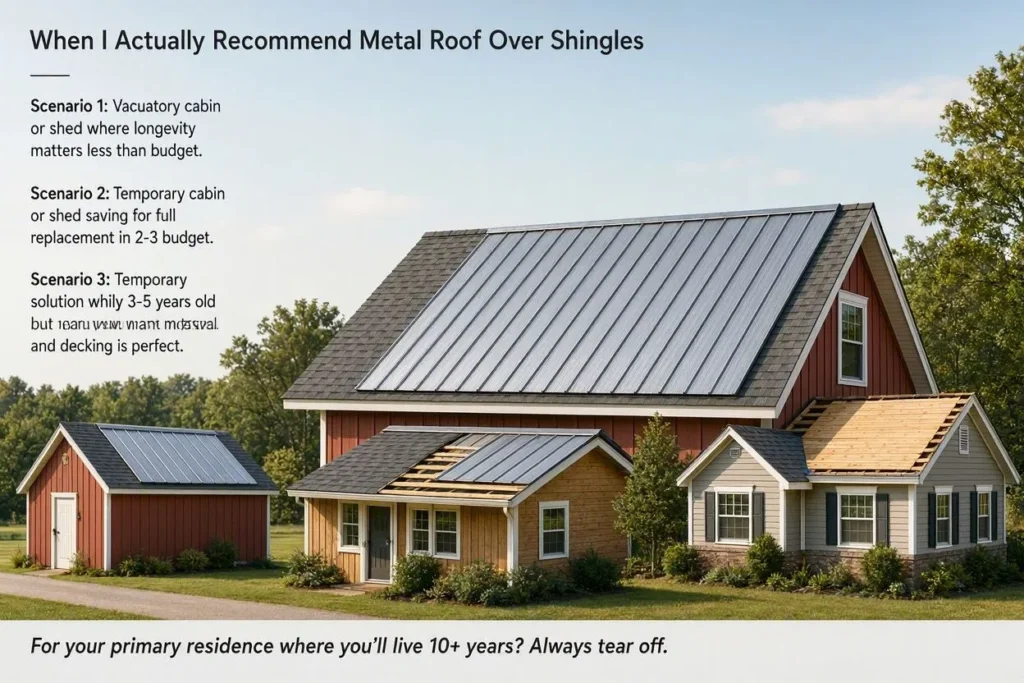
There are situations where putting metal roof over shingles makes sense:
- Scenario 1: Vacation cabin or shed where longevity matters less than budget.
- Scenario 2: Temporary solution while saving for full replacement in 2-3 years.
- Scenario 3: Your shingles are only 3-5 years old but you want metal, and decking is perfect.
For your primary residence where you’ll live 10+ years? Always tear off.
Conclusion
So can you install a metal roof over shingles? Yes, technically you can. Should you? Only if you follow every rule perfectly, understand the risks, and accept potential long-term costs. The underlayment for metal roof over shingles and furring strip installation aren’t optional steps. They’re mandatory for success.
Most metal roof over shingles problems come from contractors cutting corners to win bids. They skip the air gap. Use wrong fasteners. Don’t verify structure. Putting metal roof over shingles saves money upfront. But done wrong, it costs double or triple that in repairs. I’ve seen both outcomes. The installations done right work fine. The cheap shortcuts all failed within 5-10 years.
Rainy Roofers handle this correctly when homeowners insist on overlays. But they always recommend full tear-off for primary residences. Your roof protects everything underneath. Don’t gamble on shortcuts to save $3,000 today that cost you $15,000 tomorrow.