You’re building a new home or replacing your roof. Your contractor asks: hip or gable? You stare blankly. What’s the difference? Does it even matter?
It matters more than you think. I walk homeowners through this decision weekly. Your roof shape affects cost, durability, attic space, insurance rates, and how well your home handles storms. Let me break down the hip roof vs gable roof comparison so you can make the right choice.
The Basic Difference: Hip Roof vs Gable Roof
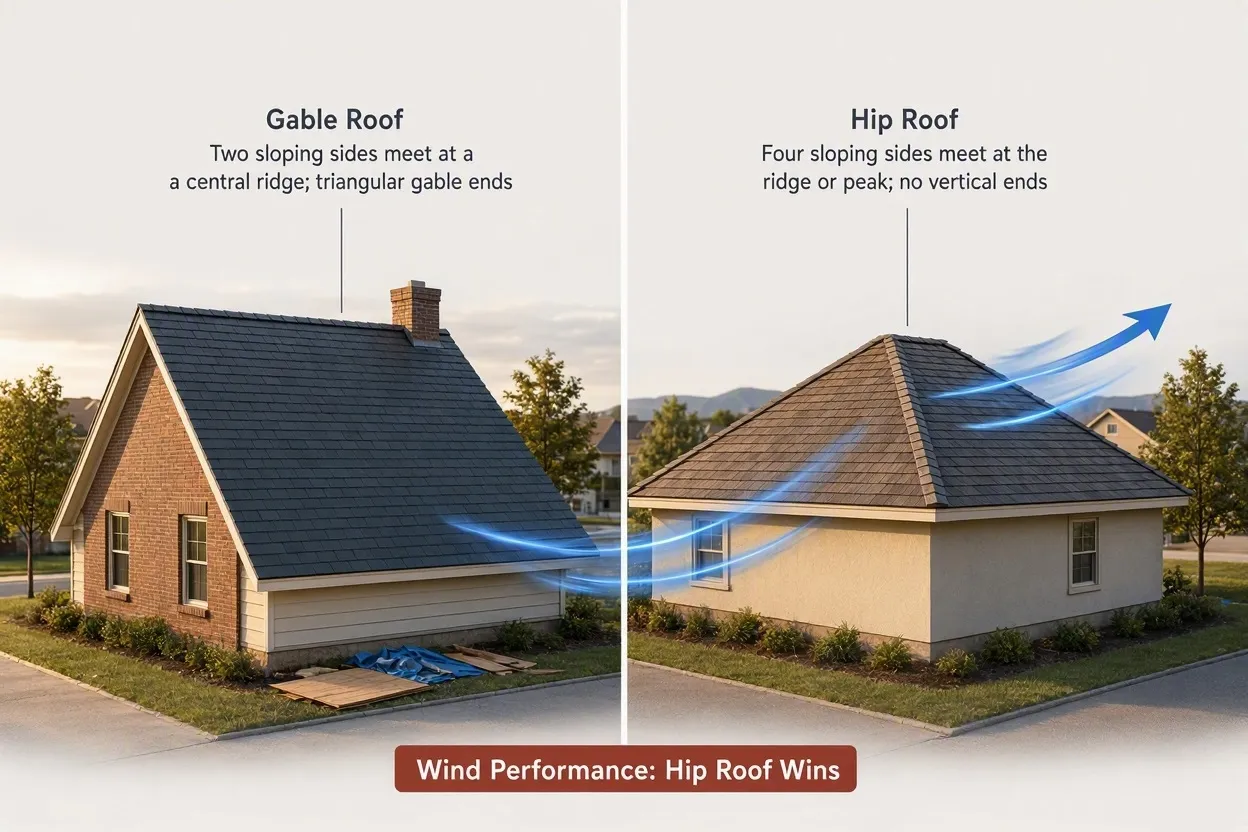
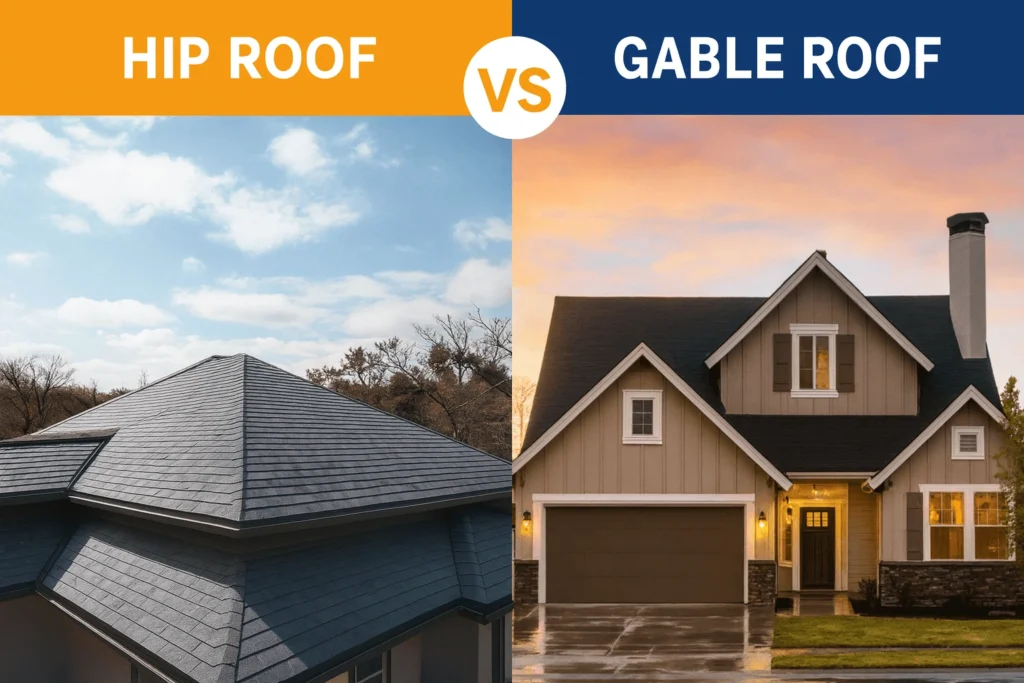
- Gable roof: Two sloping sides meet at a central ridge, creating triangular gable ends. Simple, classic, everywhere.
- Hip roof: Four sloping sides meet at a ridge or peak. No vertical ends. Sleeker, more complex.
That’s the visual difference. But the real differences show up in performance, cost, and function.
Wind Performance: Hip Roof Wins
If you’re in a hurricane zone, tornado alley, or anywhere with serious wind, pay attention here.
Hip roofs handle wind significantly better than gable roofs. The aerodynamic shape lets wind flow over all sides rather than catching against flat vertical surfaces. Gable roofs have a problem: wind hitting the flat gable end creates massive uplift pressure. In extreme storms, improperly braced gables can fail catastrophically.
The numbers back this up:
- Insurance companies offer up to 32% discounts for hip roofs in hurricane-prone areas
- Hip roofs are self-bracing due to inward slopes on all sides
- Gable roofs need diagonal bracing to handle wind loads
If you’re in Florida, coastal Texas, or any high-wind zone, hip roofs are the safer bet.
Snow Performance: Gable Roof Wins
Flip the script for snowy climates. Gable roofs typically have steeper pitches that shed snow quickly and efficiently. The simple two-sided slope sends everything sliding off.
Hip roofs can hold snow longer due to their lower pitches and multiple angles. In heavy snow country, this means more weight on your structure and potential ice dam issues. New England, Minnesota, Colorado mountains? Gable roofs dominate for good reason.
Cost Comparison: Gable Roof Wins
Let’s talk about money. This is where hip roofs hurt.
Typical cost ranges:
- Gable roof: $24,000-$48,000
- Hip roof: $33,600-$67,200
Hip roofs cost 35-40% more than gable roofs. Here’s why:
More materials: Four sloped sides vs two means more shingles, more underlayment, more everything. A 1,250 square foot house needs about 1,460 square feet of roofing with a gable design. Same house with a hip roof? 1,540 square feet.
- More complexity: Hip roofs require more skilled labor and take longer to build. The framing is intricate.
- More seams: More angles mean more potential leak points that need careful flashing.
If the budget is tight, gable roofs win every time.
Attic Space: Gable Roof Wins
Want a finished attic, storage space, or room for mechanical systems?
- Gable roofs provide significantly more usable attic space. The triangular ends create vaulted ceilings with actual headroom.
- Hip roofs slope inward from all sides, eating into your attic footprint. You get less storage and virtually no potential for converting to living space.
One of my customers wanted to finish their attic as a home office. They had a hip roof. After seeing the limited headroom, they abandoned the project entirely. That wouldn’t have happened with a gable.
Solar Panel Potential: Gable Roof Wins
Planning to go solar? Roof style matters.
- Gable roofs offer two large, uninterrupted surfaces—perfect for maximizing solar panel installation. You get nearly double the usable area compared to hip roofs.
- Hip roofs work for solar, but the multiple slopes and limited surface area reduce your options. You might not fit as many panels as you need.
For details on optimizing your roof for solar, check out our solar panels on metal roof guide.
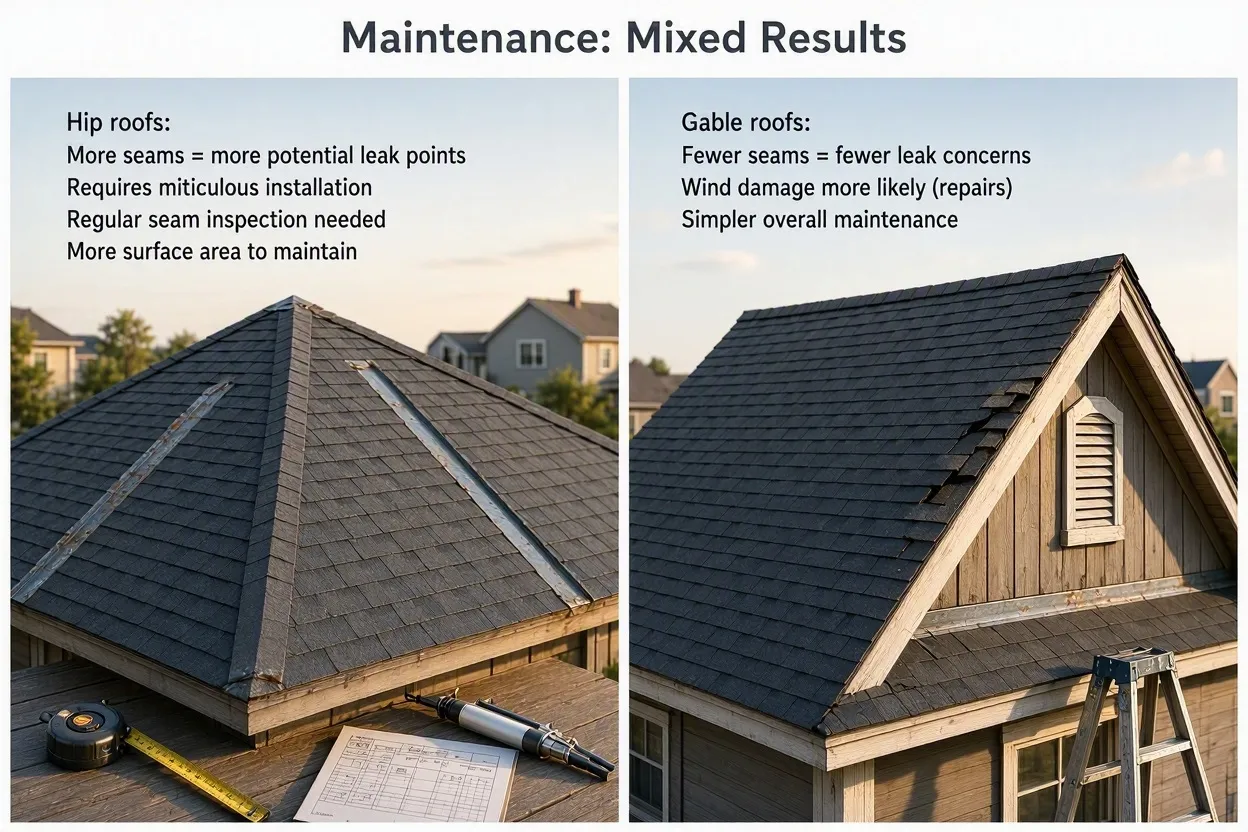
Maintenance: Mixed Results
Both roof styles need maintenance, but the challenges differ.
Hip roofs:
- More seams = more potential leak points
- Requires meticulous installation
- Regular seam inspection needed
- More surface area to maintain
Gable roofs:
- Fewer seams = fewer leak concerns
- Wind damage more likely (repairs)
- Gable vents need attention
- Simpler overall maintenance
Hip roofs demand precision from installers. Poor workmanship creates leaks at seams and valleys. Gable roofs are more forgiving during installation but may need storm-related repairs.
Insurance Benefits: Hip Roof Wins
Here’s where hip roofs can offset some of their higher cost.
Many insurance companies offer significant discounts sometimes up to 32% for hip roofs in storm-prone regions. The superior wind resistance translates to fewer claims.
In Florida, Texas coastal areas, and other high-wind zones, these savings add up over time. One homeowner I worked with saved $400 annually on insurance by choosing a hip roof. Over 30 years? That’s $12,000.
Before deciding, call your insurance company. Ask about discounts for hip roofs versus gable roofs in your area.
Hipped Gable Roof: The Hybrid Option
Can’t decide? You don’t have to choose one or the other. A hipped gable roof also called a Dutch gable combines both styles. You get a gable section sitting on top of a hip roof base.
Benefits of this hybrid:
- Better wind resistance than pure gable
- More attic space than pure hip
- Distinctive architectural appearance
- Allows for gable vents
Other hybrid options include the jerkinhead (clipped gable) where the gable peak is cut off and replaced with a small hip section. These combinations let you balance aesthetics, function, and weather performance.
Aesthetic Appeal: Personal Preference
This one’s subjective.
- Hip roofs look sleeker and more sophisticated to many eyes. The consistent eave line around the entire house creates balanced, polished curb appeal. They’re often associated with higher-end homes.
- Gable roofs appear simpler and more traditional. Some find them boring. Others appreciate the classic look.
Both styles adapt to various architectural designs. Metal roofing, asphalt shingles, tile—either roof shape works with virtually any material. For material options, see our metal roofing types guide.
Making Your Decision: Hip Roof vs Gable Roof
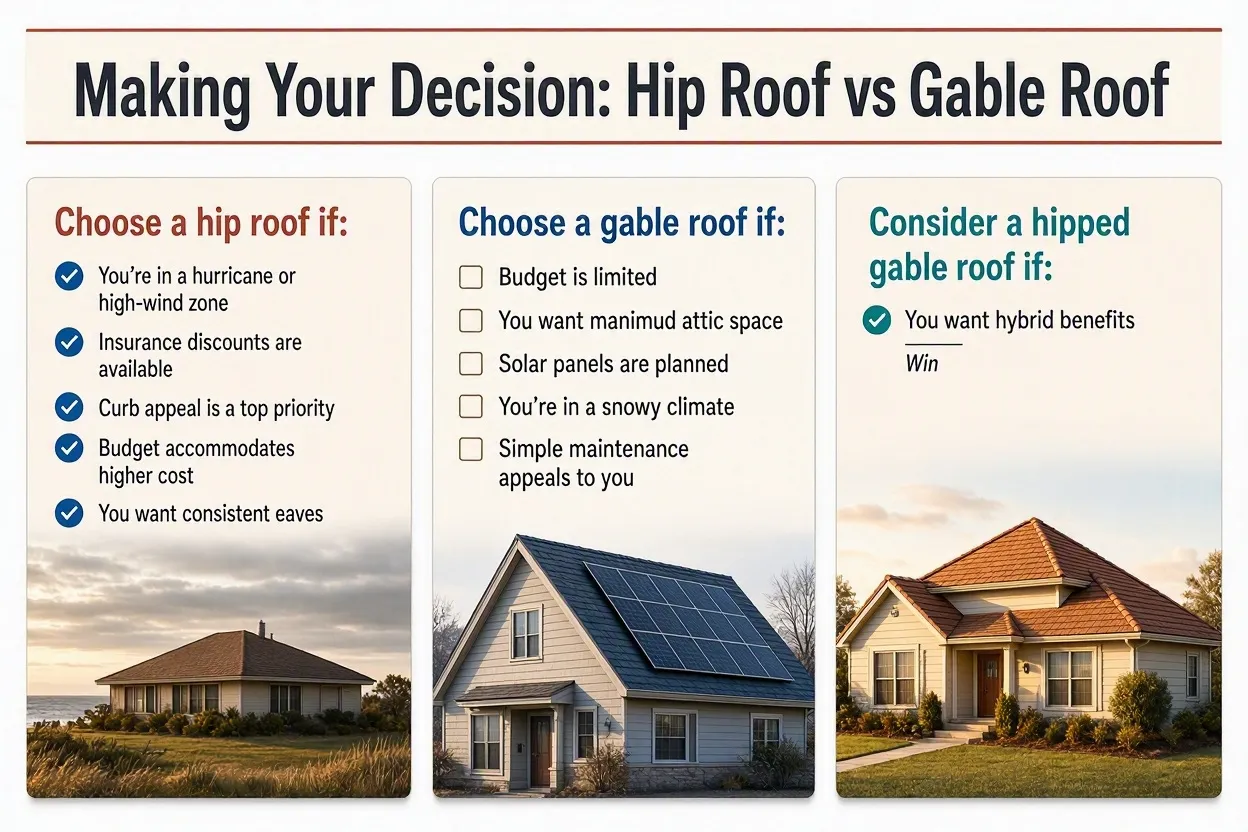
Here’s my decision framework:
Choose a hip roof if:
- You’re in a hurricane or high-wind zone
- Insurance discounts are available
- Curb appeal is a top priority
- Budget accommodates higher cost
- You want consistent eaves
Choose a gable roof if:
- Budget is limited
- You want maximum attic space
- Solar panels are planned
- You’re in a snowy climate
- Simple maintenance appeals to you
Consider a hipped gable roof if:
- You want hybrid benefits
- Wind resistance matters but so does attic space
- You prefer distinctive architecture
Conclusion
Both roof styles serve homeowners well in the right circumstances. Hip roofs deliver superior wind resistance, insurance savings, and elegant aesthetics. Gable roofs offer affordability, maximum attic space, and excellent snow performance. Your choice should reflect your climate, budget, and priorities. And if you can’t decide, a hipped gable roof gives you elements of both.