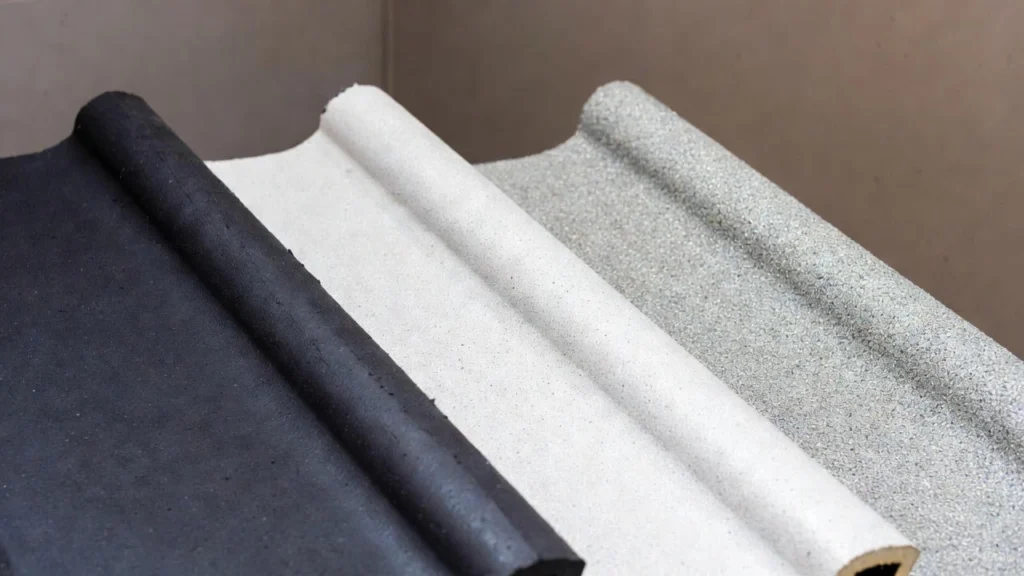
You’re getting quotes for your flat roof and three different contractors are throwing around acronyms like EPDM, TPO, and PVC. One swears by EPDM because it’s been around forever. Another pushes TPO as the “latest and greatest.” The third insists PVC is worth the extra money.
Who’s right? Here’s the truth: all three rubber roofing types work when installed correctly. The question isn’t which is “best” overall it’s which rubber roofing material makes sense for your specific roof, climate, and budget.
I’ve installed hundreds of rubber roofs at Rainy Roofers using all three. Let me break down the real differences so you can make a smart decision without the sales pitch.
EPDM Rubber Roofing: The Proven Performer
EPDM is the black rubber roofing you’ve seen on commercial buildings for decades. It’s affordable, durable, and has the longest track record of any rubber roofing membrane.
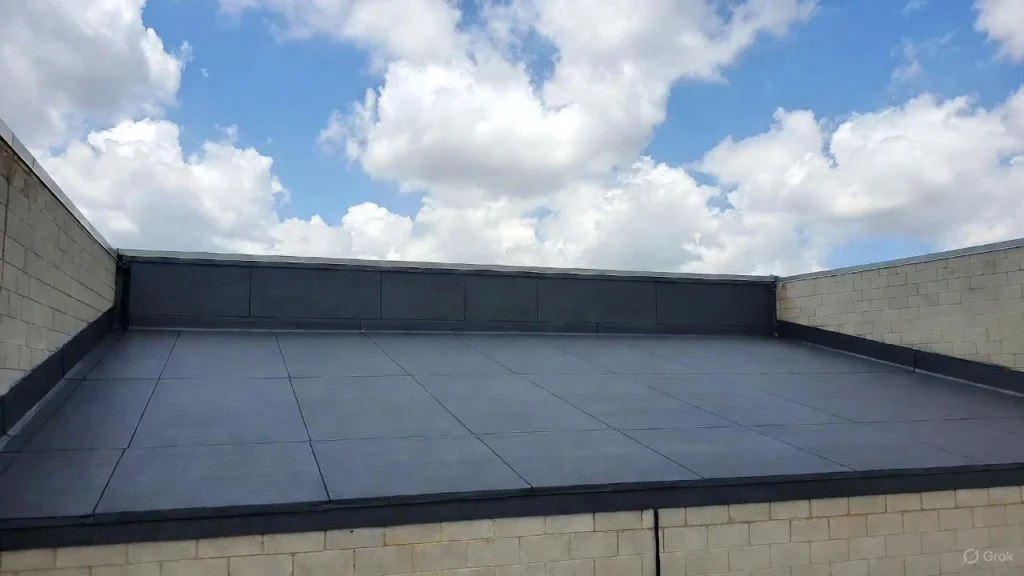
EPDM comes in rolls that get laid across your roof deck and glued together at the seams with adhesive and tape. Some systems use mechanical fasteners instead.
EPDM pros:
- Most affordable option ($5-10 per square foot installed)
- 60+ years of proven performance data
- Easy to repair if damaged
- Remains flexible in extreme cold (down to -40°F)
- Simple installation means more contractors know how to do it right
EPDM cons:
- Black color absorbs heat and increases cooling costs
- Adhesive seams are weaker than heat-welded seams
- More susceptible to punctures than TPO or PVC
- Not as energy efficient as white membranes
I installed an EPDM roof on a warehouse in 2010. That roof still looks great 14 years later with just basic cleaning twice a year.
EPDM makes sense when budget matters, you’re in a cold climate where black roofing helps melt snow, or you want the material with the longest proven track record.
TPO Rubber Roofing: The Energy Efficient Choice
TPO has taken over about 40% of the flat roof market in the past decade because it combines affordability with energy efficiency.
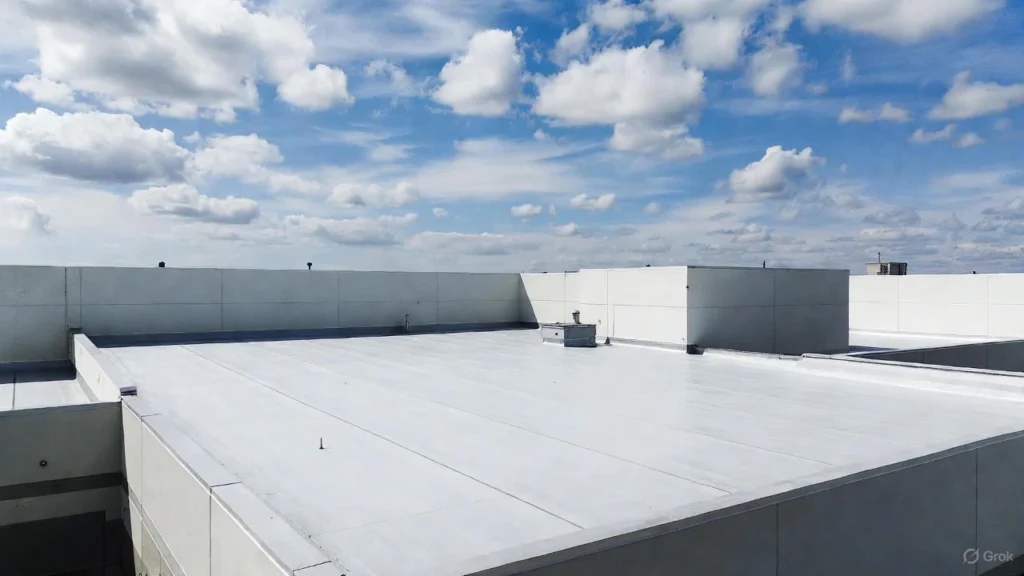
TPO comes in white or light gray, reflecting sunlight instead of absorbing it. The big difference from EPDM is the seams—they’re heat-welded together using hot air, creating a molecular bond stronger than the membrane itself.
TPO advantages:
- White surface reflects 85% of sunlight
- Reduces cooling costs by 15-25% in hot climates
- Heat-welded seams are incredibly strong
- More puncture-resistant than EPDM
- Energy Star rated versions available
- Resistant to mold and algae growth
TPO drawbacks:
- Costs $7-12 per square foot installed
- Newer material means less long-term data (30 years vs EPDM’s 60)
- Requires skilled installers for proper seam welding
- Performance varies between manufacturers
We installed TPO on a customer’s garage addition three years ago. Their electric bill dropped noticeably that first summer because the white roof stayed 50-60°F cooler than their neighbor’s black EPDM roof.
Choose TPO when energy efficiency matters, you’re in a hot climate, or you want stronger seams than EPDM provides. Just make sure your contractor uses quality brands like Carlisle, GAF, or Johns Manville.
PVC Rubber Roofing: The Premium Option
PVC costs more than EPDM or TPO but delivers maximum durability. It’s the go-to choice for restaurants, industrial buildings, or anywhere that needs serious chemical resistance.
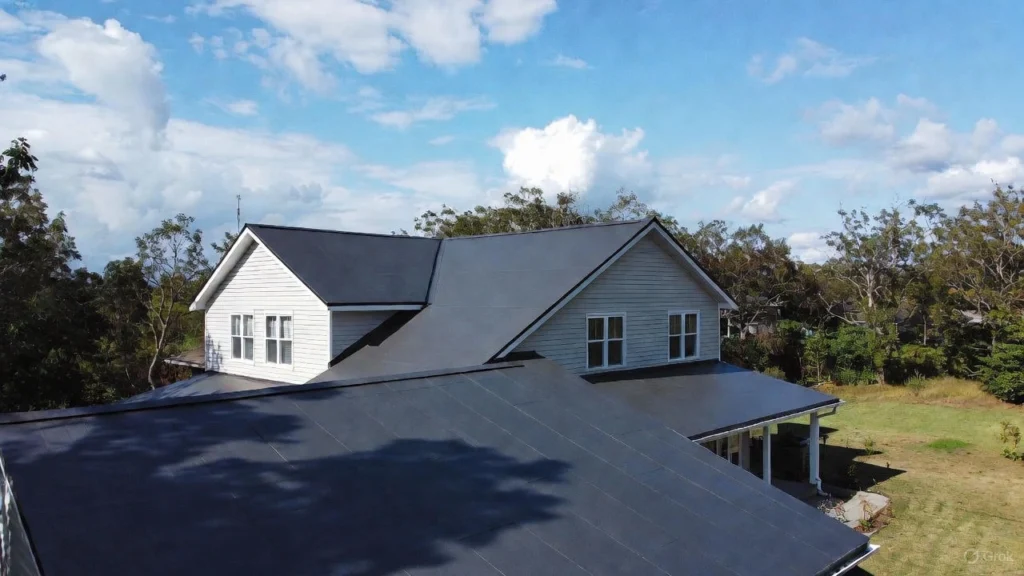
Like TPO, PVC uses heat-welded seams and comes in white for energy efficiency. The material itself is tougher and more puncture-resistant than either EPDM or TPO.
PVC benefits:
- Most resistant to chemicals, grease, and oils
- Best fire resistance of the three options
- Extremely puncture-resistant
- Heat-welded seams like TPO
- Works well for roofs with heavy equipment or foot traffic
- 30+ year lifespan
PVC limitations:
- Most expensive ($9-16 per square foot installed)
- Contains plasticizers that can degrade over time
- Heavier than EPDM or TPO
- Overkill for most residential applications
I worked on a restaurant last year where grease from kitchen exhaust was eating through their EPDM roof. We replaced it with PVC and solved the problem permanently.
For residential flat roofs, PVC is usually more than you need unless you have specific requirements like nearby trees constantly dropping branches or regular roof access.
EPDM vs TPO vs PVC: Quick Comparison
- Cost winner: EPDM ($5-10/sq ft) beats TPO ($7-12/sq ft) and PVC ($9-16/sq ft)
- Energy efficiency winner: TPO and PVC (white/reflective) beat black EPDM by 15-25% on cooling costs
- Seam strength winner: TPO and PVC (heat-welded) are stronger than EPDM (adhesive)
- Durability winner: PVC handles punctures and chemicals best
- Cold weather winner: EPDM stays flexible at the lowest temperatures
- Track record winner: EPDM has 60+ years of proven performance
Which Rubber Roofing Material Should You Choose?
Your climate matters more than most contractors admit.
- Hot climates: Go with white TPO. The energy savings pay for the higher cost within 5-7 years.
- Cold climates: EPDM makes sense. The black color helps melt snow, and you’re not running AC eight months a year anyway.
- Chemical exposure: PVC is worth the premium. It’s the only rubber roofing membrane that handles grease, oils, and chemicals long-term.
- Budget priority: EPDM delivers solid performance at the lowest cost.
At Rainy Roofers, we install mostly TPO and EPDM on residential projects. TPO when the customer wants energy efficiency. EPDM when budget is tight or we’re working in colder regions.
Installation Quality Matters Most
Here’s what nobody tells you: the material matters less than the installation.
I’ve seen 40-year-old EPDM roofs still performing perfectly. I’ve also seen 5-year-old TPO roofs leaking because the contractor didn’t weld the seams properly.
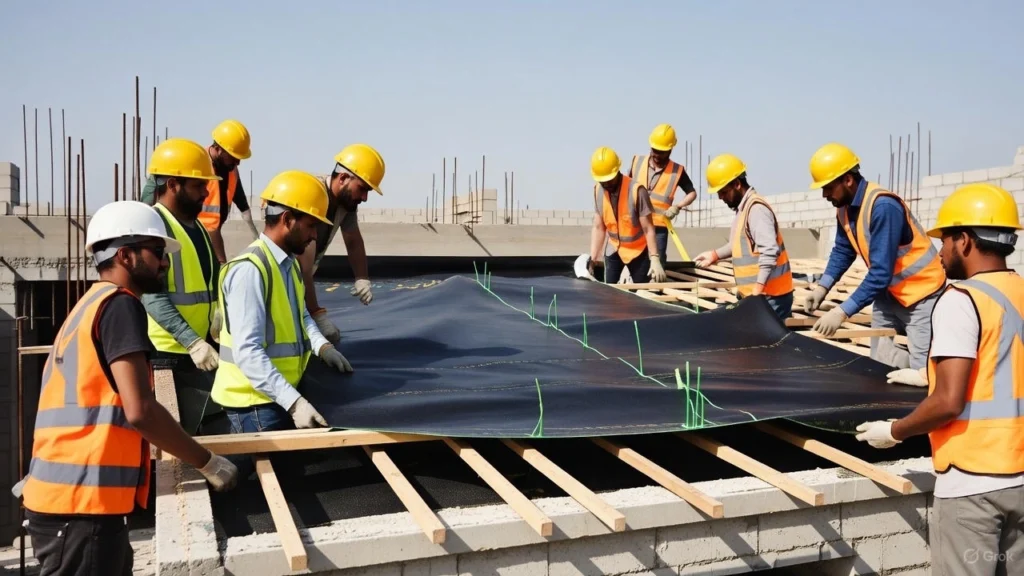
The seams are where leaks happen. With EPDM, that means proper surface prep and correct adhesive application. With TPO and PVC, it means consistent welding temperature and testing seam strength.
Check your contractor’s references for the specific rubber roofing type they’re proposing. Don’t hire an EPDM specialist to install TPO or vice versa.
Read the related article: How to Install EPDM Rubber Roofing in 4 Easy Steps
Making Your Final Decision
You don’t need the “best” rubber roofing material. You need the right material for your situation. Budget-conscious with a flat roof? EPDM delivers proven performance at the lowest cost. Hot climate with high cooling bills? TPO’s energy efficiency pays for itself. Restaurant or industrial building? PVC handles what the others can’t.
At Rainy Roofers, we’ll assess your specific roof, discuss your priorities, and recommend the rubber roofing type that makes sense—not the one that maximizes our profit.
Get quotes using the same material from multiple contractors. Compare their experience with that specific rubber roofing membrane, check references, and verify they use quality brands.
Your flat roof protects your biggest investment. Choose wisely, hire carefully, and you’ll get decades of leak-free performance.