Low water pressure is one of the most common plumbing problems in a house, and if yours has gone weak, the fix is usually one of five things: a clogged aerator, a bad regulator, a hidden leak, a valve that isn’t fully open, or a municipal supply that’s just running low. Clean the fixtures first, then work your way up to a booster pump only if nothing simpler solves it. A homeowner in a 1970s house with galvanized pipes is dealing with a different problem than someone with a clogged showerhead in a five-year-old build, so it’s worth figuring out which one you actually have before you start replacing parts.
Weak flow in the shower or at the kitchen sink isn’t random. It follows a pattern, and that pattern usually points straight to the fix. Below: what counts as normal pressure, why it drops in the first place, and nine fixes ranked from “takes two minutes” to “call a plumber.”
What Counts as Good Water Pressure?
Good residential water pressure sits between 40 and 60 PSI (about 2.8 to 4.1 bar). Below 40 and it reads as low. Above 80 and you’re risking damage to pipes, water heaters, and appliance seals. Most homes land around 50 PSI, which is the sweet spot: strong enough for a real shower, gentle enough not to beat up the plumbing.
Pressure and flow rate get used interchangeably, but they’re not the same thing. Pressure (PSI) is the force pushing water through the pipes. Flow rate (GPM or LPM) is how much water actually shows up. You can have a perfectly healthy 55 PSI reading and still feel weak water in the shower if three fixtures are running at once and the supply can’t keep up. A 12 GPM household supply split across a dishwasher, a washing machine, and a shower will feel thin everywhere, even though the pressure at the meter is fine.
How to Measure Your Water Pressure
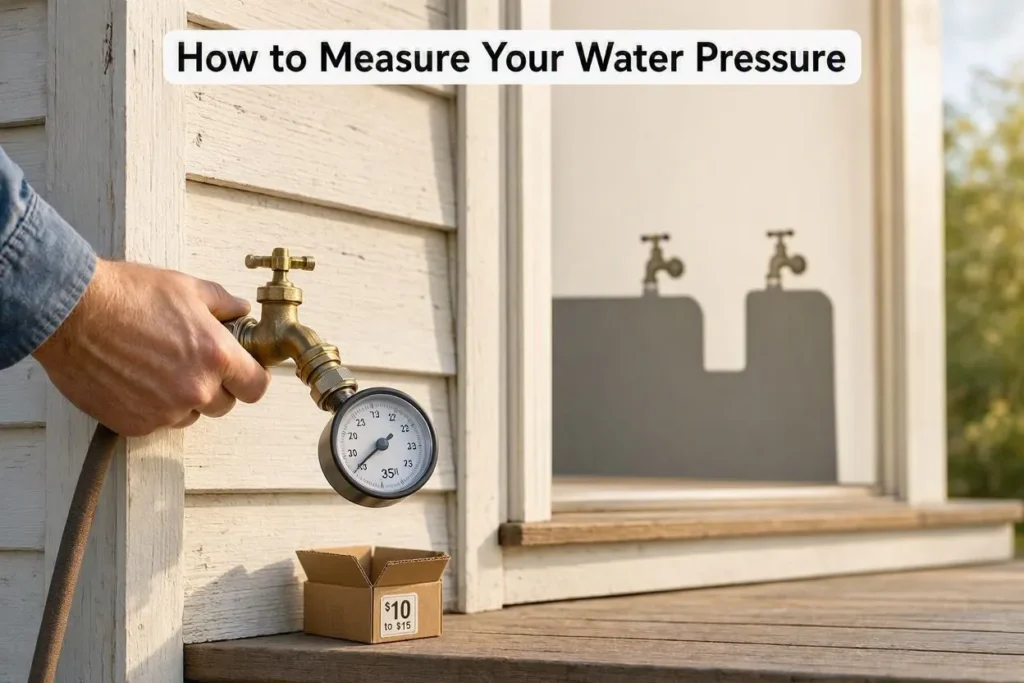
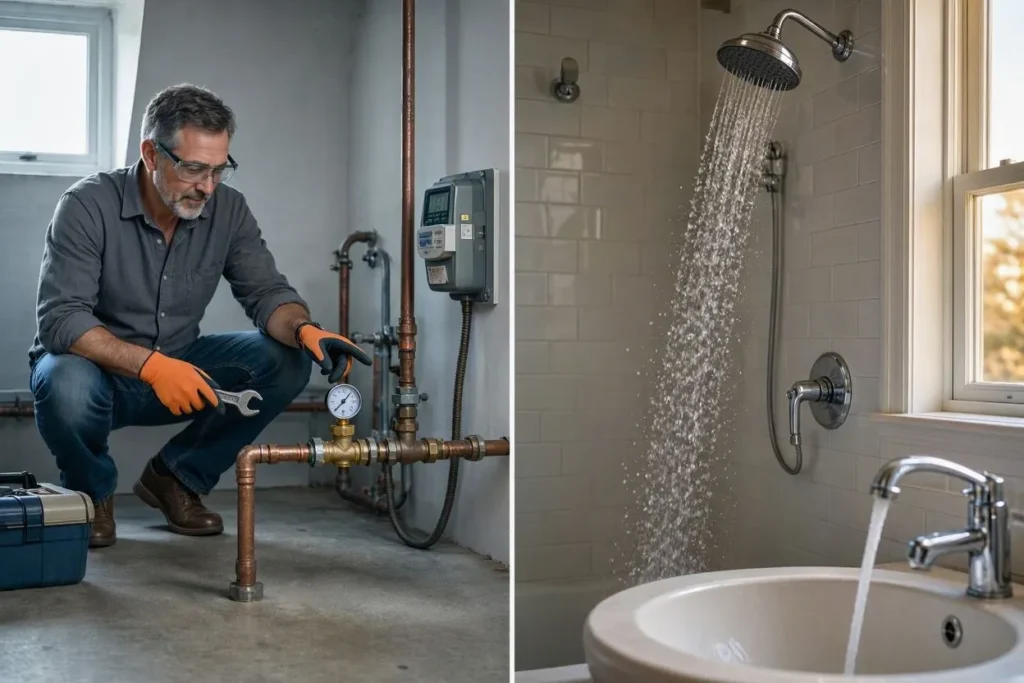
Attach a pressure gauge to an outdoor spigot, turn the water on all the way, and read the number off the dial. Gauges run about $10 to $15 at any hardware store. Shut off every other tap in the house before you test, since a dishwasher running mid-test will throw the number off.
The whole thing takes under five minutes, and it tells you exactly where you stand before you touch a single valve. A reading of 35 PSI confirms there’s a real problem; it’s not just in your head. If pressure has been drifting for a while, retest monthly. A slow decline over several months usually points to a regulator wearing out, not a sudden leak.
What Causes Low Water Pressure in a House?
Seven usual suspects: clogged aerators, a failing regulator, corroded pipes, hidden leaks, a closed valve somewhere, a municipal supply problem, or elevation loss in a gravity-fed system. If only one faucet is weak, it’s almost always a local clog. If the whole house is weak, look upstream: the main line, the regulator, or the city connection.
Clogged Aerators and Showerheads
Mineral deposits build up inside aerators and showerheads long before anyone thinks to blame the plumbing. Calcium and magnesium narrow the tiny spray holes, and it gets worse over months. A showerhead with a full, strong stream in January can feel noticeably weaker by June if you’re on hard water. This happens two to three times faster in hard-water regions like the Midwest and Southwest than in areas with naturally soft water.
A Failing Pressure Reducing Valve (PRV)
A worn or misadjusted PRV throttles pressure below what the house actually needs. It sits near the main line, usually close to the meter, and its whole job is keeping incoming municipal pressure from overwhelming your pipes. PRVs last 10 to 15 years on average. Once the internal spring or diaphragm gives out, pressure either drops or spikes without warning. If your pressure swings between weak and strong on the same day, that’s the regulator talking.
Corroded or Undersized Pipes
Rust and scale build up inside old pipes and narrow the interior diameter, choking the flow. Homes built before 1960 often ran galvanized steel, which corrodes from the inside out and leaves a rough, narrowed channel behind. A half-inch pipe corroded down to an effective quarter-inch opening delivers a fraction of its rated flow, no matter what the meter shows at the street.
Hidden Leaks
A leak steals water before it ever reaches the fixture, and that drags pressure down throughout the house. Leaks behind walls, under slabs, or along buried supply lines usually don’t show themselves until the damage is already significant. To check: shut off every tap, note the water meter reading, wait two hours without using any water, then check the meter again. If it moved at all, there’s a leak somewhere in the system.
Partially Closed Shutoff Valves
A valve that isn’t fully open will restrict flow even if everything else in the system is working. These live at the water meter, and sometimes inside the house too, near where the main line comes in. Recent plumbing work, a previous owner’s DIY project, or a repair crew from the city can leave one partially closed without anyone noticing.
Municipal Supply Issues
If the pressure coming from the city is low, it doesn’t matter how good your internal plumbing is; every fixture feels it. Peak-demand hours, nearby construction, or aging municipal infrastructure can all knock down the pressure at the curb. Utilities are generally required to maintain at least 20 PSI at the meter, which is well below the 40 to 60 PSI most homeowners actually want indoors.
Elevation and Gravity-Fed Systems
Water loses roughly 0.43 PSI for every vertical foot it has to climb. A three-story home can lose 12 to 15 PSI just from gravity working against the supply before it ever reaches the top-floor showerhead. Homes on well water at high elevation get hit twice: distance and height both work against the pump.
How to Improve Water Pressure in Your Home (9 Fixes)
Work from cheapest and fastest toward most involved. Clean the fixtures first. Then check valves and leaks. Save the booster pump or repiping for after you’ve ruled out the simpler stuff.
1. Clean or Replace Aerators and Showerheads
Unscrew the aerator or showerhead, soak it in white vinegar for an hour, then scrub off the loosened mineral buildup with an old toothbrush. This one fix solves most single-fixture complaints, and it costs nothing but a bottle of vinegar. If scrubbing doesn’t bring the flow back, just replace the part. Aerators run $3 to $10, showerheads $15 to $40.
2. Adjust the Pressure Reducing Valve
Find the PRV near the main line, loosen the locknut, then turn the adjustment screw clockwise to raise pressure or counterclockwise to lower it. Quarter turns only, testing with a gauge after each one. If pressure doesn’t respond after a few small adjustments, stop turning and call a plumber; that’s a sign the valve itself has failed, not that the setting is off.
3. Check and Fully Open the Main Shutoff Valve
Find the main shutoff near the meter and check that the handle sits fully parallel to the pipe. That’s the fully-open position. A valve that’s even 20 degrees short of open can meaningfully choke flow to the whole house. Takes under two minutes, no tools needed on most modern ball valves.
4. Find and Fix Leaks
Run the meter test from earlier. If it confirms a leak, inspect exposed pipes, under-sink connections, and toilet supply lines for moisture or corrosion. Small leaks at a joint or fitting often seal up with plumber’s tape or a tightened compression nut. Anything behind a wall or under a slab needs a professional leak detection service; cutting into drywall blind rarely finds the source efficiently.
5. Install a Water Softener
A softener strips calcium and magnesium out of the supply before they can build up inside your pipes and fixtures, using ion-exchange resin to swap hard minerals for sodium or potassium. Installed cost runs $600 to $2,500 depending on capacity and home size. This one’s prevention, not a cure. It stops future buildup, but it won’t undo damage already sitting inside old pipes.
6. Replace Old or Corroded Pipes
Repiping with copper, PEX, or PVC restores the full interior diameter and gets rid of the corrosion choking your flow. It’s the most expensive fix on this list. Whole-home repiping runs $4,000 to $15,000 depending on square footage and material. It’s also the most permanent, and it’s the right call for any home over 60 years old still running original galvanized steel.
7. Install a Water Pressure Booster Pump
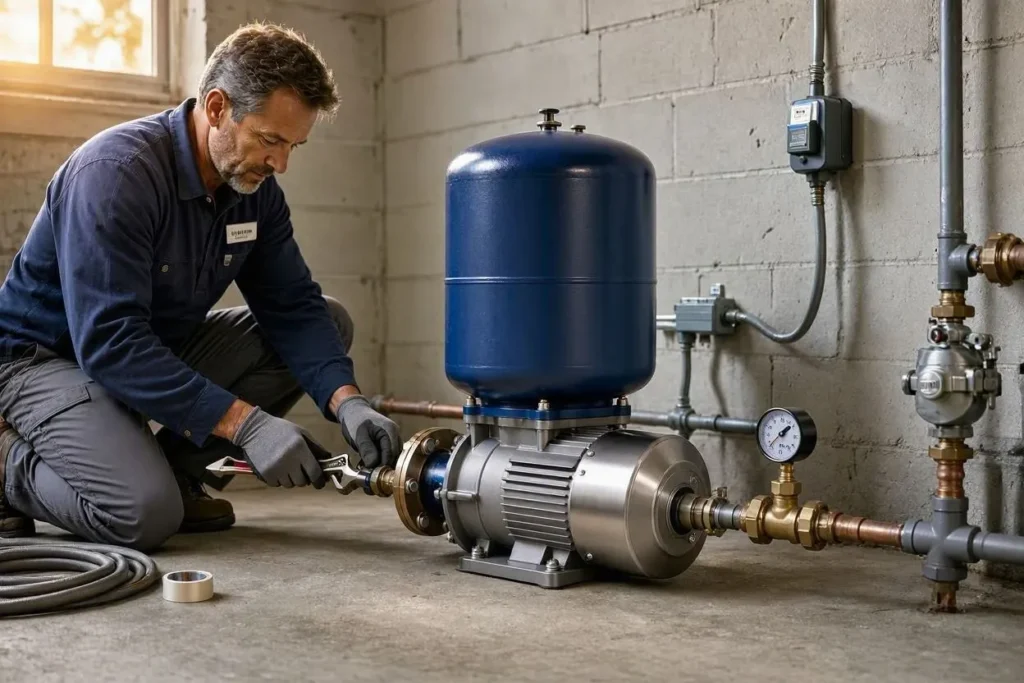
A booster pump mechanically raises pressure when the municipal or well supply just isn’t strong enough on its own. These pull in the incoming water and push it through the house at a set, consistent PSI. They work especially well for homes at the end of a municipal line or up at higher elevation. Cost ranges from $200 for a simple single-fixture booster to $3,000 or more for a whole-home system with storage built in.
8. Contact Your Local Water Utility
If every fixture in the house is weak and your internal plumbing already checks out clean, call the utility directly. They can confirm whether nearby construction, a main break, or scheduled maintenance is affecting supply to your street. If your neighbors are seeing the same drop at the same time, that’s a strong sign it’s a municipal issue, not a household one.
9. Schedule Regular Plumbing Inspections
An annual inspection catches regulator wear, early corrosion, and small leaks before they turn into a noticeable pressure problem. A licensed plumber will check PRV function, test pressure at a few different fixtures, and look over visible pipe sections during a standard visit. This one habit heads off most of the bigger repairs on this list.
When Water Pressure Is Too High
Anything above 80 PSI is too high, and it does real damage to pipes, appliances, and fixtures over time. High pressure stresses pipe joints, shortens the life of water heaters and washing machines, and causes toilets to run constantly from valve strain. Almost always, the cause is a regulator set too high, or no regulator at all. If your pressure consistently reads above 80 PSI, install a PRV if you don’t already have one, or have an existing one adjusted down by a plumber.
When to Call a Plumber
Call one if pressure hasn’t improved after cleaning fixtures, checking valves, and testing for leaks, or if the PRV is showing signs of failure like pressure that swings throughout the day. Locating a slab leak or replacing a buried, corroded pipe section takes equipment and licensing most homeowners just don’t have. Simple jobs, like adjusting a regulator or fixing a visible leak, typically run $100 to $300. Bigger jobs like repiping or a booster pump installation run $1,000 to $5,000 or more, so get a written estimate before anyone starts work.
How Low Water Pressure Affects Appliances and Daily Life
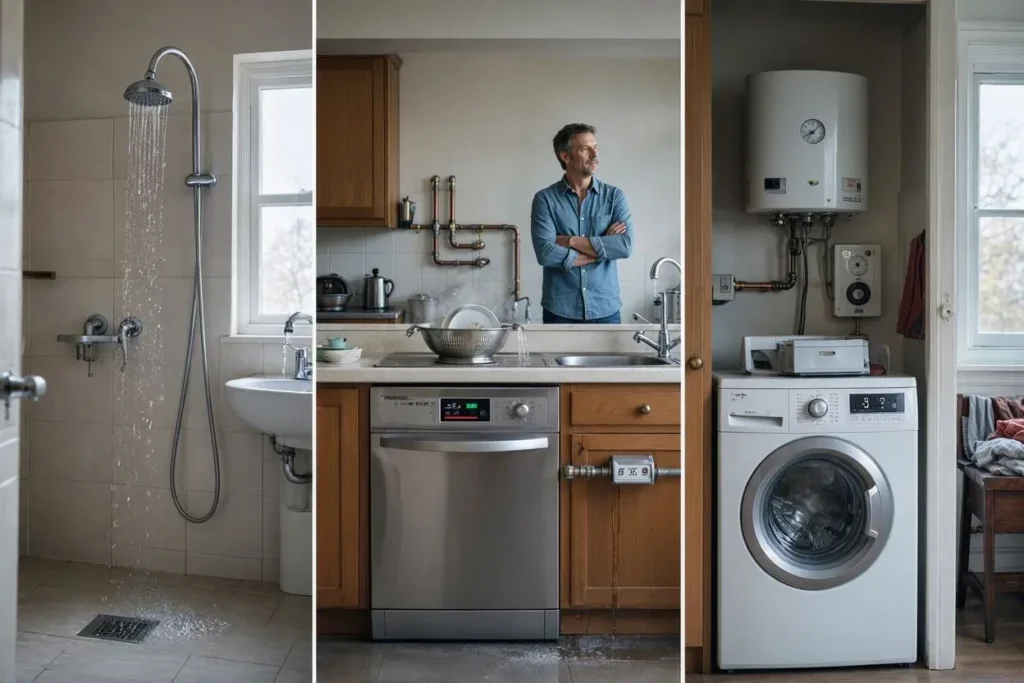
Low pressure stretches out wash cycles, weakens the shower, and puts extra strain on any appliance that needs a minimum flow to function properly. Dishwashers and washing machines both need a baseline flow rate to fill correctly, and when pressure falls short, cycles run longer and waste both water and electricity. Water heaters have trouble holding a steady output temperature when pressure drops mid-use, which is exactly why a shower can suddenly turn lukewarm for no obvious reason.
It adds up in small, annoying ways. A bathtub that should fill in five minutes takes fifteen. Rinsing shampoo out of long hair takes forever under weak flow. Dishes coming out of a low-pressure dishwasher often still have soap residue on them. None of this is cosmetic. It’s the plumbing telling you it needs attention before something bigger breaks.
Conclusion
Fixing water pressure starts with measuring it, not guessing. A $10 gauge and five minutes tell you more than months of assuming the shower “just feels weak.” From there, the fix usually matches the cause pretty directly: clean a clogged aerator, adjust a worn PRV, patch a leak, or call in a plumber for corrosion hiding behind the drywall. Most homes never need a full repipe or a booster pump. What most homes actually need is someone to check the regulator, open the valve all the way, and clean out fixtures that have been quietly losing flow for a year without anyone noticing.