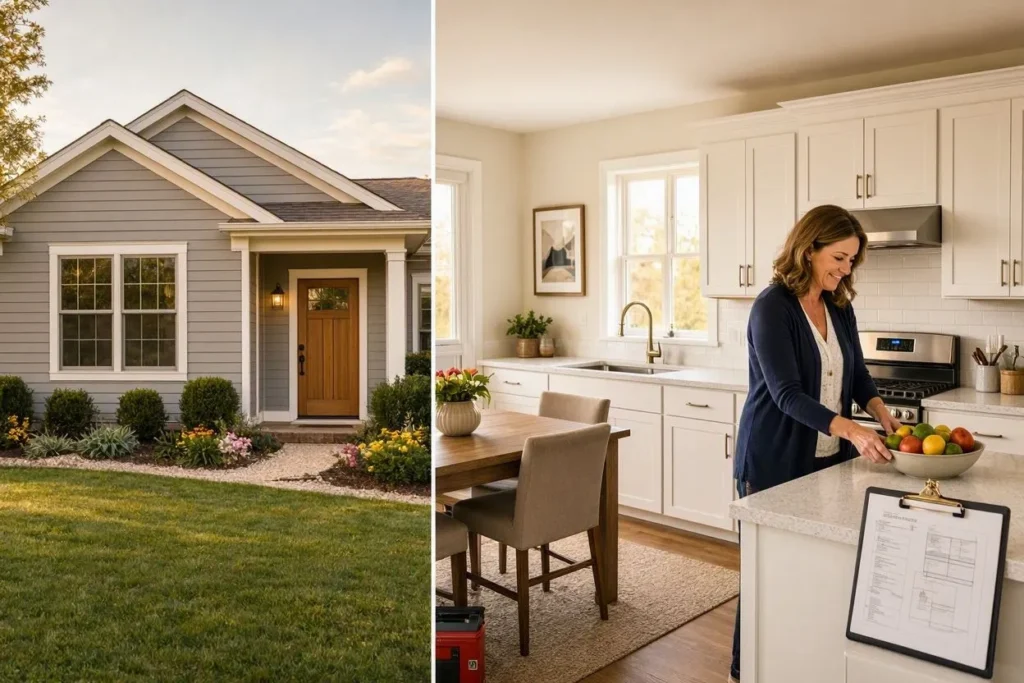
Want the fastest path to a higher home value? Combine curb appeal fixes, kitchen and bathroom updates, and energy-efficient replacements. Those three categories consistently top the national cost-vs-value reports. A garage door swap, a steel entry door, a fresh coat of paint: none of it costs much next to a full renovation, yet each one shows up near the top of nearly every ROI report published in the last three years.
If you’re planning to sell within two years, these projects pay off the most. Staying put longer? Prioritize differently. Comfort and long-term energy savings matter more than resale timing when you’re not going anywhere.
Here’s which projects actually raise home value, by how much, and what you can skip.
What Determines Home Value?
Six things: location, size, condition, age, market timing, and improvements. A house in a strong school district will outsell an identical house two towns over, no matter how much you’ve upgraded it. Square footage matters too, but usable space counts more than raw numbers. A 2,400-square-foot house with an awkward layout often appraises lower than a well-organized 2,100-square-foot one.
Condition and age work together. A 1985 house with a replaced roof, an updated electrical panel, and a newer HVAC system competes directly with new construction. Leave the maintenance undone and it drags value down faster than outdated finishes ever could. Market timing shifts the ceiling on all of it: in a tight market, buyers pay a premium even for houses that need work. In a buyer’s market, the same house sits for months without a price cut.
Improvements are the one factor you actually control. That’s what the rest of this guide is about.
How Much Does Curb Appeal Increase Home Value?
Up to 7%, according to research published in the Journal of Real Estate Finance and Economics. On a $400,000 home, that’s roughly $28,000 in added perceived value before a buyer even opens the front door. First impressions form in the first few seconds of a showing, or a scroll through listing photos, so the exterior sets the tone for everything a buyer expects to find inside.
Three projects drive most of that lift:
- Paint the front door black. Zillow’s paint-color resale research puts the average bump at $6,450 compared to other door colors.
- Trim the shrubs and fix the lawn. A local lawn service runs a few hundred dollars and moves a property from “neglected” to “move-in ready” in a buyer’s head.
None of these need a contractor, a permit, or more than a few days. If the siding itself is looking rough, a power wash handles years of dirt and grime for the cost of a rental machine and a weekend, well short of the full siding replacement covered below.
What Home Improvements Have the Best ROI?

Garage door replacement. It’s not close. The 2025 Cost vs. Value Report from The Journal of Light Construction puts it at roughly 349% ROI: a national average cost of $4,317 against a resale bump of $15,081. No other single project touches that multiplier, which makes it the obvious starting point if you’re working with a modest budget.
Six more round out the top tier.
Garage Door Replacement
Cost: $4,317. Value added: $15,081. ROI: 349%. Installation is usually a single day, and you’re not touching the structural opening, so it’s about as low-disruption as renovations get.
Steel Entry Door Replacement
Cost: $2,435. Value added: $5,270. ROI: 216%. Steel beats wood or fiberglass here because it pairs a low material cost with a security upgrade buyers notice right away.
Manufactured Stone Veneer
Cost: $11,702. Value added: $24,328. ROI: 208%. Applied to the front of a house, it changes the whole visual character without the structural cost of a real masonry rebuild.
Fiber-Cement Siding Replacement
Cost: $21,485. Value added: $24,420. ROI: 114%. It lasts about 30 years and shrugs off the rot and pest damage that shortens wood siding’s life, so buyers treat it as one less thing to worry about.
Minor Kitchen Remodel
Cost: $28,458. Value added: $32,141. ROI: 113%. New appliances, refaced cabinets, updated counters. Not a gut job. Buyers respond to a clean, modern kitchen even when the layout hasn’t changed at all.
Midrange Bathroom Remodel
Cost: $26,138. Value added: $20,915. ROI: 80%. A new vanity, updated tile, and modern fixtures push a dated bathroom into “renovated” territory without the cost of moving plumbing.
Kitchens and bathrooms are the two rooms buyers scrutinize hardest, which is why they show up on nearly every cost-vs-value report despite lower ROI percentages than the exterior projects.
Energy-efficiency work rounds out the list, even trailing the exterior categories on raw ROI. Attic insulation runs $1,500 to $3,500 and returns 80% to 100% of that, since a properly insulated attic cuts heating and cooling costs by 15% to 25%. Solar panels sit at the other end of the cost spectrum, $20,000 to $30,000 before incentives, but Zillow Research found homes with solar sell for about 4.1% more on average. That premium swings hard by region: highest in sun-belt states with strong net metering, close to nothing where utility buyback programs are weak.
What Low-Cost Improvements Increase Home Value Without a Full Remodel?
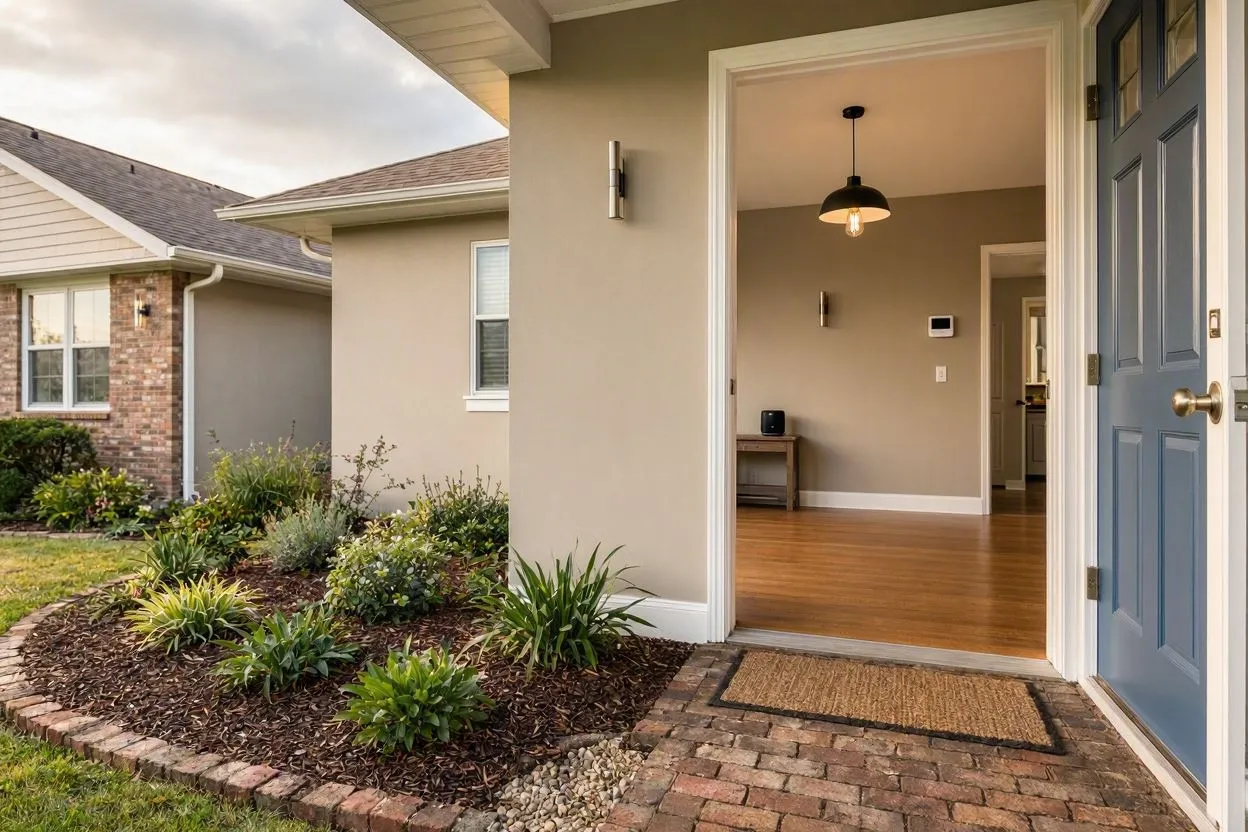
Interior paint, landscaping, updated light fixtures, basic smart home tech. Each costs a few hundred dollars and none of them trigger a renovation timeline. Good options if a six-week kitchen remodel isn’t in the cards, or the $25,000 budget just isn’t there.
Interior and Exterior Paint
A gallon runs $25 to $50, and a full-room repaint costs $200 to $400 in materials if you DIY it. Zillow’s 2024 research found 32% of sellers painted their home’s interior before listing, the single most common pre-sale project in the whole dataset. Stick to neutral tones for resale. Bold colors narrow buyer appeal even when the paint job itself is flawless.
Landscaping
Beyond the quick lawn and shrub cleanup mentioned above, a mature shade tree, placed well, can cut cooling costs by as much as 40% in summer, according to HGTV’s home-value research. Trees take years to pay off since they need time to grow in, but low-maintenance native plants and fresh mulch deliver curb appeal within a weekend for under $300.
Light Fixtures and Hardware
Swapping outdated ceiling fans, dining fixtures, and cabinet hardware costs $100 to $500 and instantly modernizes a room. Buyers read dated brass as a sign the rest of the house hasn’t been touched either, even when that’s not actually true.
Smart Home Technology
Listings with smart lighting get 3% more saves on Zillow than comparable listings without it. A smart thermostat runs $130 to $280 installed and appeals directly to buyers watching their energy bills. Video doorbells and smart locks add a similar boost for under $200 a device.
Which Home Improvements Decrease Home Value?
Three categories can actually hurt you: swimming pools in most U.S. climates, luxury upgrades that outpace the neighborhood, and garage conversions into living space. Each one either shrinks the buyer pool or signals more maintenance than the average buyer wants to take on.
Pools split buyers sharply. In Phoenix or Orlando, a pool adds real value because outdoor living is the whole point of living there. That same pool in Minneapolis or Portland often reads as a liability: a safety concern for families with kids, an ongoing cost that outweighs the handful of warm months it actually gets used.
Luxury upgrades follow similar logic. Drop $15,000 on professional-grade appliances in a $250,000 starter home and you likely won’t see that money again, because buyers shopping that price range aren’t looking for a Wolf range or marble waterfall counters.
Garage conversions carry the steepest penalty of the three. Turn a two-car garage into a bedroom or office and you’ve removed covered parking, something most buyers still expect and actively filter for in their search.
How Do You Budget for Home Improvements That Increase Value?
Cap total renovation spending at 30% of the home’s current market value. That keeps your investment aligned with what the local market can actually support at resale. On a $350,000 home, that ceiling works out to $105,000 across every project combined.
Once cash reserves run dry, financing falls into two main buckets. A HELOC works like a revolving credit line secured against your existing equity, so you borrow only what a given project needs and repay at a variable rate. A second mortgage gives you a fixed lump sum at a fixed rate instead, better if you already know the exact renovation cost and want predictable payments over flexibility. Most lenders cap combined borrowing (remaining mortgage plus new loan) at 90% of the home’s pre-improvement value, so a homeowner carrying $270,000 on a $350,000 house could typically borrow up to $45,000 more.
Timeline and disruption matter as much as raw cost when you’re sequencing projects. Garage door and entry door swaps take a few hours and barely touch daily life. A kitchen remodel runs six to twelve weeks and can knock out cooking-space access for most of that window. If you’re listing within three months, do the low-disruption, high-ROI projects first and save anything requiring more than two weeks of construction for a longer runway.
What Order Should You Tackle Projects In?
Start low-cost and low-disruption, then move to bigger renovations only if your selling timeline has room for the added construction weeks. This matters because half-finished projects show worse at a showing than a house nobody’s touched at all. Walk a buyer through exposed subfloor in one bathroom and finished hardwood in the next room, and the whole property reads as a work in progress, even where the finished parts look great.
Three tiers work for most homeowners on a fixed schedule:
- Tier one (single-day projects): garage door replacement, entry door swaps, light fixture updates.
- Tier two (a weekend to a week): interior paint, landscaping cleanup, pressure washing.
- Tier three (multi-week): kitchen remodels, bathroom remodels, siding replacement. Two to twelve weeks depending on scope.
If you’re listing in 90 days, finish every tier-one and tier-two project first, then figure out whether there’s enough runway left for one tier-three renovation before the listing date.
Skipping straight to a major renovation without handling the smaller stuff wastes money and time. A $28,000 kitchen remodel next to a dated, squeaky garage door creates an inconsistent impression that undercuts the bigger investment you just made.
How Do Appraisers and Buyers Value Improvements Differently?
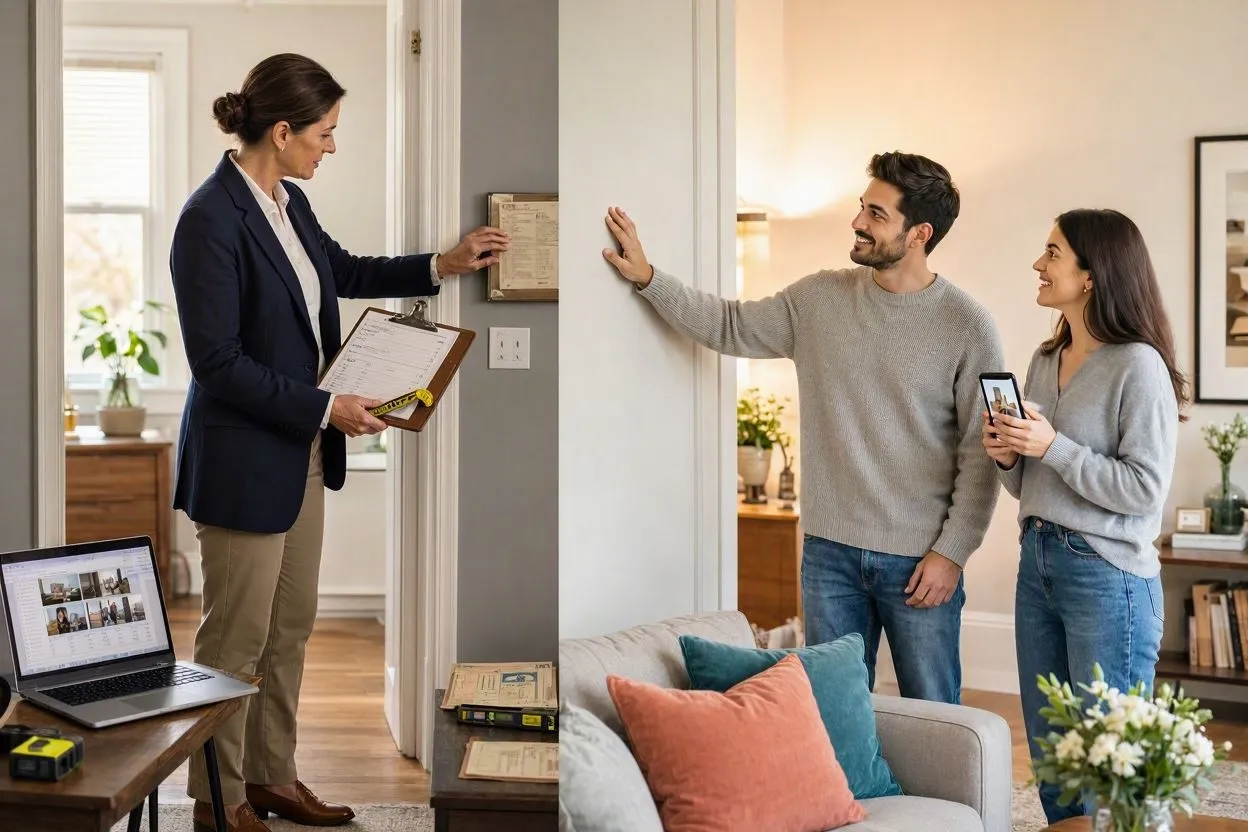
Appraisers work off comparable sales and objective condition data. Buyers respond to first impressions and how move-in ready a place feels. An appraiser walks through with a checklist covering square footage, the age of major systems, and recent sales of similar homes nearby. Fresh paint barely registers on that form unless it’s covering up visible damage.
A buyer touring the same house forms an opinion in the first ninety seconds, and that opinion gets anchored by exactly the details an appraiser ignores: paint color, lighting, how clutter-free each room looks.
That gap is why a $400 paint job can shift a buyer’s offer price while adding almost nothing to the appraised value on paper. The best outcome pairs at least one appraiser-relevant project (a new HVAC system, an updated electrical panel, a roof replacement) with the cosmetic upgrades that move buyers emotionally. Lean entirely on cosmetic work and you risk a strong offer falling apart once the appraisal comes back lower than expected.
Is It Better to Renovate Yourself or Hire a Professional?
Hire a pro for anything involving plumbing, electrical, or structural changes. Handle paint, landscaping, and fixture swaps yourself. The line comes down to licensing requirements and the cost of getting it wrong. A miswired outlet or a load-bearing wall removed without proper support creates liability that follows the sale, sometimes surfacing during a buyer’s inspection months later.
Cosmetic projects sit safely on the DIY side. Painting a room, swapping cabinet hardware, installing a smart thermostat: none of it needs a license, and the worst-case mistake is repainting a wall or reinstalling a fixture. Complex projects like a kitchen remodel benefit from professional oversight even if you’re doing some of the labor yourself, because a licensed contractor catches code issues before they turn into expensive change orders. Renovation pros across the board recommend a 25% contingency budget, and it’s worth having: it absorbs the cost of whatever surfaces once the walls open up (water damage, outdated wiring, plumbing that doesn’t match the original blueprints).
Conclusion
You don’t need a six-figure renovation budget or a full gut remodel to raise your home’s value. The data keeps pointing to the same handful of projects: garage doors, entry doors, and exterior siding return more per dollar than any kitchen or bathroom upgrade, while paint, landscaping, and light fixtures punch well above their weight for under $500 each. Cap spending at 30% of current market value, sequence projects around your actual selling timeline, and pair at least one appraiser-relevant upgrade with the cosmetic work that moves buyers emotionally. Do that and you’re in about as strong a position as you can be at closing.
The garage door alone, a $4,317 average investment returning $15,081 in resale value, remains the single highest-ROI project a homeowner can make in 2026.