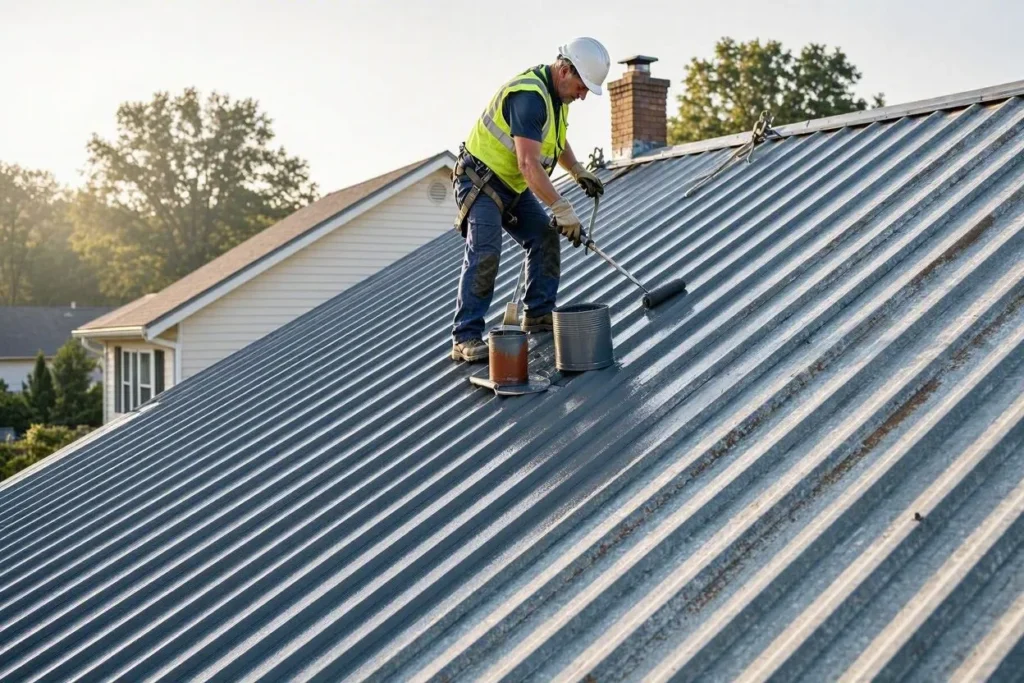
Yes, you can paint a metal roof, and in most cases it’s a smart way to restore a faded finish without paying for full replacement. The panels need to be structurally sound first. Heavy rust-through, failing fasteners, a rotting deck underneath, none of that gets fixed by a fresh coat, no matter how good the new color looks going on. Get the prep right, though. A repaint can buy a roof another 10 to 25 years depending on the coating you choose. The details that decide whether a paint job lasts three years or fifteen take a bit more explaining, starting with whether your specific roof is even a good candidate.
Is It Worth Painting a Metal Roof?
Painting a metal roof is worth it when the panels are sound but the finish has faded, chalked, or picked up light surface rust. A quality paint job restores curb appeal and adds reflectivity that can lower attic temperatures. It stretches useful life too, all without the five-figure price tag of a full tear-off.
It’s not worth it in every case, though. Widespread rust-through, fasteners pulling loose across multiple panels, or a roof already near the end of its natural 40- to 70-year lifespan point toward replacement instead. Painting over structural failure just hides the problem for a year or two before it resurfaces, often worse. A roof with three or four isolated rust spots is a good painting candidate. One where rust has eaten through the metal in a dozen places usually isn’t.
The U.S. Department of Energy notes that reflective roof coatings in light colors can drop surface temperatures by 50 to 60°F (28 to 33°C) compared to a dark, faded finish. That’s not a marginal difference. For a homeowner in a hot climate, it translates into real cooling savings over a summer.
What Type of Metal Roof Do You Have?
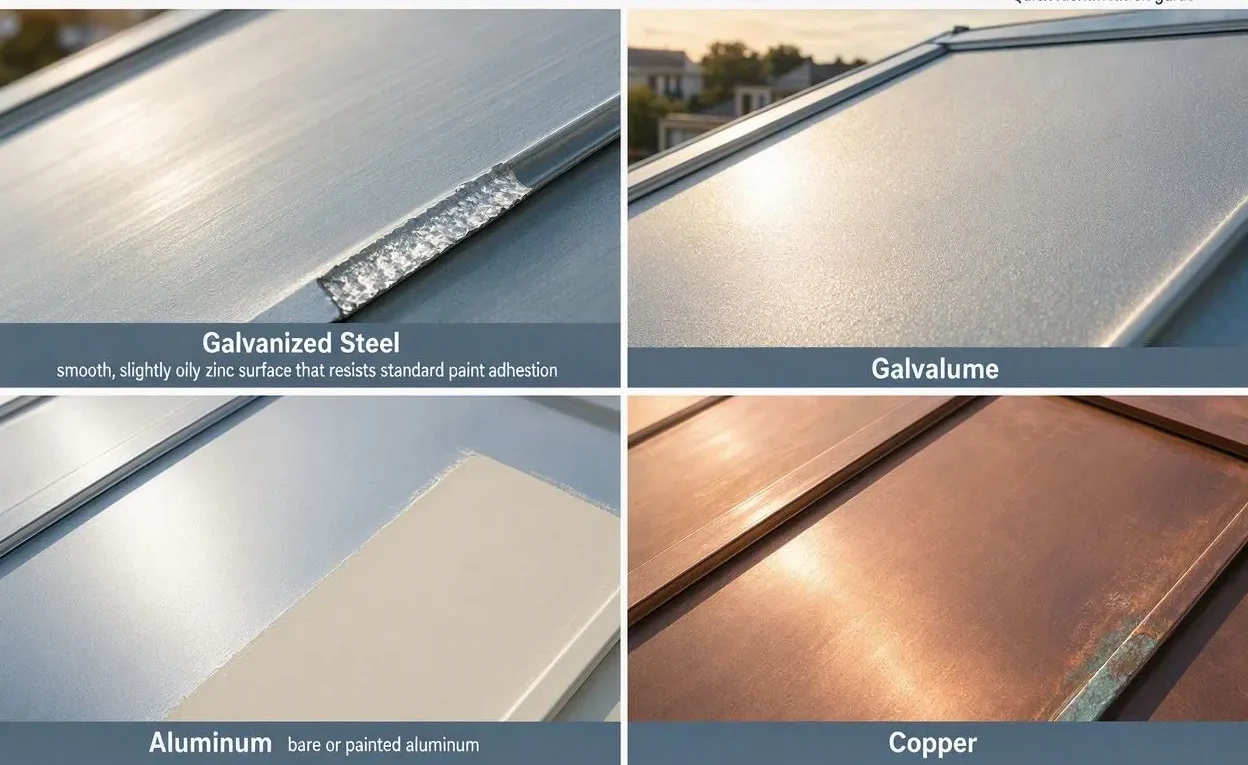
The metal underneath your existing finish determines how you prep and prime it, and skipping this step is where most DIY paint jobs go wrong. Four substrates show up most often on residential and light commercial roofs: galvanized steel, Galvalume (a steel panel coated in an aluminum-zinc alloy), bare or painted aluminum, and copper.
Galvanized steel has a smooth, slightly oily zinc surface that resists standard paint adhesion without an etching primer. Galvalume behaves similarly but needs a primer rated specifically for aluminum-zinc coatings, not a generic galvanized product. Aluminum roofing doesn’t rust the way steel does, but it still needs a bonding primer or paint won’t grip the oxide layer that naturally forms on the surface. Copper is the outlier here. Most roofers won’t recommend painting it at all. The natural patina is the whole reason people choose copper in the first place.
ASTM D6386 and D7803 cover surface preparation standards for hot-dip galvanized and Galvalume steel before coating. If you’re hiring a contractor, ask whether their prep process follows either standard. It’s a fair question, and a professional crew should have an answer ready.
What Kind of Paint Works Best on a Metal Roof?
Acrylic latex paint works best for most residential metal roof recoating projects, offering 10 to 15 years of protection when applied over a properly primed surface. It’s water-based, flexible enough to move with the metal through temperature swings, and far easier to clean up than oil-based alternatives.
Three other options come up depending on the job. Elastomeric coatings run thicker than standard paint, bridge small cracks, and last 15 to 25 years, making them the better pick for low-slope roofs or areas prone to ponding water. Direct-to-metal (DTM) acrylic combines primer and topcoat in one product, which saves a step on clean, rust-free surfaces. Polyvinylidene fluoride (PVDF), often sold under the brand name Kynar 500, is the factory-applied standard on new panels and holds its color for 30 to 40 years, but it’s not something you apply in the field. If your roof already has a PVDF finish, recoating with a high-quality acrylic or elastomeric product is the realistic option once that factory coating starts to fade.
| Paint Type | Expected Lifespan | Best Use Case |
| Acrylic latex | 10–15 years | Standard residential recoat, color change |
| Elastomeric | 15–25 years | Waterproofing, low-slope roofs, crack bridging |
| DTM acrylic | 8–12 years | Fast recoat on clean, rust-free metal |
| PVDF (Kynar 500) | 30–40 years | Factory application only, not field-applied |
Does Painting a Metal Roof Void the Warranty?
Painting over a factory finish can void the manufacturer’s warranty, and most panel warranties run 20 to 40 years on that original coating. Manufacturers design factory finishes, PVDF and silicone modified polyester (SMP) among them, to be baked on at controlled temperatures. Field-applied paint doesn’t go through that process, so it changes the terms the manufacturer originally agreed to cover.
Check your warranty documentation before doing anything else, if the roof is under 20 years old. Some manufacturers publish an approved list of recoating products that preserve partial coverage; most don’t. A handful of specialty coating systems, applied by certified installers, come with their own 10- to 15-year warranty that’s separate from the original panel warranty. That’s the exception, not the rule, and it usually costs more than a standard repaint.
How Do You Prepare a Metal Roof for Painting?
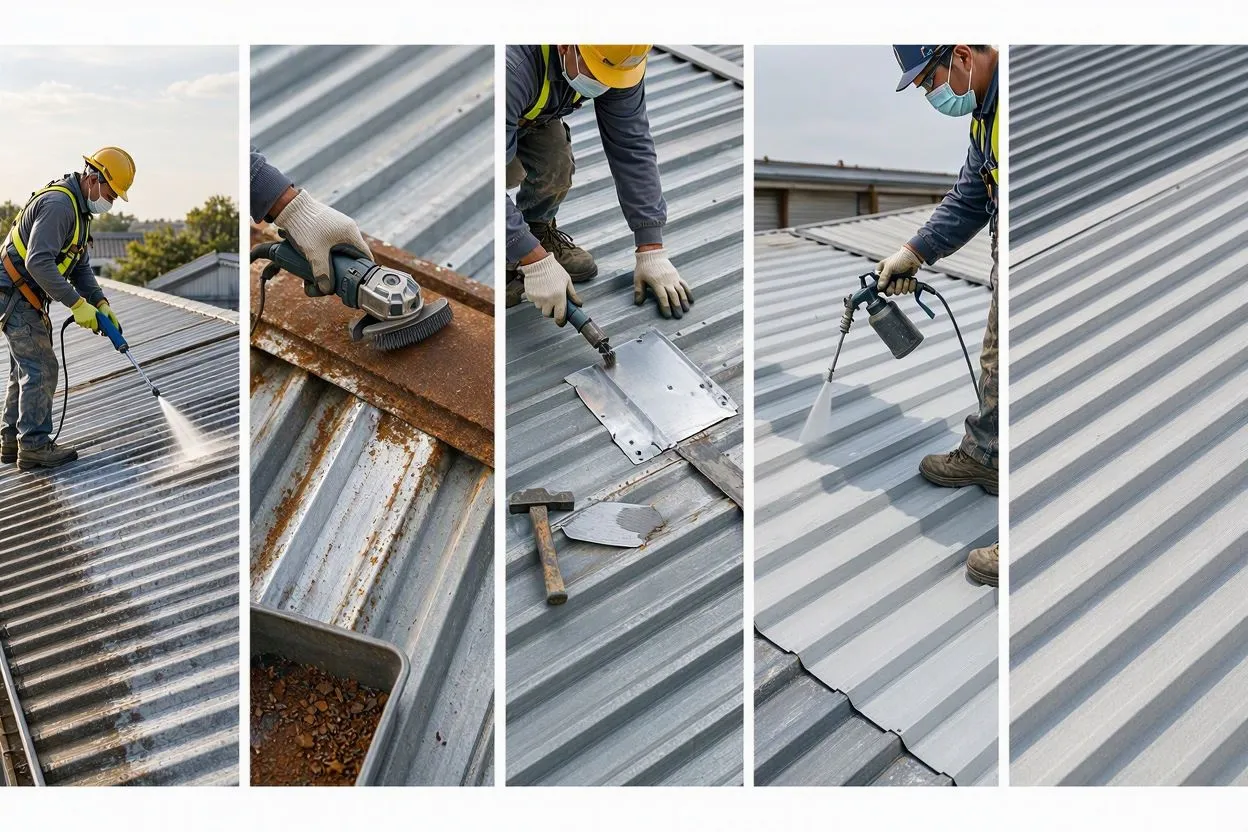
To prepare a metal roof for painting, follow five steps in order: pressure wash the surface, remove rust down to bare metal, patch any dents or seam gaps, apply a rust-inhibiting or etching primer, and let the primer cure fully before the topcoat goes on.
Start with a thorough pressure wash to strip dirt, chalk residue, and mildew. Skip this step and the new paint has nothing solid to grip. Next comes rust removal with a wire brush, sander, or grinder, working every spot down to clean metal rather than just knocking off the loose flakes on top. Any dents, small holes, or gapping seams need patching before you go further; painting over a physical defect doesn’t fix it. The primer comes next, matched to your specific substrate. Steel gets a rust-inhibiting or galvanized etching primer, and aluminum needs one formulated for non-ferrous metal. Give the primer a full 24 hours to cure before applying the topcoat. Rushing this one step is the single most common reason DIY jobs fail early.
A basic supply list covers a pressure washer, wire brush or angle grinder with a wire wheel, rust-inhibiting primer, an airless paint sprayer, drop cloths for overspray control, and a fall-arrest harness if the pitch is anything steeper than 4:12.
Should You Spray or Roll Paint on a Metal Roof?
Spraying beats rolling for most metal roof projects. An airless sprayer covers the ribs, seams, and flat panels in one even pass, something a roller just can’t match on a textured surface.
A sprayer with a .017 to .021 tip size handles acrylic latex and elastomeric coatings well. Rolling still has a place for small touch-ups, tight spots around flashing, and areas where overspray would be a problem, like near windows or landscaping. A 3/8- to 1/2-inch nap roller works on smooth panels, while corrugated metal needs a thicker 3/4-inch nap to push paint into the low points. Brushing works fine for trim and edges but takes far longer across a full roof and tends to leave visible strokes.
What Temperature Is Best for Painting a Metal Roof?
The best temperature range for painting a metal roof falls between 50°F and 85°F (10°C to 29°C), with low humidity and no rain forecast for at least 24 hours after application.
Below 50°F, the paint film doesn’t cure properly and stays soft enough to wash off in the next rain. Above 90°F, it dries too fast on a hot metal surface, which prevents proper leveling and leads to poor adhesion. Spring and early fall tend to offer the most reliable window in most U.S. climates. Summer painting can still work, but only on overcast, cooler days. A metal roof sitting in direct afternoon sun can hit surface temperatures well above the safe range, even when the air itself feels comfortable.
What Are the Most Common Painting Mistakes?
The five most common mistakes when painting a metal roof are skipping the primer, painting over active rust, working in the wrong weather, applying one thick coat instead of several thin ones, and rushing the dry time between coats.
Skip the primer and paint peels within months, because there’s nothing on bare or galvanized metal for it to bond to. Untreated rust is worse. It traps the corrosion under the new topcoat, and the rust bleeds back through as orange-brown stains that no amount of coverage will hide. The wrong temperature window causes blistering or poor curing, depending on whether it was too hot or too cold on application day. A single thick coat looks tempting for speed, but it cracks and peels faster than two or three thin ones applied correctly. Then there’s the second coat applied too soon, before the first has fully dried, which leaves uneven texture and lets the seams fail early.
How Long Does Paint Last on a Metal Roof?
Paint lasts 10 to 15 years on a metal roof with a standard acrylic latex application, or 15 to 25 years with a premium elastomeric coating, depending on climate and how well the surface was prepped beforehand.
Climate plays a bigger role than most homeowners expect. Roofs in high-UV regions like the Southwest fade and chalk faster than those in cloudier northern climates, and freeze-thaw cycles put extra stress on the paint film during winter. Color matters too. Lighter shades reflect more heat and hold their finish longer, while dark colors absorb UV radiation and break down faster. A gray roof in Phoenix, for instance, will often outlast an identical black roof by several years. Surface prep still decides more than color or climate ever will. A roof prepped and primed correctly in a tough climate will outlast a sloppy paint job done under perfect skies.
Is It Cheaper to Paint or Replace a Metal Roof?
Painting a metal roof costs significantly less than replacing it, running roughly $1,200 to $3,700 for professional painting compared to $10,000 to $40,000 or more for a full replacement, depending on roof size and material.
Painting makes financial sense, if the panels are structurally intact, fasteners are secure, and the only real problem is cosmetic fading or light surface rust. A $2,000 to $3,000 paint job on a roof with another 15 to 20 years of structural life left is a strong return. Replacement becomes the better math when a roof is already 40 or more years old, when rust has compromised the metal in multiple areas, or when the deck underneath shows signs of damage. Cost per year of service, not just the upfront number, is what actually determines which option wins.
Should You Hire a Professional or Paint It Yourself?
Hiring a professional is the safer route for any full-size roof. Metal surfaces get slippery fast, and working at height without fall protection carries real risk.
According to OSHA, falls account for over 300 construction fatalities every year, and a metal roof coated in morning dew or chalky residue is exactly the kind of surface where that risk shows up. A small shed or a single-story outbuilding is reasonable for a confident DIYer with the right harness and non-slip footwear. A two-story home with a steep pitch is a different situation entirely, and that’s where a professional crew’s equipment and experience earn their fee. Pros also bring spray rigs that lay down a more even coat, cutting labor time while producing a cleaner finish than most homeowners can match with a roller.
What Color Should You Choose for a Metal Roof?
Light and neutral colors fade the least on a metal roof. They absorb less UV radiation and heat than dark pigments do, so whites, light grays, tans, and pale blues hold their finish longer than black, dark brown, or bright red.
Dark colors also make the harder repaint later. Switching from a dark base to a lighter topcoat needs at least two coats of stain-blocking primer to keep the old color from bleeding through, while going darker over a lighter base covers in a single pass. Rust counts as a color problem too, in a sense. Left untreated, it bleeds through multiple layers of paint unless it’s removed down to bare metal first and treated with a rust-converting primer.
Do You Need HOA Approval Before Painting a Metal Roof?
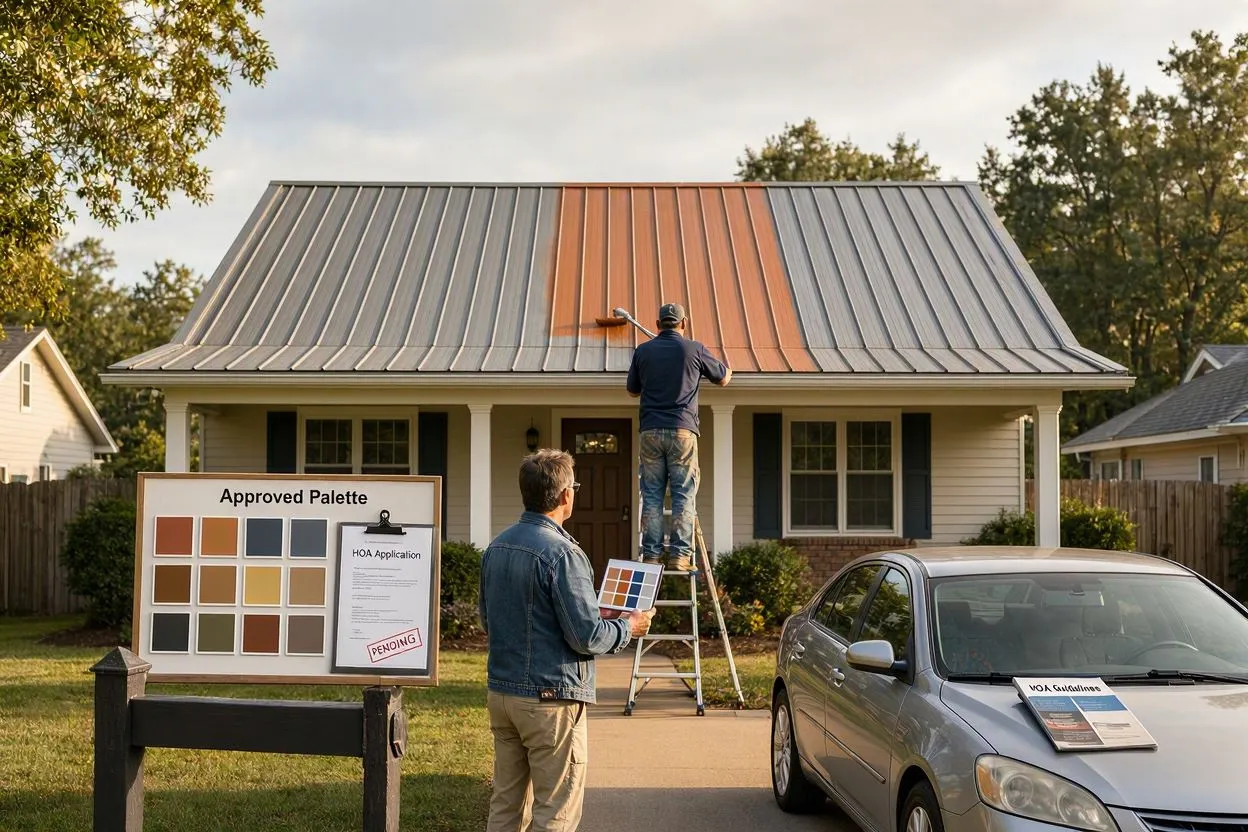
Check with your homeowners association (HOA) before painting, if your property falls under one. Many HOAs restrict roof colors outright and require written approval before any exterior color change goes ahead.
Most associations keep an approved palette on file, and submitting a paint sample or product spec sheet ahead of time avoids a compliance dispute after the work is already done. Some municipalities also require a permit for exterior alterations on commercial buildings, so it’s worth a quick call to the local building department if you’re painting anything beyond a single-family residence.
Conclusion
A metal roof can be painted successfully when the panels are still structurally sound and the job follows the right order: clean, treat rust, prime, then topcoat with a product matched to the metal underneath. Skip any one of those steps and the paint fails early, often within a single season. Get them right, and a $2,000 to $3,000 investment buys another decade or more of protection and curb appeal at a fraction of what replacement costs. The real decision isn’t whether painting is possible. It almost always is. The decision is whether your specific roof, at its current age and condition, is a better candidate for a fresh coat or a new set of panels altogether.