Yes, you can paint gutters. Aluminum, vinyl and galvanized steel gutters all take paint well when you clean, scuff and prime them first. For the topcoat, pick a 100% acrylic latex exterior paint and apply it over a primer that’s matched to the gutter material. Leave the trough’s inside bare. Vinyl gutters belong in light, vinyl-safe colors.
Key Takeaways
- Aluminum, vinyl and galvanized steel gutters can all be painted. Copper gutters are usually left unpainted so they develop a natural patina.
- The best paint for gutters is a 100% acrylic latex exterior paint applied over a primer matched to the gutter material.
- Aluminum gutters need cleaning, chalk removal and a light scuff sand of the factory baked finish before priming.
- Vinyl gutters need light colors or a vinyl-safe color line, because dark paint absorbs heat and can warp vinyl.
- Galvanized steel gutters need a primer rated for galvanized metal. Never apply an oil-based paint directly to the zinc coating.
- Homes built before 1978 may have lead paint, so test old painted gutters and trim before sanding.
Can You Paint Gutters?
Yes, gutters can be painted. A properly prepped paint job refreshes faded, chalky gutters or changes their color to match new trim, siding or roofing, without the expense of replacing sound gutters that still drain properly, hold their pitch and stay firmly attached to the fascia board.
Gutter painting is an exterior refinishing job. It restores or changes the color of gutters and downspouts, with primer and exterior paint going on over a freshly cleaned surface.
Most US homes have continuous aluminum gutters with a factory baked enamel finish, and years of sun fade that finish until a white, powdery chalk covers the surface. Fresh paint brings back an even color.
The honest answer to “can you paint gutters” depends on the gutters’ condition, not just the metal or plastic they’re made of. Paint only changes how they look. It won’t fix leaks, sagging, poor pitch or rust holes.
When Painting Beats Replacing
This table compares common gutter conditions and whether painting or replacing is the right call.
| Gutter Condition | Paint | Replace |
|---|---|---|
| Faded or chalky finish | Yes | No |
| Color clashes with new siding | Yes | No |
| Light surface rust on steel | Yes, after rust treatment | No |
| Rust holes or split seams | No | Yes |
| Sagging or pulling from fascia | No | Repair hangers or replace |
| Undersized gutters that overflow | No | Yes |
Do Painted Gutters Need Repainting?
Yes, painted gutters need repainting once the finish starts to chalk, fade or peel. There’s no verified figure for a standard repaint interval, so the finish itself, not the calendar, tells you when it’s time to repaint. Trust your eyes.
Prep quality and paint grade drive the timing. Sun exposure matters as well. In most of the US, south-facing and west-facing runs show wear before the rest of the house, so check those stretches first. Inspect the finish each spring and fall while you’re cleaning the gutters.
Which Gutter Materials Can Be Painted?
Aluminum, vinyl and galvanized steel gutters can all be painted, while copper gutters are usually left bare. Each material calls for its own cleaning method and primer, plus color limits that keep the new finish from peeling or warping early.
So, can gutters be painted when they already have a factory finish? Yes. That baked-on coating doesn’t need stripping; scuff it, then apply a bonding primer so the new paint has something to grip.
This table compares the four common US gutter materials by paintability, primer and color limits.
| Gutter Material | Paintable | Primer Needed | Colors to Avoid |
|---|---|---|---|
| Aluminum | Yes | Bonding primer; self-etching on bare metal | None; check HOA rules |
| Vinyl | Yes, with limits | Often none; follow paint label | Dark colors outside vinyl-safe lines |
| Galvanized steel | Yes | Primer rated for galvanized metal | None; avoid oil-based paint |
| Copper | Rarely | Metal primer approved for copper | Most owners keep the patina |
Can You Paint Aluminum Gutters?
Yes, you can paint aluminum gutters. Aluminum gutters are the easiest type to paint, provided you clean them and scuff the factory finish before a bonding primer goes on.
Factory baked enamel is slick. Fresh paint struggles to grip it unless you give the surface a light sanding, and a fine sanding sponge or 220-grit abrasive pad dulls the gloss without cutting through the coating.
Bare aluminum spots need self-etching primer. Exposed metal also grows a dull white oxidation, which you’ll need to scrub away completely before any primer goes on.
Can You Paint Vinyl Gutters?
Yes, you can paint vinyl gutters, but only in a color no darker than the original or in a color from a vinyl-safe line. Dark paint makes vinyl absorb extra heat, which can bow or warp the gutter.
Sherwin-Williams sells VinylSafe colors formulated for vinyl surfaces. Other brands publish their own vinyl-safe guidance, so ask at the paint counter which shades qualify before anyone tints your gallon.
Read the gutter manufacturer’s warranty first. Some vinyl warranties restrict painting or color changes, and you don’t want to void coverage on gutters that still work fine just to get a new shade.
On vinyl, stick with 100% acrylic latex. That paint flexes with the plastic as temperatures swing between cool nights and hot afternoons, so it moves with the gutter instead of fighting it.
Can You Paint Galvanized Steel Gutters?
Yes, you can paint galvanized steel gutters if you degrease the zinc coating and use a primer rated for galvanized metal. Oil-based (alkyd) paints react with the zinc coating and gradually lose their grip on the surface, a chemical process known as saponification. Keep them off galvanized steel.
New galvanized steel often carries oils or factory treatments that block paint, so a thorough degreasing always has to come first. Older gutters are different. Wire-brush any surface rust you find, then spot-prime those patches with a rust-inhibiting metal primer.
Should You Paint Copper Gutters?
No, most homeowners should not paint copper gutters. The natural brown-to-green patina is the main reason people pay for copper.
Still set on painting it? Degrease the copper, then ask your paint retailer which primer they approve for that metal. Keep in mind that paint hides copper’s main visual advantage, and replacement gutters in painted aluminum might suit the goal better.
What Is the Best Paint for Gutters?
The best paint for gutters is a premium 100% acrylic latex exterior paint in a satin or semi-gloss sheen, applied over a primer matched to the gutter material. Acrylic latex flexes as metal expands and contracts, and it resists UV fading while still cleaning up with plain water.
This table compares the product types used in a gutter paint job, with example US product lines to look for.
| Product Type | Best Use | Example Lines |
|---|---|---|
| 100% acrylic latex exterior | Topcoat for all gutter types | Sherwin-Williams Duration, Benjamin Moore Aura |
| Bonding primer | Factory finishes and slick surfaces | Sherwin-Williams Extreme Bond, Benjamin Moore Stix |
| Self-etching primer | Bare aluminum spots | Rust-Oleum Self Etching Primer |
| Galvanized-rated metal primer | Galvanized steel gutters | Sherwin-Williams Pro-Cryl Universal Primer |
| Direct-to-metal spray paint | Downspouts and small touch-ups | Rust-Oleum Stops Rust |
Read the product data sheet before you buy. That sheet lists approved surfaces and the minimum application temperature, and it also gives the recoat time you’ll need between coats.
You won’t have to hunt. Home Depot, Lowe’s, Sherwin-Williams stores and Benjamin Moore dealers stock every one of these product types at locations across the US.
Is Acrylic Paint Good for Gutters?
Yes, exterior acrylic latex paint is good for gutters, but craft acrylic paint is not. Craft acrylics lack the UV resistance and weather durability that outdoor metal and vinyl need.
If you searched for “acrylic paint for gutters,” what you actually need is a can labeled both “exterior” and “100% acrylic.” Vinyl-acrylic blends cost less. They hold up worse in sun and rain, though.
Which Sheen Works Best on Gutters?
Satin and semi-gloss work best on gutters because they shed dirt and wash clean more easily than flat paint. Semi-gloss suits white and light trim colors. Satin hides dents and seams better on long, sun-lit runs.
Match the gutter sheen to the trim sheen. The roofline then reads as one consistent finish from the street instead of a patchwork of shiny and dull surfaces.
Can You Paint Gutters Black?
Yes, you can paint gutters black. Black holds up well on aluminum and galvanized steel, but black paint on vinyl gutters needs a vinyl-safe formula, because dark colors absorb solar heat, and on sunny walls that heat can soften vinyl until it bows or warps.
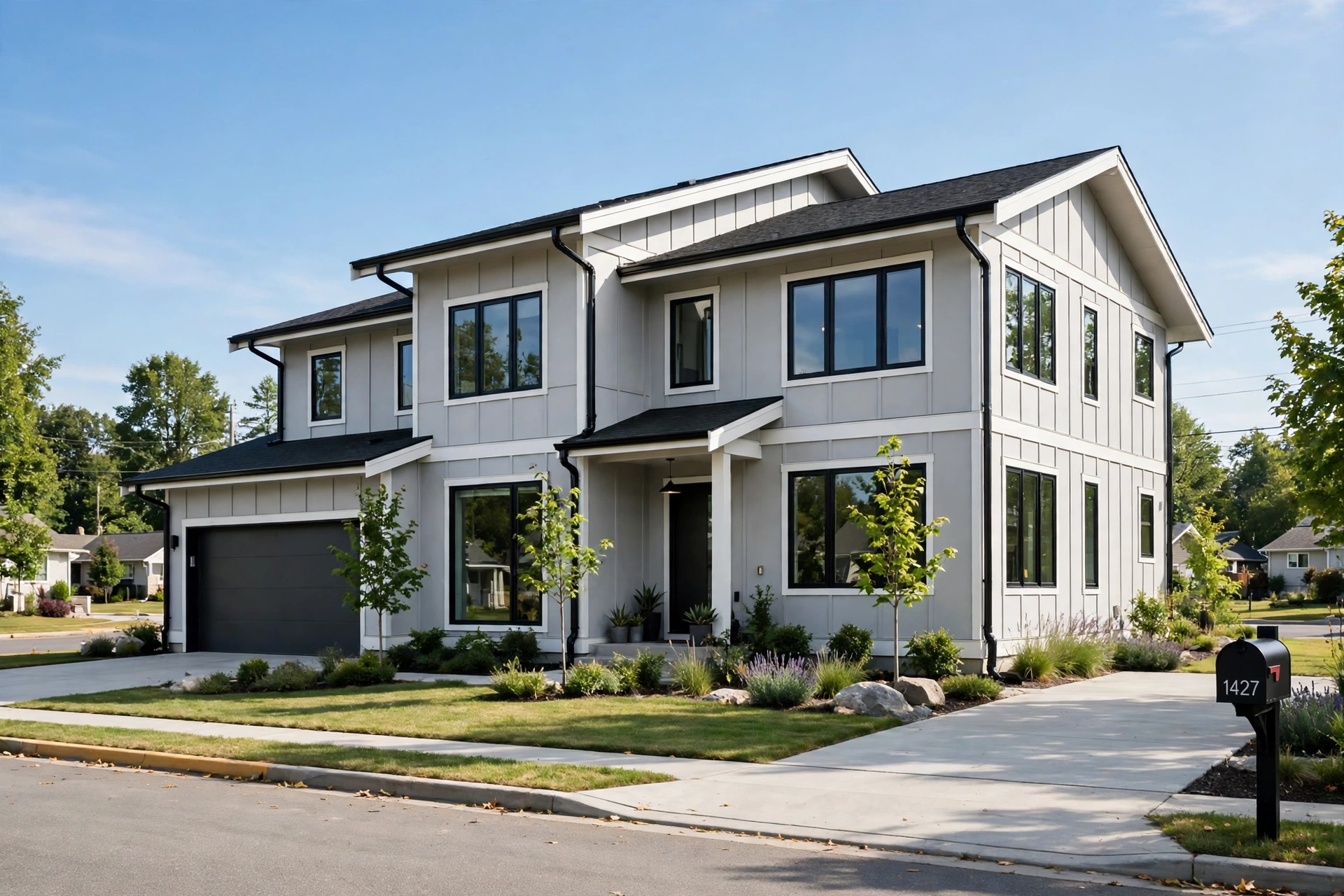
Black gutters pair well with black window frames and dark roofs, and they really stand out against white or light gray siding. They frame the roofline. From the street, the edge of the house looks crisper and more defined.
There’s a tradeoff. Chalky residue and dust show up on black sooner than on white or bronze, and so does fading, which means sunny elevations will look worn before the rest.
Do Black Gutters Fade Faster?
Yes, black and other dark gutter colors show fading sooner than light colors, especially on south-facing and west-facing runs. No verified figure is available for how much faster they fade.
A premium 100% acrylic with strong fade resistance slows the change. Still, cleaning matters. Wash the gutter faces once a year to strip chalk away before it has a chance to dull the color you paid for.
Gutter Color Ideas That Match Trim and Siding
This table compares common gutter color goals and the homes each one suits.
| Color Goal | Gutter Color | Best For |
|---|---|---|
| Blend with roofline | Match fascia and trim | Most homes |
| Disappear on walls | Match siding | Downspouts on flat walls |
| Bold accent | Black or dark bronze | Light siding with black windows |
| Classic look | White | White trim, Colonial styles |
| Warm earth tone | Brown or bronze | Brick, stone, brown roofs |
Can You Paint Gutters and Downspouts?
Yes, you can paint gutters and downspouts with the same cleaning method, primer and 100% acrylic latex exterior paint. Downspouts are the easier half of the job, because you can unscrew them and paint them on sawhorses at ground level.
Taking downspouts down also lets you reach the back face that sits against the wall, which is hard to coat properly while the downspout is still mounted. Spray paint works best here. On round or corrugated downspouts, it gives the most even finish.
Leave the inside of each downspout bare. Paint in there peels, and the loose flakes end up clogging the outlet at the bottom where water needs to exit freely.
Should Downspouts Match the Gutters or the Siding?
Downspouts should match the siding when they run flat against a wall, and match the gutters when they run along a corner board or trim. Matching the siding hides the downspout, while a gutter-matched one outlines the house.
Black or bronze downspouts on light siding read as an intentional accent. That only works, though, when the window frames or the roof already share the same dark tone, so the color repeats somewhere else on the house. Otherwise, skip it.
How Do You Prepare Gutters for Painting?
Prepare gutters for painting by clearing debris, washing off dirt and chalky residue with a degreaser, rinsing and drying them, then scuff sanding the finish and spot-priming bare metal. Paint only bonds as well as the surface beneath it.
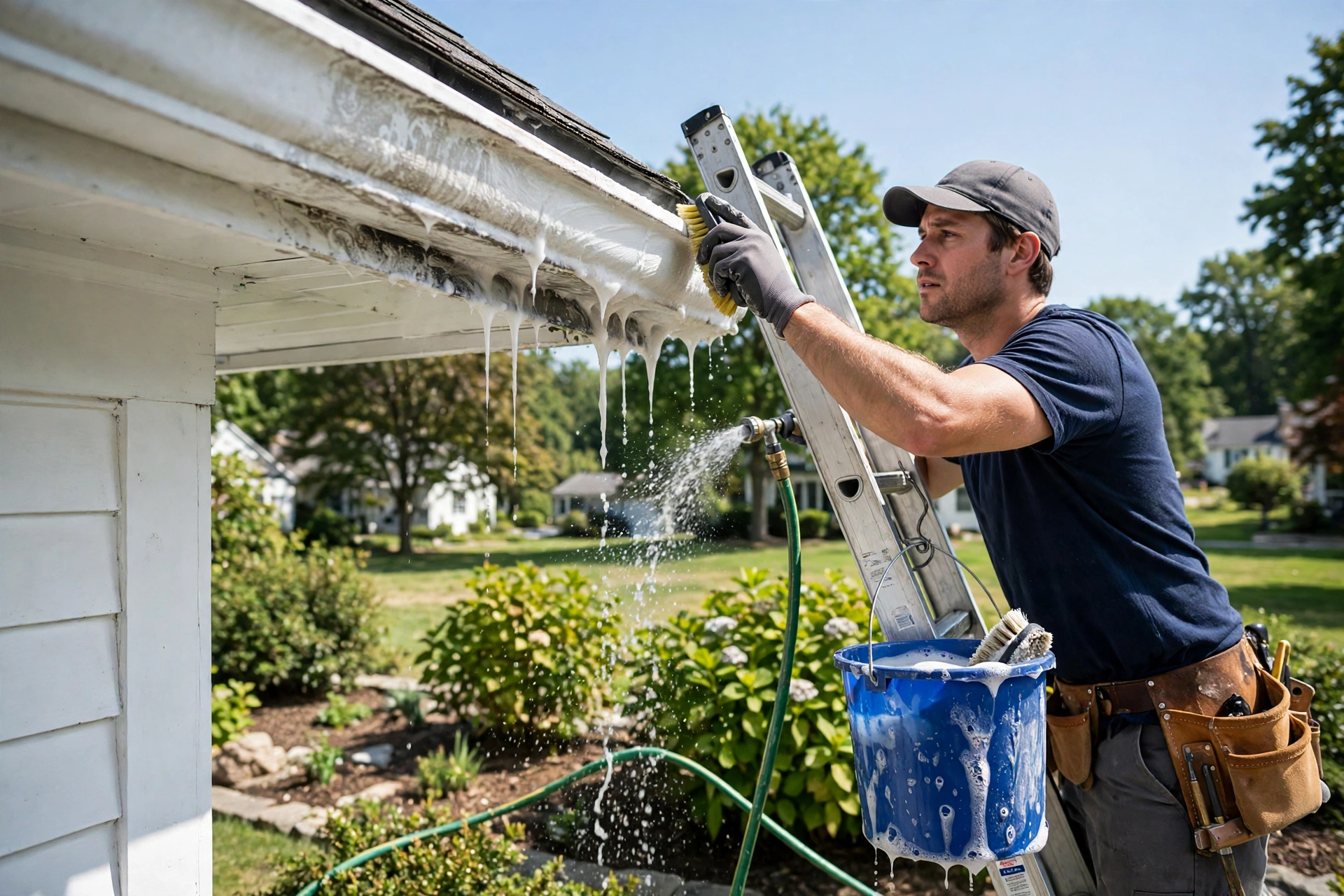
Fix leaks and sagging sections before you paint, and tighten any loose hangers while you’re up there on the ladder. Paint won’t seal a split seam.
Is your seam sealant paintable? Some gutter sealants reject paint outright, so read the label on the tube before you assume a fresh coat will cover the joints.
How Do You Remove Chalky Residue from Gutters?
Remove chalky residue from gutters by scrubbing them with a degreaser or trisodium phosphate (TSP) substitute and a nonabrasive pad, then rinsing with clean water. Repeat until a dark cloth rubbed on the surface comes away clean.
The rub test tells you whether chalk remains. If white powder shows up on the cloth, new paint will bond to the chalk rather than the gutter itself, and it’s going to peel.
Skip steel wool on aluminum. It sheds fibers that stay behind on the metal, then rust and stain the fresh paint you’ve put over them.
Check for Lead Paint on Pre-1978 Homes
Yes, older painted gutters and trim can contain lead, so test them before sanding on any home built before 1978. The US Consumer Product Safety Commission banned lead-based paint for residential use in 1978.
The Environmental Protection Agency (EPA) Renovation, Repair and Painting (RRP) rule applies to paid contractors who work on pre-1978 homes. Under that rule, contractors must be EPA Lead-Safe Certified to disturb more than 20 square feet (about 1.9 square meters) of exterior painted surface. Ask to see the certificate.
DIY work on your own home falls outside the RRP rule. The EPA still urges lead-safe practices. That means laying plastic sheeting and misting surfaces before you scrape, and it rules out dry power sanding of old paint entirely.
Test with an EPA-recognized lead kit, or hire a certified inspector. Factory-finished aluminum gutters that have never been repainted are unlikely to carry lead, but the fascia behind them may. Check both.
How to Paint Gutters Step by Step
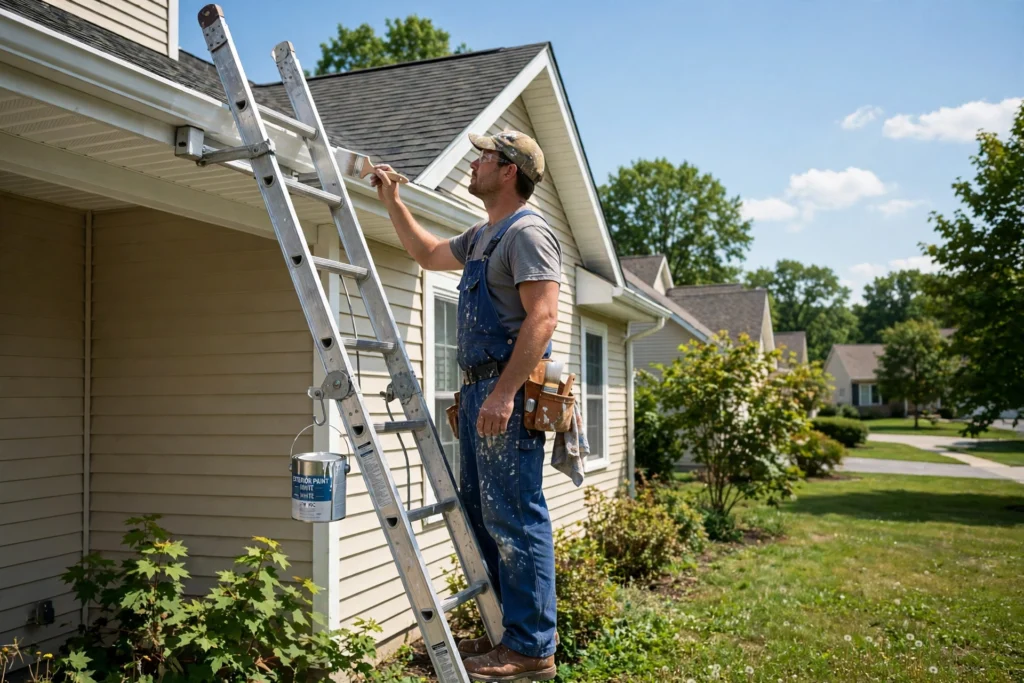
To paint gutters, clean and degrease them, scuff sand the finish, spot-prime bare metal and apply a material-matched primer. Then brush or spray two thin coats of 100% acrylic latex exterior paint on a dry day within the temperature range printed on the label.
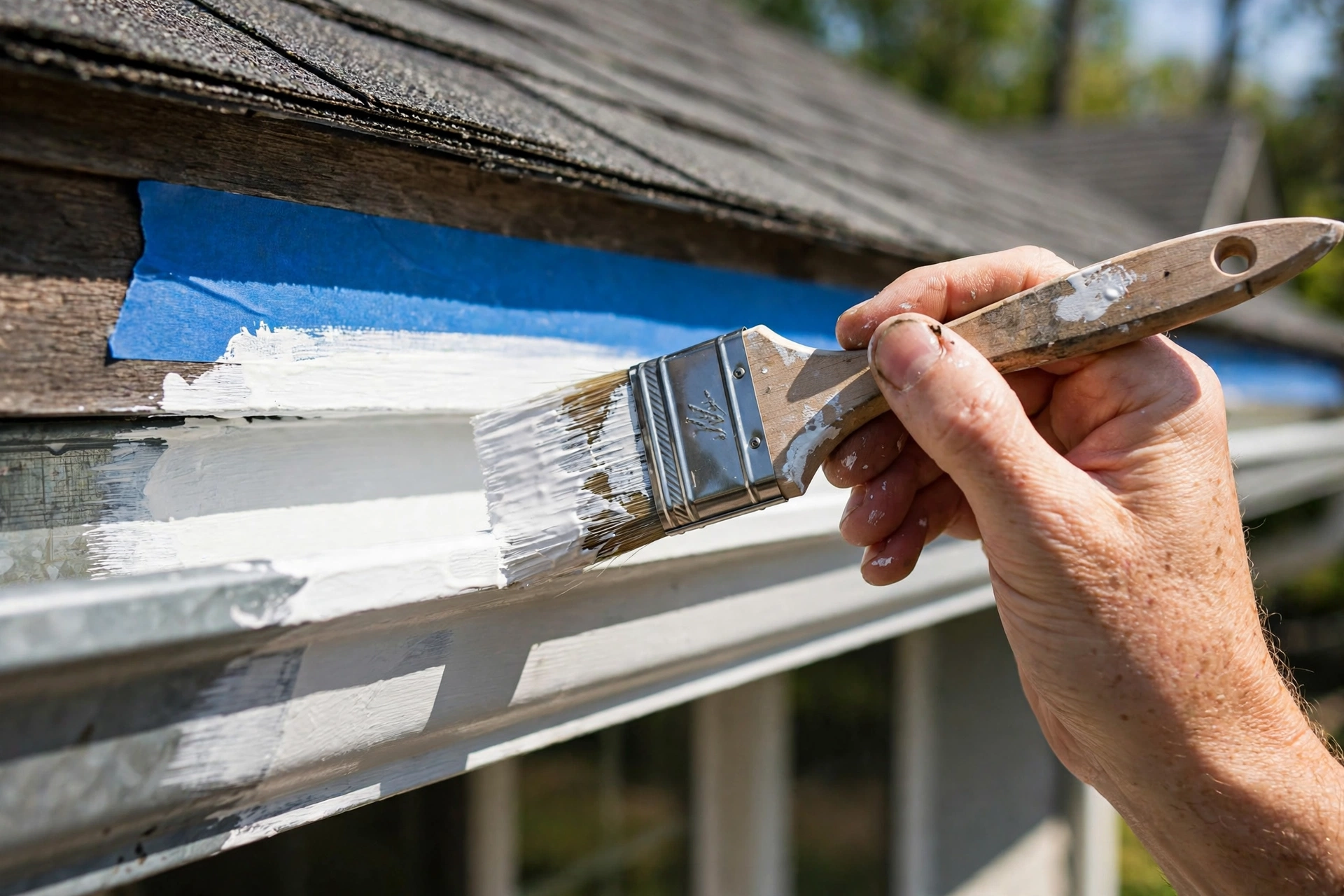
Tools and Supplies
This list covers what a typical single-story gutter job needs:
- Extension ladder with a standoff stabilizer
- Gutter scoop, bucket and garden hose
- Degreaser or TSP substitute
- Nonabrasive scrub pads
- Fine sanding sponge or 220-grit abrasive pad
- Wire brush (steel gutters only)
- Painter’s tape, plastic sheeting and drop cloths
- Primer and 100% acrylic latex exterior paint
- 2-inch (5 cm) angled sash brush and a small foam roller
- Safety glasses and chemical-resistant gloves
The Painting Process
Follow these steps in order for the most durable finish.
- Check the forecast for a dry window that meets the label’s minimum temperature and rain-free time.
- Set the ladder at a 4-to-1 angle: 1 foot (0.3 m) out for every 4 feet (1.2 m) of height.
- Scoop out leaves and debris, then flush the gutters and downspouts with a hose.
- Repair leaks, reset loose hangers and remove the downspouts.
- Scrub the exterior faces with degreaser, then rinse with clean water.
- Rub a dark cloth on the surface and rewash any area that still shows chalk.
- Scuff sand the finish until the gloss turns dull and even.
- Wipe away sanding dust with a damp cloth and let the gutters dry fully.
- Mask the roof edge, fascia and siding with tape and plastic.
- Spot-prime bare metal with self-etching or rust-inhibiting primer.
- Prime the exterior face with a bonding or galvanized-rated primer.
- Apply a thin first coat of acrylic latex, brushing along the gutter’s length.
- Apply a second coat after the recoat time listed on the label.
- Remove the tape once the final coat is dry to the touch.
- Reinstall the downspouts after the paint reaches the label’s handling time.
Never rest a ladder on the gutters. Its weight dents aluminum and scrapes fresh paint, which is exactly why a standoff stabilizer belongs on your supply list for this job.
Best Weather and Temperature for Painting
Paint gutters when the air and surface temperatures sit within the paint label’s range and stay at least 5°F (3°C) above the dew point. Some premium 100% acrylics allow application down to 35°F (2°C). Many others require 50°F (10°C).
Metal heats fast in direct sun. Paint flashes dry on a hot surface and leaves lap marks, so wait to paint each side of the house until the sun has moved off it.
Spring and fall offer the steadiest conditions in most US climates. Southern homeowners do best in early-morning shade. Up north, the deadline is the night the low first dips below the label minimum, so finish before then.
Can You Spray Paint Gutters?
Yes, you can spray paint gutters. An airless or high-volume low-pressure (HVLP) sprayer suits long runs, and aerosol cans suit downspouts and touch-ups. Spraying gives the smoothest finish but demands heavy masking of the roof and siding, and parked cars should move out of range.
This table compares the four application methods for painting gutters.
| Method | Best For | Finish Quality | Main Drawback |
|---|---|---|---|
| Brush | Short runs and cut-in work | Good, with brush marks | Slow on long runs |
| Small foam roller | Flat gutter faces | Smooth | Misses curved profiles |
| Airless or HVLP sprayer | Full-house gutter repaints | Smoothest and most even | Heavy masking, overspray risk |
| Aerosol spray can | Downspouts and touch-ups | Smooth in thin coats | Costly for long runs |
The verdict: brush and roll gutters in place for most DIY jobs, and spray downspouts after you’ve taken them down. Wind changes that. Skip spraying in anything stronger than a light breeze.
Should You Paint the Inside of Gutters?
No, you should not paint the inside of gutters. Standing water, leaf debris and ice keep the trough wet and scraped, so paint peels there faster and the flakes wash into downspouts and clog them.
Paint the outer face and top lip, along with whatever part of the underside you can see from the ground. Interiors stay bare. Don’t count on paint to stop leaks or rust inside a gutter.
Rust-through needs a real fix. If a steel gutter’s interior is rusting through, use a sealant or coating made for gutter interiors, or replace that section.
Why Does Gutter Paint Peel?
Gutter paint peels most often because of poor surface prep, especially leftover chalk, oil or an unscuffed glossy factory finish. The wrong primer is another culprit, and so is cold or damp weather on application day. Painting the trough’s wet interior also invites peeling.
This table compares the main causes of peeling gutter paint and the fix for each.
| Peeling Cause | Prevention |
|---|---|
| Chalk left on surface | Wash until the rub test is clean |
| Glossy factory finish | Scuff sand before priming |
| Oil-based paint on galvanized steel | Use a galvanized-rated primer and acrylic topcoat |
| Cold or damp conditions | Paint within label temperature and above dew point |
| Paint inside the trough | Paint exterior faces only |
| No primer on bare metal | Spot-prime with self-etching primer |
How Long Does Gutter Paint Last?
Gutter paint lasts until UV exposure, weather and surface condition wear it down, and no verified figure is available for a typical lifespan. The longest service life comes from thorough prep paired with a matched primer under a premium 100% acrylic topcoat.
Wash yearly. Doing so removes chalk and grime before they get a chance to degrade the paint film and shorten its life.
Should You Paint Gutters Yourself or Hire a Painter?
Paint gutters yourself on a single-story home with safe ladder access, and hire a painter for two-story homes, steep lots or pre-1978 homes with lead paint risk. Ladder work and lead-safe practices are the two biggest factors in this decision.
No verified cost figure is available for painting gutters in the US. Prices swing with linear footage and height, and prep needs and region shift them too, so collect at least three written quotes. Compare them line by line.
Many painters bundle gutters and downspouts with fascia and trim work. Ask what each quote covers. A good one lists degreasing and scuff sanding along with primer, so you know you’re paying for more than a quick topcoat.
Check HOA Rules Before Picking a Color
Yes, many homeowners associations (HOAs) require approval before you change exterior colors, including gutter and downspout colors. Read your HOA’s architectural guidelines and submit a color request before buying paint.
A black or bronze gutter color on a street of white trim is the change most likely to draw review. Plan for it.
Frequently Asked Questions
Is Painting Eavestrough the Same as Painting Gutters?
Yes. Eavestrough is the common Canadian name for gutters. Painting eavestrough follows the same process of cleaning, scuff sanding, priming and finishing with exterior acrylic latex, exactly as you would for gutters anywhere else.
Can You Use Leftover Exterior House Paint on Gutters?
Yes, if the can says 100% acrylic and lists metal or vinyl among its approved surfaces. Prime aluminum and galvanized steel first. That step is what gives you dependable adhesion on slick, factory-finished metal.
Do You Have to Take Gutters Down to Paint Them?
No. Homeowners typically paint gutters in place from a stabilized ladder. Pulling just the downspouts makes them faster to spray and easier to finish evenly on sawhorses set up at ground level.
Do New Aluminum Gutters Need Paint?
No. New aluminum gutters ship with a factory baked finish in many stock colors. Paint them only when you want a custom shade that your installer simply can’t supply from the standard color range.
Can You Paint Gutters in Winter?
Yes, on days when air and surface temperatures meet the label minimum, often 35°F to 50°F (2°C to 10°C), and remain above the dew point while the coating dries.
Conclusion
Painting gutters gives a tired roofline fresh color without the cost of replacing sound gutters. The catch? Prep has to fit the material: degrease and scuff aluminum, choose vinyl-safe colors for vinyl, use a galvanized-rated primer on steel, and leave copper to patina.
Don’t wait for the next spring or fall painting window to start planning. Run the chalk test on your gutters now, and check your home’s build year for lead risk. Get HOA color approval early, too. Then buy primer and 100% acrylic paint with confidence that the finish will hold up through many seasons of sun and rain.