Commercial building owners in Central Texas face a distinct set of roofing challenges. Austin and San Antonio both sit in a climate zone defined by extreme summer heat, periodic hailstorms, flash flooding, and temperature swings that put considerable stress on roofing systems year-round. Understanding how these conditions affect different roofing materials is essential before making any decisions about installation, repair, or replacement.
The commercial roofing market in Central Texas has grown significantly over the past decade alongside the region’s broader economic expansion. As more commercial developments come online, demand for qualified contractors has increased. Choosing an experienced commercial roofing company Austin property owners can rely on requires looking beyond price alone and evaluating track record, material expertise, and familiarity with local building codes.
Why Central Texas Climate Creates Unique Roofing Demands
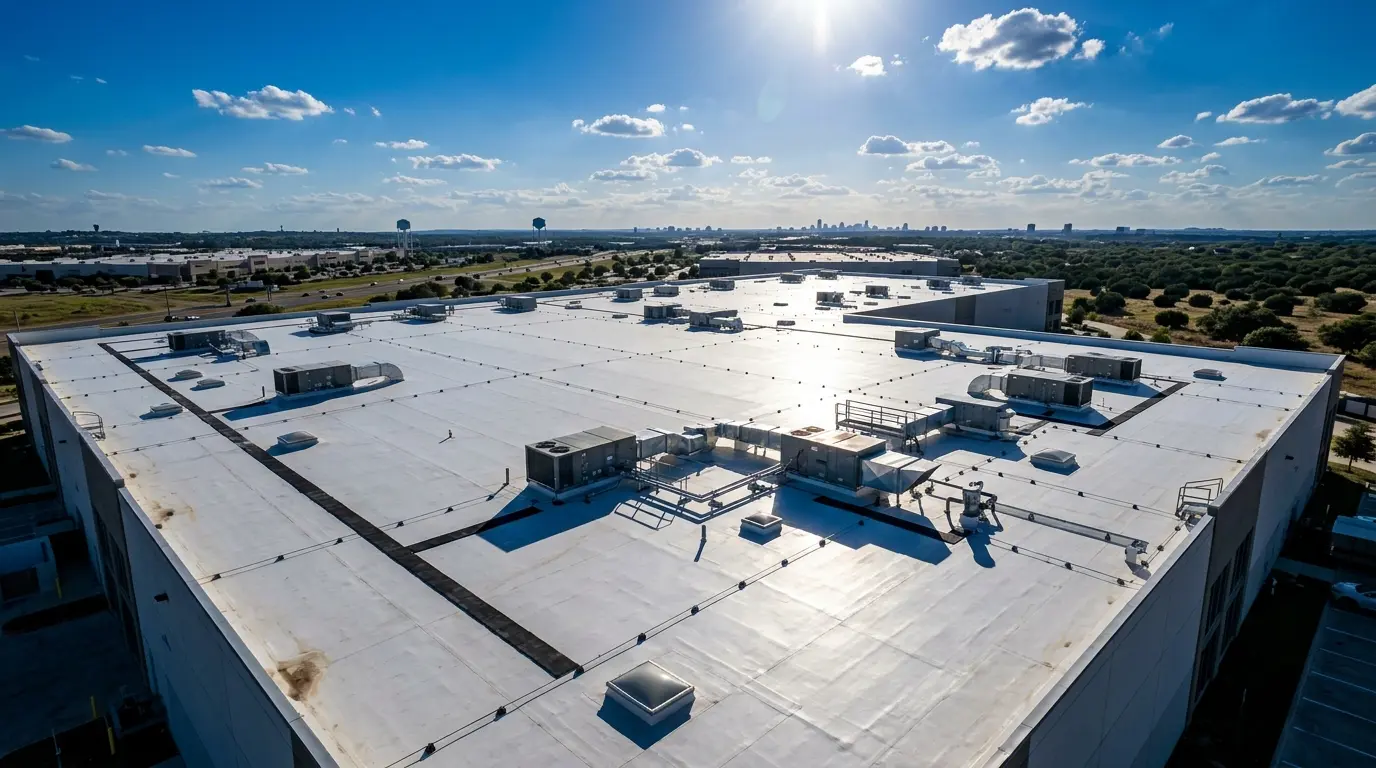
Austin and San Antonio both experience long, hot summers with temperatures regularly exceeding 100 degrees Fahrenheit. UV intensity at this level accelerates the degradation of roofing membranes, sealants, and adhesives faster than manufacturers’ standard estimates, which are often based on more temperate climates. Rooftop surface temperatures can reach 150 to 170 degrees on peak summer days, creating significant thermal stress on any roofing system.
The region also experiences periodic severe hailstorms, particularly in spring. Hail damage is one of the leading causes of premature roof failure on commercial buildings in Central Texas, and damage is not always immediately visible without a professional inspection. Flash flooding events, increasingly common in both cities, put pressure on drainage systems and expose any weaknesses in flashing or membrane seams.
Commercial Roofing Systems That Perform Well in This Climate
TPO (Thermoplastic Polyolefin)
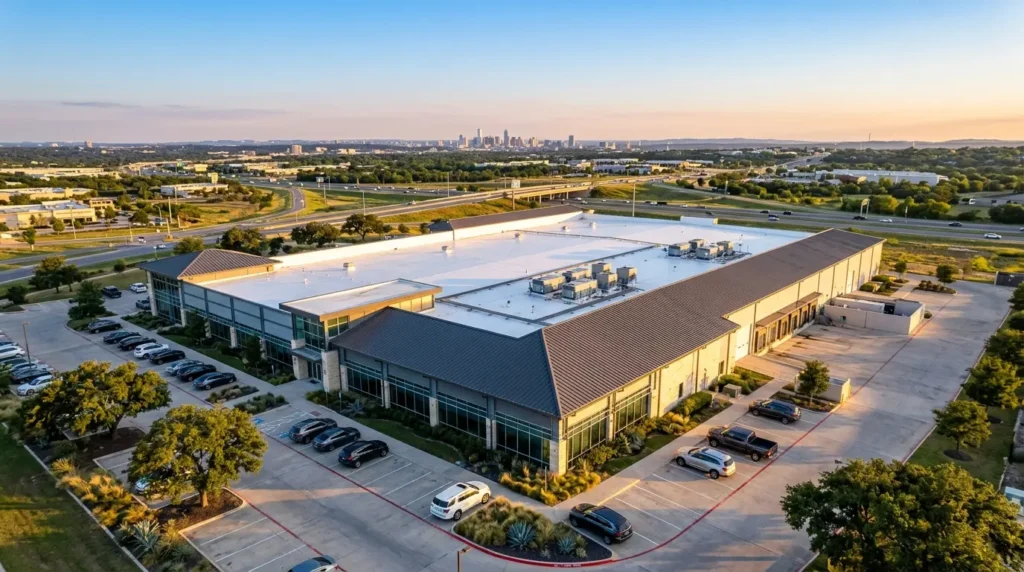
TPO is one of the most popular flat roofing systems for commercial buildings in Austin and San Antonio. Its white reflective surface reduces rooftop heat absorption, which directly lowers HVAC load during long Texas summers. Heat-welded seams provide strong resistance to water infiltration, and the material is cost-effective relative to other single-ply systems. It works well for retail centers, office parks, and warehouses with flat or low-slope roofs.
Metal Roofing
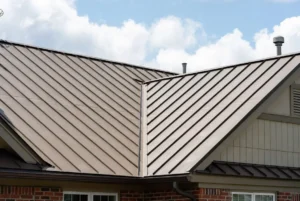
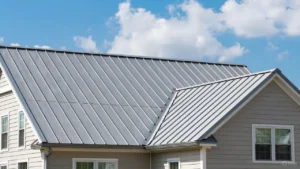
Standing seam metal roofing is a strong long-term investment for commercial properties in Central Texas. It is highly resistant to hail damage compared to membrane systems, handles thermal expansion well when properly detailed, and carries lifespans of 40 to 60 years. Metal also sheds water efficiently during heavy rain events, reducing the risk of ponding that affects flat roof systems. The higher upfront cost is offset by significantly lower maintenance and replacement frequency.
Modified Bitumen
Modified bitumen is a multi-layer asphalt-based system well suited to flat commercial roofs in hot climates. It handles thermal cycling effectively and provides solid waterproofing performance. It is a practical choice for older commercial buildings where budget is a constraint and a full membrane replacement is needed without the premium cost of TPO or metal.
EPDM (Rubber Roofing)
EPDM offers strong UV and ozone resistance and a track record of 20 to 30 year lifespans in commercial applications. Its dark surface can be a drawback in the Texas heat unless a reflective coating is applied. It is best suited for buildings where low maintenance requirements and proven durability are the primary decision factors.
Contractors with experience across multiple system types are better positioned to recommend the right material for a specific building. Cool Roofs works with TPO, metal, EPDM, and modified bitumen systems across commercial projects in Texas, providing options based on building type, budget, and performance requirements.
Roof Maintenance Schedules for Austin and San Antonio Properties
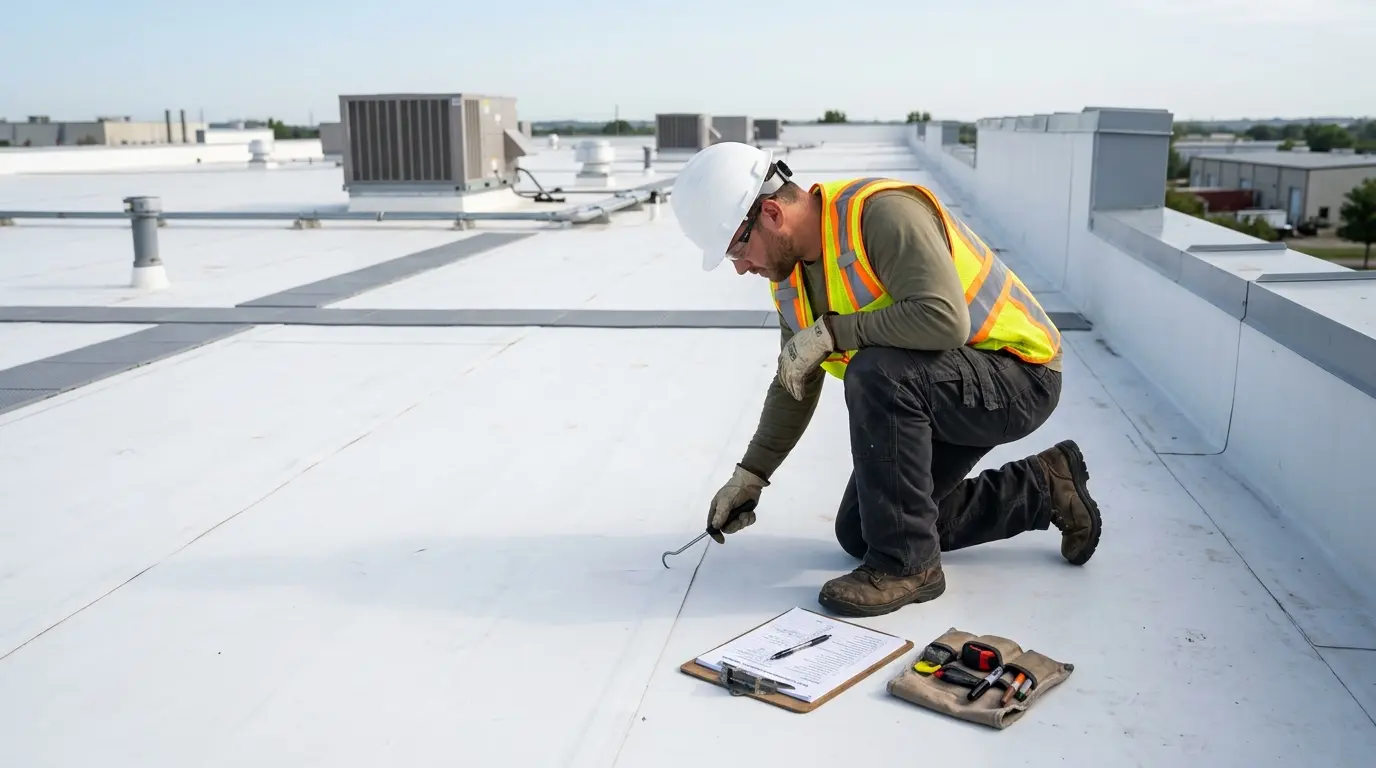
Commercial roof maintenance in Central Texas should be scheduled at least twice per year. Spring inspections help identify any winter or hail damage before the heat season puts additional stress on compromised areas. Fall inspections address any summer degradation and prepare the system for the cooler months.
Drainage is a priority maintenance item in both cities. San Antonio in particular experiences intense flash flooding events, and blocked roof drains during a heavy rainfall event can result in structural overloading. Seams, flashings, and penetrations around HVAC units are the most common failure points and should be checked at every visit.
For properties in the San Antonio market, staying current with maintenance also simplifies the insurance claim process when hail or wind events occur. Timely roof repair San Antonio contractors familiar with local insurer requirements can document damage properly and help building owners recover repair costs more effectively.
Expected Roof Lifespans in Central Texas Conditions
TPO membranes in Austin and San Antonio typically last 15 to 20 years, somewhat shorter than national averages due to UV intensity. Metal roofing can last 40 to 60 years with proper maintenance. Modified bitumen performs well for 15 to 20 years. EPDM ranges from 20 to 30 years depending on coating and installation quality.
Deferred maintenance in this climate shortens lifespan considerably. Minor seam separations or flashing failures that might remain stable for years in a mild climate can become significant water intrusion problems within a single Texas summer.
Frequently Asked Questions
How often should a commercial roof in Austin or San Antonio be inspected?
Twice per year at minimum, in spring and fall. After any significant hail event or severe storm, an additional inspection should be scheduled before filing an insurance claim.
Which roofing material handles Texas hail best?
Metal roofing is the most hail-resistant option for commercial buildings. Among membrane systems, thicker TPO and modified bitumen layers offer more resistance than standard single-ply installations. Impact-resistant ratings on materials are worth evaluating in hail-prone areas.
Do commercial roofing projects require permits in Austin and San Antonio?
Yes. Both cities require permits for commercial roofing work, and projects must comply with local energy codes and wind load requirements. A licensed contractor manages the permitting process as part of the project scope.
What does commercial roof replacement typically cost in Central Texas?
TPO installations generally range from $5 to $10 per square foot. Metal roofing typically runs $10 to $20 per square foot. Modified bitumen falls between those figures. Final cost depends on roof size, existing system removal, and complexity of penetrations and flashing work.
Can storm damage be repaired without a full roof replacement?
In many cases yes, provided the underlying deck is structurally sound and damage is contained to specific sections. A professional post-storm inspection determines the appropriate scope of work and supports the insurance documentation process.