Commercial roofing projects often involve much more than ladders, hand tools, and roofing materials. Large buildings can require thousands of pounds of materials to be moved from ground level to the roof, sometimes several stories above the job site. Getting those materials to where they need to go safely and efficiently requires careful planning, experienced crews, cranes, and the right rigging equipment.
From bundles of insulation and roofing membrane to metal panels and rooftop equipment, contractors regularly need to move materials that are difficult or impractical to handle manually. Cranes and specialized lifting equipment help roofing crews move these materials closer to their installation sites.
Understanding how this equipment is used can provide a clearer picture of the planning that goes into a large commercial roofing project.
Why Cranes Are Used on Commercial Roofing Projects
Commercial roofs can cover an enormous amount of space. Moving materials manually across a large building can take considerable time and increase handling.
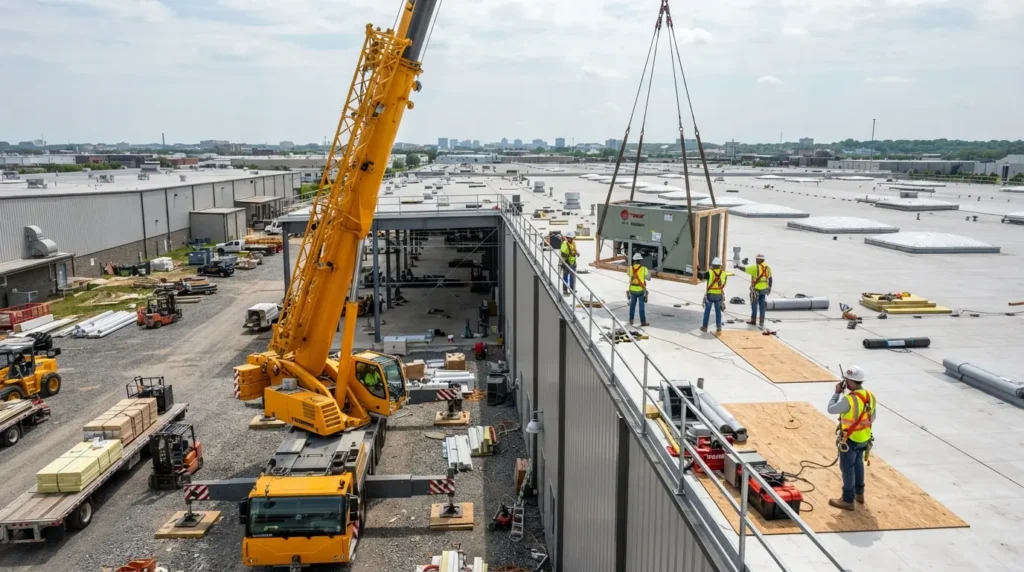
A crane lifts materials directly from a ground-level staging area to designated locations on the roof. Depending on the project, contractors may use cranes to lift roofing membrane, insulation boards, metal roofing panels, tools, equipment, and other supplies.
Cranes may also be needed to install or replace heavy rooftop equipment. HVAC units, ventilation equipment, curbs, and other mechanical components may weigh hundreds or even thousands of pounds. These items typically require a carefully planned lift rather than manual handling.
The crane itself, however, is only one part of the lifting system. Rigging equipment connects the load to the crane and helps control how the load behaves during the lift.
Rigging Equipment Used for Roofing Materials
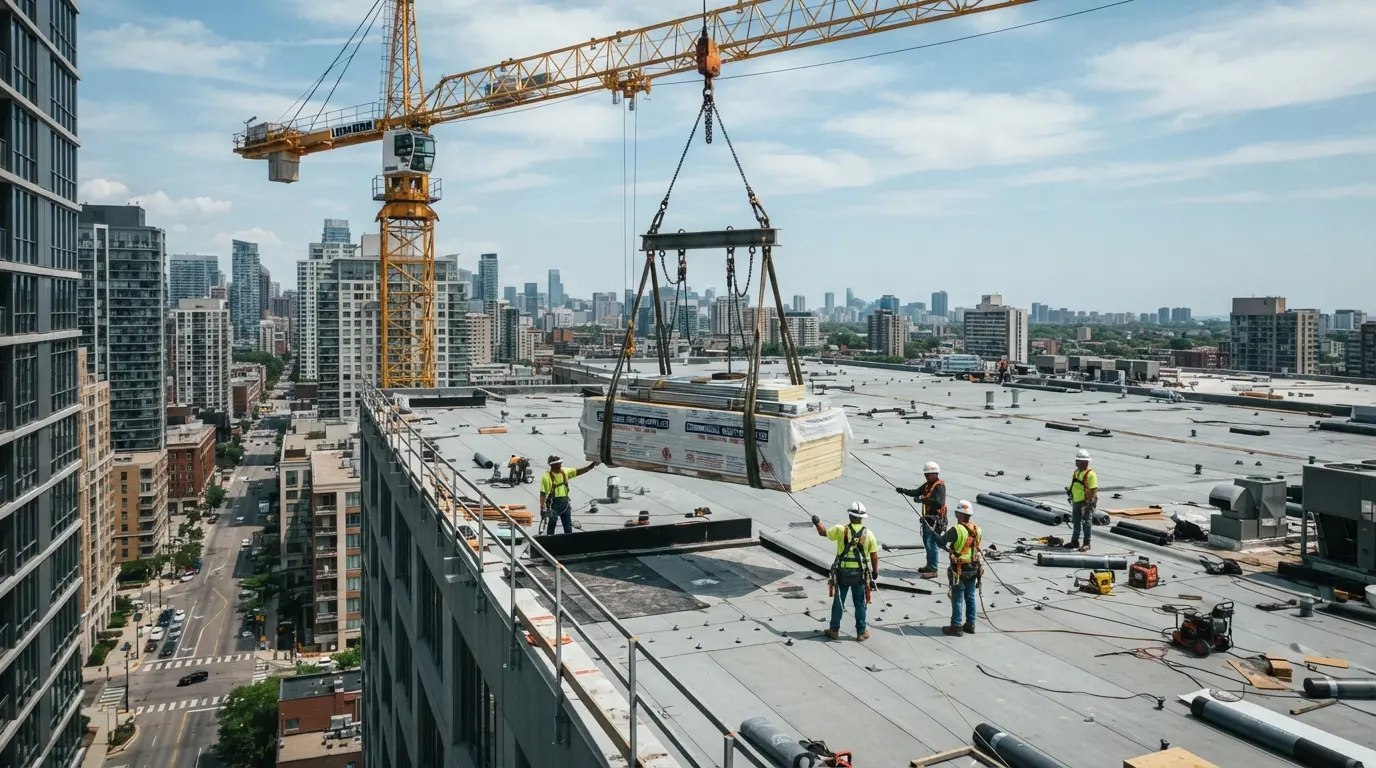
The type of rigging equipment used depends on the weight, size, shape, and lifting points of the material being moved. A pallet of roofing materials may require a different lifting arrangement than a long bundle of metal roofing panels.
One of the most common pieces of equipment is the lifting sling. Slings can be made from synthetic webbing, wire rope sling, or chain. Synthetic slings are often useful when contractors need to protect finished or easily damaged surfaces because the material is softer than metal lifting components.
Shackles are another important part of many rigging systems. They provide strong connection points between slings and other lifting hardware. Different shackle sizes and configurations are available depending on the requirements of the lift.
For certain loads, crews may also use spreader beams. A spreader beam helps distribute the lifting force across multiple points. This can be particularly useful when handling long or flexible materials that could bend, shift, or become damaged if lifted from a single location.
Other common rigging tools can include hooks, lifting clamps, chain hoists, wire rope slings, eye bolts, and various types of below the hook lifting devices.
The equipment selected for a lift must have an appropriate rated capacity for the load and be used according to its intended purpose.
Lifting Metal Roofing Panels
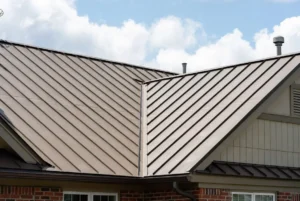
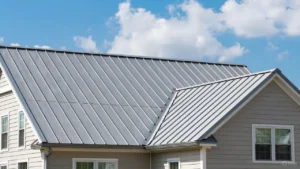
Metal roofing presents some unique material handling challenges. Commercial metal roof panels can be long, relatively thin, and vulnerable to bending if they are not supported correctly.
Instead of attaching a crane to one point in the center of a bundle, crews may use multiple lifting points to distribute the load. A spreader beam can help maintain proper sling positioning while supporting a longer section of material.
Careful lifting also helps protect the finished surfaces of metal panels. Scratches, dents, and bent edges can create installation problems or affect the appearance of the completed roof.
Once the load approaches the roof, workers guide it into the designated staging area. Tag lines may be used when appropriate to help control movement and prevent the load from rotating excessively.
Getting Roofing Materials to the Right Location
Simply getting materials onto the roof is not enough. Crews also need to consider where those materials will be placed.
Commercial roofing materials can be extremely heavy when stacked together. Concentrating too much weight in one location may place unnecessary stress on the roof structure. Contractors therefore plan staging areas before materials are lifted.
Instead of placing every bundle in one large pile, contractors may distribute materials across several locations based on the roof structure and the installation sequence.
This approach can also improve efficiency. If materials are placed near the areas where they will be installed, workers spend less time carrying or moving them across the roof.
Proper crane positioning is also important. Contractors must consider the crane’s lifting capacity, working radius, access to the building, overhead obstructions, ground conditions, and the locations where materials need to be delivered.
Rigging Heavy Rooftop Equipment
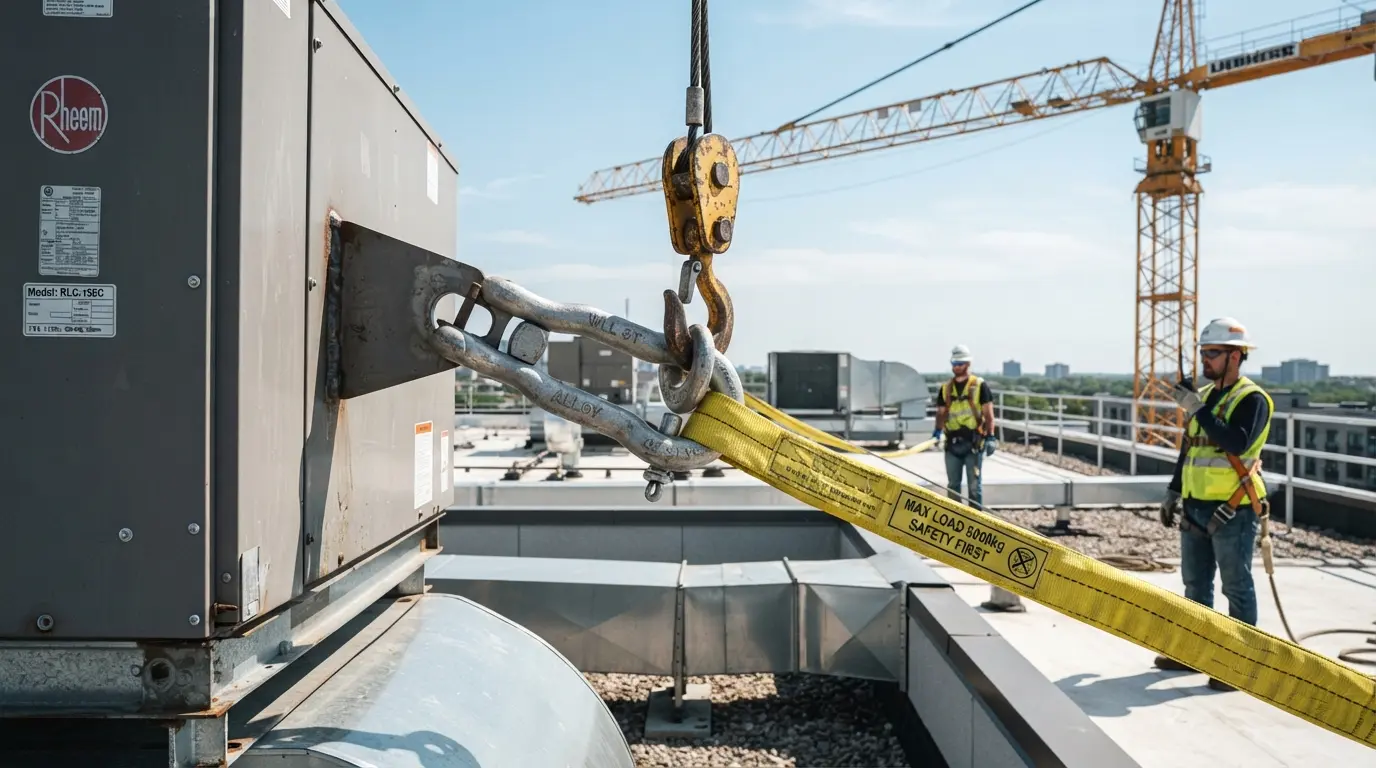
Roofing projects sometimes overlap with mechanical work, especially during major commercial renovations.
An older HVAC unit may need to be removed before a new roofing system is installed. Once the roofing work around the equipment is complete, a replacement unit may need to be lifted into place.
These lifts can require a more complex rigging arrangement than standard roofing materials.
Multiple lifting slings may be attached to designated lifting points on the equipment. Shackles provide secure connections, and a spreader beam may be used to maintain proper sling angles and reduce unwanted pressure on the equipment.
In some situations, chain hoists or other manual lifting devices can help workers make minor positioning adjustments after the main crane lift is complete.
Planning is especially important when lifting mechanical equipment because the load often needs to be placed in a very specific location.
Inspecting Rigging Equipment Before a Lift
Rigging equipment should be inspected before use. Lifting slings, shackles, hooks, wire rope, and other components can wear over time.
Synthetic slings may develop cuts, tears, burns, or damaged stitching. Wire rope can develop broken wires, crushing, corrosion, or other deterioration. Hooks and shackles can also become damaged or distorted.
Crews should take equipment out of service when it no longer meets applicable inspection or manufacturer requirements.
Workers also need to confirm the load weight and understand the rated capacity of the equipment being used. Sling angles are particularly important because the forces on individual sling legs can increase as the angle changes.
Planning Helps Create a Safer and More Efficient Roofing Project
Crane lifts should be coordinated with the overall roofing schedule rather than treated as a separate element of the project.
Crews need to determine which materials will be lifted, where they will be staged, how they will be attached to the crane, and who will guide the load.
The area around a lift should also be managed carefully. Workers not involved in the operation should remain clear of suspended loads and designated lifting areas.
Weather conditions can also affect lifting operations. Strong winds are especially important to consider when handling large roofing membranes, insulation boards, or long metal panels because their large surface area can make them harder to control.
Communication among the crane operator, rigging crew, roofing contractor, and other workers on the site helps keep the operation organized.
The Role of Rigging in Modern Commercial Roofing
Large commercial roofing projects depend on efficient material handling. Cranes allow contractors to move large quantities of roofing materials to elevated work areas without relying solely on manual labor.
The rigging equipment that connects those materials to the crane is equally important. Lifting slings, shackles, spreader beams, hooks, chain hoists, lifting clamps, and tag lines each serve specific purposes in different types of lifts.
When the right equipment is selected and the lift is carefully planned, materials can be moved to the roof efficiently, reducing unnecessary handling and protecting materials from damage.
For building owners, much of this work may occur before the roofing installation itself becomes noticeable. Behind the scenes, however, careful lifting and material placement can play an important role in keeping a large commercial roofing project organized from the first delivery through final installation.