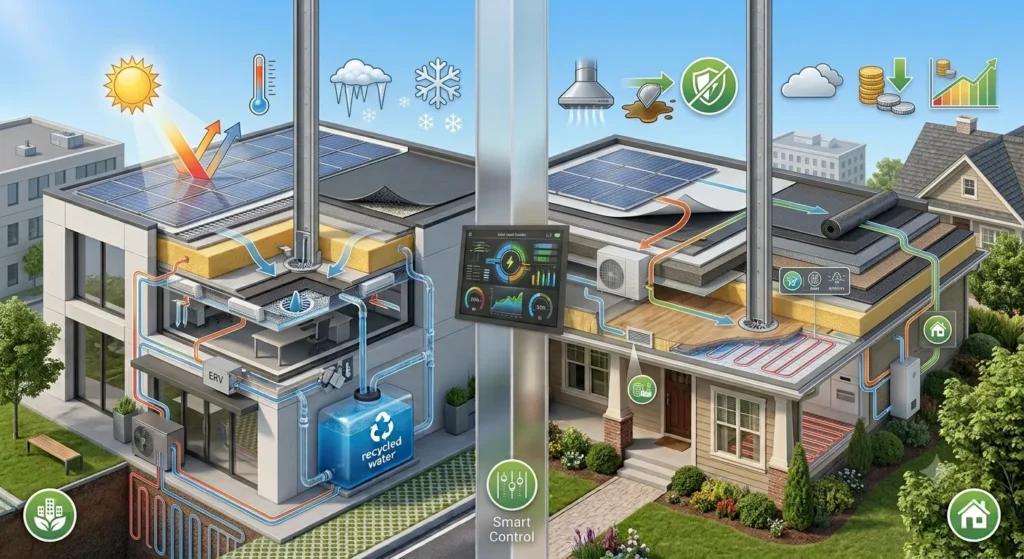
Energy efficient HVAC systems use variable-speed compressors, advanced refrigerants, and smart controls to cut heating and cooling energy consumption by 30–50% compared to standard single-stage systems. The top 5 most energy efficient HVAC options in 2026 are variable-speed central heat pumps, ductless mini-split systems, geothermal heat pumps, high-efficiency gas furnaces with AFUE 96%+, and dual-fuel hybrid heat pump systems each rated here by SEER2, HSPF2, AFUE, cost, and best climate application.
HVAC systems account for 40–50% of total home energy consumption in the U.S., according to the U.S. Energy Information Administration. Upgrading to an energy efficient system delivers the single largest reduction in household energy bills of any home improvement often saving $600–$1,800 per year. Federal tax credits under the Inflation Reduction Act (IRA) cover up to 30% of installation costs, making 2026 the best year yet to upgrade.
Understanding HVAC Efficiency Ratings: SEER2, HSPF2, AFUE, and COP
Energy efficient HVAC systems carry 4 primary efficiency ratings. Understanding each rating lets you compare systems accurately and select the right unit for your climate.
- SEER2 (Seasonal Energy Efficiency Ratio 2): Measures cooling efficiency over an entire season. SEER2 replaces the old SEER standard as of January 2023 and reflects real-world duct resistance. Minimum SEER2 for the South is 14.3; for the North it is 13.4. High-efficiency systems reach SEER2 20–26.
- HSPF2 (Heating Seasonal Performance Factor 2): Measures heat pump heating efficiency over a season. Minimum HSPF2 is 7.5 for split systems nationally. High-efficiency heat pumps reach HSPF2 10–13.
- AFUE (Annual Fuel Utilization Efficiency): Measures gas or oil furnace efficiency. An AFUE of 80 means 80% of fuel converts to heat; 20% exits as exhaust. High-efficiency condensing furnaces reach AFUE 96–98.5%.
- COP (Coefficient of Performance): Measures heat pump efficiency at a single point in time. A COP of 3.5 means the system delivers 3.5 units of heat per 1 unit of electricity consumed. Geothermal heat pumps achieve COP 3.0–6.0; air-source heat pumps reach COP 2.0–4.5 in moderate temperatures.
Old SEER ratings translate to SEER2 by dividing by 1.046. A system rated SEER 20 equals approximately SEER2 19.1. Always compare new systems using SEER2 to avoid comparing numbers measured on different test procedures.
5 Most Energy Efficient HVAC Systems for 2026
Each system below suits specific climates, budgets, and home configurations. Review the efficiency rating, cost, and ideal application for all 5 before selecting.
1. Variable-Speed Central Heat Pump: Best All-Climate System
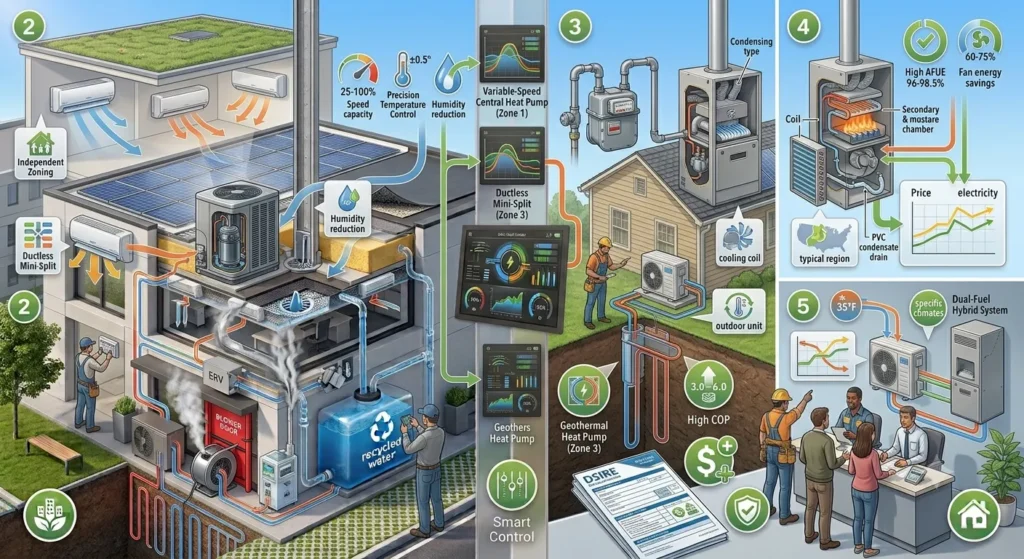
Variable-speed central heat pumps models like Carrier Infinity 26, Lennox Signature XC21, and Trane XV20i modulate compressor speed from 25–100% capacity to match the exact heating or cooling load at any moment. This produces SEER2 20–26 and HSPF2 10–13, the highest ratings available for central split systems in 2026.
A variable-speed system runs at low speed for 80–90% of operating hours, maintaining precise temperature control within ±0.5°F (±0.3°C) and reducing humidity by 35% more than a single-stage unit cycling on and off. Installation cost runs $8,000–$18,000 for a complete split system including air handler, outdoor unit, and refrigerant charge.
Variable-speed heat pumps qualify for the IRA 25C tax credit up to $2,000 per year for heat pumps meeting 25C efficiency thresholds (SEER2 15.2+ and HSPF2 7.8+ in most regions). The 25C credit directly reduces your federal tax liability, not just your taxable income.
2. Ductless Mini-Split System: Best for Homes Without Ductwork
Ductless mini-split systems, manufactured by Mitsubishi Electric (MXZ series), Daikin, and Bosch IDS, deliver heating and cooling directly to individual rooms through wall-mounted air handlers connected to an outdoor compressor by a 3-inch (7.6 cm) refrigerant line set.
Mini-splits achieve SEER2 18–33 the highest cooling efficiency of any residential HVAC category because they eliminate the duct losses that reduce central system efficiency by 20–30%. Each indoor unit has its own thermostat, creating independent zones that prevent heating or cooling unoccupied rooms.
A single-zone mini-split for one room or addition costs $3,000–$7,000 installed. A whole-home multi-zone system with 4–6 indoor units costs $12,000–$25,000. Mini-splits suit homes built without ductwork, home additions, garages, and basement conversions where running new ducts is prohibitively expensive.
3. Geothermal Heat Pump: Highest COP and Lowest Operating Cost
Geothermal heat pumps (ground-source heat pumps) achieve COP 3.0–6.0 year-round by exchanging heat with the earth’s constant underground temperature. The WaterFurnace 7 Series, Carrier GeoMax, and ClimateMaster Tranquility represent the leading residential geothermal units in 2026.
Operating costs average $400–$800 per year for a 2,000 sq ft (186 sq m) home 50–70% less than a gas furnace and central air conditioner combination. The 30% IRA Section 25D credit applies to the full installed cost with no dollar cap. Geothermal systems require a ground loop installation but eliminate the outdoor unit entirely, producing zero outdoor noise.
4. High-Efficiency Gas Furnace: Best for Heating-Dominant Cold Climates
High-efficiency condensing gas furnaces including Carrier Performance 96, Lennox EL296V, and Goodman GCVC96 achieve AFUE 96–98.5%, extracting heat from combustion gases that standard 80% AFUE furnaces vent outside as waste. A household spending $1,500 per year on gas heating saves $270–$300 annually by switching from AFUE 80 to AFUE 96.
Condensing furnaces require a PVC drain line for condensate removal and typically cost $3,500–$8,000 installed. They pair with a central air conditioner or heat pump coil for summer cooling, and the variable-speed ECM (electronically commutated motor) blower in premium models reduces fan electrical consumption by 60–75% versus standard PSC motors.
High-efficiency gas furnaces qualify for the IRA 25C credit when they meet the 95% AFUE threshold in cold-climate regions. The credit covers up to 30% of equipment and installation costs up to a $600 annual cap for furnaces specifically.
5. Dual-Fuel Hybrid Heat Pump: Best for Variable Climate Regions
A dual-fuel hybrid system pairs a heat pump with a gas furnace, automatically switching between the 2 energy sources based on outdoor temperature and real-time energy prices. The heat pump operates efficiently above 35–40°F (2–4°C); the gas furnace activates below that threshold when heat pump efficiency drops.
Dual-fuel systems reduce gas consumption by 30–50% versus a furnace-only setup and cut electrical consumption by 15–25% versus a heat-pump-only setup in cold climates. Total installed cost ranges from $8,000–$16,000 for the heat pump outdoor unit, indoor coil, and integration with the existing furnace. Dual-fuel systems qualify for both the 25C heat pump credit ($2,000 max) and the 25C furnace credit ($600 max) in the same tax year.
Energy Efficient HVAC Systems: Quick-Reference Comparison Table
Use this table to compare all 5 energy efficient HVAC systems by key efficiency rating, installed cost, best climate, and 2026 tax credit eligibility.
| System Type | Efficiency Rating | Installed Cost | Best Climate | IRA Tax Credit |
| Variable-Speed Heat Pump | SEER2 20–26 / HSPF2 10–13 | $8,000–$18,000 | All zones (best 3–6) | 25C: up to $2,000 |
| Ductless Mini-Split | SEER2 18–33 | $3,000–$25,000 | All zones, no ducts | 25C: up to $2,000 |
| Geothermal Heat Pump | COP 3.0–6.0 | $10,000–$30,000 | All zones | 25D: 30% no cap |
| High-Efficiency Furnace | AFUE 96–98.5% | $3,500–$8,000 | Zones 5–8 (cold) | 25C: up to $600 |
| Dual-Fuel Hybrid | COP + AFUE 96% | $8,000–$16,000 | Zones 4–6 (mixed) | 25C: up to $2,600 |
How Your Roof Affects HVAC System Efficiency
Your roof is the primary thermal boundary between your living space and outdoor heat. A poorly insulated or damaged roof increases your building’s cooling and heating load by 15–30%, forcing your HVAC system to run longer, consume more energy, and wear out faster than its rated lifespan.
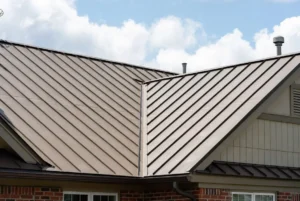
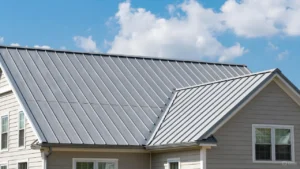
A dark-colored standard asphalt roof with SRI 20 absorbs 80% of solar radiation, raising attic temperatures to 140–160°F (60–71°C) on peak summer days. This heat conducts into living spaces and adds directly to the cooling load your HVAC must overcome. Upgrading to a light-colored metal roof with SRI 70 or a cool coating with SRI 100 reduces attic temperature by 40–60°F (22–33°C) and cuts cooling load by 10–25%.
Before replacing or sizing an HVAC system, schedule a roof inspection services appointment. A certified inspector identifies insulation gaps, ventilation deficiencies, and decking damage that inflate your Manual J load calculation and drive up HVAC equipment size and cost. Fixing roof deficiencies first often reduces required HVAC capacity by 0.5–1 ton, saving $1,500–$4,000 on equipment alone.
An aging roof with active leaks introduces moisture into attic insulation, compressing its R-value and increasing thermal conductivity through the roof assembly. residential roof replacement eliminates moisture pathways and restores full insulation R-value, directly reducing the HVAC run time needed to maintain comfort setpoints.
How to Choose the Right Energy Efficient HVAC System in 4 Steps
To choose the right energy efficient HVAC system, complete these 4 steps before contacting any contractor.
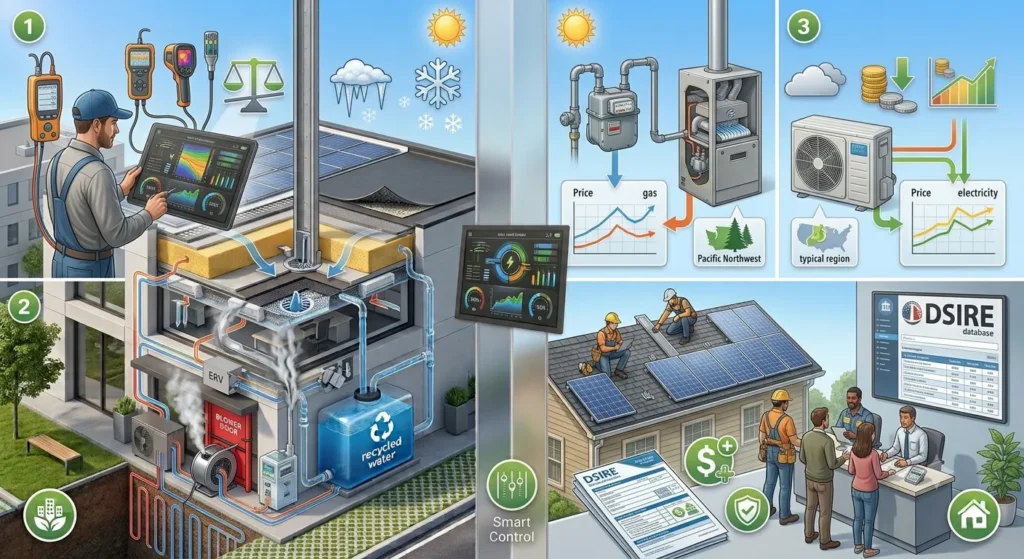
Step 1: Get a Manual J load calculation. A licensed HVAC contractor calculates your home’s exact heating and cooling load in BTUs per hour. Never accept a system size based on square footage alone undersized and oversized systems both fail to deliver rated efficiency or comfort.
Step 2: Assess your duct system. Duct leakage wastes 20–30% of conditioned air in a typical U.S. home. A blower door test and duct pressure test reveals leakage rates. Seal ducts with mastic or metal-foil tape before installing a new system duct leakage offsets efficiency gains from a high-SEER2 unit.
Step 3: Confirm fuel availability and cost. Natural gas at $1.20/therm costs roughly 3 times less than electricity at $0.16/kWh for equivalent heat output in mild temperatures. In regions where electricity costs below $0.10/kWh the Pacific Northwest, for example an all-electric heat pump outcompetes gas at every outdoor temperature above 25°F (-4°C).
Step 4: Check local utility rebates. Many U.S. utilities offer $300–$1,000 rebates for ENERGY STAR heat pumps and high-efficiency furnaces in addition to IRA federal tax credits. Check DSIRE (Database of State Incentives for Renewables and Efficiency) at dsireusa.org for your state and utility before purchasing.
Also schedule annual roof maintenance services to preserve your building envelope’s thermal performance. A well-sealed, properly ventilated roof keeps your HVAC system working within its design parameters and extends both the roof’s and the HVAC system’s useful life.
What Are the IRA Tax Credits for Energy Efficient HVAC in 2026?
The IRA 25C Energy Efficient Home Improvement Credit covers 30% of qualified HVAC costs up to $3,200 per year across all eligible home improvement categories. HVAC-specific limits within that cap:
- Heat pumps (air-source): up to $2,000 per year. System must meet 25C efficiency thresholds generally SEER2 15.2 and HSPF2 7.8 in most regions.
- Furnaces and boilers (gas): up to $600 per year. Furnace must meet AFUE 95% threshold for cold-climate states.
- Central air conditioners: up to $600 per year. System must meet SEER2 15.2 threshold in most regions.
- Geothermal heat pumps: covered under 25D at 30% of full installed cost with no dollar cap, separate from the $3,200 25C limit.
Stack credits strategically install a heat pump in year one ($2,000 credit), add a heat recovery ventilator (HRV) in year two ($600 credit), and replace windows in year three ($600 credit) to maximize the annual $3,200 cap each year rather than exceeding it in a single year.
Upgrade Your HVAC System and Start Saving in 2026
Energy efficient HVAC systems cut household energy bills by 30–50%, qualify for IRA federal tax credits of up to $2,000 per year, and improve indoor comfort through precise humidity and temperature control. Variable-speed heat pumps suit most homes; mini-splits work without ductwork; geothermal delivers the lowest lifetime operating cost.
Before installing any new HVAC system, confirm your roof delivers the thermal performance the load calculation assumes. Contact Rainy Roofers for a free roof assessment and energy efficiency consultation. Rainy Roofers serves residential and commercial properties across the U.S. — tightening the building envelope so your new HVAC system delivers every BTU of efficiency it’s rated to produce.