To start a roofing business in the USA, form a business entity, earn the roofing contractor license your state or city requires, buy general liability and workers’ compensation insurance, post any required surety bond, and write a business plan. Paperwork comes first. After that, buy tools, set up customer relationship management (CRM) software, pull permits, and win first jobs through referrals.
Key Takeaways
Launching a roofing company legally comes down to licensing, insurance, and a written plan completed before the first sale. Expect scrutiny. Licensing boards, insurers, lenders, and homeowners all check those items before money changes hands. The bullets below summarize how to start a roofing business for roofers, foremen, sales reps, and career changers across the United States.
- Florida, California, and Arizona issue roofing contractor licenses through a state board. Texas and Colorado leave roofing licensing to city or county offices.
- No verified national figure exists for roofing business startup costs. Price each item with quotes from your licensing board, insurance agent, surety agent, and equipment dealers.
- An owner with no roofing experience can launch a company by hiring a licensed qualifier whose license covers the business.
- Roof cleaning and drone roof inspection are lower-equipment entry paths. Paid drone inspections require a Federal Aviation Administration (FAA) Part 107 Remote Pilot Certificate.
- Growth comes from manufacturer certifications, trained sales reps, and tracking profit on every job.
What Is a Roofing Business?
A roofing business is a construction company that installs, repairs, inspects, and replaces roof systems on homes and commercial buildings. Most new roofing companies start with residential shingle installation and repairs. Bigger work comes later. Storm restoration, commercial roofing, gutters, or maintenance contracts get added once the crew and cash flow can carry larger jobs and the company’s reputation backs them up.
Learning how to start a roofing business begins with choosing an entry path. Experience shapes that choice. So do your state’s licensing rules and the amount of equipment you can afford up front, since a full-service company needs far more gear than a drone inspection outfit.
Anyone researching how to start a roofing company should know that four realistic paths exist, and each one carries different legal requirements. Pick carefully. This table compares all four paths side by side.
| Business Path | License Needed | Key Requirement | Best For |
|---|---|---|---|
| Full-service roofing company | State or local contractor license | Licensing, insurance, trained crew | Experienced roofers and foremen |
| Owner with no experience | Licensed qualifier’s license | Hired or partnered qualifier | Sales reps and investors |
| Roof cleaning business | Varies by state and city | Soft wash equipment and chemical handling | Pressure washing operators |
| Drone roof inspection business | FAA Part 107 certificate | Registered drone and inspection software | Drone pilots and adjusters |

How to Start a Roofing Business Step by Step
Starting a roofing company follows ten steps in order: research the market, write a plan, form an entity, get a tax ID, get licensed, insure and bond the company, open banking, buy equipment, set up software, and open supplier accounts. Marketing waits. It starts only once every legal requirement is in place, so no ads or door knocks happen before the license and insurance are active.
- Research your local market. Count active roofers in your area, check their online reviews, and note which services they skip, such as repairs, metal roofing, or commercial flat roofs.
- Write a roofing business plan. Define your services, service area, pricing method, startup costs, and cash flow for the first 12 months.
- Choose a business entity. Register a limited liability company (LLC) or corporation with your Secretary of State to separate personal assets from business debts.
- Get an Employer Identification Number (EIN). Apply free on the Internal Revenue Service (IRS) website. Banks, payroll providers, and suppliers ask for this number.
- Apply for your roofing contractor license. Contact your state licensing board or city building department and complete any exam, experience, and financial requirements.
- Buy insurance and a surety bond. Get general liability, workers’ compensation, and commercial auto quotes, plus any license or permit bond your state or city requires.
- Open a business bank account. Keep every deposit and material purchase in the company account so job costing stays accurate.
- Buy tools, a truck, and safety gear. Equip every crew member with fall protection that meets Occupational Safety and Health Administration (OSHA) construction standards.
- Set up roofing CRM software. Use one system for estimates, contracts, scheduling, photos, and invoices.
- Open supplier accounts. Apply for trade credit with roofing distributors such as ABC Supply, Beacon, or SRS Distribution.
Do You Need a License to Start a Roofing Business?
Yes, a roofing contractor license is required in states such as Florida, California, and Arizona before you bid or perform roofing work. States without a statewide roofing license, such as Texas and Colorado, let cities and counties set their own licensing and permit rules, including contractor registration. Check both levels. A state license doesn’t exempt you from local requirements, so confirm them before signing any contract.
Unlicensed work is expensive. You can face fines and voided contracts, and you can lose the lien rights that let you collect on unpaid jobs. Homeowners and insurers check license status online before they pay, too.

Roofing Contractor License Requirements by State
Rules shift often. Confirm current requirements and thresholds with each official board before you rely on them, since a table like this one can’t track every update. The table below compares roofing license rules in five high-volume roofing states plus Colorado.
| State | Licensing Authority | Roofing License Rule | Official Website |
|---|---|---|---|
| Florida | DBPR Construction Industry Licensing Board | Certified or registered roofing contractor license | myfloridalicense.com |
| California | Contractors State License Board (CSLB) | C-39 Roofing classification | cslb.ca.gov |
| Arizona | Registrar of Contractors (ROC) | Roofing classification license | roc.az.gov |
| North Carolina | Licensing Board for General Contractors | License above a project-value threshold | nclbgc.org |
| Texas | No state roofing board | City and county rules apply | N/A |
| Colorado | No state contractor board | City and county licensing applies | N/A |
How to Get a Roofing License in Florida
Florida licenses roofers through the Construction Industry Licensing Board (CILB), part of the Department of Business and Professional Regulation (DBPR). Florida offers two options: a certified license valid statewide and a registered license limited to the local jurisdictions where the contractor holds a local competency license. Both run through DBPR. Anyone planning to start a roofing company in Florida applies there.
Hurricanes explain the strictness. Florida’s hurricane exposure keeps roofing work there heavily regulated, and the Florida Building Code sets strict installation requirements that a new contractor has to learn before the first tear-off. Storm-related contracts carry added consumer protection rules as well.
Six steps cover the application. Follow them in order to apply for a certified roofing contractor license in Florida, beginning with the eligibility rules in state law.
- Review the eligibility rules in Chapter 489 of the Florida Statutes and on the DBPR website, including the experience and education requirements.
- Document your experience with verifiable work history, including supervisory experience.
- Pass the state exams for business and finance and for roofing trade knowledge.
- Submit fingerprints and a credit report to show good moral character and financial responsibility.
- Provide proof of insurance, including general liability and workers’ compensation coverage or a valid exemption.
- Apply and pay the fees listed on the DBPR fee schedule. No verified fee figure is included here because fees change.
This table compares Florida’s two roofing license types.
| License Type | Where You Can Work | How You Qualify |
|---|---|---|
| Certified roofing contractor | Anywhere in Florida | State exams through the CILB |
| Registered roofing contractor | Only in locally licensed jurisdictions | Local competency license, then state registration |
Building Permits and Local Registration
Most jurisdictions require a building permit for reroofs, and the licensed roofing contractor pulls the permit before tear-off begins. Local offices do more than issue permits. City and county building departments schedule inspections and verify code compliance, and they may require local contractor registration even when the state already licenses you.
Make the calls early. Phone the building department in every city where you plan to work, and ask about permit fees, required inspections, local registration, and any wind or fire code rules for roof coverings.
How Much Does It Cost to Start a Roofing Business?
The cost to start a roofing business depends on your state’s license fees, insurance quotes, bonding rules, equipment, vehicles, and working capital, and no verified national average figure is available. Quotes beat guesses. Build an accurate budget by collecting written quotes for each cost category from licensing boards, insurance agents, surety agents, and equipment dealers in your area.
Skip any published “average startup cost” figure that cites no source. Those numbers mislead. Insurance premiums alone swing widely, since insurers price them on your state, payroll, claims history, and the type of roofing work your crew performs.
Startup Cost Worksheet
This worksheet compares the major startup cost categories by coverage and by where to get a real price.
| Cost Category | What It Covers | Where to Get a Price | Your Figure (USD) |
|---|---|---|---|
| Entity registration | LLC or corporation filing | Secretary of State fee page | $__________ |
| Contractor license | Application, exam, and renewal fees | State or city licensing office | $__________ |
| Surety bond | License or permit bond premium | Surety bond agent | $__________ |
| General liability insurance | Third-party injury and property damage | Commercial insurance agent | $__________ |
| Workers’ compensation | Employee injury coverage | Insurer or state fund | $__________ |
| Commercial auto insurance | Truck and trailer coverage | Commercial auto insurer | $__________ |
| Truck and trailer | Hauling materials and tear-off debris | Dealers or leasing companies | $__________ |
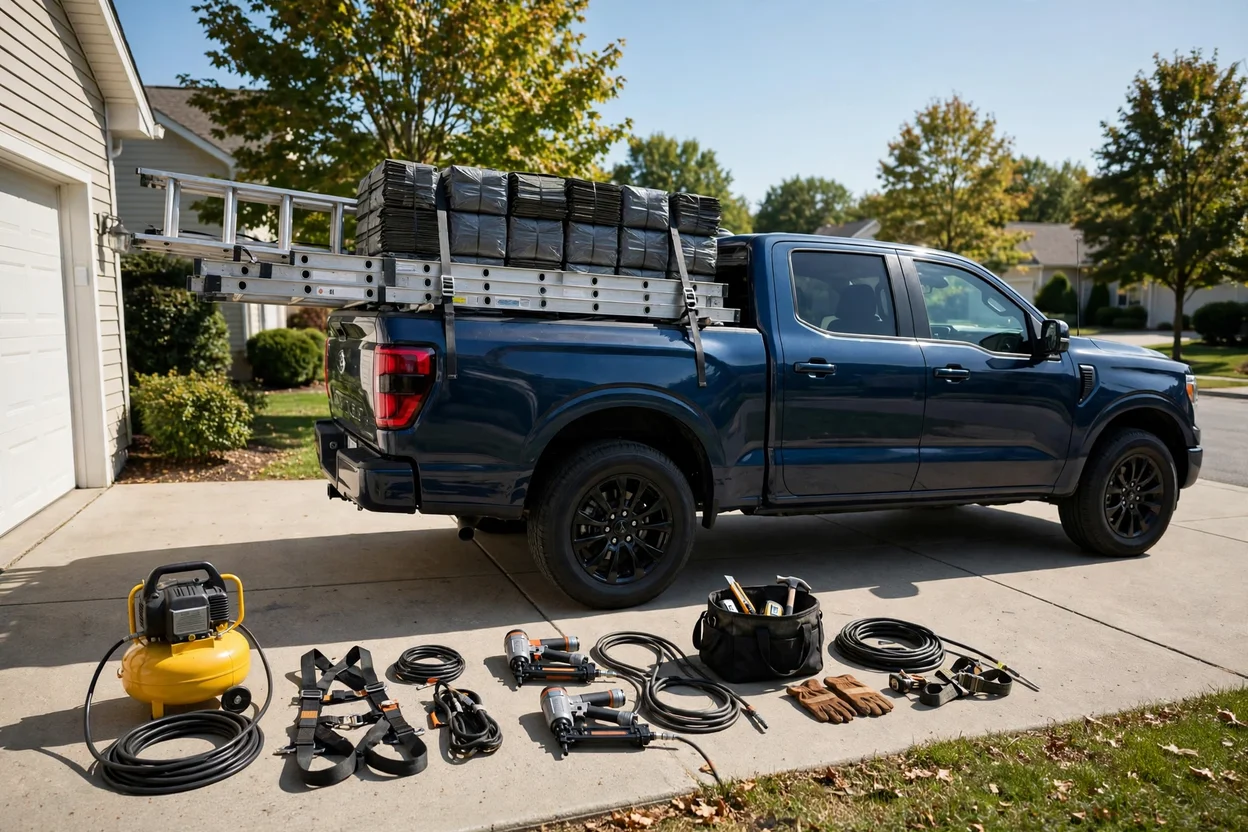
| Tools and safety gear | Nailers, ladders, harnesses | Roofing supply distributors | $__________ |
| Software | CRM, estimating, aerial measurements | Vendor pricing pages | $__________ |
| Marketing | Website, signs, ads | Local agencies and printers | $__________ |
| Working capital | Payroll and materials before payment | Your cash flow plan | $__________ |
| Total startup cost | $__________ |
Which Costs Can Be Financed or Deferred
Trucks, trailers, and large equipment can be financed or leased, materials can be bought on supplier trade credit, and dumpsters can be rented job by job. Some costs can’t wait. License fees and bond premiums generally require cash up front, and so do insurance down payments, so reserve money for those items before anything else.
The Small Business Administration (SBA) guarantees loans made by participating lenders, including the 7(a) and microloan programs. Approval isn’t automatic. A lender reviews your business plan and credit history, then studies your cash flow projections closely before it agrees to release any funds to a new roofing company.
Ask for a deposit on every residential contract where your state allows one. Limits exist. Some states cap down payments on home improvement contracts, so confirm the rule with your licensing board before you write it into a proposal.
What Insurance Does a Roofing Company Need?
A roofing company needs general liability insurance, workers’ compensation insurance for employees, commercial auto insurance, and often a surety bond. Clients, general contractors, licensing boards, and lenders ask for proof of these coverages before work starts. Roofing is dangerous work. Because of that injury risk, insurers price each policy on payroll and on the specific type of roofing work the company performs.
This table compares the core coverages for a new roofing company.
| Coverage | What It Pays For | Who Usually Requires It |
|---|---|---|
| General liability | Third-party injury and property damage | Clients, general contractors, many states |
| Workers’ compensation | Employee medical bills and lost wages | States with employee requirements |
| Commercial auto | Accidents in company vehicles | State auto laws and lenders |
| Inland marine (tool coverage) | Stolen or damaged tools and equipment | Optional, sometimes lenders |
| Surety bond | Guarantee of license and permit compliance | Licensing boards and cities |
Solo owners face different rules. California requires C-39 roofing contractors to carry workers’ compensation even when they have no employees on payroll. Florida takes another approach and lets eligible construction company officers apply for an exemption through the Division of Workers’ Compensation.
Don’t skip the paperwork on subcontractors. Collect a current certificate of insurance from every subcontractor, because uninsured subs can make your policy responsible for their injuries.
Can You Start a Roofing Business with No Experience?
Yes, you can start a roofing business with no experience by hiring or partnering with a licensed qualifier, an experienced roofer whose license covers your company, while you run sales, finance, and operations. Several states allow it. Florida and California let companies license through a qualifying individual who holds legal responsibility for supervising the work, and Arizona follows the same model.
The title changes by state. California calls this person a Responsible Managing Officer (RMO) or Responsible Managing Employee (RME), depending on whether the qualifier is an officer or an employee of the company. Florida says qualifying agent, while Arizona’s term is qualifying party.
How a Licensed Qualifier Arrangement Works
A licensed qualifier lends a contractor license to your company, supervises the roofing work, and answers to the licensing board for code and workmanship violations. The role has to be real. A qualifier must actually supervise, and licensing boards discipline companies that pay someone only for the name printed on the license.
Five steps set up a qualifier arrangement. Work through them before you file the company license application, since the qualifier has to be listed on that paperwork when you submit it.
- Find a qualifier through roofing supply houses, trade associations, or retired contractors in your area.
- Sign a written agreement that covers pay, supervision duties, job site visits, and how either party can end the arrangement.
- Apply for the company license with the qualifier listed on the application.
- Schedule supervision so the qualifier inspects jobs and approves estimates on complex projects.
- Plan for replacement by learning your state’s deadline for naming a new qualifier if the current one leaves.
Learn the trade first. Spend your first season riding along on tear-offs and studying estimating, then earn manufacturer training credentials so you can sell roofs with real confidence.
What Goes in a Roofing Business Plan?
A roofing business plan includes an executive summary, company description, service list, market analysis, marketing plan, operations plan, management team, and financial projections with startup costs and cash flow. Lenders, including SBA lenders, read the financial section first. Build it from real quotes. Guesses won’t survive a loan officer’s questions about where each startup cost and cash flow figure came from, so attach the quotes.
This table lists each plan section and what to write in it.
| Plan Section | What to Include |
|---|---|
| Executive summary | Mission, services, funding request |
| Company description | Entity, license, service area |
| Services | Residential, commercial, repairs, storm restoration |
| Market analysis | Local competitors, housing stock, storm frequency |
| Marketing plan | Lead sources, budget, referral program |
| Operations plan | Crews, suppliers, software, safety program |
| Management team | Owners, qualifier, key hires |
| Financial projections | Startup costs, pricing, 12-month cash flow |
Spell out pricing, too. The plan should show how each roofing estimate covers materials, labor, permits, disposal, overhead, warranty reserve, and profit, so anyone reading it can see the margin built into every job.
Tools, Equipment and Software for a Roofing Company
A roofing company needs fall protection, installation tools, access equipment, a truck with a dump trailer, and roofing CRM software for estimates, scheduling, and job tracking before taking its first paid job. Safety gear comes first. OSHA fall protection rules apply from day one, so buy harnesses and anchors before you spend money on nailers or a truck.
This table groups the core equipment by category.
| Category | Examples | Why It Matters |
|---|---|---|
| Fall protection | Harnesses, anchors, lifelines, guardrails | OSHA compliance and crew safety |
| Installation tools | Roofing nailers, compressors, hatchets, snips | Shingle installation speed and quality |
| Access equipment | Extension ladders, roof brackets, ladder hoist | Safe material handling |
| Vehicles | Pickup truck, dump trailer | Hauling materials and debris |
| Software | Roofing CRM, aerial measurement reports | Estimates, scheduling, job tracking |
AccuLynx and JobNimbus are both roofing CRM options, and RoofLink is another worth a demo. Aerial measurement providers such as EagleView and Hover go further, producing roof measurements from imagery so you can quote a job without making a ladder trip. Shop before signing. Request demos and compare pricing pages before you commit to any annual contract.
How to Start a Roof Cleaning Business
To start a roof cleaning business, form an entity, confirm whether your state requires a contractor or pesticide applicator license, insure the company, buy soft wash equipment, and learn cleaning methods that remove algae without damaging shingles. Soft washing is the method to learn. It applies a cleaning solution at low pressure instead of blasting shingles with high-pressure water that can damage the surface.
The Asphalt Roofing Manufacturers Association (ARMA) warns against pressure washing asphalt shingles, because high pressure can strip the protective granules. Warranties are at stake, too. Follow each manufacturer’s cleaning guidance to keep the homeowner’s warranty protected.
Follow these steps to launch a roof cleaning company.
- Check licensing rules with your state contractor board and state department of agriculture.
- Buy soft wash equipment, including a low-pressure pump, chemical tank, hoses, and roof-safe nozzles.
- Get insured with general liability coverage that names chemical application and roof access as covered operations.
- Protect landscaping by pre-wetting plants and controlling runoff to meet local stormwater rules.
- Train on fall protection because roof cleaning carries the same fall hazards as roofing.
- Market to homeowners and property managers with before-and-after photos and annual maintenance plans.
How to Start a Drone Roof Inspection Business
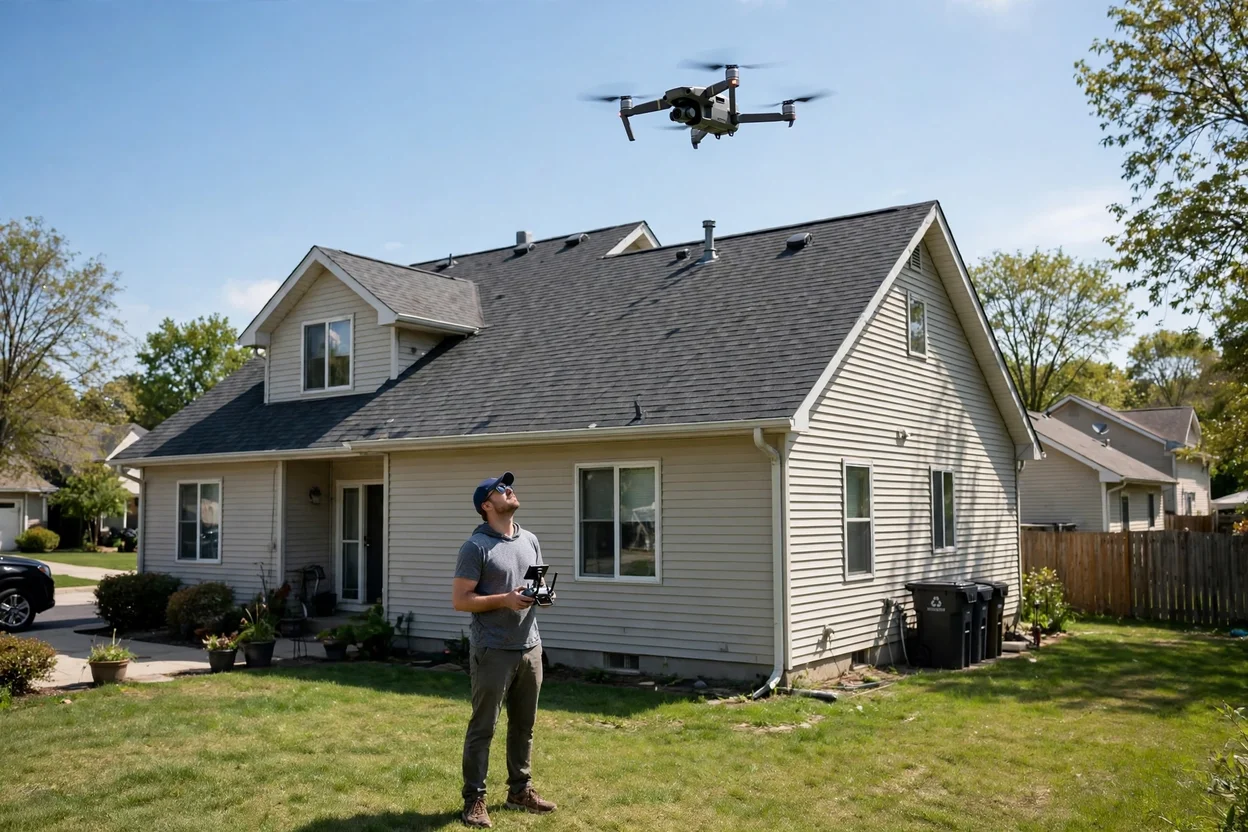
To start a drone roof inspection business, earn an FAA Part 107 Remote Pilot Certificate, register your drone with the FAA, buy drone liability insurance, and sell inspection reports to roofers, insurance adjusters, and property managers. Paid flights count as commercial. Flying a drone for any paid inspection without Part 107 certification violates federal rules, even if the roof belongs to a friend.
Follow these steps to pass the FAA Part 107 knowledge test and get certified.
- Study the FAA’s free Remote Pilot study guide covering airspace, weather, regulations, and loading and performance.
- Create an FAA Tracking Number (FTN) through the Integrated Airman Certification and Rating Application (IACRA).
- Schedule the knowledge test at an FAA-approved Knowledge Testing Center.
- Pass the test and keep your exam results.
- Apply for your certificate through IACRA and complete the security background check.
- Register your drone through the FAA DroneZone website.
Airports need extra steps. Request controlled airspace authorization through the Low Altitude Authorization and Notification Capability (LAANC) before you fly in controlled airspace near an airport, and keep the approval on hand.
The report is the product. Pair labeled photos with written damage notes, and include roof measurements that roofers can plug straight into estimates and insurance claims.

How Do You Get Your First Roofing Customers?
Get your first roofing customers through referrals from people you know, a Google Business Profile, door-to-door canvassing after storms, yard signs at every job, and partnerships with real estate agents, home inspectors, and property managers. Start with leads you generate. They cost less per closed job than purchased leads, which vendors often sell to several roofers at the same time.
Create the profile first. Before your first job goes on the calendar, list your license number and service area on your Google Business Profile, then keep adding photos as projects wrap up. Every finished job should end with a review request.
Storms bring volume. They bring regulation too, and Texas, for example, prohibits contractors from waiving or rebating a homeowner’s insurance deductible on a claim. Learn your state’s rules on insurance claims and contractor solicitation before canvassing a storm zone.
This table compares common lead sources for new roofers.
| Lead Source | Cost Type | Lead Quality |
|---|---|---|
| Customer referrals | Referral reward or none | Highest trust |
| Google Business Profile | Free to set up | High local intent |
| Storm canvassing | Labor time | High after verified storms |
| Purchased lead services | Pay per lead | Often shared with competitors |
| Real estate and inspector partners | Relationship time | Steady repair and replacement work |
How to Grow Your Roofing Business
Grow your roofing business by earning manufacturer certifications, hiring trained sales reps and crews, tracking profit margin on every job in roofing CRM software, adding services such as gutters and commercial roofing, and asking every satisfied customer for a review and referral. Fix the numbers first. Growth works best once your estimating and job costing are accurate, because adding crews to a mispriced operation only multiplies the losses.
Manufacturer Certification Programs
Shingle manufacturers certify contractors who meet their licensing, insurance, and training standards, and certified contractors can offer extended warranty options. Certification signals quality to homeowners comparing estimates. Rules vary. Each program sets its own eligibility standards, so check the manufacturer’s contractor page for current requirements before you start an application.
This table compares three major shingle manufacturer programs.
| Manufacturer | Certification Tiers | Main Benefit |
|---|---|---|
| GAF | Certified, Master Elite | Enhanced warranty options |
| Owens Corning | Preferred, Platinum Preferred | Extended system warranties |
| CertainTeed | ShingleMaster, SELECT ShingleMaster | Upgraded warranty coverage |
Hiring Crews and Sales Reps
Hire your first crew leader before your first sales rep, because installation quality protects your reviews, warranties, and referrals. Classify every worker correctly as an employee or subcontractor under IRS and Department of Labor rules. Mistakes cost money. Misclassification can trigger back taxes and penalties, and it can also expose the company to workers’ compensation claims it never budgeted for.
Training help exists. The National Roofing Contractors Association (NRCA) offers training and the ProCertification program for roofing installers, giving new crew members a formal credential to work toward.
Sales pay needs care. Tie commission to gross profit, not job price, so reps have a reason to protect your margins instead of discounting to close.
Is a Roofing Business Profitable?
Yes, a roofing business can be profitable when estimates correctly price labor, materials, overhead, permits, disposal, and warranty risk, but no verified industry-wide profit margin figure is available. Execution decides it. Profit depends on your local pricing, crew productivity, and material costs, plus how tightly you control callbacks and change orders.
Track profit by job type. Your CRM can then compare repairs, full replacements, commercial work, and storm restoration side by side, showing which services earn the most in your market.
Written change orders and accurate measurements protect margins, and so do deposits where your state allows them. Collect final payment fast. Unpaid invoices drain the working capital that covers your crew’s payroll, and a few slow payers can leave you short on materials for the next job.
Frequently Asked Questions
Which States Have No Statewide Roofing License?
Texas and Colorado have no statewide roofing contractor license. Local rules still apply. Cities and counties in both states can require registration or permits, and some issue their own licenses, so call the building department before bidding.
Is Workers’ Comp Required for a Solo Roofing Owner?
No, not in every state. California requires C-39 roofing contractors to carry workers’ compensation even without employees, while Florida lets eligible construction company officers apply for an exemption.
Does Roof Cleaning Need a Contractor License?
No, not in every state. Some states and cities do require a contractor or home improvement license, and moss or algae treatments can require a pesticide applicator license from the state agriculture department.
Should New Roofers Buy Leads or Generate Them?
Generate leads first. Referrals and a Google Business Profile build lasting demand alongside job-site signs, while purchased leads cost money per contact and frequently go to several competing roofers.
Where Can I Get a Free Roofing Business Plan Template?
The SBA and SCORE both publish free business plan templates online. Mentoring is free too. SCORE connects new owners with volunteer mentors who review business plans at no charge and can help a first-time roofer tighten the financial section.
Conclusion
The roofing companies that last start with the right license, full insurance, a written plan, and accurate estimates, then grow through certifications, trained crews, and earned reviews. Start with two calls this week. Phone your state licensing board and your local building department, then gather insurance and bond quotes and fill in the startup cost worksheet before spending on equipment.
Knowing how to start a roofing business is the first milestone. Profitable operation comes next. Build your systems early and track every job’s margin, then add roof cleaning or drone roof inspection, or move into commercial work, once your core residential business runs smoothly.