
The pros and cons of metal roofing are clear: metal roofs last longer, resist fire, lower heat gain, and cost more upfront. Choose metal roofing when your budget supports a 40 to 70 year roof, and avoid metal roofing when low initial cost matters most.
What Are the Pros and Cons of Metal Roofing in 2026?
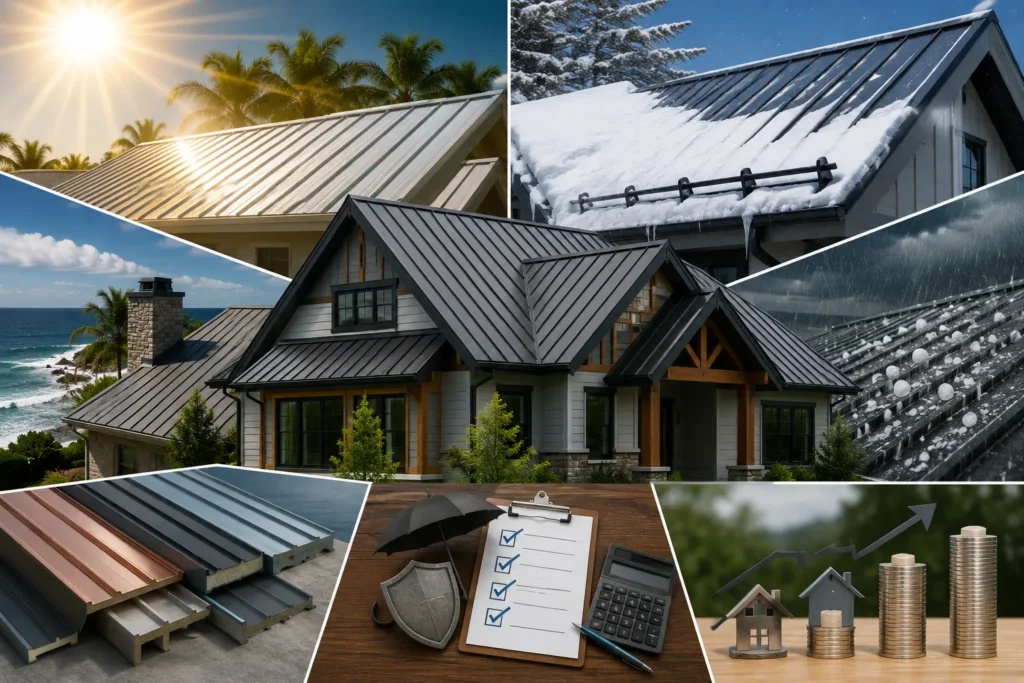
Metal roofing gives you longer lifespan, strong weather resistance, low maintenance, and better energy control. Metal roofing also brings higher upfront cost, skilled installation needs, dent risk, noise concerns, and repair challenges.
A metal roof suits you when your home needs long service life, fire resistance, and strong wind performance. A metal roof suits long-term owners better than short-term sellers. The higher purchase price needs enough ownership time to return value through fewer replacements and lower maintenance.
Quick Reference: Metal Roofing Decision Table
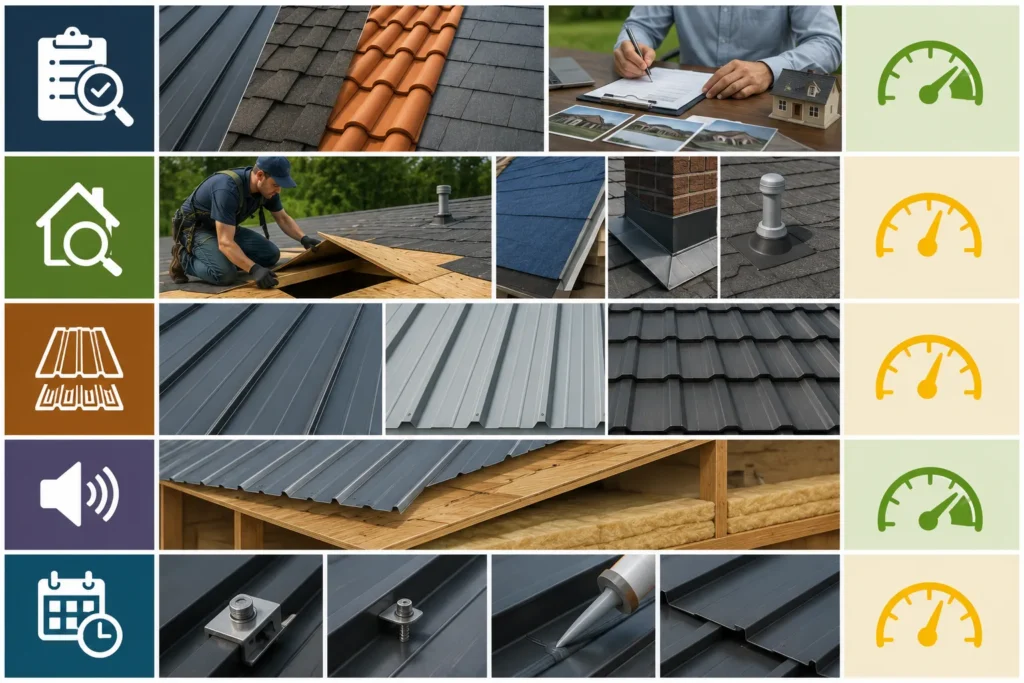
| Task | Timing | Method | Difficulty |
| Compare roof materials | Before quote approval | Review metal, asphalt, tile, and slate options | Easy |
| Check roof deck condition | Before installation | Inspect decking, underlayment, flashing, and vents | Medium |
| Choose panel type | During estimate | Compare standing seam, corrugated, and metal shingles | Medium |
| Plan noise control | Before contract | Add solid decking, underlayment, and attic insulation | Easy |
| Inspect fasteners and seams | Every 12 months | Check clips, screws, sealant, and panel movement | Medium |
Rainy Roofers explains material options on the metal roofing services page for homeowners comparing systems.
How Much Does Metal Roofing Cost Compared With Shingles?
Metal roofing usually costs more than asphalt shingles at installation. Most homeowners pay more because metal panels, trim, fasteners, underlayment, and skilled labor carry higher prices. The pros and cons of metal roofing start with price, lifespan, and repair planning.
The pros and cons of metal roofing become clearer after you compare lifecycle cost. Asphalt shingles often need replacement sooner. Metal roofs can run 40 to 70 years with correct installation and maintenance. Copper and zinc roofs can last longer on premium homes.
How to Estimate Metal Roof Payback
To estimate metal roof payback, compare 3 numbers: installed price, expected lifespan, and avoided replacement cost. Divide the total installed price by expected service years. Compare that number with asphalt replacement cycles.
How to Read a Metal Roofing Quote
To read a metal roofing quote, check material gauge, panel profile, coating type, trim package, ventilation work, and warranty terms. Ask the contractor to list decking repair by square foot, such as 32 square feet (3m2) of plywood replacement.
Request a roof replacement estimate when your current roof has leaks, old decking, or poor ventilation.
Which Metal Roofing Benefits Matter Most for Homeowners?
The strongest metal roofing benefits are lifespan, weather resistance, fire resistance, low maintenance, and energy savings. These benefits matter most when your home faces hail, wind, snow, heat, or wildfire exposure.
Durability ranks first for many homeowners. Steel roofing resists cracking, curling, mildew, insects, and rot. Aluminum resists coastal corrosion better than basic steel. Copper gives premium appearance and long service life. Galvalume steel balances cost, strength, and coating performance. The pros and cons of metal roofing favor homes that need long-term protection.
How to Use Metal Roofing for Storm Protection
To use metal roofing for storm protection, choose tested panels, correct fasteners, and strong flashing. Standing seam systems protect seams with raised locks. Exposed fastener panels need visible screws and washer checks.
Wind protection depends on clips, spacing, trim, and edge details. A 6 inch (15cm) edge gap invites wind uplift when trim fails. Correct eave and rake installation protects the panel field.
How to Use Metal Roofing for Energy Savings
To use metal roofing for energy savings, choose reflective coatings and proper ventilation. White, light gray, and light bronze finishes reflect more heat than black panels. Ventilation should move air from soffit vents to ridge vents across the full roof plane.
A 5 feet (1.5m) attic area with blocked intake vents still traps heat. Clean intake vents, balanced exhaust, and good insulation support metal roof performance.
Which Pros and Cons of Metal Roofing Should You Check Before Buying?
The biggest drawbacks are higher upfront cost, noise concerns, denting, expansion movement, and specialized repair needs. Review every drawback before signing a roofing contract.
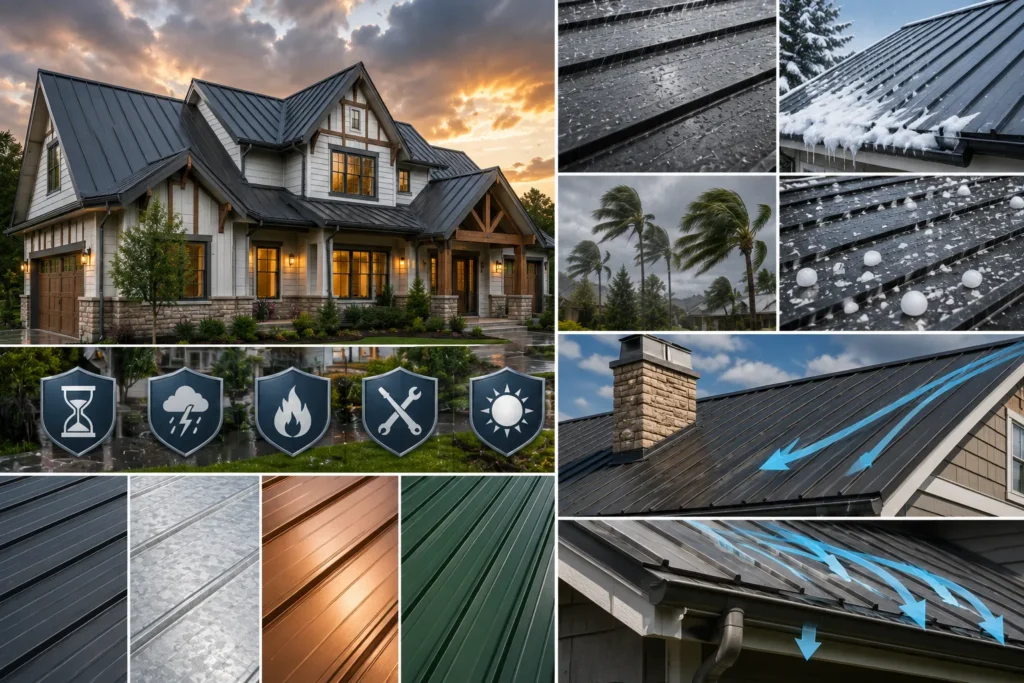
The pros and cons of metal roofing include real trade-offs, not only sales benefits. Metal roofing needs trained crews because panel alignment, fastener torque, flashing, and sealant details control leak resistance. General shingle crews do not always understand metal systems.
Noise concerns usually come from thin panels over open framing. Solid decking, synthetic underlayment, attic insulation, and ceiling materials reduce rain sound. Hail still sounds louder on metal than on thick tile in many homes. The pros and cons of metal roofing include sound control for bedrooms and offices.
Denting risk depends on metal type and thickness. Aluminum and copper dent easier than steel. Thicker steel resists impact better than thin panels. Large hail, falling limbs, and foot traffic can damage coatings, seams, and panel surfaces. The pros and cons of metal roofing change by material and gauge.
How to Reduce Metal Roof Noise
To reduce metal roof noise, install metal over solid decking and quality underlayment. Add attic insulation where the roof covers bedrooms, offices, or nurseries. Ask for details before work starts because retrofit noise control costs more.
A 12 inch (30cm) insulation depth performs better than a thin, uneven attic layer. Your contractor should inspect insulation coverage before replacing the roof surface.
How to Prevent Metal Roof Leak Problems
To prevent metal roof leak problems, focus on seams, penetrations, valleys, and fasteners. Skylights, chimneys, vents, and sidewalls need custom flashing. Exposed screws need correct torque because crushed washers fail faster.
Thermal expansion also needs room. Metal panels expand in heat and contract in cold weather. Hidden clips allow movement without tearing fasteners from the deck.
Schedule roof inspection services before choosing metal panels for an older roof deck.
How to Choose the Right Metal Roof Type for Your Home
To choose the right metal roof type for your home, match the panel system to roof slope, budget, climate, and design. Standing seam suits modern homes, low slopes, and high-wind zones. Metal shingles suit traditional homes that need a familiar profile.
How to Match Metal Roofing to Roof Slope
To match metal roofing to roof slope, measure rise over run. A 3:12 roof rises 3 inches (7.6cm) over 12 inches (30cm). Many metal shingles need steeper slopes than mechanical seam systems.
Low-slope roofs need stricter seam details. Mechanical seam panels create tighter locks than snap-lock panels. Flat commercial areas need different systems, such as thermoplastic polyolefin (TPO) or ethylene propylene diene monomer (EPDM).
How to Match Metal Roofing to Home Style
To match metal roofing to home style, compare panel lines, color, texture, and trim. Farmhouse homes often suit standing seam panels. Craftsman homes often suit metal shingles. Mediterranean homes often suit stone-coated steel tile profiles.
How to Compare the Pros and Cons of Metal Roofing Against Asphalt Shingles
To compare metal roofing against asphalt shingles, compare lifespan, upfront price, repair ease, weather resistance, and appearance. Asphalt shingles win on initial price and simple repairs. Metal roofing wins on long service life and lower replacement frequency.
The pros and cons of metal roofing matter most during a full roof replacement. Replacing a roof gives your contractor access to decking, flashing, underlayment, ventilation, and insulation. Material choice alone cannot fix weak framing or poor attic airflow.
Asphalt shingles suit rental properties, short ownership plans, and tight budgets. Metal roofing suits long-term homes, wildfire zones, snowy regions, sunny climates, and homes where owners value lower maintenance. The pros and cons of metal roofing make asphalt better for short budgets.
How to Compare Repair Difficulty
To compare repair difficulty, ask how each roof handles 3 repair types: punctures, storm dents, and flashing leaks. Asphalt shingles allow small section replacement. Large metal panels need specialized matching and careful seam work.
Metal repairs become harder after 10 years because color matching can differ. Sun exposure fades coatings at different rates. Store spare panels and trim after installation for future repairs.
How to Compare Resale Value
To compare resale value, review buyer expectations in your neighborhood. Some buyers value metal roofing because metal suggests fewer future roof bills. Some communities prefer shingles because shingles match local design rules.
Check homeowner association rules before choosing visible panels. Some associations limit colors, profiles, gloss levels, or roof materials. Written approval protects your budget and timeline.
How to Maintain a Metal Roof After Reviewing the Pros and Cons of Metal Roofing
To maintain a metal roof after installation, inspect the roof every 12 months and after major storms. Check seams, flashing, gutters, fasteners, sealant, and coating damage. Clean debris from valleys and behind chimneys.
The pros and cons of metal roofing change after maintenance begins. A well-maintained metal roof keeps value. An ignored metal roof develops loose fasteners, failed sealant, clogged gutters, and hidden leaks.
How to Build a Metal Roof Maintenance Calendar
To build a metal roof maintenance calendar, schedule 2 checks each year. Spring checks find winter damage. Fall checks prepare the roof for snow, rain, ice, and wind.
How to Clean a Metal Roof Safely
To clean a metal roof safely, use ground-based rinsing where possible. Remove leaves, pine needles, branches, and dirt from gutters and valleys. Avoid harsh abrasives because abrasives scratch coatings.
Should You Choose Metal Roofing After Checking the Pros and Cons of Metal Roofing?
Choose metal roofing when your climate rewards durability and your budget supports a higher first price. Choose asphalt shingles when short-term cost matters more than lifetime value.
Metal roofing performs well in hot climates because reflective finishes reduce heat gain. Metal roofing performs well in snowy climates because smooth panels shed snow. Snow guards control sliding snow over doors, walkways, and driveways. The pros and cons of metal roofing depend strongly on local weather.
Coastal homes need corrosion-aware materials. Aluminum, copper, and coated steel systems perform differently near salt air. Ask for written coating recommendations when your home sits within 1 mile (1.6km) of saltwater.
Hail-prone areas need thicker panels and stronger profiles. Steel often handles hail better than soft aluminum. Insurance rules vary by state, roof class, and policy. Ask your insurer about premium credits, exclusions, and cosmetic damage coverage. The pros and cons of metal roofing include insurance rules and storm risk.
The pros and cons of metal roofing point to a simple decision. Metal works for homeowners who want long-term performance, lower replacement frequency, and strong weather protection. Metal does not fit every budget, every style rule, or every repair plan.
Final Decision for Homeowners
The pros and cons of metal roofing show a clear path: choose metal for durability, energy control, and long-term value. Choose another roof when low first cost, simple patching, or strict design rules matter more. For a clear material recommendation, contact Rainy Roofers through the metal roofing services page and request a roof review before your next replacement decision.