Rubber roof tiles come in two forms. Recycled rubber shingles cover pitched roofs, while interlocking rubber deck tiles turn a flat roof into a surface people can actually walk on. If you’re replacing asphalt or slate on a sloped home, pick shingles. Deck tiles are the answer when a flat-roof membrane needs protection under a patio or rooftop deck.
Key Takeaways
- Rubber roof tiles split into two product types: rubber shingles for pitched roofs and rubber deck tiles for flat roofs.
- True rubber shingles use recycled tire rubber, while many “synthetic slate” products are polymer or plastic composites.
- A UL 2218 Class 4 rating is the highest impact rating in that standard and can qualify a home for insurance discounts in hail-prone states.
- Rubber shingles cost more than asphalt shingles up front. No verified current US price figure is available, so get written quotes per roofing square.
- Rubber decking tiles need a compatible protection layer and clear drainage paths so the flat-roof membrane stays dry and undamaged.
- Confirm local building code rules, the membrane warranty, and homeowners association (HOA) approval before ordering any product.
What Are Rubber Roof Tiles?
Rubber roof tiles are roofing products made from recycled rubber or rubber-like compounds that either shed water on a pitched roof or protect a flat roof surface. The term covers two different product families. Your roof’s slope decides which one fits, along with whether people will walk on it.
Plenty of shoppers searching this term end up in the wrong product category, and it’s an easy mistake because both products share one name. Someone pricing a full roof replacement needs shingles. A condo owner planning a rooftop patio? Deck tiles.
Rubber Shingles for Pitched Roofs
Rubber shingles are molded roofing units, often made largely from recycled tires, that installers nail over underlayment on a sloped roof deck. Most mimic slate or cedar shake. Each piece overlaps or interlocks with the course below it, which is how the roof sheds water. Rubber tile roofing of this type takes over from asphalt or wood as the primary roof covering, and it often stands in for natural slate too.
Rubber roofing shingles suit homeowners who want a premium look paired with high impact resistance. The roof still has to slope. Like any other steep-slope covering, these shingles need a solid roof deck underneath and a full underlayment system between deck and shingle.
Rubber Deck Tiles for Flat Roofs
Rubber roof deck tiles are thick, interlocking pads, usually made from crumb rubber, that sit on top of a finished flat-roof membrane. They don’t waterproof anything. What they do is shield the membrane from foot traffic and furniture legs while giving you a usable outdoor floor. They also cut the membrane’s ultraviolet (UV) exposure.
You’ll see rubber decking tiles on condo terraces and rooftop patios, and on garage roofs as well. Water passes through their seams or channels to the membrane below, which then carries it off to the drains. The membrane does the real work.
Shingles or Deck Tiles: Which Do You Need?
Roof pitch decides the product. Choose rubber shingles for a sloped roof that needs a new watertight covering. Choose rubber deck tiles for a flat or low-slope roof that already has a working membrane and needs a walkable, protected surface for people and furniture.
This table routes common roof situations to the right product.
| Roof Situation | Best Product | Main Reason |
|---|---|---|
| Sloped roof, full replacement | Rubber shingles | Primary water-shedding cover |
| Sloped roof, slate look wanted | Rubber slate shingles | Lighter than natural slate |
| Flat roof with rooftop patio | Rubber deck tiles | Shields membrane from foot traffic |
| Flat roof, no foot traffic | Membrane only (EPDM or TPO) | Tiles add cost without benefit |
| Leaking flat roof | Membrane repair first | Tiles do not stop leaks |
Check the minimum slope before you buy. The International Residential Code (IRC) sets a 2:12 minimum for asphalt shingles, which means 2 inches of rise per 12 inches of run (about 17 cm per 1 m). For rubber shingles, look at the maker’s spec sheet, since each brand publishes its own slope limit.
What Does “Rubber” Really Mean in Roofing?
“Rubber” in roofing describes three different materials: recycled-rubber shingles made largely from scrap tires, polymer composite shingles sold as synthetic slate, and ethylene propylene diene monomer (EPDM) membrane sheets for flat roofs. Each material differs in feel, recycled content, and price, so buyers must compare like for like.
This table compares the materials sold under the “rubber” label.
| Material | Main Ingredient | Typical Use | Example Brands |
|---|---|---|---|
| Recycled-rubber shingles | Recycled tire rubber | Pitched roofs | Euroshield |
| Polymer composite shingles | Engineered polymers | Slate or shake look | DaVinci Roofscapes, Brava |
| EPDM membrane | Synthetic rubber sheet | Flat and low-slope roofs | Carlisle, Firestone |
| Rubber deck tiles | Crumb rubber | Walkable layer over membranes | N/A |
Plenty of retailers file polymer composite products under “rubber shingles,” since both materials are flexible and light. Chemically, though, polymer shingles aren’t rubber. Ask for the spec sheet, then get the recycled content and base material confirmed in writing before you commit to an order.
EPDM is a single-ply membrane. It isn’t a tile. If a roofer quotes “a rubber roof” for a flat garage roof, they almost always mean EPDM sheet rather than rubber roof tiles.
Are Rubber Roof Shingles Any Good?
Yes, rubber roof shingles are a strong choice for homeowners who want high impact resistance, a slate or shake look, and lower weight than natural slate. The product must carry a UL 2218 Class 4 impact rating and a Class A fire rating, and a manufacturer-certified crew must install it.
This table weighs the main strengths and limits of rubber shingles.
| Factor | Verdict | Reason |
|---|---|---|
| Hail resistance | Strength | Flexible material absorbs impact |
| Appearance | Strength | Convincing slate and shake profiles |
| Weight | Strength | Lighter than natural slate |
| Upfront price | Limit | Costs more than asphalt |
| Installer availability | Limit | Fewer trained crews in many markets |
| Color range | Limit | Narrower than asphalt lines |
Euroshield is the best-known manufacturer of recycled-rubber shingles sold in the US. DaVinci Roofscapes and Brava go after the same slate-look buyers with polymer composite products instead. Skip the marketing copy. Judge each brand on the spec-sheet ratings for impact and fire, and check the wind rating listed alongside them.
Read through Reddit roofing threads or contractor reviews and a pattern shows up: installation quality drives most complaints about any premium roof. Hire certified. A certified installer protects the roof and keeps the warranty intact.
Rubber Shingles vs Asphalt Shingles
Rubber shingles beat asphalt shingles on impact resistance and slate-look appearance, while asphalt shingles win on upfront price, installer availability, and color choice. Rubber shingles suit hail-prone homes and long ownership plans. Asphalt shingles suit tight budgets and owners planning to sell within a few years.
This table compares rubber shingles vs asphalt shingles on key buying factors.
| Factor | Rubber Shingles | Asphalt Shingles |
|---|---|---|
| Upfront cost | Higher | Lower |
| Impact rating | Class 4 on many products | Class 4 only on impact-resistant lines |
| Look | Slate or cedar shake | 3-tab or architectural |
| Installer pool | Smaller, often certified | Largest in the US |
| Recycled content | High on tire-based products | Low |
| Repair parts | Order from manufacturer | Stocked at most suppliers |
Paying more makes sense when hail damage is a real risk and your insurer offers an impact-rated discount. Plan to stay long enough to recover the premium, too. There’s a middle path. Impact-resistant asphalt shingles also carry Class 4 ratings, which gives a hail-state buyer working with a tight budget a realistic option in between.
Asphalt is still the standard roof covering on most US homes. Every big-box retailer stocks it, Home Depot and Lowe’s included, and that wide supply keeps repairs quick and inexpensive for most homeowners. That’s hard to beat.
Do Rubber Roof Tiles That Look Like Slate Pass for Real Slate?
Yes, from the street most rubber roof tiles that look like slate pass for natural slate, because manufacturers mold them with chiseled edges and textured faces. Up close, viewers notice a softer feel, a matte surface, and more uniform color than quarried stone, which varies piece to piece.
Don’t trust website photos. Order full-size samples and look at them outdoors in both morning and afternoon light, because slate tones shift noticeably as the sun angle changes.
Ask the installer for the address of a finished rubber slate roofing job in your area, then drive by to see it. One sample can’t show you how a whole roof reads. Blended color mixes look most natural.
Historic districts are trickier. The National Park Service guidance on historic roofing favors in-kind replacement, so local historic commissions may reject synthetic substitutes on landmark homes. Get that approval before you order.
How Long Do Rubber Shingles Last?
Rubber shingles last for decades when installed correctly, but no verified independent lifespan figure is available for recycled-rubber products in the US. The manufacturer’s written warranty term is the best available benchmark, and buyers must read the exclusions before treating any warranty as a lifespan promise.
A warranty and a real-world lifespan rarely line up. Read the fine print. Many warranties are prorated, and they often require product registration plus a certified installer while excluding wind above the rated speed.
These conditions shorten the life of any pitched roof:
- Poor attic ventilation, which traps heat and moisture under the roof deck
- Missing or cheap underlayment at valleys and eaves
- Repeated freeze-thaw cycles where ice dams form at the eaves
- Long UV exposure on south- and west-facing slopes
Store the warranty paperwork with the invoice. The installer certification belongs in that file as well, since insurers and future buyers both tend to ask for the full set when a claim or sale comes up.
How Much Do Rubber Shingles Cost?
Rubber shingles cost more than asphalt shingles per roofing square, and no verified current US price figure is available. A roofing square equals 100 square feet (9.29 square meters), so compare written quotes on a per-square basis that includes tear-off, underlayment, flashing, and disposal.
Get at least three written quotes. Each contractor should break out material cost and labor cost as separate lines, which makes it much easier to trace where the price gaps come from.
What Drives Installation Labor Costs
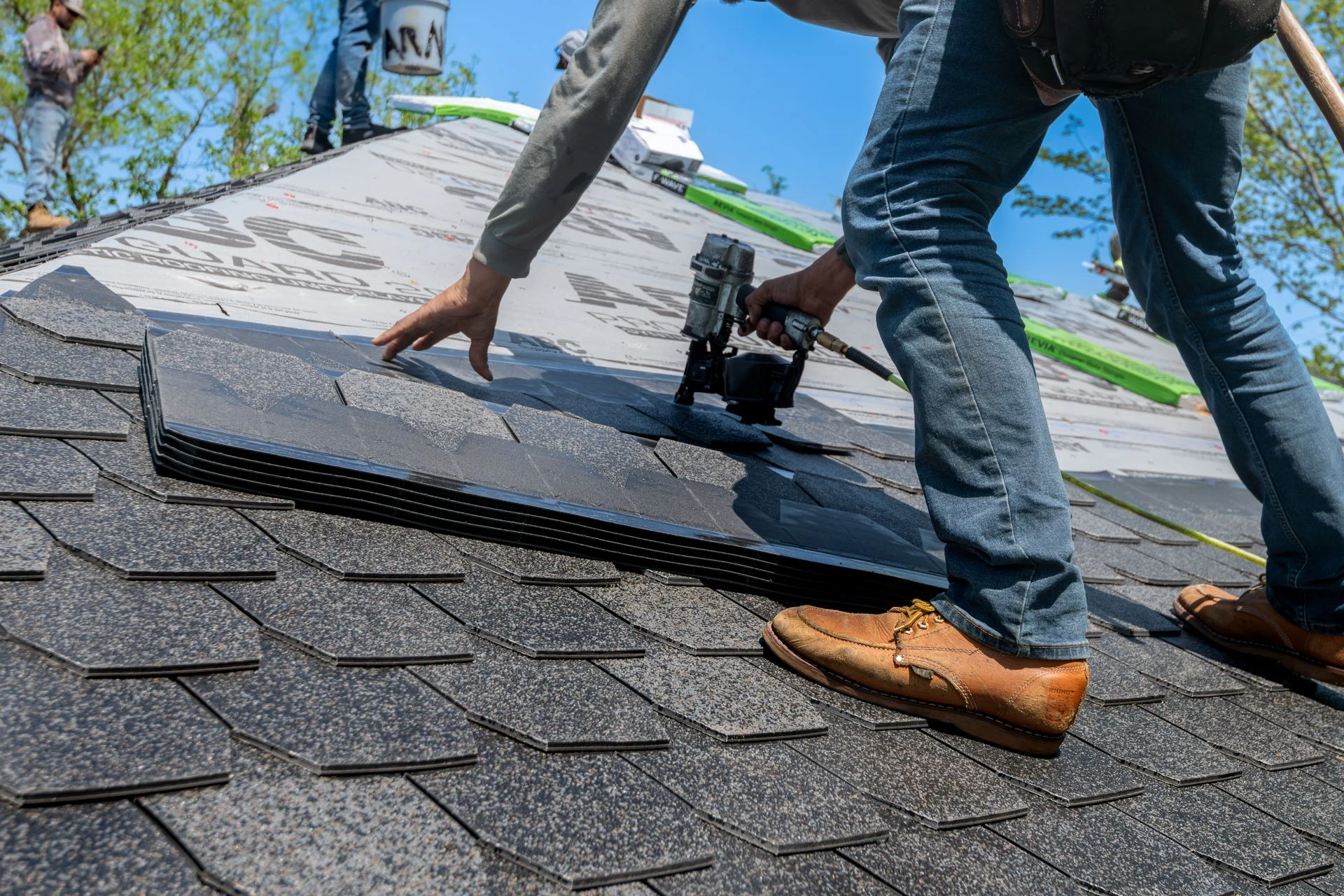
This table compares the factors that push rubber shingle labor costs up or down.
| Cost Driver | Effect on Price | Reason |
|---|---|---|
| Roof pitch | Raises cost | Steep roofs need safety gear, slower work |
| Roof complexity | Raises cost | Valleys and dormers need extra cutting |
| Tear-off layers | Raises cost | More debris, more disposal fees |
| Certified installer scarcity | Raises cost | Fewer crews compete for jobs |
| Simple gable roof | Lowers cost | Fewer cuts and flashings |
Permit fees vary by city and county. To compare quotes fairly, add the local permit cost to each one before you set one contractor’s number against another’s.
Do Rubber Shingles Hold up to Hail?

Yes, rubber shingles hold up to hail better than standard asphalt shingles, and many recycled-rubber products carry a UL 2218 Class 4 rating, the highest impact class in that standard. The flexible material absorbs strikes that crack brittle roofing, which matters most in hail-belt states such as Texas, Colorado, and Nebraska.
UL 2218 Class 4 Explained
UL 2218 tests roofing by dropping steel balls onto the same spot twice, with bigger balls used for each higher class. The pass rule is strict. A product earns a class only when no crack or split shows up in the covering.
This table compares the steel ball size used for each UL 2218 class.
| UL 2218 Class | Ball Diameter (in / mm) | Impact Level |
|---|---|---|
| Class 1 | 1.25 / 32 | Lowest |
| Class 2 | 1.5 / 38 | Low to moderate |
| Class 3 | 1.75 / 45 | Moderate to high |
| Class 4 | 2.0 / 51 | Highest |
A Class 4 rating covers the tested product, not a badly installed roof. Sloppy nailing undercuts it. Fasten every shingle to the manufacturer’s nailing pattern so the rating actually means something when the next storm rolls through.
Insurance Discounts in Hail States
Many insurers in hail-prone states offer premium discounts for roofs rated UL 2218 Class 4. Alabama goes further. State law there requires insurers to offer discounts for homes built or retrofitted to the Insurance Institute for Business and Home Safety (IBHS) FORTIFIED standard.
- Call your insurer and ask whether a Class 4 roof qualifies for a discount.
- Request the discount terms in writing before signing a roofing contract.
- Save the product label, invoice, and installer certificate after installation.
- Submit the documents to your insurer and confirm the discount appears on the next renewal.
Watch for cosmetic damage exclusions. Some policies in hail states won’t pay for dents and marks that don’t cause leaks, so read that clause closely before you assume a hailstorm is covered.
Are Rubber Shingles Fire Resistant?
Rubber shingles can be fire resistant, but the rating depends on the tested product system, not the material name. Look for a Class A rating under UL 790 or ASTM E108, the highest of three fire classes, and check whether the product reaches Class A only over a specific underlayment.
This table compares the three roof fire classes.
| Fire Class | Exposure Level | Typical Requirement |
|---|---|---|
| Class A | Severe fire exposure | Wildfire-prone zones |
| Class B | Moderate fire exposure | Some general codes |
| Class C | Light fire exposure | Lowest accepted rating |
Under its wildland-urban interface building rules, California requires Class A roofing in the highest wildfire hazard zones across the state. It isn’t alone. Homeowners in Colorado or Oregon, along with other fire-prone areas, face similar local rules.
Codes, Wind Ratings, and HOA Approval
Rubber shingles must meet the roof covering rules your local jurisdiction adopts, usually based on the International Residential Code (IRC), plus any high-wind approvals and homeowners association (HOA) rules. Confirm the permit, wind rating, and HOA sign-off before signing a roofing contract, because each one can block installation.
IRC Section R905 covers roof coverings. Which edition applies is up to your local building department, and that office also decides whether local amendments pile extra rules on top.
Florida’s coastal counties require extra wind approvals. In the High-Velocity Hurricane Zone, any product needs a Miami-Dade Notice of Acceptance (NOA) or an equivalent Florida Product Approval before it goes on a roof.
In US subdivisions, slate-look roofs often need HOA approval, and the architectural committee usually wants specific documents before it signs off. Here’s how to get it:
- Read the HOA covenants for approved roofing materials and colors.
- Submit the product spec sheet, color sample, and installer details to the architectural committee.
- Wait for written approval before scheduling the tear-off.
- Keep the approval letter with your roofing records.
Can Rubber Tiles Go on a Flat Roof?
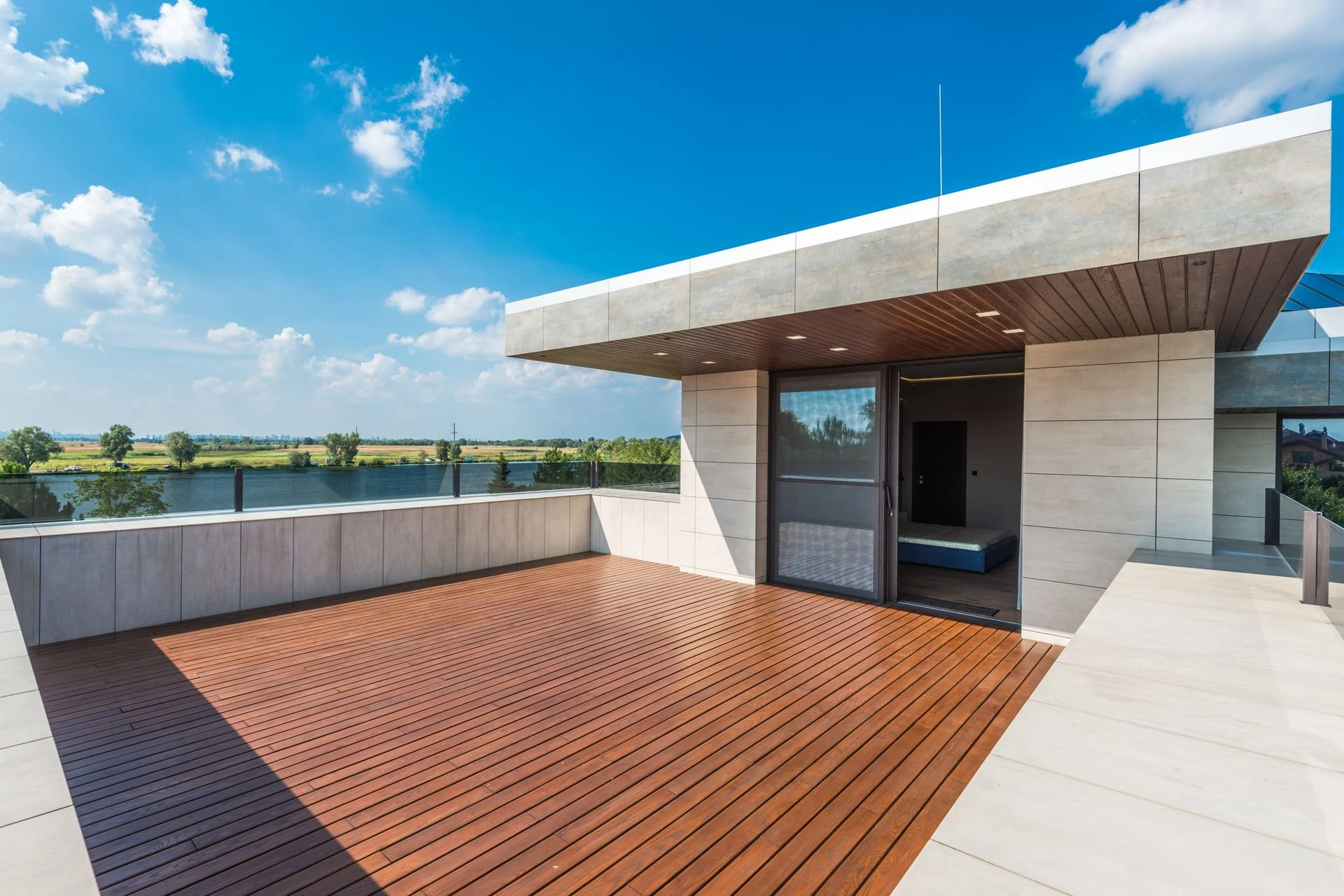
Yes, rubber tiles can go on a flat roof as a walking and protection layer over an existing membrane such as EPDM or thermoplastic polyolefin (TPO). Rubber roof deck tiles do not waterproof the roof, so the membrane underneath must be sound, sloped to drain, and approved for foot traffic.
People can walk on rubber deck tiles. That’s their main purpose. Weight capacity is another matter, since it depends on the specific product and on the roof structure beneath it.
Before you add tiles, planters, hot tubs, or heavy furniture, have a structural engineer confirm that the roof can carry the combined load. Bare tiles count, too. Rubber adds weight even before anyone steps on it.
How to Install Rubber Roof Deck Tiles
- Inspect the membrane and repair any blisters, punctures, or open seams.
- Confirm with the membrane manufacturer that rubber tiles will not void the warranty.
- Lay a compatible protection mat or slip sheet if the membrane maker requires one.
- Plan the layout so tiles never block drains, scuppers, or gutters.
- Start the first row along the straightest edge and interlock each tile firmly.
- Cut edge tiles with a sharp utility knife or jigsaw for a tight perimeter.
- Leave drain covers accessible with removable tiles or access hatches.
Protecting the Membrane Under Rubber Decking Tiles
Chemistry matters here. Some rubber compounds react chemically with certain membranes. Polyvinyl chloride (PVC) membranes are especially sensitive to this, so get written compatibility approval from the membrane maker before a single tile goes down.
This table compares two common installation methods for deck tiles over membranes.
| Install Method | Best For | Drainage | Membrane Access |
|---|---|---|---|
| Loose-laid tiles | Light foot traffic, small decks | Through seams | Lift tiles by hand |
| Pedestal system | Level decks over sloped membranes | Open space below | Easy, panels lift out |
Lift a few tiles twice a year and look underneath. Trapped leaves and grit hold moisture against the membrane and slowly wear it down, so clear out whatever you find. It’s a quick job.
Are Rubber Shingles Eco-Friendly?
Yes, recycled-rubber shingles are among the more eco-friendly pitched-roof options because they divert scrap tires from landfills and stockpiles. Their green value drops when the product is mostly virgin polymer, so check recycled content on the spec sheet and ask the manufacturer about end-of-life recycling.
No verified US figure is available for how often old rubber shingles get recycled a second time once they come off the roof. So ask. Find out whether the manufacturer runs a take-back program before you buy.
Energy claims need proof. The Cool Roof Rating Council publishes independent reflectance and emittance ratings, so search its directory for the exact product and color you’re considering.
Frequently Asked Questions
Are Rubber Shingles Better Than Asphalt Shingles?
Yes, for hail resistance and a slate-style look. Asphalt costs less. It’s also easier to repair and comes in more colors, which is why budget-focused owners so often pick it instead of rubber.
Do Rubber Shingles Reduce Insurance Premiums?
Yes, often. Many insurers in hail-prone states discount premiums for UL 2218 Class 4 roofs. Get the discount terms in writing before installation, then submit proof of the rated product once the roof is finished.
Can You Walk on Rubber Roof Tiles?
Yes. Rubber deck tiles are built for foot traffic on flat roofs. Shingles are a different story: stay off a pitched roof unless you have to be there, and wear soft-soled shoes plus fall protection when you do.
Is EPDM the Same as Rubber Roof Tiles?
No. EPDM is a continuous waterproof membrane for flat roofs. Tiles are separate units, with shingles shedding water on slopes and deck tiles sitting on top of membranes to protect them.
Do Rubber Shingles Need HOA Approval?
Yes, usually, in subdivisions with architectural rules. Send the HOA committee the spec sheet and a color sample. Installer details go in the same packet, and nobody should start the tear-off until a signed approval letter is in your hands.
Conclusion
Rubber roof tiles will keep gaining ground as hail claims rise and insurers reward impact-rated roofs. Expect more Class 4 and Class A products. Installer certification programs should widen over the next few years, and recycled-content labeling should get clearer. Start with your roof pitch. Once the product type is settled, line up spec sheets and written quotes side by side with your insurer’s discount terms. Check codes and HOA rules before ordering, along with membrane compatibility on flat roofs. Get those checks done first, and you’ll end up with a roof that lasts and pays back its premium.