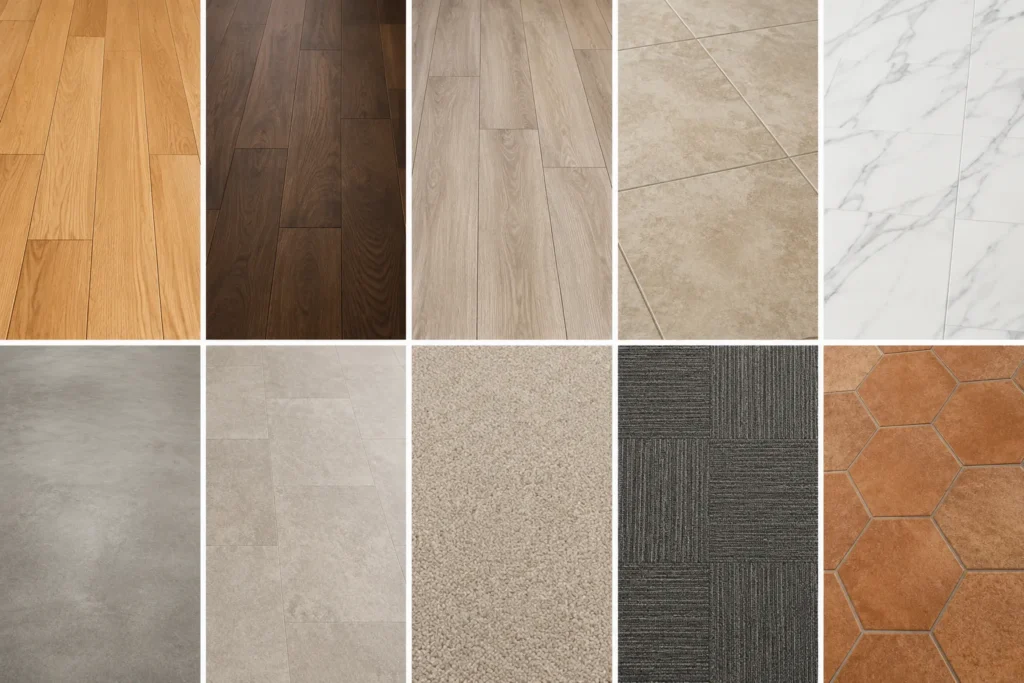
There are 10 main types of flooring materials: hardwood, engineered wood, laminate, luxury vinyl (LVP/LVT), ceramic or porcelain tile, carpet, concrete, cork, bamboo, and linoleum. Each one differs in cost per square foot, lifespan, water resistance, and which room it suits best.
Wrong flooring costs money twice — once to buy and once to replace. A bathroom floor installed with hardwood warps within months. A bedroom floored in tile feels cold and hard underfoot for years. This guide cuts through the confusion. You get real pricing, honest pros and cons, and a straight answer for every room in your home.
Before you calculate how much material you need, use this flooring calculator to get accurate square footage estimates for any room in your home.
4 Factors That Determine the Right Flooring Material
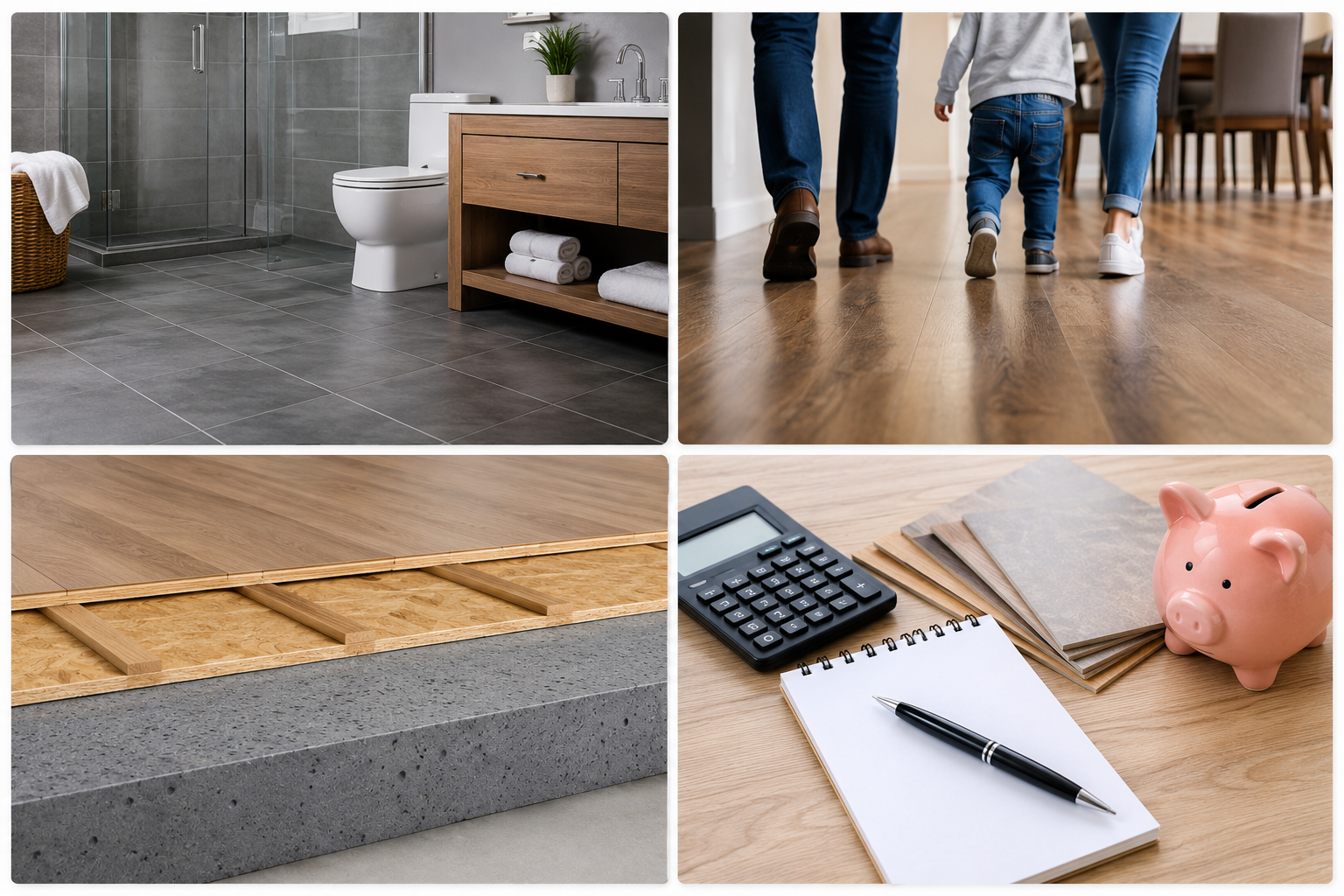
Every flooring decision comes down to 4 variables. Get these right before comparing materials.
1. Moisture Level of the Room
Wet rooms — bathrooms, kitchens, laundry rooms, and basements — need 100% waterproof flooring. Only 3 materials qualify: luxury vinyl plank (LVP), ceramic or porcelain tile, and sealed concrete. Hardwood, laminate, and cork absorb moisture and swell, buckle, or grow mold in high-humidity spaces.
2. Foot Traffic Volume
High-traffic areas need a wear layer of at least 12 mil (0.3 mm) or a Janka hardness rating above 1,000. Living rooms, hallways, and entryways wear faster than bedrooms. Porcelain tile, hardwood (white oak or hickory), and LVP with a 20 mil wear layer handle heavy daily use without showing damage in the first 5 years.
3. Subfloor Type
Concrete subfloors rule out nail-down hardwood. Wood frame subfloors rule out direct concrete pours. Know your subfloor type before buying a single plank.
4. Budget Per Square Foot
Budget under $3/sq ft: laminate or LVP. Budget $3–$7/sq ft: engineered wood, mid-grade tile, or bamboo. Budget $8+/sq ft: solid hardwood or natural stone tile. Installation labor adds $2–$6/sq ft on top of material costs, depending on complexity.
Types of Flooring Materials: Quick Comparison Table
The table below compares all 10 flooring types by 5 key factors. Prices are in USD per square foot (sq ft) for materials only, not including labor.
| Flooring Type | Cost/Sq Ft | Lifespan | Water Resistance | Best Room |
| Hardwood | $5–$15 | 25–100+ yrs | Low | Living room, bedroom |
| Engineered Wood | $4–$12 | 20–50 yrs | Medium | Basement, any room |
| Laminate | $1.50–$5 | 15–30 yrs | Medium–High | Bedroom, office |
| Luxury Vinyl (LVP) | $2–$7 | 15–25 yrs | 100% Waterproof | Kitchen, bathroom |
| Ceramic/Porcelain Tile | $2–$20+ | 50–100+ yrs | 100% Waterproof | Bathroom, kitchen |
| Carpet | $2–$8 | 5–15 yrs | Low | Bedroom, playroom |
| Concrete | $2–$6 | Lifetime | High (sealed) | Garage, basement |
| Cork | $3–$7 | 10–25 yrs | Medium (sealed) | Home office, bedroom |
| Bamboo | $2–$8 | 20–50 yrs | Medium | Living room, hallway |
| Linoleum | $2.50–$5 | 25–40 yrs | High | Kitchen, laundry |
*Prices last verified May 2026. Always add 10% waste allowance to your square footage before ordering.
10 Types of Flooring Materials: Detailed Breakdown
1. Solid Hardwood Flooring
Solid hardwood costs $5–$15 per sq ft ($54–$161 per sq meter) for materials and lasts 25–100+ years with proper care. It is milled from a single piece of timber oak, maple, walnut, or hickory are the most common species in the US.
White oak is the most popular choice in 2026 because of its neutral gray-brown tone, wide plank availability, and Janka hardness rating of 1,360, which resists dents well in moderate-traffic spaces.
- Best rooms: Living rooms, dining rooms, bedrooms, hallways
- Avoid in: Bathrooms, basements, kitchens with heavy moisture
- Refinishing: Can be sanded and refinished 5–8 times over its lifespan
- Installation: Nail-down or staple-down over wood subfloors only
Main weakness: Solid hardwood swells, warps, and gaps when exposed to moisture or humidity swings above 60%. Never install it below grade or in rooms with plumbing.
2. Engineered Hardwood Flooring
Engineered hardwood costs $4–$12 per sq ft ($43–$129 per sq meter) and installs over concrete, wood, or radiant heat systems where solid hardwood cannot go. The top layer is real wood veneer (0.6–6 mm thick) bonded to a plywood or HDF (High-Density Fiberboard) core.
A thicker veneer 3 mm or more — allows 2–3 refinishing cycles. Thinner veneers under 2 mm cannot be sanded. Check veneer thickness before buying if refinishing matters to you.
- Best rooms: Basements, kitchens, rooms over radiant heat.
- Lifespan: 20–50 years depending on veneer thickness and traffic.
- Moisture tolerance: Better than solid wood but not waterproof
- Key advantage over solid hardwood: Engineered wood is dimensionally stable, meaning it expands and contracts less with temperature and humidity changes — a major benefit in climates with hot summers and cold winters.
3. Laminate Flooring
Laminate flooring costs $1.50–$5 per sq ft ($16–$54 per sq meter) and is the most DIY-friendly option on this list. A high-resolution photographic layer over a dense HDF core mimics wood or stone at a fraction of the real material cost.
Modern waterproof laminate from brands like Pergo and Mohawk FeatureStep solves the old moisture weakness. AC (Abrasion Class) ratings tell you how well a laminate handles foot traffic AC3 suits residential use, AC4 handles light commercial traffic.
- Best rooms: Bedrooms, home offices, living rooms, hallways.
- Cannot be: Refinished must be replaced when worn.
- Install method: Floating click-lock system, no glue or nails needed.
- One real limitation: Cheap laminate sounds hollow underfoot. A quality foam or cork underlayment (3–5 mm thick) adds density, reduces sound transmission, and insulates against cold subfloors.
4. Luxury Vinyl Plank (LVP) and Luxury Vinyl Tile (LVT)
LVP and LVT are 100% waterproof, cost $2–$7 per sq ft ($22–$75 per sq meter), and install in every room of the house including bathrooms and basements. These are the fastest-growing flooring categories in the US for the third straight year.
Wear layer thickness is the most important spec to check. A 6 mil wear layer suits low-traffic bedrooms. A 12 mil layer handles standard residential traffic. A 20 mil layer works in kitchens, hallways, and homes with dogs or heavy furniture.
- Best rooms: Kitchens, bathrooms, basements, laundry rooms — any room
- Rigid-core LVP: Resists dents and feels solid underfoot — better than standard LVP
- Waterproof: Yes, fully including the core and locking joints
- Competitor gap: 3 of 4 competitor articles list LVP without explaining wear layer thickness. A 6 mil floor in a kitchen hallway shows scratches within 18 months. A 20 mil floor in the same space still looks new at 10 years.
5. Ceramic and Porcelain Tile Flooring
Tile is the most durable flooring material porcelain tile lasts 50–100+ years and is immune to water, scratches, and stains. Ceramic tile costs $2–$10 per sq ft ($22–$108 per sq meter). Porcelain costs $3–$20+ per sq ft ($32–$215 per sq meter).
Porcelain is denser and harder than ceramic because it fires at a higher temperature. The PEI (Porcelain Enamel Institute) rating tells you where to use each tile — PEI 1–2 for walls only, PEI 3 for light residential floors, PEI 4–5 for heavy-traffic and commercial floors.
- Best rooms: Bathrooms, kitchens, entryways, mudrooms
- Radiant heat: Yes — tile conducts heat efficiently from underfloor systems
- Main weakness: Cold and hard underfoot — add radiant heat or rugs in winter
- Grout maintenance: Unsealed grout stains and traps bacteria. Seal all grout lines every 12–18 months with a penetrating grout sealer. Epoxy grout is stain-proof and never needs sealing but costs 3–4x more than standard cement grout.
6. Carpet Flooring
Carpet costs $2–$8 per sq ft ($22–$86 per sq meter) and remains the top choice for bedrooms and family rooms where comfort, warmth, and sound absorption matter most. Carpet lifespan ranges from 5 years for budget nylon to 15+ years for high-quality wool or solution-dyed polyester.
Face weight measured in ounces per sq yard determines durability. Under 30 oz suits low-traffic bedrooms. 30–50 oz works for family rooms and hallways. Over 50 oz handles stairs and high-traffic areas without matting down.
- Best rooms: Bedrooms, playrooms, home theaters, basements
- Avoid in: Kitchens, bathrooms, entryways — moisture and stains are permanent
- Allergy note: Carpet traps dust, pet dander, and pollen — vacuum twice weekly
- Best pick for families with children: Solution-dyed polyester (SDN) carpet repels stains because the color is locked into the fiber, not applied on top. Spills wipe up clean instead of setting permanently.
7. Polished Concrete Flooring
Polished concrete costs $2–$6 per sq ft ($22–$65 per sq meter) for basic grinding and sealing, up to $15+ per sq ft for decorative staining and full polishing. Concrete lasts a lifetime with minimal maintenance no other flooring material comes close on longevity.
Most competitors skip concrete flooring entirely in their guides. This is a major gap because concrete is already the subfloor in millions of US basements, garages, and modern open-plan homes. Polishing or staining it costs far less than laying a new floor on top.
- Best rooms: Garages, basements, open-plan living areas, commercial spaces
- Radiant heat: Yes — concrete holds and radiates heat exceptionally well
- Sealing: Required every 3–5 years to maintain stain resistance and sheen
Planning a concrete floor project? Use the concrete floor calculator to get cubic yards, bag count, and cost estimates before you start.
Main limitation: Uninsulated concrete feels cold in winter and is hard underfoot for hours of standing. Anti-fatigue mats in kitchen work areas and radiant heating solve both problems.
8. Cork Flooring
Cork flooring costs $3–$7 per sq ft ($32–$75 per sq meter) and offers a soft, warm surface that reduces standing fatigue — a feature no other hard flooring material provides. Cork is harvested from the bark of cork oak trees without cutting them down, making it one of 2 renewable flooring options on this list.
Cork contains suberin, a natural waxy substance that repels insects and resists mold. A polyurethane topcoat makes cork water-resistant but not waterproof. Reseal cork floors every 3–4 years to maintain moisture protection.
- Best rooms: Home offices, bedrooms, playrooms, yoga studios
- Avoid in: Bathrooms and kitchens — excessive moisture warps unsealed cork
- Sound: Absorbs 10 dB more sound than hardwood — excellent for apartments
- Biggest competitor gap: Every competitor article mentions cork in 1–2 sentences. Cork’s anti-fatigue properties make it the single best flooring material for stand-up desks and home offices — a major selling point that search results consistently bury.
9. Bamboo Flooring
Bamboo flooring costs $2–$8 per sq ft ($22–$86 per sq meter) and reaches full harvest maturity in 3–5 years, making it the most rapidly renewable flooring material available. Strand-woven bamboo has a Janka hardness rating of 3,000+ — nearly 3x harder than red oak — and handles heavy foot traffic without denting.
Not all bamboo flooring is equal. Carbonized bamboo (the dark brown variety) looks attractive but is softer because the heat treatment that creates the color reduces hardness by 30%. Natural bamboo is harder and more durable but has a limited color range.
- Best rooms: Living rooms, hallways, home offices, bedrooms
- Moisture: Sensitive to standing water not for bathrooms or laundry rooms
- VOC concern: Check for low-VOC adhesives cheap bamboo uses formaldehyde-based glues
10. Linoleum Flooring
Linoleum costs $2.50–$5 per sq ft ($27–$54 per sq meter) and lasts 25–40 years — longer than vinyl, carpet, or laminate at the same price point. Made from linseed oil, cork dust, wood flour, and jute backing, linoleum is biodegradable and contains no synthetic plastics.
Linoleum is antibacterial by nature linseed oil oxidizes over time and creates a surface that inhibits bacterial growth. This makes linoleum the most hygienic flooring option for kitchens among budget materials.
- Best rooms: Kitchens, laundry rooms, commercial kitchens, schools
- Avoid confusion with: Vinyl linoleum is a natural material, vinyl is synthetic plastic
- Maintenance: Damp mop weekly, strip and rewax every 2–3 years
Best Flooring Material by Room: 7 Quick Recommendations
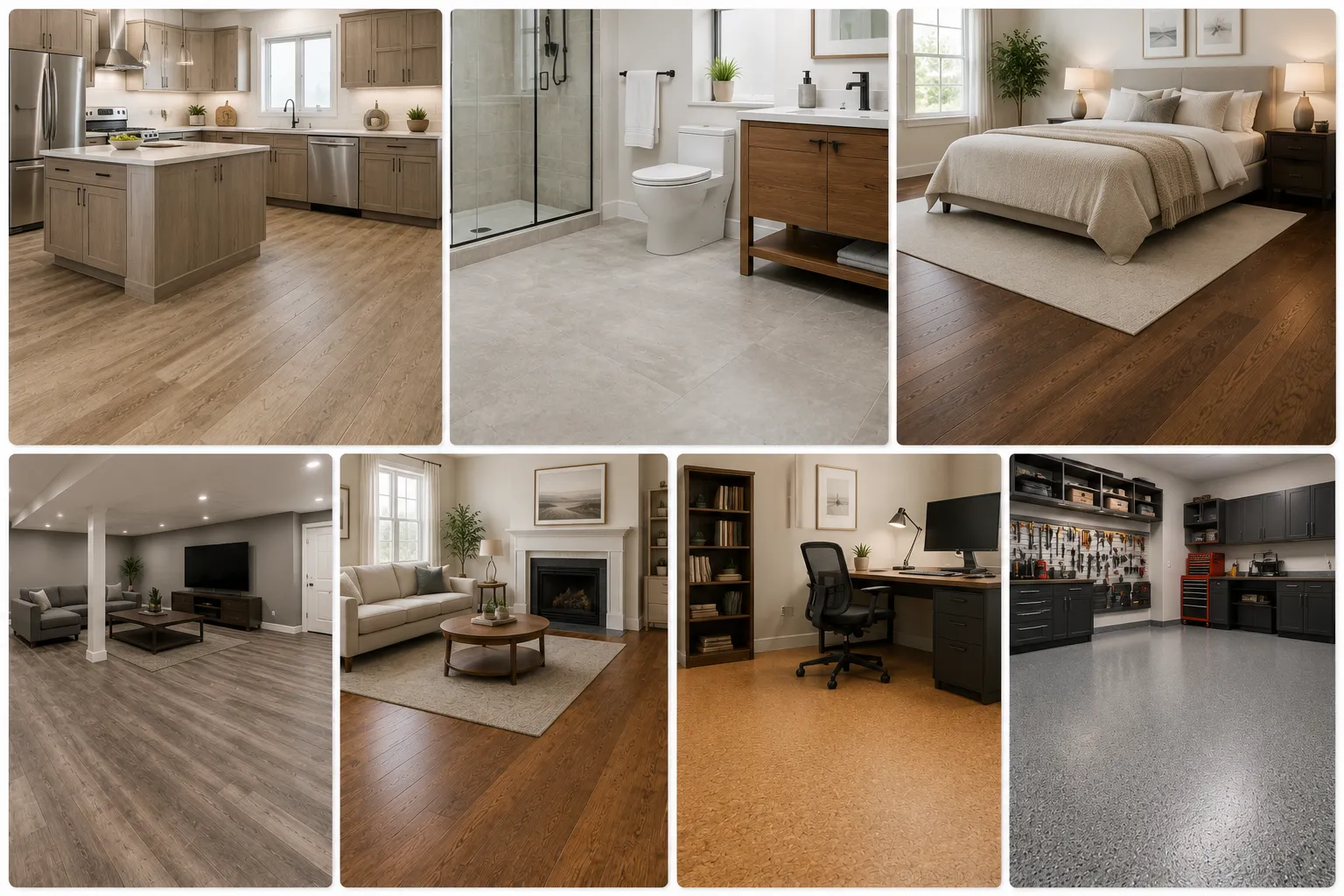
Pick from this room-by-room guide if the full comparison is more detail than you need right now.
Kitchen
Best choice: LVP (20 mil wear layer) or porcelain tile. Both handle water, grease, and dropped utensils. LVP is softer underfoot during long cooking sessions. Tile stays cooler and pairs with radiant heat.
Bathroom
Best choice: Porcelain tile or LVT. Both are 100% waterproof. Porcelain with a slip-resistance rating of R10 or higher prevents falls on wet floors. Add radiant heat under tile to eliminate the cold-floor problem in winter.
Bedroom
Best choice: Carpet (medium-to-high face weight) or hardwood. Carpet adds warmth, sound absorption, and softness underfoot. Hardwood increases resale value. Choose based on whether comfort or home value matters more to you.
Basement
Best choice: LVP or polished concrete. Both handle moisture from concrete subfloors. LVP floats over uneven surfaces without adhesive. Polished concrete is cheaper if you are converting an existing slab.
Living Room
Best choice: Hardwood, engineered wood, or LVP. All 3 look good, handle moderate foot traffic, and hold up to furniture legs. Hardwood adds the most resale value. LVP costs the least. Engineered wood sits in the middle on both.
Home Office
Best choice: Cork or LVP. Cork reduces standing fatigue at a desk and absorbs keyboard and typing noise. LVP holds up to rolling desk chairs without showing track marks — look for LVP rated for commercial use if you roll frequently.
Garage
Best choice: Epoxy-coated concrete or interlocking rubber tiles. Epoxy coatings resist oil, chemicals, and abrasion. Rubber tiles cushion falls and install without tools. Both handle the freeze-thaw cycles and vehicle weight that destroy other flooring materials.
How Much Does Flooring Installation Cost in 2026?
Total flooring installation costs — materials plus labor — range from $3.50–$25+ per sq ft depending on material and complexity. Labor alone runs $2–$6 per sq ft for standard rooms and $4–$9 per sq ft for tile and intricate patterns.
- Laminate or LVP DIY: $1.50–$7/sq ft materials only — no labor cost if self-installed
- Professional LVP install: $4–$10/sq ft total (material + labor)
- Hardwood installation: $8–$20/sq ft total — higher for nail-down and wide planks
- Tile installation: $7–$25/sq ft total — intricate patterns and large-format tile cost more
- Carpet installation: $4–$12/sq ft total including pad and stretch-in labor
Get exact sq ft counts for your room before ordering — measure length x width, then add 10% for waste and cuts.
5 Flooring Mistakes That Cost Homeowners Money
1. Skipping the Moisture Test
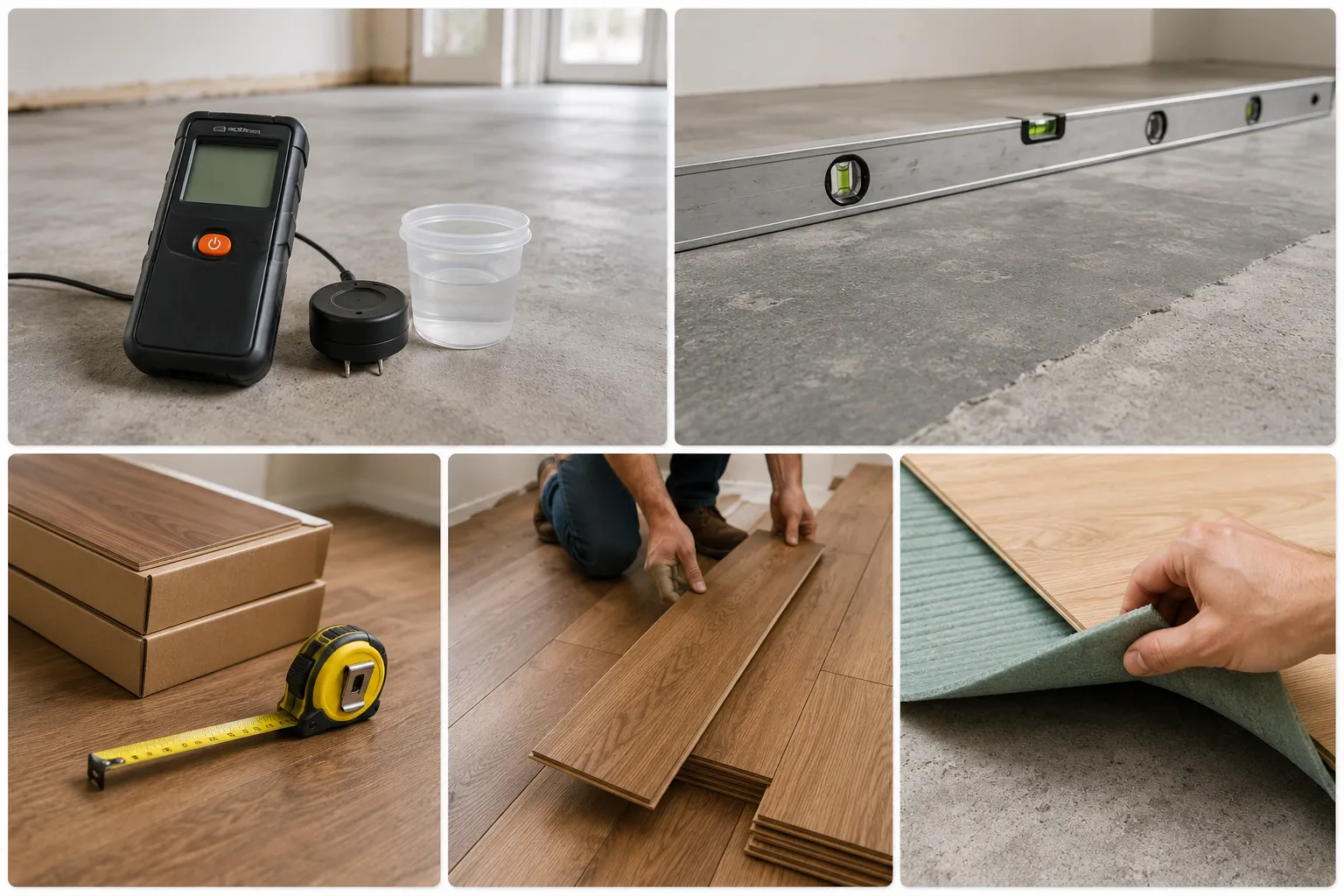
Test concrete subfloors for moisture before installing any flooring. A calcium chloride test takes 60–72 hours and costs under $30 at hardware stores. High moisture readings above 3 lbs/1,000 sq ft/24 hrs disqualify glue-down hardwood and LVP and require a moisture barrier first.
2. Choosing Flooring Before Checking Subfloor Flatness
Subfloors must be flat within 3/16 inch over 10 feet for tile, hardwood, and LVP. High spots need grinding. Low spots need floor leveling compound. Skipping this step causes tiles to crack, hardwood planks to squeak, and LVP click joints to fail within months.
3. Buying the Exact Square Footage Needed
Always buy 10% more flooring than your room’s square footage — 15% for diagonal layouts. This accounts for cuts, waste, and future repairs. Running short mid-install means buying a second batch that may not match the first lot’s color or texture exactly.
4. Installing Wood Flooring Without Acclimation
Solid and engineered hardwood need 3–5 days of acclimation inside the room before installation. Planks adjust to the room’s temperature and humidity. Skipping acclimation causes boards to expand after installation, creating buckling and gaps.
5. Ignoring Underlayment Thickness
Underlayment adds sound reduction, cushion, and a vapor barrier — but too much thickness causes problems. Check door clearance before adding any overlay flooring — 3/4 inch laminate plus 1/4 inch underlayment raises your floor height by 1 full inch, which can prevent doors from opening properly.
Plan Your Flooring Project With Accurate Measurements
The biggest mistake homeowners make when buying flooring is underestimating the square footage they need. Rooms with closets, angled walls, or irregular shapes require precise calculation — not a rough estimate.
Conclusion
There is no single best flooring material, only the right one for a given room, budget, and moisture level. Wet spaces need waterproof options like LVP or tile, high-traffic areas need a thick wear layer or a high Janka rating, and comfort-focused rooms like bedrooms still do well with carpet or hardwood. Match the flooring to how the room is actually used, and check your subfloor and moisture levels before buying anything, since that single step prevents most of the expensive mistakes homeowners make.