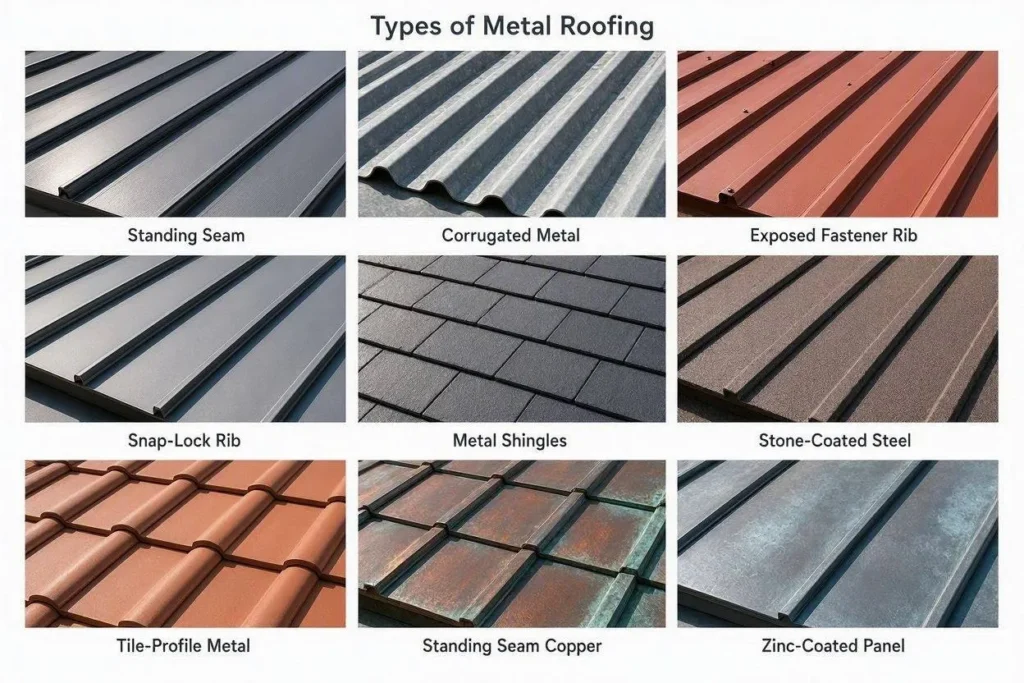
If you’re comparing the different types of metal roofing for your home, you’ve probably noticed that not all metal roofs are the same. The material, the panel style, and even the way the panels are fastened down all change how your roof looks, how long it lasts, and what it costs. This guide breaks down every type of metal roof on the market today: steel, aluminum, copper, zinc, and tin, along with the different panel styles like standing seam, corrugated, and metal shingles, so you can pick the right one for your home, your climate, and your budget.
Quick Comparison: All Types of Metal Roofing at a Glance
Before we go section by section, here’s a fast overview of how the main types of metal roofing stack up against each other on cost, lifespan, and best use case.
| Material | Cost Per Sq Ft (Installed) | Lifespan | Best For |
| Steel (Galvanized/Galvalume) | $4.50 – $12 | 40–70 years | Most homeowners, best value |
| Aluminum | $6 – $14 | 40–60 years | Coastal homes, salt air areas |
| Tin (modern terne/steel-tin) | $4 – $10 | 30–50 years | Traditional or historic-style homes |
| Zinc | $10 – $18 | 60–100 years | Long-term investment, distinctive patina |
| Copper | $15 – $30+ | 60–100+ years | High-end homes, architectural statements |
Different Types of Metal Roofing Materials
The material your roof is made of affects everything else: weight, price, corrosion resistance, and how the color ages over time. Here’s a closer look at each of the different types of metal roofing material available today.
Types of Steel Roofing
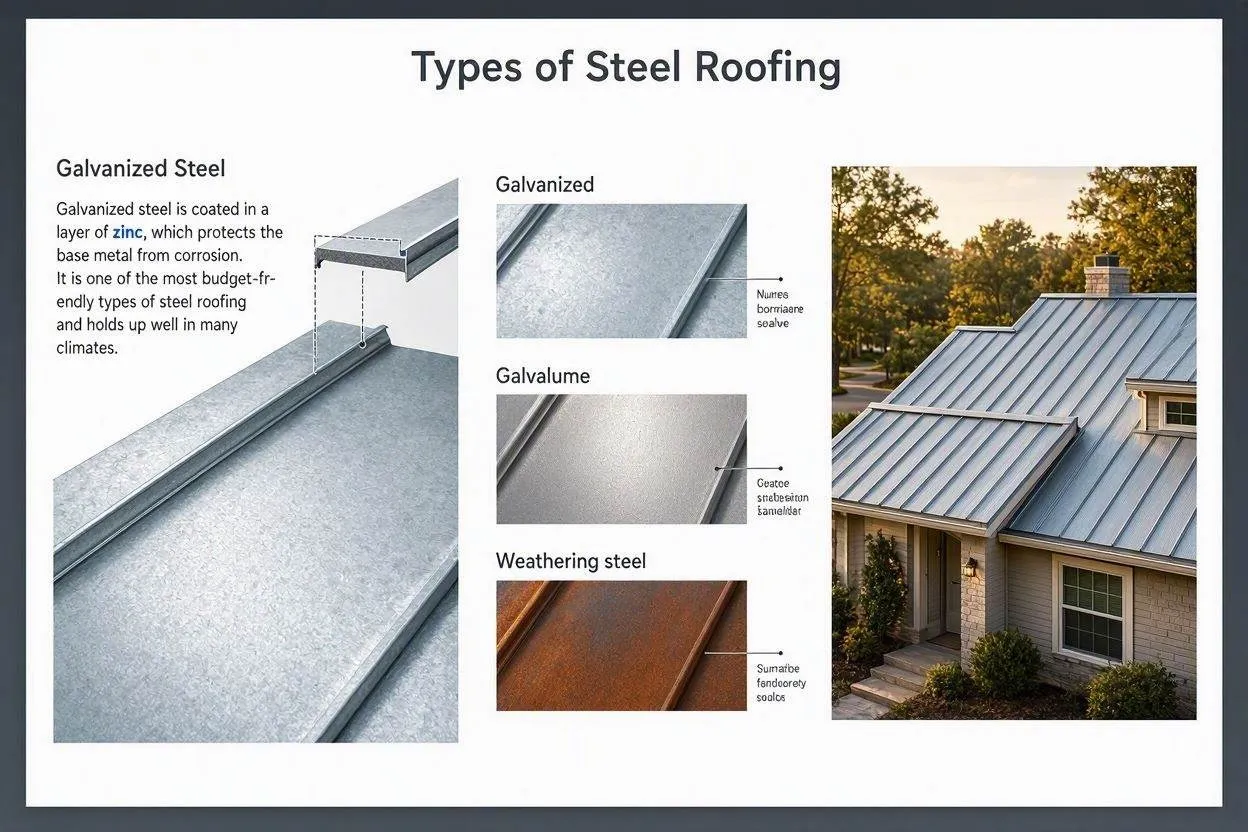
Steel is the most common type of metal roofing installed in the U.S., mainly because it balances cost, strength, and durability better than any other material. There are a few different types of steel roofing, depending on the coating used to protect it from rust.
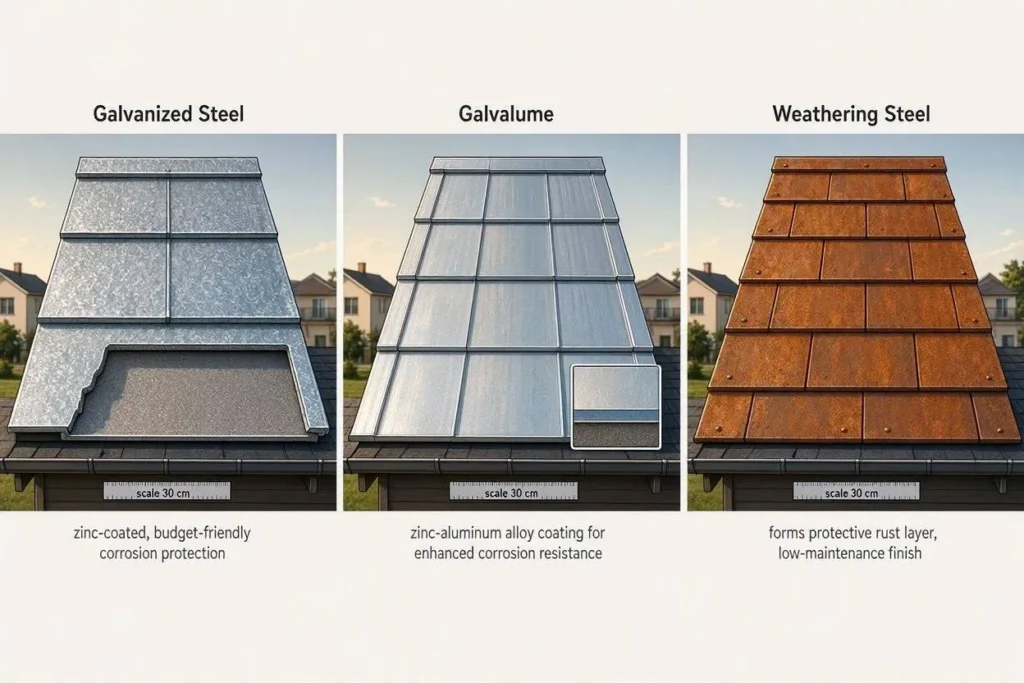
Galvanized Steel
Galvanized steel is coated in a layer of zinc, which protects the base metal from corrosion. It’s one of the most budget-friendly types of steel roofing and holds up well in most climates, though it can eventually rust at cut edges or scratches if not maintained.
Galvalume Steel
Galvalume combines zinc and aluminum in its protective coating, giving it better corrosion resistance than plain galvanized steel. It’s now the industry-standard base for most painted steel roofing panels.
Weathering Steel
Weathering steel (sometimes called Cor-Ten) is designed to form a stable, rust-colored patina on purpose. It’s less common on homes and more popular in architectural or commercial applications where that raw, weathered look is the goal.
Steel Roofing Pros: Strong, affordable, widely available, and resistant to fire and impact.
Steel Roofing Cons: Heavier than aluminum, can dent in hail, and less naturally corrosion-resistant than aluminum or zinc without coating.
Aluminum Roofing
Aluminum is naturally corrosion-resistant, which makes it one of the best types of metal roofing for coastal homes exposed to salt air. It won’t rust the way steel can, and it’s roughly a third lighter, which puts less stress on your home’s structure.
Pros: Naturally corrosion-resistant, lightweight, easy to shape for custom profiles.
Cons: More expensive than steel, dents more easily since it’s a softer metal, fewer suppliers in some regions.
Copper Roofing
Copper is the most premium type of metal roofing material, chosen mainly for its appearance and lifespan rather than upfront cost. Over time, copper develops a green patina that many homeowners specifically want for a historic or high-end look.
Pros: Can last 100+ years, distinctive appearance, and patina protects the metal naturally over time.
Cons: The highest cost of any metal roofing type, can dent, patina process takes years, and can’t be rushed.
Zinc Roofing
Zinc is less common in the U.S. but popular in Europe, and it shares copper’s ability to self-heal small scratches through its natural patina. It’s a strong choice for homeowners who want longevity without copper’s price tag.
Pros: Extremely long lifespan, self-healing patina, distinctive matte-gray finish.
Cons: Expensive, limited installer availability in some U.S. markets, can develop white “chalking” if not properly ventilated underneath.
Types of Tin Roofs
Despite the name, almost no modern “tin roof” is actually made of tin anymore; the term stuck around from the 1800s when roofing sheets were coated in a tin alloy. Today, when people search for different types of tin roofing, they’re usually referring to painted or galvanized steel panels styled to look like traditional tin roofing.
Pros: Lightweight, easy and fast to install, budget-friendly, classic look.
Cons: Modern “tin” panels are really steel, so cost and durability depend heavily on the coating quality used.
Types of Metal Roofing Panels & Styles
Beyond material, the physical shape and installation style of the panels change both the look and the performance of your roof. These are the main types of metal roof panels used on residential and commercial buildings.
Standing Seam Panels
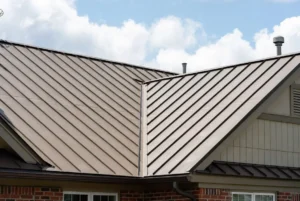
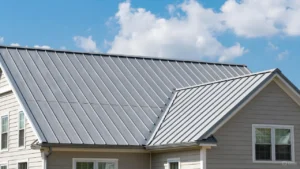
Standing seam is the most popular panel style for homes today, recognized by its raised, vertical seams that run from ridge to eave. The fasteners are hidden underneath the seams, which makes it the most weather-tight and long-lasting panel option.
Types of Corrugated Metal Roofing
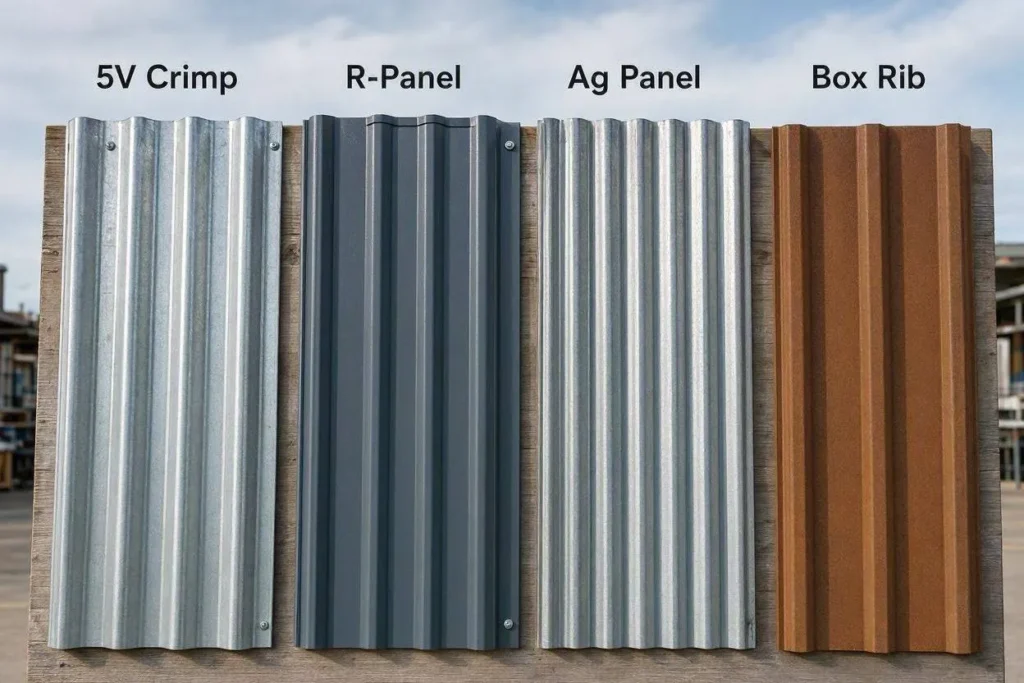
Corrugated panels have a repeating wave pattern and are one of the most affordable types of metal roofing panels available. There are a few sub-styles worth knowing:
- 5V Crimp – A classic wave profile popular on both homes and barns, with a moderate rib height.
- R-Panel – A trapezoidal rib pattern common on agricultural and commercial buildings.
- Ag Panel – A traditional corrugated wave, often the cheapest option, frequently used on barns and outbuildings.
Metal Shingles
Metal shingles are stamped to mimic the look of asphalt shingles, wood shakes, or slate tiles, while still giving you the durability of metal underneath. They’re a good option for homeowners who want a more traditional appearance without giving up metal’s lifespan.
Metal Tile
Metal tile panels replicate the look of Spanish or clay tile roofing, which is popular in Southwestern and Mediterranean-style homes, but at a fraction of the weight of real tile.
Metal Slate
Metal slate panels copy the layered look of natural slate roofing while weighing far less, making them a practical option for homes that want a slate aesthetic without the structural reinforcement real slate would require.
Fastening Methods: Exposed vs Concealed Fasteners
How the panels are physically attached to your roof affects both appearance and long-term performance, and it’s worth understanding before you choose a style.
Exposed fastener panels (common with corrugated and most tin-style roofing) are screwed directly through the face of the panel. They’re cheaper and faster to install, but the exposed screws and washers need to be checked and occasionally replaced over the years as the rubber seals wear down.
Concealed fastener panels (standing seam) are clipped together so no screws are visible on the surface. This costs more upfront but generally outlasts exposed fastener systems and needs less maintenance over time.
Best Types of Metal Roofing for Residential Homes
Not every type of metal roofing is equally suited to a house; some options are better matched to certain budgets, climates, and architectural styles.
- Best overall value: Galvalume steel standing seam.
- Best for coastal/salt-air areas: Aluminum.
- Best for historic or farmhouse-style homes: Corrugated steel or metal shingles.
- Best for high-end or architectural homes: Copper or zinc.
- Best for tight budgets: Exposed-fastener corrugated steel panels.
Metal Roofing vs Traditional Roofing (Asphalt Shingles)
Metal roofing typically costs two to three times more upfront than asphalt shingles, but it usually lasts two to three times longer, which narrows the real cost gap significantly over the life of the roof. Asphalt shingles generally last 15–25 years, while most types of metal roofing last 40–70 years or more, and metal also holds up better against fire, high winds, and heavy snow loads.
Cost Breakdown By Type (2026 Pricing)
Metal roofing prices vary by material, panel style, gauge thickness, and your local labor rates, so it helps to see costs broken out both ways.
By material (installed, per sq ft): Steel $4.50–$12 | Aluminum $6–$14 | Tin-style steel $4–$10 | Zinc $10–$18 | Copper $15–$30+
By panel type (installed, per sq ft): Corrugated $3.50–$9 | Standing seam $7–$16 | Metal shingles $6–$12 | Metal tile/slate $8–$16
Color & Finish Options
Most steel and aluminum panels come with a baked-on paint finish (like PVDF or SMP coatings) available in dozens of standard colors, while copper and zinc are typically left unpainted so their natural patina can develop. Specialty finishes, such as stone-coated or textured paint, usually add $0.50–$2 per square foot to the base cost.
Installation & Maintenance
Getting the installation right and staying on top of basic upkeep is what determines whether your metal roof hits the lower or upper end of its expected lifespan.
Most residential metal roofs take between two and five days to install, depending on the size of the home and the panel style chosen; standing seam typically takes a bit longer than corrugated because of the detailed seaming work. Metal roofing is not a strong DIY candidate for most homeowners; panel cutting, proper fastening torque, and flashing details are easy to get wrong and can void manufacturer warranties.
Maintenance is minimal compared to asphalt but still matters: check exposed fasteners every 1–2 years, clear debris from valleys, and rinse off coastal salt buildup a few times a year if you live near the ocean.
How To Choose The Right Type Of Metal Roofing For Your Home
- Start with your climate: coastal areas favor aluminum; snow-heavy regions favor standing seam for its slick.
- Snow-shedding surface: and hot, sunny climates benefit from reflective coated steel.
- Match your budget: if cost is the main driver, galvalume steel in either corrugated or standing seam form gives you the best balance of price and lifespan. If you’re building a forever home and long-term value matters more than upfront costs. Zinc or copper pays off over decades, even though they cost more today.
Conclusion
There’s no single “best” type of metal roofing; the right choice depends on your climate, your budget, and how long you plan to stay in your home. Steel offers the best all-around value for most homeowners; aluminum wins out near the coast, and zinc or copper makes sense if you’re investing in a roof that could outlast the house itself. Whichever type of metal roof you choose, working with an experienced installer and buying quality-coated panels will do more for your roof’s lifespan than the material choice alone.