
Bamboo flooring costs $3 to $9 per square foot for materials and $7 to $17 per square foot installed. Strand-woven bamboo scores between 3,000 and 5,000 on the Janka hardness scale roughly 2 to 3 times harder than red oak (1,290 lbf). Bamboo reaches harvest maturity in 5 to 7 years. Oak trees need 40 to 80 years. That growth rate makes bamboo one of the most renewable flooring materials available for residential and commercial projects.
This guide covers 3 types of bamboo flooring, real-world cost data per square foot, 7 proven advantages, 5 drawbacks to watch for, installation methods, room-by-room suitability, and long-term care. Every section answers a specific question homeowners ask before buying.
What Is Bamboo Flooring?
Bamboo flooring is a plank-style floor product manufactured from the bamboo plant—a woody grass in the Poaceae family, not a hardwood tree. Manufacturers slice, shred, or laminate bamboo stalks into planks that function like traditional hardwood boards. The planks come in widths of 3.75 to 7.5 inches (9.5 to 19 cm) and lengths of 36 to 72 inches (91 to 183 cm).
Bamboo entered the North American flooring market in the mid-1990s. Early products had durability problems because manufacturing processes were still developing. Modern strand-woven bamboo, introduced around 2005, solved those early issues through high-pressure compression and advanced resin bonding.
3 Types of Bamboo Flooring
1. Horizontal Bamboo Flooring
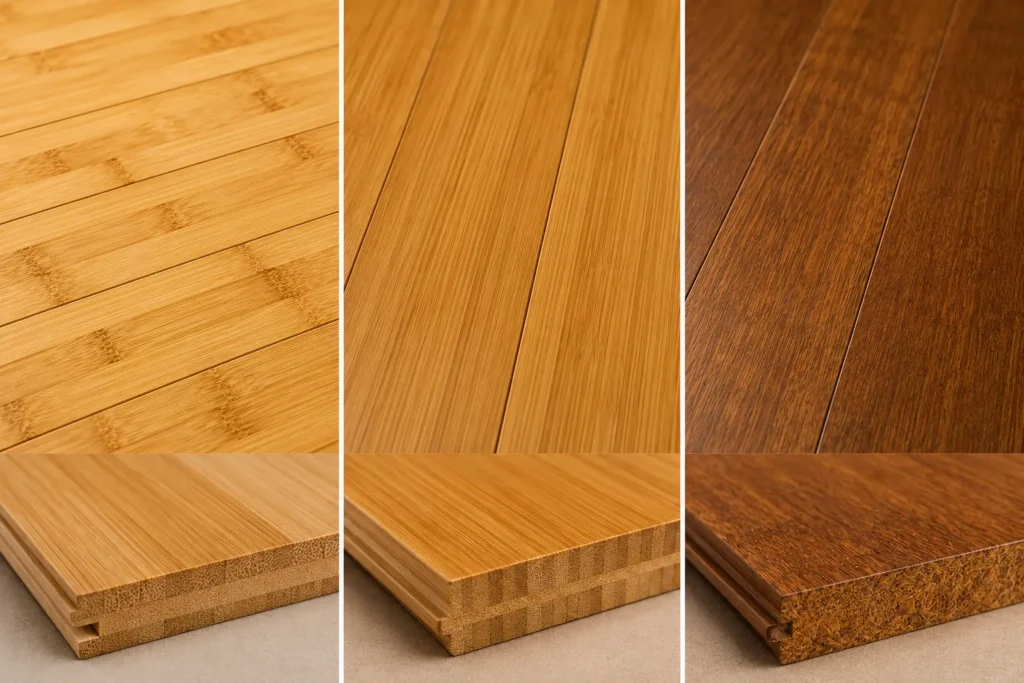
Horizontal bamboo uses flat bamboo strips glued side by side in a single layer. The wide, visible bamboo nodes (called knuckles) give horizontal planks a classic bamboo look. Janka hardness rating: approximately 1,380 lbf. Horizontal bamboo works best in bedrooms and home offices where foot traffic stays moderate.
2. Vertical Bamboo Flooring
Vertical bamboo stacks narrow bamboo strips on edge and bonds them together. The grain lines run vertically, creating a uniform, modern appearance with fewer visible nodes. Janka hardness: roughly 1,410 lbf. Vertical bamboo suits dining rooms and hallways that need a streamlined look.
3. Strand-Woven Bamboo Flooring
Strand-woven bamboo is the strongest option. Manufacturers shred raw bamboo stalks into thin fibers, mix them with heat-cured adhesives, and compress everything under extreme pressure (approximately 2,000 psi). The result is a plank with a Janka hardness of 3,000 to 5,000+ lbf harder than Brazilian walnut (3,684 lbf) and more than triple the hardness of red oak. Strand-woven bamboo handles kitchens, living rooms, and homes with large dogs.
Bamboo Type Comparison
| Feature | Horizontal | Vertical | Strand-Woven |
| Janka (lbf) | ~1,380 | ~1,410 | 3,000–5,000+ |
| Appearance | Wide nodes visible | Linear grain | Marbled pattern |
| Material Cost/sq ft | $3–$5 | $3–$5 | $4–$9 |
| Best Rooms | Bedrooms, offices | Dining, hallways | Kitchens, living rooms |
Solid vs. Engineered Bamboo Flooring
Solid Bamboo
Solid bamboo planks are 100% bamboo from top to bottom. Typical thickness: 5/8 inch (15 mm). Solid bamboo can be sanded and refinished 2 to 4 times over its lifespan. Installation methods include nail-down and glue-down over plywood or oriented strand board (OSB) subfloors. Solid bamboo requires acclimation of 7 to 14 days before installation. Avoid solid bamboo in basements or areas below grade where moisture levels stay high.
Engineered Bamboo
Engineered bamboo bonds a bamboo wear layer (2 to 4 mm thick) onto a plywood or high-density fiberboard (HDF) core. The cross-ply construction resists expansion and contraction better than solid bamboo. Engineered bamboo supports floating, glue-down, and nail-down installation. Engineered planks work over concrete subfloors with a moisture barrier and pair well with radiant heat systems. The main trade-off: engineered bamboo can only be refinished once or twice because of the thinner wear layer.
Bamboo Flooring Cost in 2026
Bamboo flooring materials cost $3 to $9 per square foot. Installed cost (materials plus labor) runs $7 to $17 per square foot. A standard 200-square-foot room totals $1,400 to $3,400 installed. A full 2,000-square-foot home project ranges from $14,000 to $34,000. These numbers depend on bamboo type, plank quality, subfloor prep, and regional labor rates.
Cost Breakdown by Component
| Component | Cost Per Sq Ft |
| Bamboo materials | $3–$9 |
| Underlayment | $0.50–$1.50 |
| Installation labor | $4–$9 |
| Subfloor prep (if needed) | $1–$3 |
| Trim and transitions | $1–$2 |
Use a floor calculator to estimate square footage and material quantities before requesting contractor quotes.
7 Advantages of Bamboo Flooring
1. Extreme Hardness (Strand-Woven)
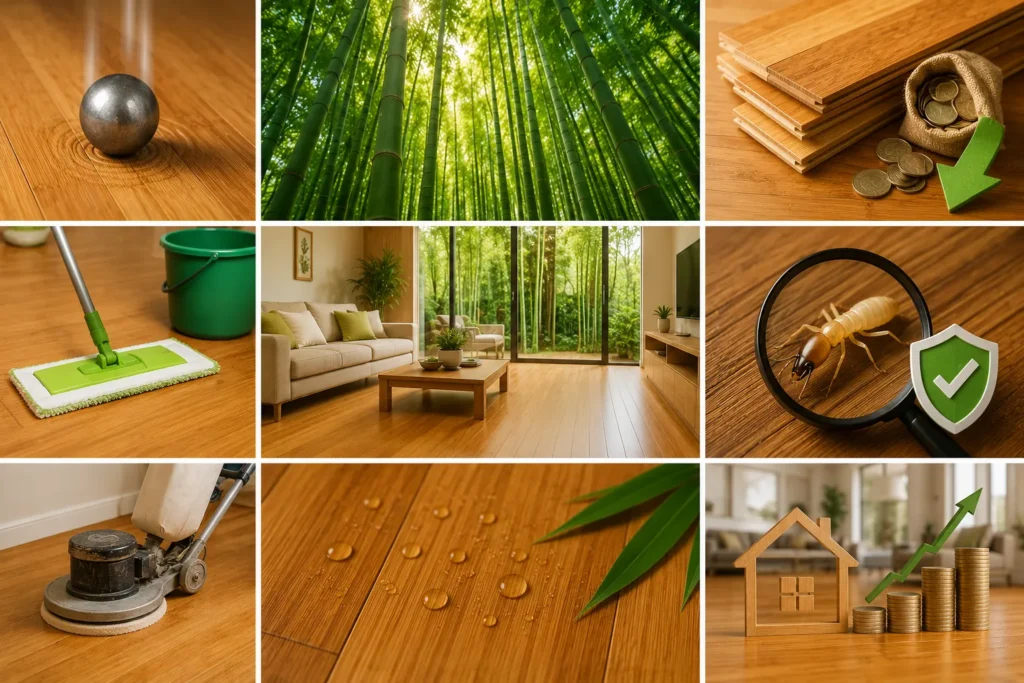
Strand-woven bamboo scores 3,000 to 5,000+ lbf on the Janka hardness scale. Red oak scores 1,290 lbf. Maple scores 1,450 lbf. Hickory scores 1,820 lbf. Strand-woven bamboo outperforms every common domestic hardwood species in dent and impact resistance.
2. Rapid Renewability
Bamboo reaches harvest maturity in 5 to 7 years and regrows from its existing root system without replanting. Hardwood trees like oak, walnut, and cherry need 40 to 80 years to reach harvest size. This growth cycle makes bamboo a strong choice among sustainable building materials for eco-conscious homeowners.
3. Lower Cost Than Hardwood
Bamboo materials average $3 to $9 per square foot. Solid oak costs $5 to $15 per square foot. Brazilian walnut runs $8 to $14 per square foot. Bamboo delivers comparable or superior hardness at 30% to 50% lower material cost than premium hardwoods.
4. Easy Maintenance
Bamboo floors need sweeping or vacuuming 2 to 3 times per week and damp mopping once every 1 to 2 weeks. No waxing required. No polishing needed. Clean spills immediately to prevent moisture damage.
5. Pest Resistance
Bamboo contains natural bio-agents (called bamboo kun) that resist termites, powder-post beetles, and other wood-boring insects. Pest resistance reduces the need for chemical treatments in bamboo flooring compared to softwood alternatives like pine.
6. Refinishing Capability
Solid bamboo floors can be sanded and refinished 2 to 4 times. Strand-woven bamboo supports at least 2 refinishing cycles. Each refinishing costs $2 to $6 per square foot and extends floor lifespan by 8 to 12 years.
7. Adds Home Value
Bamboo flooring increases home value modestly, particularly when replacing carpet or worn-out vinyl. Strand-woven bamboo with a modern finish appeals to buyers who want durable, low-maintenance floors.
5 Drawbacks of Bamboo Flooring
1. Moisture Sensitivity
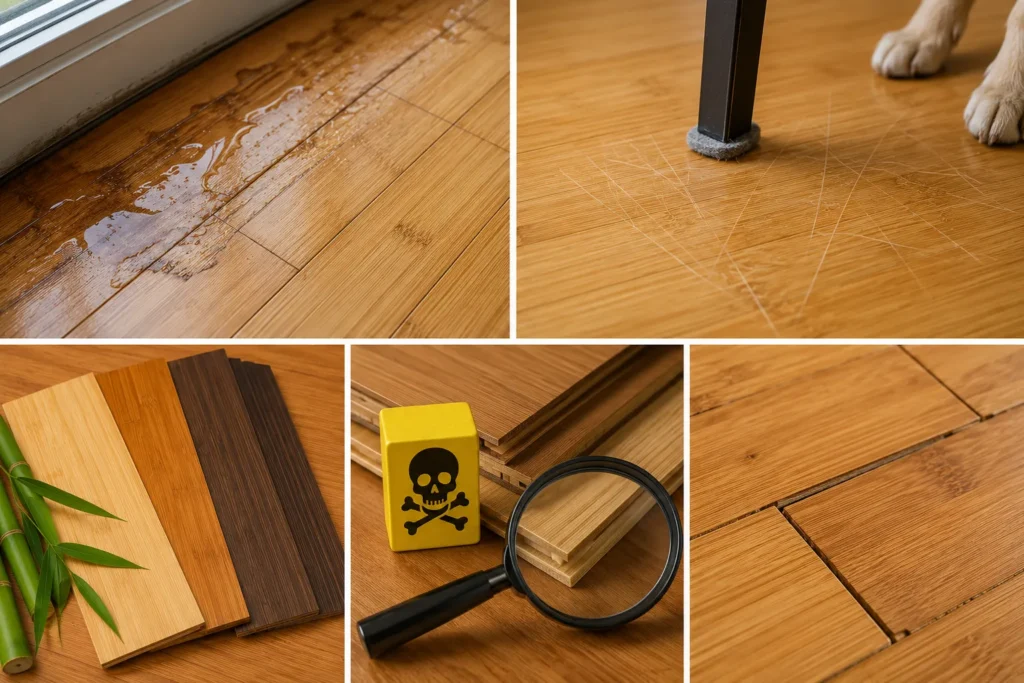
Solid bamboo swells and warps in humid conditions above 60% relative humidity (RH). Keep indoor humidity between 40% and 60% year-round. Standing water causes permanent damage. Solid bamboo is not suitable for bathrooms, basements, or laundry rooms. Engineered bamboo handles moderate moisture better but still needs a vapor barrier over concrete subfloors.
2. Scratch Vulnerability (Non-Strand Types)
Horizontal and vertical bamboo score around 1,380 to 1,410 lbf on the Janka scale. Pet claws, furniture legs without pads, and high-heeled shoes scratch these softer types. Strand-woven bamboo resists scratches far better. Place felt pads under all furniture and keep pet nails trimmed to protect non-strand bamboo.
3. Limited Color Range
Bamboo comes in 3 base tones: natural (blond), carbonized (caramel brown), and stained. Carbonization darkens bamboo by steaming it under pressure, which softens the material by approximately 20%. Staining expands color options, but the selection remains narrower than oak, walnut, or maple hardwoods that offer 20+ standard finishes.
4. VOC Concerns in Low-Quality Products
Cheap bamboo flooring from unregulated manufacturers may contain formaldehyde-based adhesives that off-gas volatile organic compounds (VOCs). Buy bamboo certified under FloorScore, CARB Phase 2, or GREENGUARD Gold standards. Check that products are labeled NAUF (no added urea formaldehyde) to protect indoor air quality.
5. Quality Variation Between Brands
Bamboo flooring quality varies widely. Low-grade bamboo from unknown manufacturers shows significant wear within 5 to 10 years. High-quality bamboo from established brands (companies in business 15+ years) lasts 20 to 25 years. Research manufacturer certifications, published Janka test results, and independent reviews on platforms such as BBB, Google Reviews, and Houzz before purchasing.
Bamboo Flooring Installation Methods
Floating Installation (Click-Lock)
Click-lock bamboo planks snap together without glue or nails. The floor floats over a foam or cork underlayment placed on the subfloor. Floating installation is the fastest method—a 200-square-foot room takes 4 to 6 hours for an experienced installer. Best for: engineered bamboo over concrete or existing hard flooring. DIY-friendly.
Glue-Down Installation
Glue-down installation bonds bamboo planks directly to a plywood, OSB, or concrete subfloor using manufacturer-recommended adhesive. The subfloor must be flat within 3/16 inch per 10 feet. Glue-down creates a solid feel underfoot with no hollow sounds. Professional installation costs $4 to $7 per square foot for labor. Best for: solid and strand-woven bamboo in high-traffic rooms.
Nail-Down Installation
Nail-down installation uses a pneumatic flooring nailer to secure bamboo planks to a plywood or OSB subfloor (minimum 3/4-inch thickness). Nails go through the tongue edge at a 45-degree angle every 8 to 10 inches. The method provides strong plank stability. Best for: solid bamboo on wood subfloors above grade level.
Subfloor Preparation Checklist
Test subfloor moisture with a pin-type moisture meter before installing. Acceptable readings: wood subfloors below 12% moisture content, concrete subfloors below 3 lbs per 1,000 sq ft per 24 hours (calcium chloride test). Level the subfloor to within 3/16 inch per 10 feet. Remove all debris, dust, and old adhesive. Acclimate bamboo planks in the room for 3 to 14 days (follow manufacturer specs) with packaging opened.
Where to Install Bamboo Flooring (Room Guide)
Best Rooms for Bamboo
Living rooms, bedrooms, home offices, dining rooms, and hallways are the 5 best locations. These rooms maintain stable humidity and temperature. Strand-woven bamboo handles the foot traffic in living rooms and hallways without showing wear.
Bamboo in Kitchens
Yes, strand-woven or engineered bamboo works in kitchens. Wipe up water spills within minutes. Use mats near the sink and dishwasher. Bamboo stands up to dropped utensils and rolling carts better than softwoods like pine. Avoid horizontal or vertical bamboo in kitchens—the lower Janka scores leave them vulnerable to dents and moisture damage.
Rooms to Avoid
Do not install solid bamboo in bathrooms, laundry rooms, or basements. These rooms expose flooring to standing water, steam, and humidity above 60% RH. For rooms with high moisture, consider other flooring options such as luxury vinyl plank (LVP) or porcelain tile.
Bamboo Flooring vs. Hardwood: 6 Key Differences
| Factor | Bamboo (Strand-Woven) | Hardwood (Red Oak) |
| Janka Hardness | 3,000–5,000+ lbf | 1,290 lbf |
| Material Cost/sq ft | $4–$9 | $5–$15 |
| Harvest Cycle | 5–7 years | 40–80 years |
| Lifespan | 20–25 years | 25–100+ years |
| Refinishing | 2–4 times | 5–10+ times |
| Resale Value Impact | Moderate boost | Strong boost |
Bamboo wins on hardness, cost, and sustainability. Hardwood wins on lifespan, refinishing potential, and resale value. The right choice depends on budget, room use, and how long you plan to stay in the home.
Bamboo Flooring With Pets
Strand-woven bamboo is a strong option for homes with dogs and cats. The 3,000 to 5,000+ Janka rating resists claw marks and dents from running and jumping. Horizontal and vertical bamboo scratch more easily under pet claws.
Keep dog nails trimmed to 2 mm or shorter. Place rugs in areas where pets eat, drink, or play. Wipe up water bowl spills immediately. Strand-woven bamboo with a 10-coat aluminum oxide finish provides the highest scratch protection for pet households.
How to Maintain Bamboo Floors (5 Steps)
Step 1: Sweep or Vacuum 2–3 Times Per Week
Use a soft-bristle broom or a vacuum with the beater bar turned off. Grit and sand act like sandpaper under foot traffic and scratch bamboo surfaces.
Step 2: Damp Mop Every 1–2 Weeks
Use a flat microfiber mop wrung out until barely damp. Never saturate bamboo floors with water. Excess water seeps into seams and causes swelling.
Step 3: Clean Spills Immediately
Blot liquid spills with a dry cloth within 1 to 2 minutes. Do not let water sit on bamboo. Prolonged moisture contact leads to warping and staining.
Step 4: Use Felt Pads Under Furniture
Attach adhesive felt pads (minimum 1 inch diameter) to all chair legs, table legs, and sofa feet. Replace pads every 6 to 12 months as they compress and collect debris.
Step 5: Control Indoor Humidity
Maintain 40% to 60% relative humidity year-round. Use a dehumidifier in humid climates and a humidifier during dry winter months. A hygrometer (digital humidity gauge) costs $10 to $20 and helps you monitor conditions.
Environmental Impact and Certifications
Bamboo ranks among the top sustainable building materials in the flooring category. The plant absorbs 35% more carbon dioxide than hardwood trees per acre. Bamboo sequesters carbon throughout its rapid 5-to-7-year growth cycle. Harvesting the stalks does not kill the root system—new shoots grow from the same base.
What Certifications to Look For
FloorScore certification confirms low VOC emissions meet California Section 01350 standards. CARB Phase 2 compliance limits formaldehyde emissions to 0.05 ppm for thin MDF cores. GREENGUARD Gold certification meets strict chemical emission thresholds for schools and healthcare settings. FSC (Forest Stewardship Council) certification verifies responsible forest and plantation management. Buy bamboo that carries at least 2 of these 4 certifications.
Bamboo Flooring Buying Guide: 6 Checkpoints
1. Verify the Janka Rating
Ask for published Janka test results. Reputable brands provide third-party lab data. Strand-woven bamboo should score above 3,000 lbf. Any bamboo scoring below 1,300 lbf is low-quality and not suitable for main living areas.
2. Check Emission Certifications
Look for FloorScore, CARB Phase 2, and GREENGUARD Gold logos on packaging and the manufacturer website. Uncertified bamboo may off-gas formaldehyde at levels above the 0.05 ppm CARB limit.
3. Evaluate the Manufacturer Track Record
Choose companies with 10 to 20+ years in the bamboo flooring market. Check their BBB rating, Google Reviews, and Houzz reviews. A company still operating after 15+ years provides real evidence that their products hold up over time.
4. Compare Warranty Terms
Standard residential warranties range from 15 to 30 years for structural integrity. Premium brands offer 50-year or lifetime warranties. Read warranty exclusions carefully—most warranties void coverage for improper installation, excessive moisture, or failure to acclimate planks before installation.
5. Request Samples
Order 3 to 5 samples in different colors and types. Test scratch resistance with a coin or key. Compare color against your cabinets, walls, and existing trim under both natural and artificial light.
6. Calculate Total Project Cost
Multiply your room’s square footage by the installed cost per square foot. Add 10% for waste and cuts. Factor in underlayment, transitions, trim, and any subfloor repair. Use a floor calculator for accurate material estimates.
Conclusion
Bamboo flooring delivers exceptional hardness (3,000 to 5,000+ Janka for strand-woven), genuine sustainability (5-to-7-year harvest cycle), and competitive pricing ($3 to $9 per square foot for materials). Strand-woven bamboo is the strongest option for high-traffic areas and pet households. Avoid solid bamboo in bathrooms, basements, and laundry rooms. Buy certified products from established manufacturers to avoid VOC issues and quality problems. Proper subfloor prep, controlled indoor humidity, and regular maintenance keep bamboo floors looking new for 20 to 25 years.