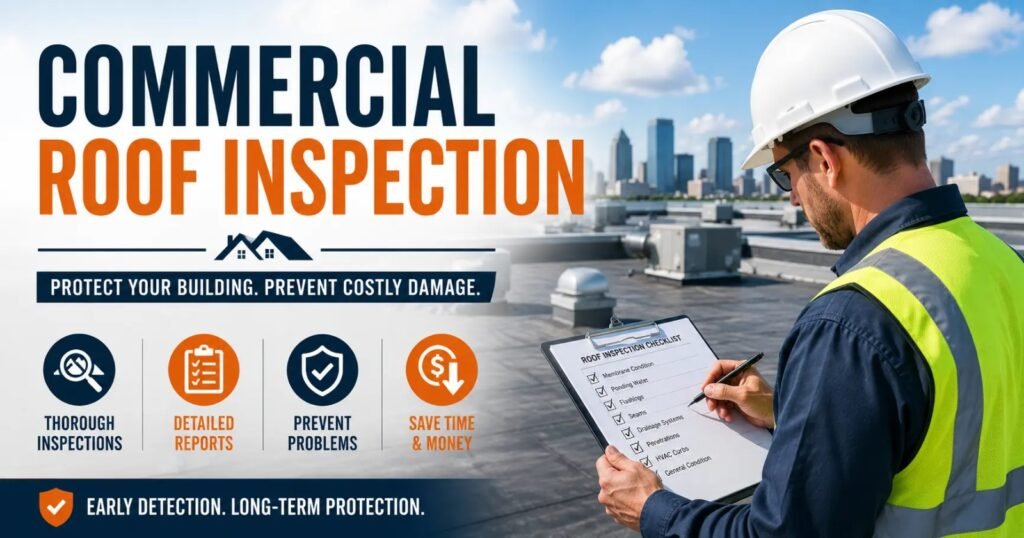
A commercial roof inspection checklist is a written list of every roof component that needs visual or physical evaluation during a scheduled inspection, organised by system rather than by random order. Facility teams rely on these lists to catch deterioration before it becomes a leak, a warranty dispute, or an insurance claim. Coverage matters more than format. A checklist that skips flashing or drainage leaves blind spots exactly where commercial roofs fail first, and no amount of polish on the paperwork fixes that gap.
Paper checklists still work fine for a single building. Portfolios with a dozen properties need something more consistent, since handwriting varies and pages get lost between the roof and the office.
Why Commercial Roof Inspections Matter
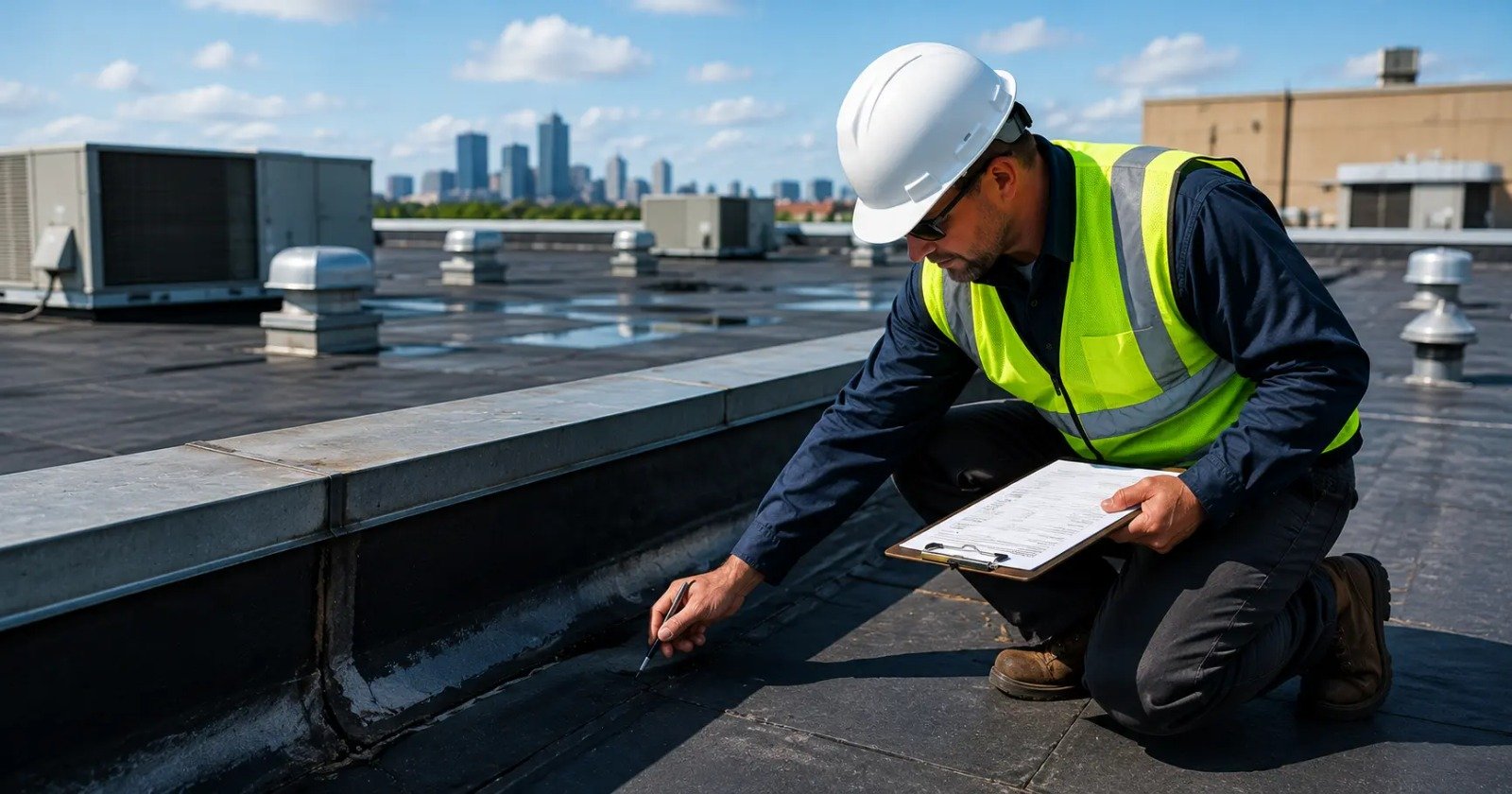
Commercial roof inspections protect three things at once: the building’s interior, the roof’s warranty, and the owner’s capital budget. Water intrusion damages insulation, ceiling tiles, and inventory long before anyone notices a stain from the ground floor. By the time a tenant reports a drip, the moisture has usually been working through the assembly for weeks.
Manufacturer warranties require documented inspections at set intervals. Skip one, and a claim for a failed seam five years later gets denied on a technicality that had nothing to do with the actual defect. Roofing manufacturers don’t need to prove the skipped inspection caused the failure. They just need to show the maintenance requirement wasn’t met.
- Insurance carriers require inspection documentation after storm damage, not just a damage report after the fact
- An inspection report dated two weeks before a hailstorm proves the roof’s pre-existing condition and speeds up claim approval
- Adjusters default to assuming damage was gradual and therefore not covered when no recent inspection record exists
- Missing documentation turns a routine claim into a dispute rather than a straightforward payout
- Example: A property manager in Ohio filed a hail damage claim in 2024 using an inspection report from six weeks earlier that showed an undamaged roof
- That claim cleared in eleven days
- A neighboring property without recent documentation waited three months for the
How Often Should Commercial Roofs Be Inspected?
Commercial roofs need inspection twice a year, once in spring and once in fall, at minimum. Buildings in hurricane, hail, or heavy-snow regions need additional inspections after every major weather event, regardless of the scheduled cadence.
Roofs older than 15 years or nearing the end of their warranty period benefit from quarterly checks. Age changes the math here. A membrane that’s held up fine for a decade can start showing seam separation within a single season once it crosses a certain threshold, and quarterly checks catch that shift before it turns into a full replacement decision.
Equipment load matters just as much as age. A manufacturing facility with rooftop HVAC (heating, ventilation, and air conditioning) equipment running year-round wears through membrane and flashing faster than an office building with a single rooftop unit. The inspection schedule should reflect that load, not just the calendar.
The Complete Commercial Roof Inspection Checklist
Work through the categories below in sequence. Inspectors who jump between systems miss the connections between a drainage failure on one side of the roof and membrane damage on the other side.
Pre-Inspection Safety Requirements
- Confirm weather conditions are dry and wind speeds are below 20 mph (32 km/h)
- Inspect fall protection anchors, guardrails, and harness points for damage
- Check roof access ladders and hatches for secure operation
- Verify required safety signage is posted at all access points
- Review the prior inspection report for unresolved hazards
Workers need proper fall protection training before stepping onto any commercial roof. The Occupational Safety and Health Administration (OSHA) requires this training regardless of roof size or slope. Skipping this step isn’t a paperwork shortcut. It’s the difference between a routine inspection and a workplace injury claim.
Roof Surface and Membrane
- Inspect the membrane for blistering, cracking, or alligator patterns
- Check seams and laps for separation
- Look for ponding water, moss growth, or granule loss
- Compare surface condition against the previous inspection cycle
Ponding water sitting for more than 48 hours signals a drainage or slope problem, not a membrane defect. Inspectors sometimes patch the wrong spot because the water damage shows up on the surface while the actual cause sits three feet away at a clogged drain. Fixing the visible symptom without tracing it back wastes a repair budget on a problem that returns within a month.
Drainage Systems
- Clear debris from roof drains, scuppers, and gutters
- Inspect drain clamping rings for secure attachment
- Check overflow drains for correct elevation and function
- Verify roof slope directs water toward drainage points
A single clogged drain on a flat commercial roof can hold thousands of pounds of standing water after heavy rain. That added weight puts structural load on a deck that was never engineered to carry it, and repeated ponding cycles accelerate membrane fatigue well beyond what the material was rated for.
Flashing and Penetrations
- Inspect base flashing around HVAC curbs for separation
- Check pipe boot flashings for splits
- Verify counter-flashing is sealed at wall terminations
- Inspect skylight curbs and vent stack flashings
Flashing failures cause more commercial roof leaks than membrane failures do. The transition points between flat and vertical surfaces take more thermal stress than any other part of the roof assembly, since the two materials expand and contract at different rates through every seasonal swing.
Edge Details and Perimeter
- Inspect coping caps for secure attachment and sealant condition
- Check parapet walls for cracking or moisture intrusion
- Verify drip edges direct water away from the wall assembly
- Look for wind uplift damage at the roof perimeter
Perimeter and edge zones experience the highest wind uplift forces on any commercial roof, based on American Society of Civil Engineers (ASCE) 7 wind load standards. Treat the outer 10 feet of any flat roof as a higher-risk zone during every visit, since fastener pull-out starts at the edges long before it reaches the roof field.
Rooftop Equipment
- Inspect HVAC unit curbs and supports for rust
- Check conduit and pipe supports for secure mounting
- Look for oil or refrigerant stains near equipment
- Verify solar panel mounts and wire management, if installed
Interior Indicators
- Check ceilings and upper walls for water stains
- Inspect insulation for moisture or compression
- Look for daylight visible through the roof deck from below
Daylight visible from inside a building means a gap exists in the roof assembly large enough to let weather through. That’s not a moisture vapour issue. It’s an open path for rain, and it needs same-week attention rather than a spot on next quarter’s list.
Documentation and Compliance
- Record inspection date, weather conditions, and inspector name
- Photograph every deficiency with a location reference
- Note roof age and remaining warranty term
- Assign a severity rating to each finding
Inspection Points by Roof Material
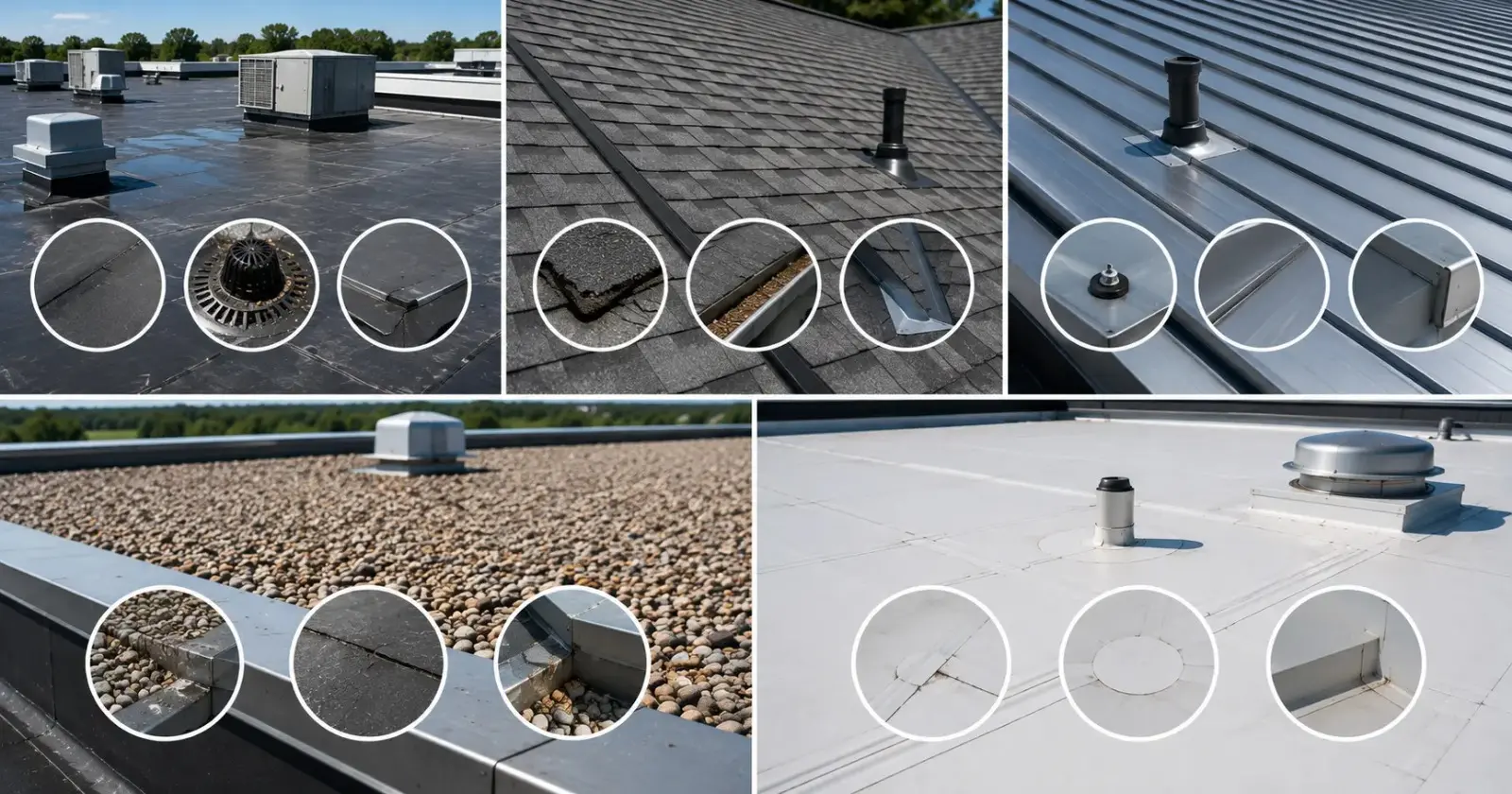
Inspection priorities shift depending on roof material, because thermoplastic polyolefin (TPO), ethylene propylene diene monomer (EPDM), modified bitumen, and metal roofing fail in different ways. TPO seams rely on heat-welded joints that separate under repeated thermal cycling, so seam integrity gets checked first. EPDM uses adhesive-bonded seams instead. Adhesion failure and shrinkage become the primary concern there rather than weld separation.
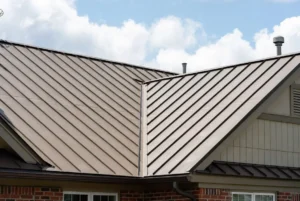
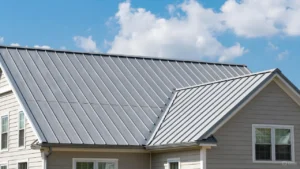
Modified bitumen roofs develop blistering from trapped moisture between plies. Metal roofing fails through fastener backout and panel seam corrosion rather than membrane cracking, which means an inspector running a TPO checklist on a metal roof will miss the actual failure points entirely.
A warehouse with a TPO roof installed in 2015 needs seam-pull testing at every inspection once the roof passes year eight. Welded seams start losing tensile strength around that point, and catching the loss early costs a fraction of a full membrane replacement.
Who Should Perform a Commercial Roof Inspection?
Trained facility staff can perform routine visual inspections, but licensed roofing contractors need to handle warranty-related, insurance, and structural assessments. A staff member using a standardized checklist catches obvious problems like debris buildup and surface cracking without needing any special certification.
Warranty compliance works differently, though. Manufacturers typically require inspections by contractors certified under their specific warranty program. An in-house maintenance tech’s findings won’t satisfy a claims review, even if the observations are accurate. Insurance adjusters and structural engineers get involved when deck deflection or load-bearing concerns show up during a routine check, since those findings fall outside what a facility team is qualified to assess.
Standards and Codes That Apply to Commercial Roofs
The National Roofing Contractors Association (NRCA) and ASTM International publish the primary technical standards governing commercial roof inspections in the United States. ASTM E2508 outlines the standard practice for conducting roof condition assessments, covering documentation methods and defect classification.
ASCE 7 sets wind load requirements that determine how roofs in hurricane and high-wind zones get engineered and inspected. Local building codes layer on top of these standards. Code requirements vary by jurisdiction, so inspectors working across multiple states need to confirm local amendments before finalizing a report, rather than assuming one state’s requirements apply everywhere.
What a Commercial Roof Inspection Cost
A standard commercial roof inspection costs between $200 and $600 for buildings under 20,000 square feet (1,858 square metres), with larger or more complex roofs running $0.02 to $0.10 per square foot. Infrared moisture scans add $300 to $800, depending on roof size. The specialised equipment and technician certification push the price above a visual-only inspection.
Most inspections take 30 to 90 minutes for straightforward roofs. Buildings with multiple penetrations, rooftop equipment zones, and drainage systems push that time toward the higher end. Thorough photo documentation adds time to the visit, but it produces records worth far more than the extra 20 minutes once a warranty dispute or insurance claim comes up.
Turning Inspection Findings Into Capital Planning
Inspection data becomes useful for capital planning once it gets tracked across multiple cycles instead of being treated as a one-time snapshot. A single inspection report shows the current condition, nothing more. Eight quarters of reports showing the same membrane seam degrading on schedule build a case that a budget committee can’t dismiss as guesswork.
This approach sometimes gets called a Roof Asset Management Plan (RAMP), a running record tied to each roof in a portfolio that tracks condition trends, remaining service life, and repair history side by side. Property managers overseeing multiple buildings use that data to rank which roofs need capital dollars first. Reacting to whichever roof leaks loudest tends to waste money on the wrong priorities.
Conclusion
A commercial roof inspection checklist works only when it gets used on schedule, twice a year at minimum, with documentation that holds up for warranty claims and insurance filings. Skipping categories like flashing or drainage creates blind spots exactly where commercial roofs fail first. Treating each inspection as an isolated event instead of a data point wastes the information that justifies capital repairs before a roof reaches failure.