A flat roof costs $2.50–$9 per sq ft ($27–$97 per m²) installed and lasts 10–30 years. A pitched roof costs $4–$12 per sq ft ($43–$129 per m²) and lasts 20–50+ years. The right choice depends on your climate, building type, and budget.
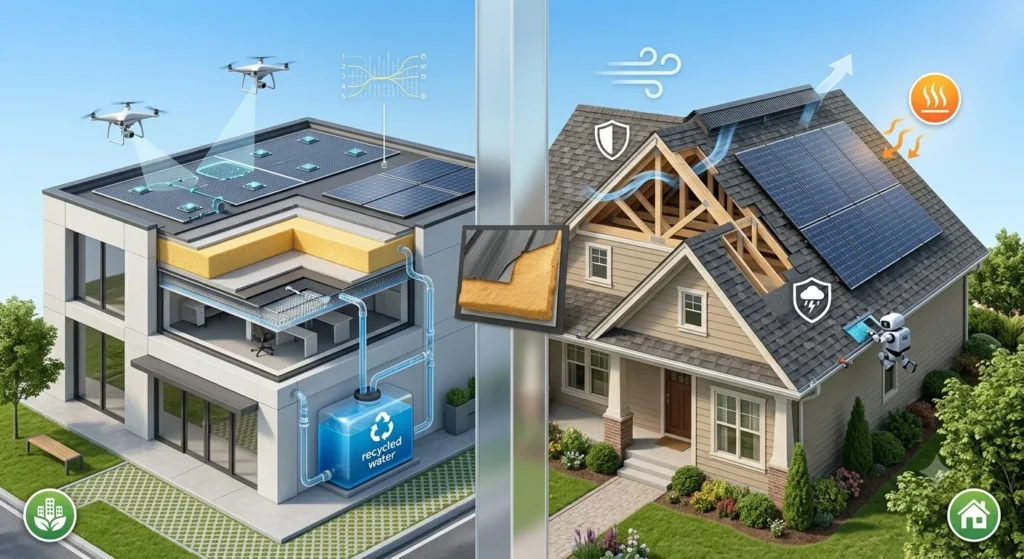
The core difference between flat roof and pitched roof comes down to slope. Flat roofs sit at 1–10 degrees — barely visible to the eye. Pitched roofs slope at 20–45 degrees, shedding water and snow by gravity. That single structural difference drives every other cost and performance gap between the 2 systems.
This guide covers 7 key differences with real cost data, lifespan figures for 6 specific materials, a climate decision guide, and a quick-reference table so you can pick the right roof in under 5 minutes.
What Is a Flat Roof? Definition, Slope, and 4 Common Materials
A flat roof is any roofing system with a slope between 1 and 10 degrees (a pitch ratio of 1:12 or less). The slight angle drains water toward scuppers or internal drains — it does not drain by gravity the way a pitched roof does.
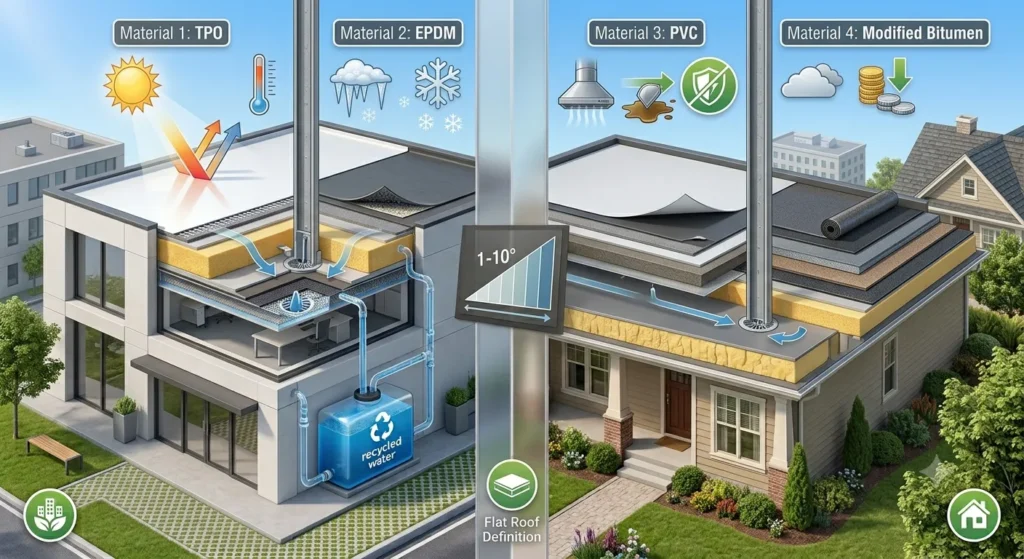
Flat roofs use 4 primary membrane materials, each with different lifespans and costs:
- TPO (Thermoplastic Polyolefin) membrane: $5–$10/sq ft ($54–$108/m²) installed. Lifespan: 20–30 years. Highly reflective — ENERGY STAR rated. Best for hot climates and commercial buildings.
- EPDM (Ethylene Propylene Diene Monomer) rubber: $4–$8/sq ft ($43–$86/m²) installed. Lifespan: 15–25 years. Excellent cold-weather flexibility. Common in northern US states.
- PVC (Polyvinyl Chloride) membrane: $6–$12/sq ft ($65–$129/m²) installed. Lifespan: 20–30 years. Superior chemical resistance — ideal for restaurant exhausts and grease exposure.
- Modified bitumen: $3–$6/sq ft ($32–$65/m²) installed. Lifespan: 10–20 years. Budget option applied in layers. Requires more frequent inspection.
If your flat roof develops a leak, our flat roof repair team responds same day across the US.
What Is a Pitched Roof? Definition, Pitch Ratios, and 5 Common Materials
A pitched roof slopes at 20–45 degrees (a pitch ratio of 4:12 to 12:12). Water and snow run off by gravity — no drains or scuppers needed. The International Building Code (IBC) defines a low-slope roof as anything below 2:12 and a steep-slope roof at 4:12 or above.
Pitched roofs use 5 primary materials with significantly different price points:
- 3-tab asphalt shingles: $3–$5/sq ft ($32–$54/m²). Lifespan: 15–20 years. Budget choice — lowest upfront cost.
- Architectural (laminate) shingles — such as GAF Timberline HDZ or Owens Corning Duration: $4–$7/sq ft ($43–$75/m²). Lifespan: 25–30 years. Standard residential choice.
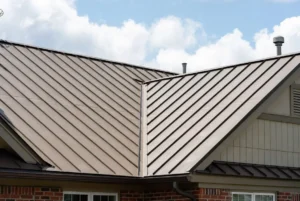
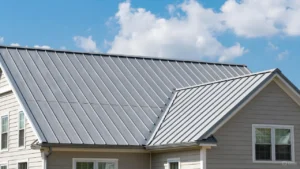
- Metal panels (steel / aluminum): $8–$14/sq ft ($86–$151/m²). Lifespan: 40–70 years. Best long-term value on a pitched roof.
- Concrete and clay tiles: $9–$18/sq ft ($97–$194/m²). Lifespan: 50+ years. Heavy — requires structural reinforcement of 27–35 lbs per sq ft (132–171 kg/m²).
- Slate: $15–$30/sq ft ($161–$323/m²). Lifespan: 75–150 years. Heaviest option at 40–50 lbs per sq ft (195–244 kg/m²).
Difference Between Flat Roof and Pitched Roof: Quick-Reference Table
This table compares both roof types across 9 factors so you can scan the differences in 60 seconds.
| Factor | Flat Roof | Pitched Roof | Winner |
| Install cost / sq ft | $2.50–$9 (USD) | $4–$12 (USD) | Flat roof |
| Typical lifespan | 10–30 years | 20–50+ years | Pitched roof |
| Drainage method | Scuppers / internal drains | Natural slope runoff | Pitched roof |
| Annual maintenance | Moderate — inspect membranes | Low — check shingles/tiles | Pitched roof |
| Usable rooftop space | Yes — patio, garden, HVAC | No | Flat roof |
| Snow / ice performance | Poor — accumulation risk | Strong — sheds naturally | Pitched roof |
| Solar panel install | Easy — no penetrations | Possible — rail mounts | Flat roof |
| Energy efficiency | Moderate — reflective options | High — attic insulation possible | Pitched roof |
| Resale value impact | Minimal / modern niche | High — standard expectation | Pitched roof |
Flat Roof vs Pitched Roof: Full Cost Comparison for a 2,000 Sq Ft Home
How Much Does a Flat Roof Cost to Install?
A flat roof on a 2,000 sq ft (186 m²) home costs $7,000–$14,000 installed. TPO membrane runs $10,000–$18,000 installed higher than EPDM but delivers a 30-year lifespan and ENERGY STAR reflectivity. EPDM runs $7,000–$14,000 installed. Modified bitumen sits at $5,000–$10,000 but requires replacement in 10–15 years.
Flat roofs also need functional drainage systems. Internal roof drains cost $300–$600 per drain installed. Scuppers cost $100–$300 each. A 2,000 sq ft (186 m²) flat roof typically needs 2–4 drains — add $600–$2,400 to total cost.
How Much Does a Pitched Roof Cost to Install?
A pitched roof on a 2,000 sq ft (186 m²) home costs $8,000–$24,000 installed, depending on material. Architectural shingles land at $8,000–$14,000. Metal panels run $16,000–$28,000. Slate reaches $30,000–$60,000 but lasts 75–150 years.
Pitched roof labor costs 15–25% more than flat roof labor because workers need safety harnesses and specialized equipment on slopes above 6:12. On a 12:12 pitch (45 degrees), some contractors charge a steep-slope surcharge of $1–$3 per sq ft ($11–$32/m²).
60-Year Total Cost — Which Roof Costs Less Over Time?
On a 2,000 sq ft (186 m²) home, the 60-year total cost comparison looks like this:
- Flat roof (TPO, replaced twice): $18,000–$36,000 in material and labor over 60 years.
- Pitched roof (architectural shingles, replaced twice): $16,000–$28,000 over 60 years.
- Pitched roof (metal, installed once): $16,000–$28,000 — no replacement needed in 60 years.
Metal on a pitched roof wins the 60-year cost race. Flat roofs cost less today but accumulate more replacement cycles.
Drainage, Leaks, and Water Damage: The Biggest Difference Between the 2 Roof Types
How Flat Roof Drainage Works
Flat roofs drain through 3 systems: internal drains (pipe through the deck), scuppers (openings in the parapet wall), or gutters at the perimeter. Tapered insulation panels cut at 1/4 inch per foot (21 mm per meter) slope direct water toward drains.
The risk: a blocked drain creates ponding water water sitting on the roof surface for more than 48 hours. Ponding water weighs 5.2 lbs per sq ft per inch of depth (25.4 kg/m² per 25.4 mm). A 2-inch (51 mm) pond over 100 sq ft (9.3 m²) adds 1,040 lbs (472 kg) of load. Unchecked, it collapses the membrane and deck.
How Pitched Roof Drainage Works
A pitched roof drains by gravity at 4:12 pitch or steeper (18 degrees). Water hits the surface and runs immediately toward gutters. Snow sheds at pitches above 6:12 (27 degrees) without intervention. No internal drains. No standing water risk.
Gutters on a pitched roof cost $5–$12 per linear foot ($16–$39/m) installed the only drainage infrastructure needed.
How Climate Determines Which Roof Type Performs Better
Choose a Pitched Roof in 3 Climate Types
- Heavy snow regions (Minnesota, Michigan, Maine): A pitched roof at 6:12 sheds snow before ice dams form. Flat roofs in these regions need heated internal drains ($800–$1,500 each) to prevent freeze-up.
- Heavy rainfall regions (Pacific Northwest, Florida): Pitched roofs drain immediately at slope. Flat roofs in these areas need 2x drain inspection frequency — every 3 months — to prevent ponding.
- Wildfire regions (California, Oregon, Colorado): Pitched roofs with Class A metal or tile materials outperform flat roofs in ember resistance. Flat membranes (TPO, EPDM) carry Class A ratings but can melt under sustained ember contact.
Choose a Flat Roof in 3 Climate Types
- Hot, dry climates (Arizona, Nevada, New Mexico): Flat TPO roofs reflect up to 80% of solar radiation. No snow load risk. Drainage systems perform reliably with minimal rainfall.
- Mild coastal climates (Southern California, Gulf Coast): Low wind uplift, minimal freeze-thaw cycles. Flat roofs with PVC membrane last 25–30 years with standard maintenance.
- Urban commercial buildings nationwide: HVAC units, water towers, and rooftop equipment mount safely on flat surfaces. A pitched roof cannot carry mechanical equipment without custom structural support.
Maintenance: How to Maintain a Flat Roof vs a Pitched Roof
How to Maintain a Flat Roof
To maintain a flat roof, follow this 5-step schedule:
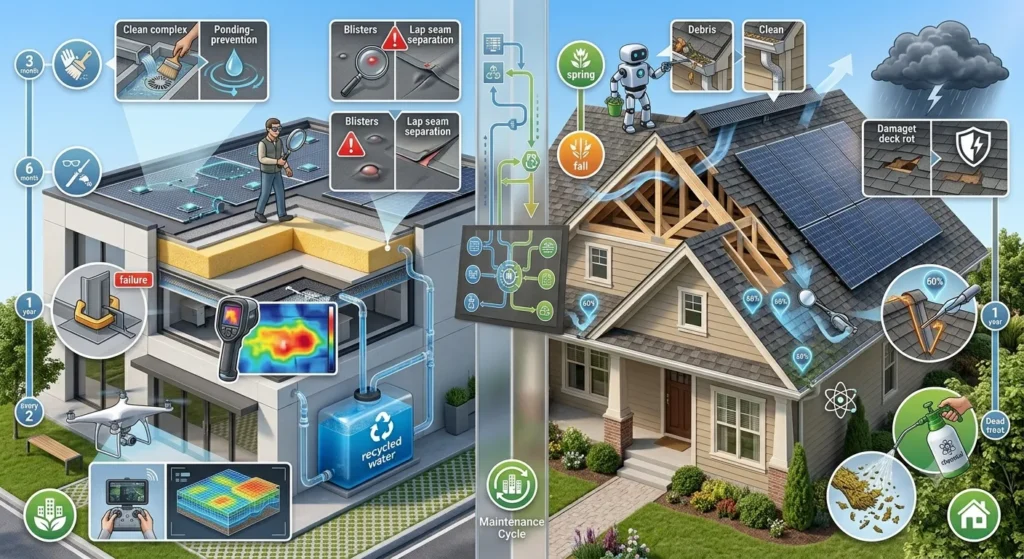
- Inspect drains and scuppers every 3 months — clear leaves, debris, and sediment to prevent ponding.
- Walk the membrane surface twice per year — look for blisters, punctures, and lap seam separation.
- Check flashing around HVAC units and vents annually — flashing failure is the #1 cause of flat roof leaks.
- Remove standing water within 48 hours using a squeegee or pump — ponding voids most membrane warranties.
- Book a professional membrane inspection every 2 years — infrared moisture scans detect sub-surface saturation before visible leaks appear.
Annual flat roof maintenance costs $200–$600 per year for a 2,000 sq ft (186 m²) residential roof. Skip maintenance and a full membrane replacement runs $7,000–$14,000.
How to Maintain a Pitched Roof
To maintain a pitched roof, follow this 4-step schedule:
- Clean gutters twice per year — spring and fall. Blocked gutters cause water backup under eaves.
- Inspect shingles after every major storm — replace cracked, curled, or missing shingles within 30 days to prevent deck rot.
- Check ridge caps and valley flashing annually — these 2 areas account for 60% of pitched roof leak sources.
- Treat moss or algae immediately with zinc sulfate solution — moss retains moisture and lifts shingle edges within 2 seasons if untreated.
Annual pitched roof maintenance costs $150–$400 per year on a 2,000 sq ft (186 m²) residential roof. Book a roof inspection service once per year catching a $150 shingle issue prevents a $4,000 deck replacement.
Flat Roof vs Pitched Roof: Solar Panels, Attic Space, and Resale Value
Solar Panel Installation by Roof Type
Flat roofs accept ballasted racking systems — no roof penetrations. Installers angle panels at 10–15 degrees facing south for optimal output. No structural modifications needed. Installation costs $0.10–$0.20/watt less ($0.33–$0.66/m² less) than pitched roof installs because no rail-to-rafter attachments are required.
Pitched roofs at south-facing 25–40 degrees match peak solar generation angles in most US latitudes. Rail systems mount to rafters through the sheathing — each penetration needs waterproof flashing. On a metal pitched roof, S-5! clamps attach without penetrations, combining the best of both systems.
Attic Space and Insulation
A pitched roof creates 300–800 sq ft (28–74 m²) of attic space on a typical 2,000 sq ft (186 m²) home. That space holds R-49 to R-60 blown insulation per Energy.gov guidelines — the single biggest factor in heating and cooling efficiency.
A flat roof has no attic. Insulation sits on top of the deck in ISO boards (R-6 per inch / 25.4 mm). Achieving R-30 requires 5 inches (127 mm) of ISO board, which adds 3–4 inches (76–102 mm) of roof height and $2–$4/sq ft ($22–$43/m²) to material cost.
Resale Value Impact
Pitched roofs increase resale value by 15–40% of installation cost recovered at sale, per Remodeling Magazine cost-vs-value data. Buyers expect a pitched roof on a residential home — a new pitched roof is a selling point. A flat roof on a residential property narrows the buyer pool and requires explanation during home inspection.
Conclusion
The core difference between flat roof and pitched roof is slope — and that slope controls drainage, lifespan, maintenance cost, and energy performance. Flat roofs cost less today but require more upkeep and earlier replacement. Pitched roofs cost more upfront and last 2–3x longer with lower annual maintenance.
Choose a flat roof for commercial buildings, hot dry climates, rooftop solar on a budget, or HVAC placement. Choose a pitched roof for residential homes, snow and rain regions, long-term value, and maximum resale return.
Rainy Roofers installs, repairs, and inspects both flat and pitched roofs across the US with same-day service. Visit our residential roof replacement page or call +1 (866) 817-9140 for a free estimate today.