
Is roof replacement tax deductible is the question homeowners ask right after getting that $15,000 estimate. I get it. You’re looking for any way to soften the financial blow. Here’s the truth most roofing companies won’t explain clearly. The IRS has very specific rules about what counts as deductible and what doesn’t.
Let me break down exactly what qualifies, what doesn’t, and how to potentially save thousands on your taxes.
The IRS Definition Nobody Explains Properly
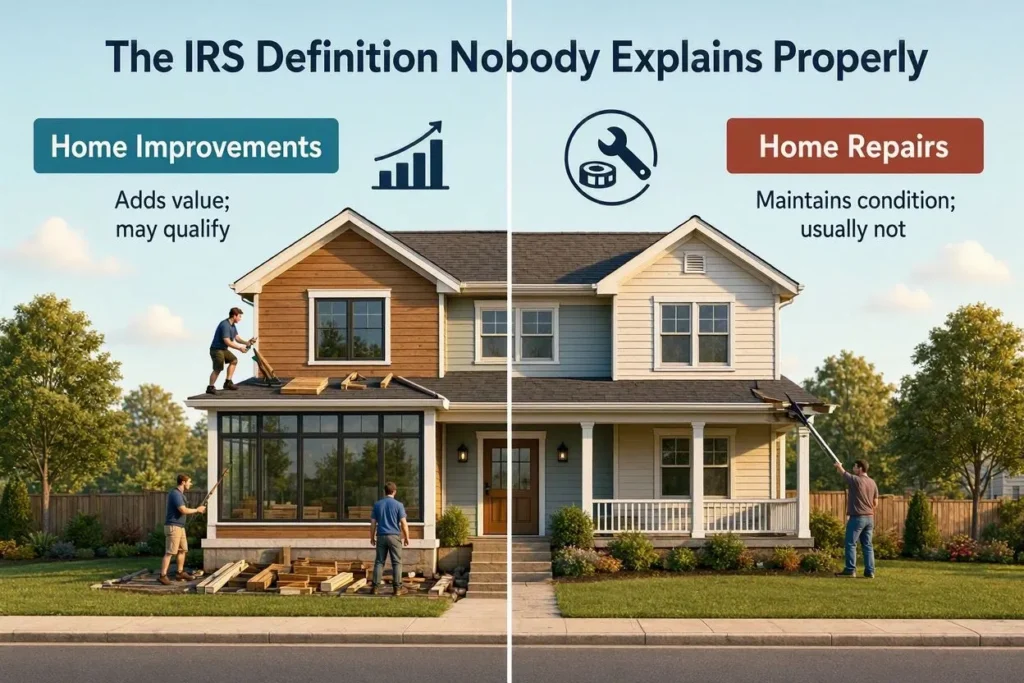
The Internal Revenue Service splits home expenses into two categories. Understanding this difference determines whether you get tax relief or not.
Home improvements add value to your property, extend its useful life, or adapt it to new uses. These can potentially be tax deductible under certain circumstances.
Home repairs just maintain your current condition. They don’t add value or extend life. These almost never qualify for tax deductions.
Here’s where it gets tricky with roofs. The line between repair and improvement isn’t always obvious to homeowners filing taxes.
When Roof Replacement Actually Qualifies as Tax Deductible
A complete roof replacement usually falls under capital improvement if it meets IRS criteria. But there are specific conditions that must be satisfied.
Your roof replacement is potentially deductible if:
- It significantly increases your home’s market value
- It extends the useful life of your property substantially
- It adapts your home to a new purpose or use
- You’re using the property for business or rental income
I talked to a tax professional last month who explained this perfectly. If you’re replacing a 25-year-old damaged roof with a brand-new energy-efficient roof, you’re doing more than maintenance.
You’re making a capital improvement that extends your home’s useful life by decades. That changes the tax equation completely.
The Primary Residence Problem Most People Face
Here’s the part that frustrates homeowners. If you live in the house as your primary residence, is roof replacement tax deductible right now? Usually not immediately.
The IRS doesn’t let you deduct capital improvements on your primary home in the year you make them. Brutal, I know. But here’s the strategy most people miss. Those improvements increase your cost basis when you eventually sell the property.
What this actually means:
- You paid $300,000 for your home originally
- You spent $20,000 on a new roof replacement
- Your cost basis becomes $320,000
- When you sell for $400,000, you only pay capital gains tax on $80,000 instead of $100,000
Keep every receipt, every invoice, every piece of documentation. This stuff matters when you sell years later.
Energy Efficient Roof Tax Credits: What Changed for 2026
Many older guides say an Energy Star roof earns a 30% federal tax credit. That is no longer true. Roofing materials were dropped from the federal Energy Efficient Home Improvement Credit (Section 25C) starting in 2023, and the One Big Beautiful Bill Act, signed in July 2025, ended the 25C credit entirely for improvements placed in service after December 31, 2025. A roof replaced in 2026 does not qualify for a federal energy tax credit.
What can still lower the cost of an energy efficient roof:
- State and utility programs. Some states and utilities offer rebates for cool roofs or added attic insulation. Search your state on the DSIRE database or ask your utility.
- Rental and business property. The roof is depreciated over time, as explained in the next section.
- Cost basis. On your own home, a new roof adds to your cost basis, which can reduce capital gains tax when you sell.
Rental Properties and Home Offices Change The Rules Completely
Own a rental property? Congratulations. Is roof replacement tax deductible? becomes a completely different question with a much better answer.
For rental properties, roof replacement qualifies as a deductible expense. You can depreciate the improvement over 27.5 years, reducing your taxable rental income annually.
Here’s the rental property advantage:
- Full roof replacement cost gets depreciated
- Reduces your taxable income every single year
- No waiting until you sell to see tax benefits
- Major repairs can sometimes be expensed immediately
Have a home office? If you’re using part of your primary residence for business, a portion of your roof replacement might be deductible based on the square footage percentage.
A client told me her accountant calculated 15% of her roof replacement as immediately deductible because she runs a consulting business from her dedicated home office.
Roof Repair vs Roof Replacement For Tax Purposes
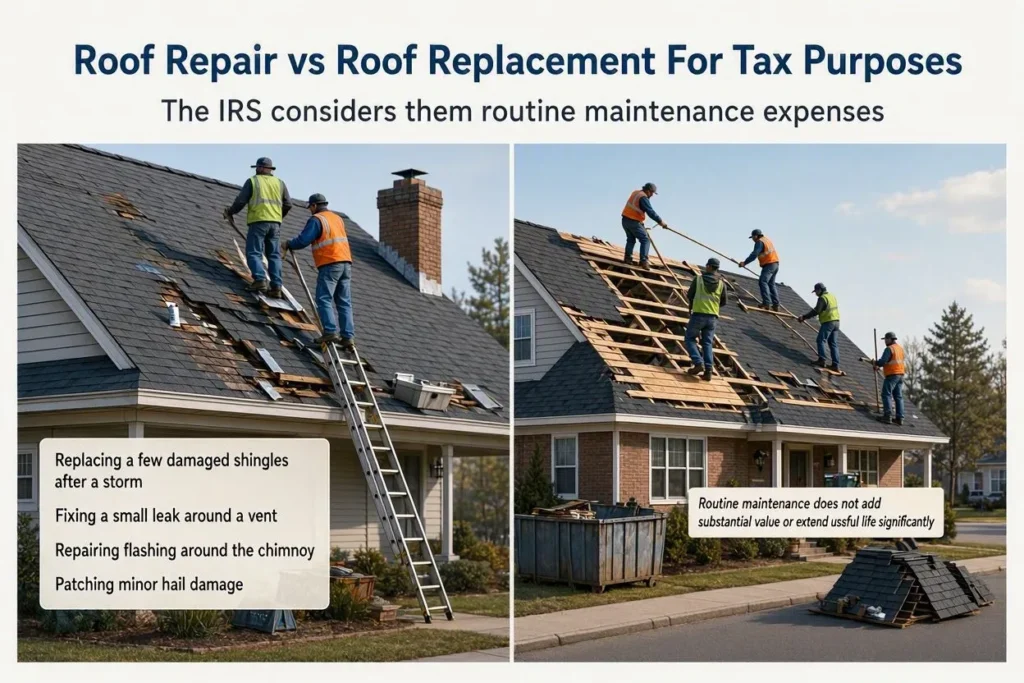
Roof repairs almost never qualify as tax deductible for primary residences. The IRS considers them routine maintenance expenses.
Examples of non-deductible roof repairs:
- Replacing a few damaged shingles after a storm
- Fixing a small leak around a vent
- Repairing flashing around the chimney
- Patching minor hail damage
These expenses maintain your current condition but don’t add substantial value or extend useful life significantly. However, if your “repair” is actually part of a larger capital improvement project, the whole thing might qualify. The IRS looks at the total scope of work.
If you’re repairing extensive storm damage across 80% of your roof, that’s basically a replacement disguised as repair. Document everything properly.
Insurance Claims and Tax Deduction Complications
Got insurance covering your roof replacement? This creates another layer of tax complexity most people don’t anticipate. If insurance pays $18,000 of your $20,000 roof replacement, you can’t claim a deduction on money you didn’t actually spend out-of-pocket. You can only potentially deduct or add to the cost basis the portion you paid yourself. In this example, just the $2,000 deductible amount.
Critical insurance considerations:
- Only out-of-pocket expenses count toward your cost basis
- Insurance reimbursements don’t qualify for deductions
- Keep detailed records separating insurance payments from your payments
- Some situations might trigger taxable income if insurance overpays
I’ve seen homeowners make expensive mistakes by claiming full roof replacement costs when insurance covered most of it. The IRS catches this stuff eventually.
Documentation That Actually Matters For Tax Purposes
If you want any chance at tax benefits from roof replacement, documentation becomes absolutely critical. No receipts equals no deduction, ever.
Save these items permanently:
- Original contractor estimates and final invoices
- Proof of payment (cancelled checks, credit card statements)
- Before and after photos of your roof
- Energy efficiency certifications for materials used
- Building permits if required in your area
- Manufacturer warranties and product specifications
I keep a dedicated folder labeled “Home Improvements” with every significant expense documented. When tax time comes or I eventually sell, everything is organized and accessible. Don’t rely on memory five years later. You’ll forget details that cost you thousands in missed deductions or increased capital gains taxes.
Solar Panels and Your New Roof
The federal Residential Clean Energy Credit (Section 25D), which returned 30% of solar installation costs, also ended for systems placed in service after December 31, 2025. Solar installed on a new roof in 2026 does not earn that federal credit.
It still makes sense to replace an aging roof before installing solar, because removing and reinstalling panels later is expensive. Check for state solar incentives, net metering rules and utility rebates before you budget, and confirm current rules with a tax professional.
When You Should Absolutely Consult a Tax Professional

I’m not a CPA. I can tell you what generally applies, but your specific situation needs professional analysis before making expensive decisions.
Hire a tax professional if:
- Your roof replacement exceeds $15,000
- You have rental properties or home office deductions
- You’re installing energy efficient roof systems
- You’re unclear about repair vs improvement classification
- You’ve received insurance settlements
A good tax advisor costs $200-500 but could save you thousands in legitimate deductions you didn’t know existed or prevent expensive mistakes. I’ve watched people miss $5,000+ in available credits because they didn’t consult with someone who understands the current tax code.
For more on this, see our guides to roof financing options and roof replacement cost in Toledo.
FAQs
Can you write off a new roof on your taxes?
Generally, you cannot deduct the cost of a new roof as a personal expense, but it may be eligible for tax benefits if it’s for a rental property or energy-efficient improvements.
Is a new roof tax deductible?
A new roof is not immediately tax deductible for primary residences in most cases. However, it increases your cost basis, reducing capital gains taxes when you sell. For rental properties, roof replacement can be depreciated over 27.5 years, providing annual tax benefits.
Are roof repairs tax deductible?
Roof repairs are typically not tax deductible for primary residences because the IRS classifies them as routine maintenance expenses. They maintain current condition but don’t add substantial value or extend useful life. Rental property roof repairs follow different rules and may be deductible.
Is a new roof tax deductible?
A new roof is usually not tax-deductible for personal homes, but may qualify for deductions on rental properties or energy-efficient upgrades.
Does a new roof qualify for energy tax credit?
Yes, certain energy-efficient roofing materials may qualify for a tax credit for new roof under federal energy incentives.
Conclusion
For most primary residence situations, is roof replacement tax deductible in the current tax year? No, not directly as an immediate write-off. But that doesn’t mean zero tax benefits exist. You’re building cost basis for future capital gains reduction when you sell your property.
If you’re strategic about energy efficient roof choices, rental properties, or timing improvements properly, significant tax advantages become available. Keep immaculate records. Consult qualified tax professionals. Understand the difference between repairs and capital improvements clearly.
Your roof protects everything underneath it. Understanding whether new roof replacement tax deduction for your specific situation protects your financial future just as much.