
Asphalt concrete (AC) is a composite paving material made of mineral aggregate bound with a bitumen binder, laid in layers, and compacted into a rigid surface. The Federal Highway Administration (FHWA) reports that 94% of all paved roads in the United States carry an asphalt concrete surface making AC the dominant paving material in North American infrastructure.
AC goes by several regional names: blacktop and pavement in North America, and tarmac or bitmac in the United Kingdom and Ireland. Engineers and construction documents use the precise term asphalt concrete to distinguish AC from pure bitumen or from Portland cement concrete.
What Is Asphalt Concrete and What Does It Contain?
Asphalt concrete contains 3 primary components: crushed stone or gravel aggregate, sand fines, and a bitumen (petroleum-derived) binder. The binder typically makes up 5–6% of the total mix weight, while aggregate accounts for the remaining 94–95%.
Bitumen is a thick, sticky, black hydrocarbon extracted during petroleum refining. When heated, bitumen becomes viscous enough to coat and bind aggregate particles. Once the mix cools and compacts, bitumen hardens and holds the aggregate matrix together under traffic load.
The abbreviation AC denotes asphalt concrete as a material. HMA stands for hot-mix asphalt the most common production method. Both terms appear in engineering specs, and both describe the same broad material category.
Roofing contractors also use bitumen in modified form specifically as torch-on membranes and flat-roof waterproofing systems. If you need accurate quantities for a roofing project, use the bitumen calculator tool to calculate coverage rates and order volumes.
4 Types of Asphalt Concrete and When to Use Each
Asphalt concrete comes in 4 primary categories, each defined by production temperature, binder type, and intended application. The quick-reference table below shows the key differences at a glance.
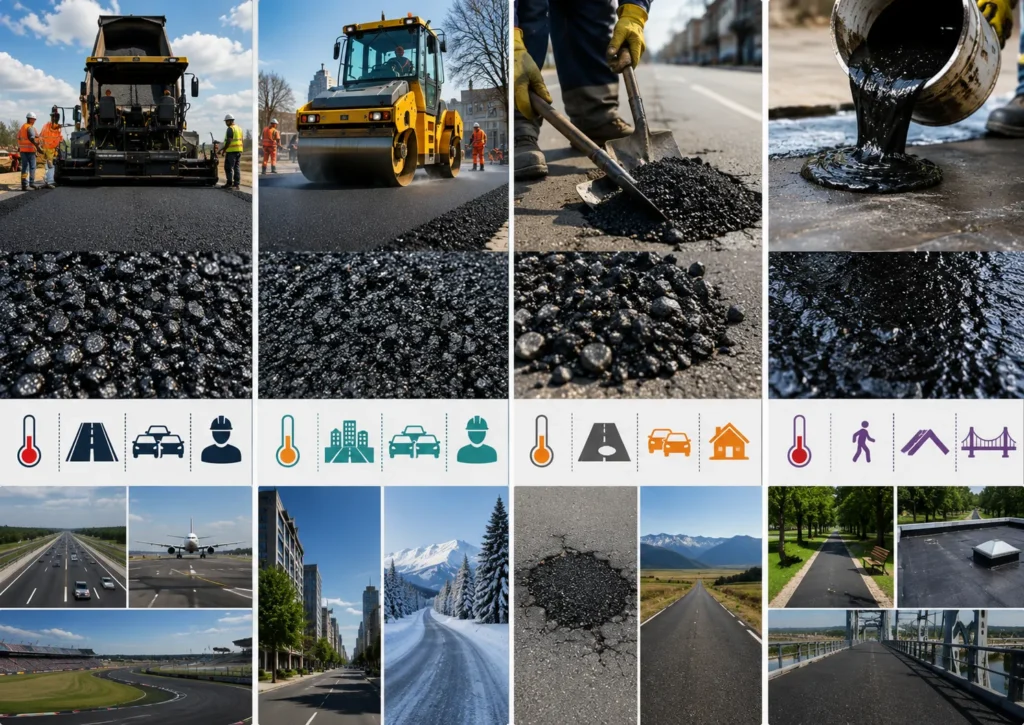
Quick-Reference: Asphalt Concrete Mix Types
| Mix Type | Mix Temp | Best Use | Traffic Level | Difficulty |
| Hot-Mix Asphalt (HMA) | 150°C (300°F) | Highways, airports, racetracks | High | Professional only |
| Warm-Mix Asphalt (WMA) | 100–140°C (212–284°F) | Urban roads, cold-weather paving | Medium–High | Professional only |
| Cold-Mix Asphalt (CMA) | Ambient temp | Pothole patches, remote repairs | Low–Medium | DIY possible |
| Mastic Asphalt | 200–230°C (392–446°F) | Footpaths, roofing, bridge decks | Low–Medium | Specialist only |
Hot-Mix Asphalt Concrete (HMA)
HMA is produced by heating bitumen to 93°C (200°F) and drying aggregate to approximately 150°C (300°F) before mixing. Polymer-modified HMA requires aggregate heated to 170°C (340°F). Paving crews must lay and compact HMA before the mix cools below workable temperature.
HMA is the standard for high-traffic pavements including interstate highways, airport runways, racetracks, and major urban roads. Crews restrict HMA paving to warmer months in cold climates because frozen subgrades cool the mix too quickly for proper compaction.
HMA also works as an environmental liner for landfills, water reservoirs, and fish hatchery ponds because its low permeability prevents liquid seepage through the base.
Warm-Mix Asphalt Concrete (WMA)
WMA is produced by adding zeolites, synthetic waxes, or asphalt emulsions to the binder, which lowers mixing and laying temperatures by 20–55°C (36–99°F) compared to standard HMA. Lower temperatures reduce fossil fuel consumption and release fewer carbon dioxide emissions and aerosols.
A 2012 survey of U.S. asphalt producers found that nearly 25% of all asphalt produced was warm-mix a 416% increase since 2009. WMA also cools faster after laying, which opens roads to traffic sooner a major advantage on high-priority construction schedules.
Cold-Mix and Mastic Asphalt Concrete
Cold-mix asphalt concrete (CMA) uses asphalt emulsions mixed with aggregate at ambient temperature no heating required. CMA works for pothole patching and low-traffic repairs. Mastic asphalt concrete, by contrast, is heated to 200–230°C (392–446°F) in a mixer for 6–8 hours before application.
Mastic asphalt is hand- or machine-laid to a depth of 20–30mm (¾–1¼ inches) for footpaths and roads and 10mm (⅜ inch) for floors and roofing. Its dense, void-free texture makes it highly waterproof, which is why structural engineers specify mastic for bridge decks and parking garage roofs.
How Asphalt Concrete Is Structured in 3 Distinct Layers
A complete asphalt concrete pavement system uses 3 structural layers built from the bottom up. Each layer carries specific load-distribution and drainage roles.
Subbase and Base Course
The subgrade the natural ground beneath the pavement must be compacted to 95% relative density before any paving begins. Soft or wet subgrade material must be removed and replaced with stable fill. The subbase layer above the subgrade typically consists of compacted crushed stone or granular material.
The asphalt concrete base course sits directly on the subbase. For residential collector streets, the APAI (Asphalt Pavement Association of Indiana) design guide specifies a base course thickness of 7.5 inches (19cm) on aggregate subbase. Commercial and highway base courses run 8–12 inches (20–30cm) depending on traffic load category.
Wearing Course Thickness Requirements
The wearing course — the top surface layer drivers contact must match traffic volume and vehicle type. A standard urban road wearing course measures 2 inches (5cm) thick. A highway wearing course ranges from 1.5–4 inches (4–10cm) depending on axle loads.
A tack coat a thin application of diluted bitumen emulsion bonds each new asphalt layer to the layer beneath it. Contractors apply the tack coat at a prescribed rate before placing any course above. Skipping the tack coat causes delamination between layers, which leads to alligator cracking and premature pavement failure.
Asphalt Concrete vs Portland Cement Concrete: Key Differences
Portland cement concrete (PCC) uses a cement-water-aggregate matrix that cures rigid. Asphalt concrete uses bitumen as a flexible binder. The 3 primary differences between the 2 materials are installation speed, traffic opening time, and maintenance frequency.
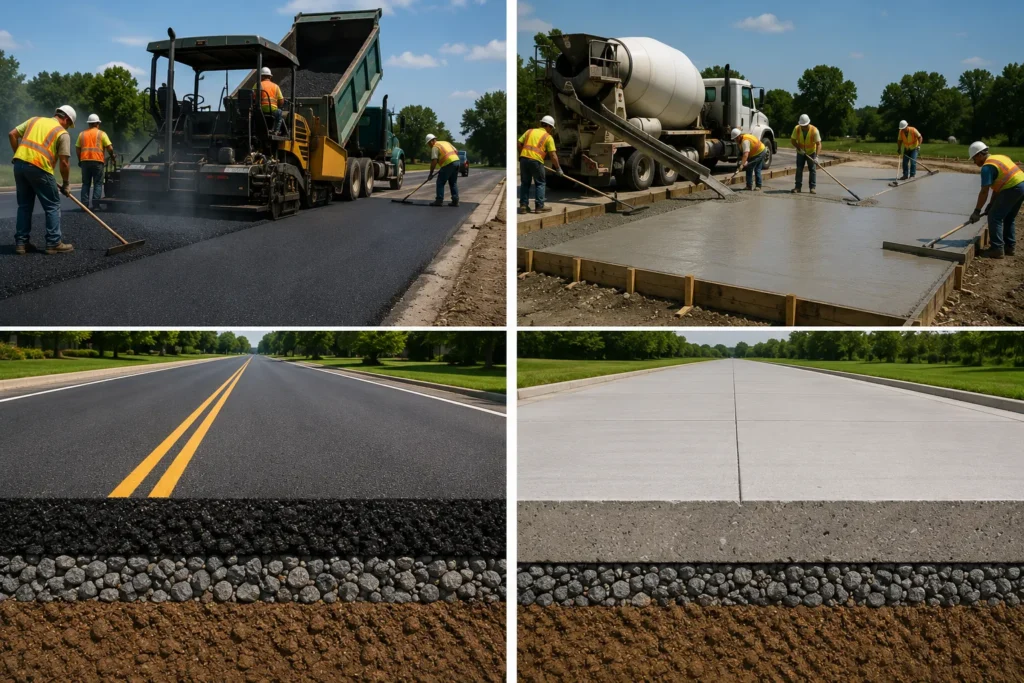
- Installation speed: Asphalt concrete crews lay and compact in a single visit. PCC requires form-setting, pouring, curing time, and form removal.
- Traffic opening time: HMA opens to foot traffic in 24 hours and vehicles in 2–3 days. PCC requires 48 hours for foot traffic and 5–7 days for vehicles.
- Maintenance frequency: Asphalt concrete requires sealcoating every 3–5 years and crack sealing as cracks appear. PCC requires joint sealing every 3–5 years and is more expensive to repair when cracking occurs.
- Lifespan: Asphalt concrete lasts 15–20 years before resurfacing. PCC lasts 30–40 years on a solid, well-drained base.
- Cost: Asphalt concrete carries a lower upfront installation cost. PCC costs more per square foot but requires fewer maintenance interventions over a 35-year horizon.
Asphalt concrete outperforms PCC in cold climates where freeze-thaw cycles cause rigid concrete slabs to crack. Bitumen’s flexibility allows AC to absorb freeze-thaw movement without fracturing — a key reason AC dominates northern U.S. highways.
How Long Does Asphalt Concrete Last Without Maintenance?
Asphalt concrete lasts 15–20 years without maintenance on a properly prepared subgrade. With proactive maintenance sealcoating, crack sealing, and surface treatments lifespan extends to 25–30 years. Neglected asphalt concrete fails in 10–12 years under moderate traffic.
Traffic load is the single largest factor in pavement deterioration. Heavy commercial vehicles, specifically 18-wheel trucks, generate axle loads that accelerate surface fatigue. A single heavy truck pass causes more structural damage than 1,000 passenger car passes on the same surface.
Climate also determines how quickly asphalt concrete ages. Ultraviolet radiation breaks down bitumen binders in hot, sunny climates like Arizona and Texas. The rich black color fades to gray a visible sign of oxidation then surface raveling begins as fines separate from the binder. Address raveling within 12–18 months of first appearance, or the surface becomes a pothole candidate.
How to Maintain Asphalt Concrete Pavement by Age
To maintain asphalt concrete effectively, follow a schedule tied to the surface’s age not just its visible condition. The following 3 phases reflect how bitumen and aggregate degrade over time.
Years 1–5: No Major Action Required
To protect new asphalt concrete in its first 5 years, keep the surface clean and free of petroleum spills. Remove oil spots promptly using an asphalt-compatible degreaser petroleum products dissolve bitumen binders and create soft spots. Keep heavy equipment and delivery vehicles off the surface for the first 72 hours after laying.
Walk the surface twice per year once in spring after winter damage becomes visible, and once in fall before temperatures drop. Document any crack wider than 6mm (¼ inch) and treat with a flexible crack filler rated for asphalt concrete.
Proper maintenance services protect your paving investment at every stage. Rainy Roofers’ roof maintenance services apply the same proactive inspection philosophy to all building surface materials, catching problems before they compound.
Years 5–15: Sealcoating and Crack Sealing
To extend asphalt concrete life through years 5–15, apply sealcoat at year 5 and repeat every 3–5 years thereafter. Sealcoat is a thin bitumen emulsion or coal-tar coating that blocks UV radiation, water infiltration, and chemical penetration. Block all vehicle and foot traffic for 24–48 hours after application.
Apply sealcoat in 2 thin layers not 1 thick layer. Allow the first coat to fully dry before applying the second coat. Two thin coats bond better and protect longer than a single thick coat.
Seal cracks wider than 6mm (¼ inch) before applying sealcoat. Sealcoat does not fill cracks it only protects intact pavement surfaces. For cracks wider than 13mm (½ inch), use a routing tool to cut clean vertical edges before filling for maximum bond strength.
Years 15–25: Overlay or Full Resurfacing
To restore asphalt concrete pavement between years 15 and 25, choose between an asphalt overlay or full mill-and-replace resurfacing. An overlay places 1.5–2 inches (4–5cm) of new HMA over the existing surface. Full resurfacing removes the deteriorated wearing course with a milling machine and places fresh HMA from scratch.
Choose an overlay when the base course remains structurally sound and no alligator cracking appears. Choose full resurfacing when alligator cracking covers more than 25% of the surface area overlaying a structurally compromised base only delays further failure by 3–5 years.
Understanding roofing material lifespan follows the same logic. The asphalt shingle types guide explains how 3-tab, architectural, and luxury asphalt shingles each carry different resurfacing timelines just as pavement surfaces do.
5 Factors That Shorten Asphalt Concrete Lifespan
5 specific conditions cause asphalt concrete to fail years before its expected lifespan — all of them preventable with correct specification and installation.
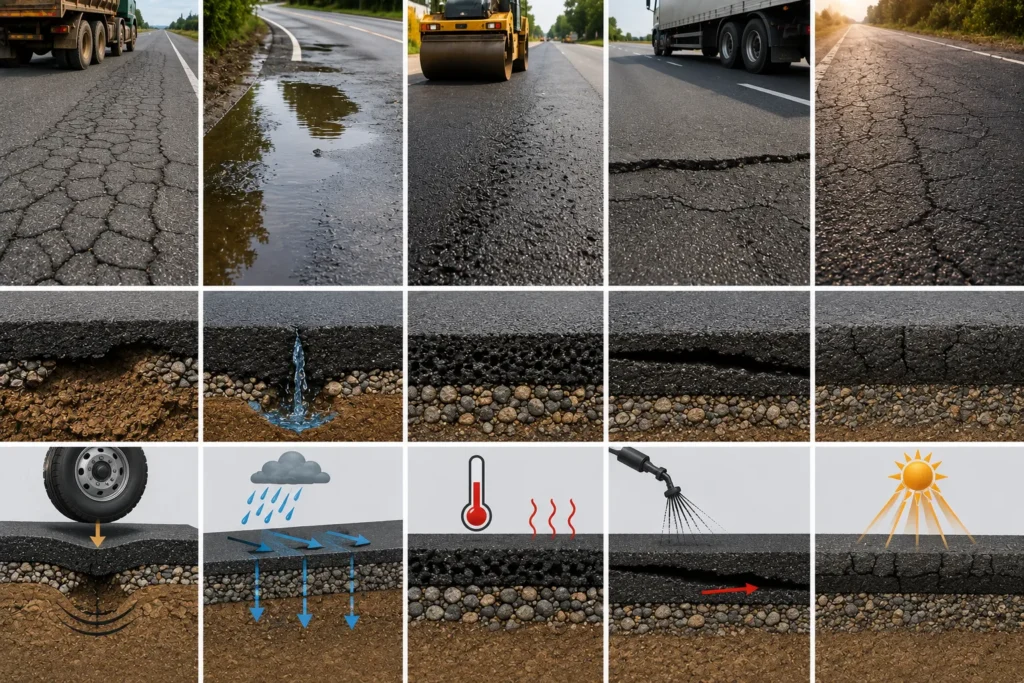
- Poor subgrade preparation: Subgrade compacted below 95% relative density creates a soft base that flexes excessively under load. Surface fatigue cracking begins within 3–5 years on a soft subgrade, regardless of mix quality.
- Inadequate drainage: Standing water penetrates micro-cracks and softens the base course through erosion. Grade the surface so water drains to the edges within seconds of rainfall. A surface slope of 1–2% toward drainage channels prevents pooling.
- Incorrect mix temperature: HMA placed below 120°C (248°F) does not compact to the required density. Under-compacted pavement develops surface voids that trap water and accelerate raveling within 2–4 years.
- Skipped tack coat: Each asphalt layer must bond to the layer below it. Without a tack coat, layers delaminate under traffic shear forces, producing slippage cracking horizontal cracks that follow the direction of vehicle braking.
- UV oxidation without sealcoating: Ultraviolet radiation hardens and embrittles the bitumen binder over time. Hardened binder cracks under thermal expansion and contraction. A sealcoat applied every 3–5 years blocks UV radiation and extends binder flexibility for years.
Where Asphalt Concrete and Bitumen Overlap in Roofing
Bitumen serves as the binding agent in asphalt concrete road surfaces and as the waterproofing agent in roofing systems including asphalt shingles, modified bitumen membranes, and built-up roofing (BUR) systems.
Asphalt shingles contain a fiberglass or organic mat coated with oxidized bitumen and embedded with mineral granules. The same bitumen chemistry that holds pavement aggregate together holds shingle granules in place against wind, rain, and UV exposure. Standard architectural shingles contain approximately 25–30% bitumen by weight.
Modified bitumen roof membranes use either APP (atactic polypropylene) or SBS (styrene-butadiene-styrene) polymer modifiers the same polymer-modified bitumen chemistry used in high-performance WMA road paving. These polymer modifiers increase flexibility at low temperatures and heat resistance at high temperatures.
For flat concrete roofs requiring bitumen waterproofing, a 2-coat system uses 2.0–3.0 liters per square meter (0.05–0.07 gallons per square foot). A 100m² (1,076 sq ft) flat roof requires 200–300 liters (53–79 gallons) of liquid bitumen plus a primer coat.
Conclusion
Asphalt concrete is a proven, cost-effective surface material for roads, driveways, parking lots, and infrastructure projects. The right mix type, correct layer thickness, and a consistent maintenance schedule determine whether your pavement reaches 15 years or 30 years of service life.
Whether your project involves pavement, flat roofing, or bitumen-based waterproofing, the material science is closely connected. Rainy Roofers provides expert assessment and installation for all roof maintenance services from asphalt shingles to modified bitumen membranes. Contact Rainy Roofers today for a free inspection and written estimate on any roofing or bitumen-based project.