Eco friendly roofing materials reduce a home’s carbon footprint, cut energy bills by 15–40%, and outlast standard asphalt shingles by 20–50 years. The 8 best eco friendly roofing materials in 2026 are metal roofing, reclaimed slate, clay and concrete tiles, recycled composite shingles, living green roofs, cool roof coatings, solar photovoltaic (PV) tiles, and Thermoplastic Polyolefin (TPO) membranes — each rated here by lifespan, Solar Reflectance Index (SRI), recycled content, and cost.
Your roof covers roughly 40% of a home’s exterior surface area, making it the single largest factor in heat gain and energy loss. Upgrading to an eco friendly roof lowers your cooling load, qualifies you for federal tax credits under the Inflation Reduction Act (IRA), and diverts old roofing material from landfills. This guide compares all 8 materials with exact numbers so you choose with confidence.
What Qualifies a Roofing Material as Eco Friendly?
A roofing material qualifies as eco friendly when it meets 3 criteria: a high Solar Reflectance Index (SRI) to reflect heat, low embodied carbon during manufacturing, and recyclability or long lifespan that reduces replacement frequency.
The Solar Reflectance Index (SRI) measures how well a surface reflects solar heat and emits absorbed heat back into the atmosphere. An SRI of 0 equals black asphalt at peak heat absorption; an SRI of 100 equals a perfect reflector. The U.S. Environmental Protection Agency (EPA) recommends an SRI of at least 78 for low-slope roofs and 29 for steep roofs to qualify as a cool roof.
Standard asphalt shingles score SRI 20–30, last 15–25 years, and contain 0% recycled content. They generate approximately 13.5 million tons of landfill waste annually in the U.S., according to the Construction Materials Recycling Association. Every eco friendly alternative on this list outperforms asphalt on at least 2 of the 3 criteria above.
8 Eco Friendly Roofing Materials Ranked for 2026
Each material below receives a score across 4 metrics: SRI, lifespan, recycled or renewable content, and installed cost range. Review all 4 before making your decision.
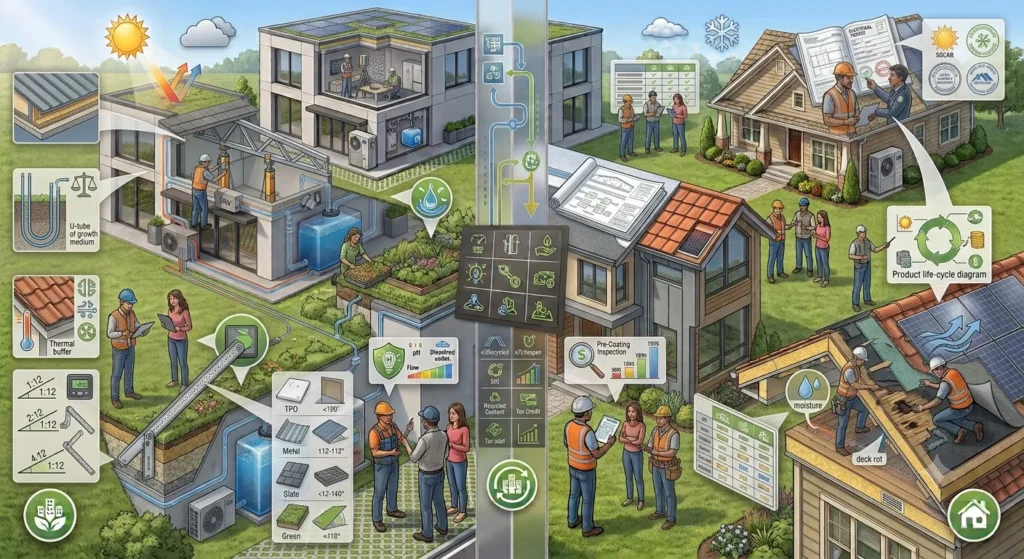
1. Standing Seam Metal Roofing: Highest Recycled Content
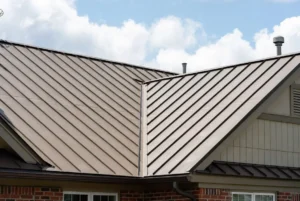
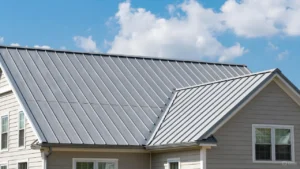
Standing seam metal roofing contains 25–95% recycled steel or aluminum and achieves an SRI of 50–80 depending on finish color. Metal roofs last 40–70 years — 2 to 4 times longer than asphalt — producing a cost-per-year significantly lower than the initial price suggests. A 2,000 sq ft (186 sq m) metal roof installed at $15,000–$25,000 averages $250–$625 per year over a 40-year lifespan.
Metal roofs shed rainwater efficiently and resist wildfire, hail, and wind speeds up to 140 mph (225 km/h). Light-colored or coated metal panels qualify for Energy Star certification and the 25C federal tax credit. Rainy Roofers’ metal roof installation service covers both residential standing seam systems and commercial metal panel roofs with 40+ year workmanship guarantees.
2. Reclaimed Slate: The Longest-Lasting Option
Reclaimed natural slate lasts 75–150 years — the longest lifespan of any roofing material — and requires zero new raw material extraction when sourced from salvaged buildings. Slate carries an SRI of 30–45 and a thermal mass that buffers indoor temperature swings. New quarried slate costs $15–$30 per sq ft installed; reclaimed slate costs $8–$20 per sq ft.
Slate weighs 750–1,500 lbs per square (100 sq ft / 9.3 sq m), so structural assessment is mandatory before installation. Verify that your roof framing carries at least 15 lbs per sq ft (73 kg per sq m) of dead load capacity before specifying slate. Reclaimed slate qualifies for LEED v4 Materials and Resources credits under the recycled content category.
3. Clay and Concrete Tiles: The Natural Thermal Buffer
Clay tiles derive from natural earth minerals and carry zero recycled content requirements since the raw material is abundant and the fired tile is fully recyclable at end of life. Clay tile achieves an SRI of 40–70 depending on glaze and color, lasts 50–100 years, and improves roof ventilation through its curved profile — air circulates beneath tiles and reduces heat transfer into the attic by 40%.
Concrete tiles cost $4–$8 per sq ft installed, compared to $10–$18 per sq ft for clay. Both materials exceed 50 lbs per square (243 kg per 9.3 sq m), requiring structural verification. Clay tile production emits 0.39 kg CO2 per kg of tile — lower than aluminum roofing at 8.24 kg CO2 per kg — making clay the lowest embodied-carbon rigid tile option available.
4. Recycled Composite Shingles: The Drop-In Asphalt Replacement
Recycled composite shingles, sold by brands including DaVinci Roofscapes, CertainTeed Symphony, and EcoStar Majestic Slate, use 80–95% post-consumer rubber, plastic, and wood fiber. Composite shingles achieve SRI values of 25–45, last 40–50 years, and install identically to asphalt shingles — no structural upgrade required.
The cost ranges from $5–$10 per sq ft installed, slightly above standard asphalt at $3–$6 per sq ft, but the 40-year lifespan versus 20 years for asphalt cuts the lifetime cost by 30–40%. Composite shingles weigh 2.5–3.5 lbs per sq ft (12–17 kg per sq m), making them compatible with virtually all residential roof structures.
5. Living Green Roofs: The Stormwater Management Specialist
A living roof (vegetated roof assembly) covers the roof membrane with a 3–6 inch (7.5–15 cm) growing medium planted with sedum, grasses, or native wildflowers. Green roofs achieve SRI values of 45–65 and reduce stormwater runoff by 50–90%, addressing a critical urban infrastructure problem. A 1,000 sq ft (93 sq m) intensive green roof retains approximately 12,000–15,000 gallons (45,000–57,000 liters) of rainwater per year.
Green roofs insulate the roof membrane from UV degradation, extending its lifespan from 15 years to 40+ years. Installation costs $15–$40 per sq ft for an extensive system (low-growing sedum, 3–4 inch / 7.5–10 cm depth) and $30–$60 per sq ft for an intensive system (deeper soil, trees and shrubs). Many U.S. cities, including Chicago, Portland, and Washington D.C., offer green roof tax incentives and stormwater fee rebates.
6. Cool Roof Coatings: The Lowest-Cost Eco Upgrade
Cool roof coatings apply directly over existing roofing surfaces and raise the SRI from 20 (standard asphalt) to 85–110 (coated surface) — the highest achievable SRI of any option on this list. Products like GAF Cobra Rigid Relief Ventilation and Henry Pro-Grade 287 White Elastomeric Coating cost $0.50–$2.00 per sq ft, making a cool coating the most affordable eco friendly roofing upgrade available.
Cool coatings reduce roof surface temperatures by up to 50°F (28°C) on peak summer days, cutting cooling energy consumption by 10–25% in Climate Zones 1–3. Schedule a roof inspection services appointment before applying any coating — a certified inspector identifies surface defects, active leaks, and adhesion issues that would cause a coating to fail within 2–3 years if left unaddressed.
7. Solar Photovoltaic (PV) Tiles: The Energy-Generating Roof
Solar PV tiles — most notably the Tesla Solar Roof V3 and GAF Energy Timberline Solar — integrate photovoltaic cells into standard-profile roofing tiles, generating 10–20 watts per sq ft (108–215 watts per sq m) of electricity. A 2,000 sq ft (186 sq m) roof generates 8–12 kW of peak power, covering 50–100% of an average U.S. household’s annual electricity consumption of 10,632 kWh.
Solar tile installation costs $25,000–$65,000 for a full roof, but the 30% federal Solar Investment Tax Credit (ITC) under IRA Section 48E reduces that cost to $17,500–$45,500. Over 25 years, energy generation savings typically total $25,000–$40,000, producing a net positive return on most projects. Solar tiles last 25–30 years, matching the generation warranty period.
8. TPO Single-Ply Membrane: The Best Flat Roof Eco Option
Thermoplastic Polyolefin (TPO) membrane achieves SRI 104–115 in white formulations — the highest of any commercial flat roof material — and weighs only 0.3–0.5 lbs per sq ft (1.5–2.4 kg per sq m). TPO installs on flat and low-slope roofs by heat-welding seams, creating a fully watertight assembly. A 10,000 sq ft (929 sq m) commercial TPO roof costs $4–$8 per sq ft installed.
TPO is 100% recyclable at end of life, and some manufacturers — including Carlisle SynTec and Firestone Building Products — operate take-back programs to process old membranes into new roofing material. TPO lasts 15–25 years with annual maintenance. Upgrading from standard EPDM to white TPO on a commercial building cuts cooling costs by 20–35% in warm climates.
Eco Friendly Roofing Materials: Quick-Reference Comparison Table
This table compares all 8 eco friendly roofing materials by SRI, lifespan, approximate cost, and key eco benefit for fast decision-making.
| Material | SRI Range | Lifespan (Years) | Cost / Sq Ft Installed | Top Eco Benefit |
| Standing Seam Metal | 50–80 | 40–70 | $7.50–$12.50 | 25–95% recycled content |
| Reclaimed Slate | 30–45 | 75–150 | $8–$20 | Zero new raw material |
| Clay / Concrete Tile | 40–70 | 50–100 | $4–$18 | Lowest embodied carbon tile |
| Recycled Composite Shingles | 25–45 | 40–50 | $5–$10 | 80–95% post-consumer material |
| Living Green Roof | 45–65 | 40+ (membrane) | $15–$60 | 90% stormwater retention |
| Cool Roof Coating | 85–110 | 5–15 (recoat) | $0.50–$2.00 | 50°F surface temp reduction |
| Solar PV Tiles | N/A | 25–30 | $12.50–$32.50 | Generates on-site electricity |
| TPO Membrane | 104–115 | 15–25 | $4–$8 | 100% recyclable at end of life |
How to Choose the Right Eco Friendly Roofing Material for Your Climate
To choose the right eco friendly roofing material, match the material’s SRI and thermal properties to your local climate zone and roof geometry.
Hot and Dry Climates: Prioritize High SRI
In Climate Zones 1–3 (Florida, Texas, California desert), cooling load dominates your energy bill. Choose materials with SRI above 65 — cool roof coatings, white TPO, light-colored metal, or solar tiles. A white TPO flat roof in Miami reduces cooling costs by 25–35% annually, recovering the installation cost in 5–8 years.
Cold and Mixed Climates: Prioritize Lifespan and Thermal Mass
In Climate Zones 5–8 (Midwest, Northeast, Pacific Northwest), heating cost outweighs cooling cost. Choose materials with high lifespan and thermal mass — reclaimed slate, clay tile, and metal roofing hold indoor heat longer and need replacement less often. Metal roofs in cold climates shed snow loads efficiently, preventing ice dam formation and the structural damage it causes.
Regardless of climate, schedule annual residential roof maintenance to inspect flashings, clean debris from valleys, and check sealant integrity. A well-maintained eco roof delivers its full rated lifespan — neglecting maintenance shortens lifespan by 30–40% on any material type.
What Are the Financial Benefits of Eco Friendly Roofing in 2026?
Eco friendly roofing delivers 3 direct financial benefits: reduced energy bills, federal tax credits, and higher resale value.
The IRA’s 25C Energy Efficient Home Improvement Credit covers 30% of qualifying roofing material costs up to $1,200 per year. Metal roofs, cool roof coatings, and solar tiles all qualify when installed in a primary U.S. residence and meeting Energy Star requirements. Solar tiles additionally qualify for the 30% ITC with no dollar cap, covering the full installation cost.
Homes with eco friendly roofs sell for 1–4% more than comparable homes without green upgrades, according to the National Association of Realtors 2024 Sustainability Report. On a $400,000 home, a 3% premium adds $12,000 to the sale price — often exceeding the original cost of a cool roof coating or metal roof upgrade.
Energy savings vary by material and climate. A metal roof in Phoenix, AZ cuts cooling bills by $400–$800 per year. A living green roof in Chicago, IL reduces heating and cooling costs by $300–$600 per year. Solar tiles in Los Angeles, CA generate $1,200–$2,400 of electricity annually based on a 10 kW system at $0.29 per kWh.
How to Install Eco Friendly Roofing: 4 Pre-Installation Checks
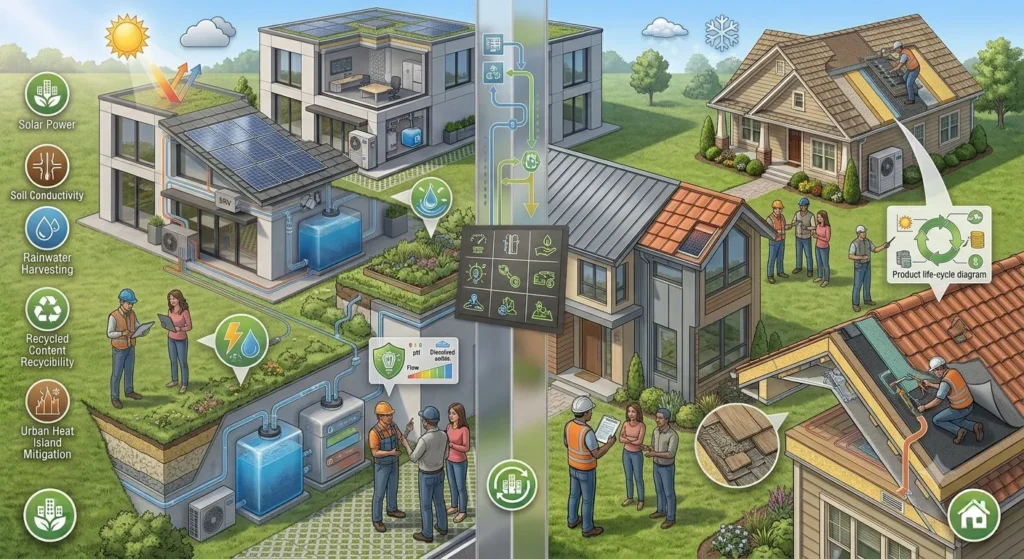
To install eco friendly roofing successfully, complete these 4 checks before any materials arrive on-site.
Check 1: Structural load capacity. Verify that your roof framing handles the material weight. Slate and green roofs require engineered load calculations. Submit drawings to your local building department if adding more than 5 lbs per sq ft (24 kg per sq m) of dead load.
Check 2: Roof slope compatibility. TPO and cool coatings require a slope below 2:12 (9.5°). Metal panels install on slopes as low as 1:12 (4.8°). Clay and slate require a minimum 4:12 (18.4°) slope. Composite shingles work on slopes of 2:12 and above.
Check 3: Local permit requirements. Solar tiles require electrical permits in all 50 states. Green roofs require drainage calculations and often a structural engineer’s stamp. Metal and slate roofs typically require a standard roofing permit only.
Check 4: Existing roof condition. Remove all existing layers before installing eco roofing — installing over damaged or wet decking traps moisture, voids material warranties, and reduces performance. A certified inspector identifies hidden deck rot, wet insulation, and inadequate ventilation before installation begins.
Conclusion
Eco friendly roofing materials protect your home, reduce your energy bills, and support the environment — all while qualifying for federal tax credits and raising your property value. Metal roofing suits most residential budgets with its recycled content and 40–70 year lifespan. Cool coatings offer the fastest payback for existing homes. Solar tiles generate income through electricity production.